Abigail and Afronita (in sashes) upon arrival at Kotoka International Airport
Following their success at the just ended Britain’s Got Talent (BGT) in London, Ghanaians celebrated with immense pride as dance stars Afronitaa and Abigail received a hero’s welcome at Kotoka International Airport in Accra.
The duowas greeted by a massive, cheering crowd. Afronitaa, 20, and her 9-year-old protégé, Abigail, impressed both judges and audiences with their energetic routines, securing a spot in the finals and ultimately placing third.
Their arrival was met with enthusiastic fans waving banners and singing praises, reflecting national pride in their international success. Afronitaa expressed gratitude for the overwhelming support, while Abigail shared her excitement and thanks.
Their achievement on BGT has not only put Ghana on the map but also inspired many young dancers across the country, showcasing the power of passion, hard work, and determination. The future looks bright for Afronitaa and Abigail, whose captivating performances promise to leave a lasting impact on the dance world.
Gospel musician Philipa Baafi has disclosed that she will not in any way going to compose a song for any political party.
In 2008, her ‘Go High’ song was the campaign song for the New Patriotic Party (NPP) making people perceive that she specifically composed the song for them.
“I won’t accept anything to compose a song for any political party. I know my mission clearly and I will stand by it,” she said.
“I did not do that song for the NPP. It is a song that touched on victory and the party loved it so they hopped on it to use for their campaign and they paid for copyrights.
She added that no amount of money is going to influence her to compose a song for any political party because her goal is to sing for Christ.
“I don’t do songs for political parties. I sing on realities, about God and positivity and that is why my songs usually catch people’s attention.”
Philipa Baafi however clarified that she wouldn’t hesitate to sell the right to the use of any of her songs to any political party that approaches her with the deal.
“If I have a song and a particular political party wants to use it, they just pay for copyrights and go ahead with it. But for me to be paid to compose a song specifically for a political party, that won’t happen,” she concluded.
US Army Staff Sergeant Gordon Black talks with his lawyer
A Russian court has handed a United States soldier a jail sentence as Moscow said it is awaiting Washington’s response to prisoner swap proposals.
The Pervomaisky District Court of Vladivostok sentenced US staff sergeant Gordon Black to three years and nine months in a penal colony on Wednesday for stealing $113 from his girlfriend and threatening to kill her, according to state-run TASS and Sputnik.
The sentencing adds to the list of US citizens jailed in Russia amid the deterioration in relations ushered in by the invasion of Ukraine. A senior official said on the same day that Moscow is waiting for Washington to respond to its latest prisoner swap proposals.
Russia is holding at least a dozen US citizens in jail, including corporate security executive Paul Whelan, musician Travis Leake – arrested last year on drug-related charges – teacher Marc Fogel – sentenced to 14 years in prison, also on drug charges – and dual national Ksenia Khavana.
On Tuesday, a court turned down an appeal by another twin passport holder Alsu Kurmasheva against the extension of her pre-trial detention. The Radio Free Europe journalist was arrested eight months ago and has been charged with spreading “false information” about the military.
Wall Street Journal reporter Evan Gershkovich is due to face trial behind closed doors on charges of espionage, which he has denied, on Tuesday.
President Vladimir Putin said in February that talks on a prisoner swap involving the journalist were under way, but the Kremlin has not given any details on the progress of the negotiations.
“The ball is in the court of the United States, we are waiting for them to respond to the ideas that were presented to them,” Deputy Foreign Minister Sergei Ryabkov told state news agency TASS.
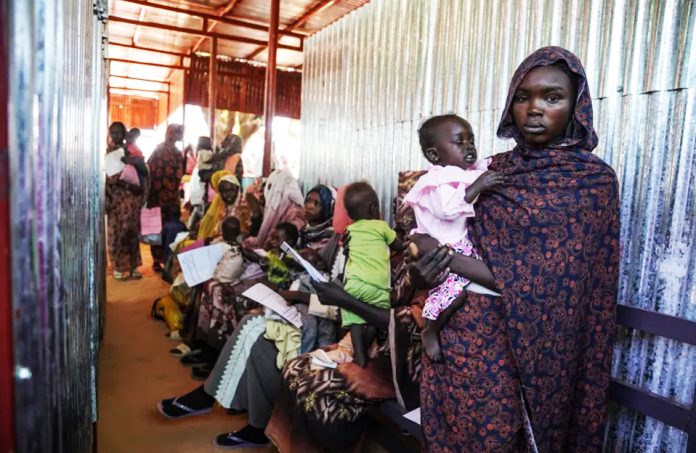
Displaced people take refuge at the Zamzam camp in Sudan
Sudan has accused the United Arab Emirates of arming a paramilitary force in the country’s 14-month civil war, prompting a clash at the United Nations Security Council (UNSC).
Al-Harith Idriss al-Harith Mohamed, Sudan’s UN ambassador, accused the UAE late on Tuesday of arming the Rapid Support Forces (RSF), which has been fighting Sudan’s army since April 2023 and faces accusations of ethnic war crimes. The Sudanese envoy said Khartoum has evidence of the weapons supply and his government will submit a file on UAE actions to the International Criminal Court.
Speaking to reporters after the meeting, he said he had urged the council to “walk the extra mile by naming and shaming the United Arab Emirates”.
Sitting next to Mohamed at the horseshoe-shaped Security Council table, UAE Ambassador Mohamed Abushahab called Sudan’s charge “ludicrous” and designed to distract from “grave violations that are happening on the ground”.
“If they seek an end to the conflict and civilian suffering, then why won’t they come to the Jeddah talks? Why are they blocking aid? What are you waiting for?” Abushahab asked.
In May, the United States and Saudi Arabia sought to resurrect ceasefire talks in Jeddah that stalled last year due to alleged violations of agreements on both sides. Sudan, however, refused to participate.
Aid agencies, which have warned that Sudan is on the brink of the world’s largest hunger crisis, have said aid is being blocked by all of the warring factions in the country.
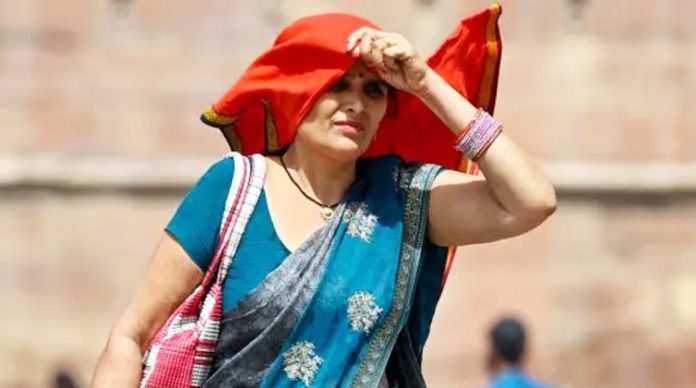
The Indian capital is reeling under a prolonged heatwave
India’s capital Delhi is reeling under a prolonged heatwave that has sent power demand soaring to a record 8,647 megawatts (MW) this week.
Temperatures have hovered around 44-45C in the city and other parts of northern India for weeks.
The widespread use of cooling appliances such as air conditioners has put pressure on resources, leading to frequent power outages in Delhi.
The capital’s record on Tuesday came a day after northern India saw peak power consumption at 89,000 MW.
Delhi’s electricity demand has broken many records this season, first on 22 May when it touched 8,000 MW.
On Monday, the city’s airport witnessed a power outage that lasted several minutes and impacted service at terminals.
Images shared on social media showed passengers standing in long queues at check-in counters as airline staff waited for their computers to turn on again.
The city is also battling a severe water crisis. Videos shared on social media show crowds holding buckets thronging water trucks. The weather department has said that the heatwave over northern India is likely to persist for the next few days.
Dozens of people have died of heat-related illnesses since March, when summer set in.
In the first week of June, more than 50 people died due to the heat in a span of three days in the northern state of Uttar Pradesh and the north-eastern state of Odisha (formerly Orissa).
Summers in India are usually hot and humid, but this year, the heat has been exceptionally harsh with longer, more intense and frequent heatwaves.
On Tuesday, the weather department said the country is also likely to receive below-normal rainfall in June.
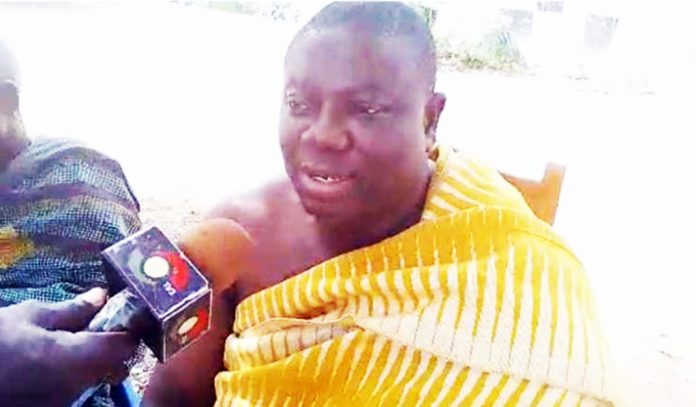
The Chief of Abutia-Kpota, Togbe Tsali addressing the media
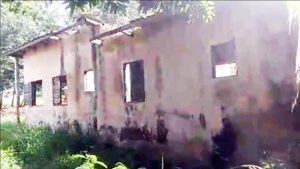
The chief of Abutia–Kpota, Togbe Tsali and the management of E.P Basic School have appealed to government, philanthropists, churches and public spirited organisations to help rebuild the abandoned teachers’ quarters constructed in the 1970s, to address the accommodation needs of teachers in the area.
One of the dilapidated teachers bungalows at Abutia-Kpota
Togbe Tsali said teachers refused posting to Abutia-Kpota is as a result of lack of accommodation for them, which he said, was affecting quality teaching and learning in the area.
Speaking to the media at Abuti-Kpota in the Ho West District of the Volta region on challenges confronting education in the area, Togbe Tsali explained that the quarters were built by the General I.K. Acheampong led military government to cater for refugees from the Republic of Togo, who escaped to Ghana as a result of conflict that emanated from a coup in that country.
The chief further explained that the abandoned quarters were for teachers of the then Refugees Basic School, now the E.P Basic School, adding that the farming activities of the refugees failed and they were relocated to the national capital, Accra.
Togbe Tsali continued that since then, the quarters had not seen any refurbishment in spite of various appeals made by the chiefs and elders.
The authorities have also failed to complete construction of two bungalows that were started under the European Union (EU) 5th Micro Project programme.
The Chief said the two uncompleted EU bungalows were left without handing them over to the school, thereby allowing the building to deteriorate.
For now, these two buildings must be re-constructed in addition to the teachers’ bungalows to address the accommodation needs of the teachers.
The abandoned staff bungallow
He said the chiefs and people of Abuti-Kpota had never relented in their efforts to find accommodation for teachers through community self-help initiative, with support from the Member of Parliament (MP) for Ho West, Mr Emmanuel Kwasi Bedzrah.
According to the chief, under the MP’s Development Fund, a 6-unit chamber and hall self-contained houses and single rooms with toilet, bath and kitchen were constructed and handed over to the school authorities.
He disclosed that the kindergarten (KG) at Abutia-Kpota Basic School was closed down, following the withdrawal of teachers at the KG department by the authorities of the Ho West District Directorate of Education, which the community members were uncomfortable with, as clear reasons for the withdrawal, was not made known to them.
Togbe Tsali said as a result of various appeals made to the District Directorate of Education, three teachers were posted to the KG department, which was denied teachers for the past nine months and their presence brought life back to the basic school.
He announced that to ensure quality education at the KG, the community mobilised resources and refurbished the new KG and handed it over to the school authorities to promote quality childhood education in the area.
The Head teacher of Abutai-Kpota E.P Basic School, Mr Nutepe Abotsi, commended the Ho West District Directorate of Education for the quick response by posting the three teachers to the KG department of the school, adding that Abutia-Kpota KG was among five selected KGs in Ghana to benefit from a pilot system of early childhood teaching and learning dubbed – “Right to Play”, under Leadership Community of Practice (LCOP).
Mr Abotsi said as a result, a team of early childhood education officers from Rwanda, led by officers from the Ghana Education Service (GES) visited the school’s KG to observe how teaching and learning was done, as well as classroom layout.
A teacher at the KG department, Ms Mercy Esinam Anyigba commended the Abutia-Kpota community for their communal spirit that had promoted education in the community and promised that she and other teachers would put in their best efforts to educate the children.
A Specialist in Educationist, working with Right to Play Organisation, Mr Kwabena Gao, on his part explained that education is the key to the development of every country and stressed that sound early childhood education would definitely provide a strong foundation for the educational system in the country.
An Opinion Leader in the community, Mr Godwin Ndewu, said the chiefs, elders and people of the community were committed to ensuring that the only basic school in the town would grow to become one of the best schools in the Volta region and the country in general.
The Chairman of Abutia-Kpota Development Committee, Mr David Segbe, disclosed that friends in the Republic of Korea are helping the community to construct a clinic, which was expected to be completed in six months, adding that the project was at the window level and that when completed would have a consulting room, male and female wards, Dispensary, X-ray department and OPD.
Mr Segbe said the community contributed an amount of GH¢65,000 to support development projects at the Abutia-Kpota Basic School and lauded the efforts of the chiefs and people of the community for their willingness to promote quality education in the area.
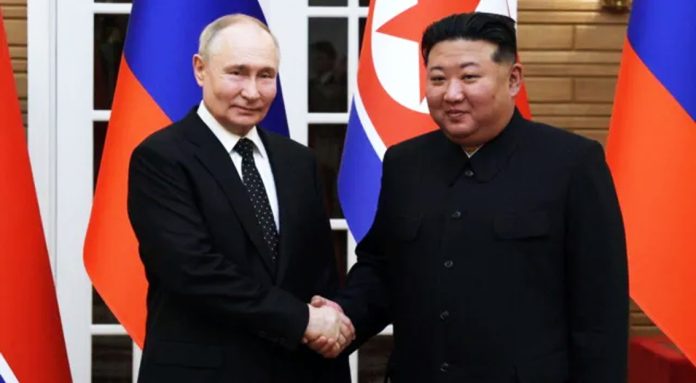
Vladimir Putin and Kim Jong Un have signed an agreement pledging that Russia and North Korea will help each other in the event of “aggression” against either country.
The Russian president made the announcement following talks with Mr Kim during a lavish visit to Pyongyang, his first since 2000.
Mr Kim said it took their relationship to “a new, high level of alliance”.
The pact cements a rapidly blossoming partnership that has worried the West. It could also have significant ramifications for the world, say observers.
Any kind of mutual defence treaty could possibly see Moscow assisting Pyongyang in a future conflict on the Korean peninsula, while North Korea could openly help Russia in its war on Ukraine.
Mr Kim is already accused of supplying Russia with weapons, while Mr Putin is thought to be giving the North Koreans space technology that could aid their missile programme. The two last met in Russia in September.
On Wednesday they signed a “comprehensive partnership agreement” that included a clause where they agreed to provide “mutual assistance in the event of aggression” against either country, said Mr Putin. He did not spell out what would constitute aggression.
In the last few weeks however, the US and other Nato countries have given permission to Ukraine to use Western weapons on Russian soil, in a significant move that Kyiv hopes would turn the tide to its favour.
Mr Putin warned of consequences and earlier this month said he was considering arming adversaries of the West with long-range weapons – something that North Korea has been developing.
He criticised the West’s decision again on Wednesday, saying it was “a gross violation” of restrictions under international obligations.
He also took issue with Western sanctions on Russia and North Korea, saying that they both “do not tolerate the language of blackmail and diktat” and would continue to counter the West’s use of “sanctions strangling” to maintain “hegemony”.
Mr Kim meanwhile praised their treaty as marking a significant and historic moment in their relation. He also expressed “full support and solidarity” for Russia in its war on Ukraine. The treaty is likely to anger Seoul, which had ahead of the meeting warned Russia against going “beyond a certain point”.
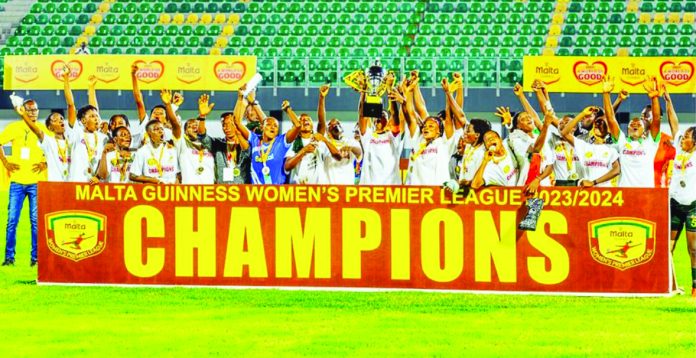
Ghana’s Vice President, Dr Mahamudu Bawumia has congratulated the winners of the 2023/24 Women’s Premier League Hasaacas Ladies.
Dr Bawumia is looking forward to hosting the Ghanaian champions as preparations begin ahead of the WAFU Zone B Championship and subsequently the CAF Women’s Champions League.
The Presidential Candidate of the New Patriotic Party charged the team to even go a step further than they did in the inaugural season of the continental championship, where they finished as silver medalists.
“I have taken notice of your stellar performance in the just ended Malta Guinness Women’s Premier League,” he wrote in a letter sent to Hasaacas Ladies.
“Congratulations to the management, technical team, playing body, and fans on your impressive achievement of winning your 5th league title and qualifying to represent Ghana at the 2024 CAF Women’s Champions League, WAFU Zone,” he added.
The Doos defeated rivals Ampem Darkoa Ladies in the final of the Women’s Championship last week to reclaim their title.
Hasaacas Ladies will compete in the WAFU Championship later this year as a qualification tournament for the Champions League.
Veggies like broccoli, cauliflower, kale, and cabbage are high in vitamins A and C. These are antioxidants that may help offset the toxins and carcinogens that can trigger breast cancer. Sauté or blanch these veggies to get the max nutrients. And try to get your antioxidants from food instead of supplements. Some research suggests antioxidant supplements may be risky during breast cancer treatment.
Flax Seeds
Flax seeds are known for their omega-3s, but they’re good for your breasts because they have more lignans than any other food. These are plant compounds that have fiber and the antioxidant phytoestrogen. Researchers think phytoestrogen targets estrogen receptors so estrogen-stimulated breast cancer can’t form. Toss flax seeds (not flaxseed oil) into yogurt, oatmeal, salads, soups, smoothies, and muffins.
Turmeric
People have used turmeric to curb inflammation for centuries. And early research suggests it may have two big breast cancer benefits. Curcumin, the active compound in turmeric, may help stop the spread of breast cancer and lessen the damage of chemotherapy on other parts of your body. But that finding comes from lab studies — more research is needed to see if this will hold true in humans. Eat turmeric in curry dishes, or add it to your soups, scrambled eggs, or warm milk.
Red and Orange Produce
Carotenoids are natural pigments that give tomatoes, carrots, and sweet potatoes their color. Your body converts them to vitamin A, which is important for your eyes. They also help keep your skin healthy. More research is needed, but some studies suggest there may be a link between carotenoids and a lower risk of some types of breast cancer.
Oily Fish
These benefit your breasts with cancer-fighting vitamin D and omega-3. Some lab research shows that omega-3 can stop blood vessels from growing inside a tumor. But more research is needed to know if eating oily fish can lower cancer risk. Focus on salmon, tuna, sardines, anchovies, and mackerel to avoid mercury exposure and get the most nutrients.
Berries
Blueberries, strawberries, blackberries, and raspberries are high in immunity-boosting vitamin C. They also contain antioxidants that protect your body from cell damage. Fresh, frozen, or dried, berries are great on their own and easy to add to yogurt, cereal, smoothies, and muffins.
Walnuts
Many studies point to a diet with more plant-based protein than meat to protect your breasts from cancer or lower the risk of it coming back. Try ground walnuts tossed with seasoning to replace ground beef in tacos. One study has shown that eating walnuts helps slow breast tumor growth and may even help lower the risk of breast cancer.
Grapes
Grapes, especially red and purple, have high levels of resveratrol. That’s an antioxidant linked to the prevention of breast, liver, and stomach cancer. Snack on a bunch of grapes right off the vine, freeze them as a cool dessert, or add them to salads. Just keep the skin on: That’s where most of the antioxidants live.
Soy Protein
Years ago, rodent-based research linked soy foods with breast cancer. But updated studies explain that rodents and humans process soy differently. Healthy soy foods like soybeans (edamame), tofu, and tempeh are safe and have phytonutrients — called isoflavones — that may help prevent cancer.
Black Beans
Of all the varieties of beans, these are considered one of the healthiest. Also called turtle beans, their high antioxidant levels may help lower your risk of breast cancer, other types of cancer, and ongoing illnesses. Black beans are also a strong source of ergothioneine, an amino acid that protects your DNA.
Whole Grains
These are a crucial source of bioactive phytochemicals, natural compounds that can help prevent or manage breast cancer. In one study, women who ate whole grains more than seven times a week showed a reduced risk of breast cancer. Sound like a lot? Whole-grain oatmeal, bread, crackers, tortillas, cereals, pastas, and brown rice all count.
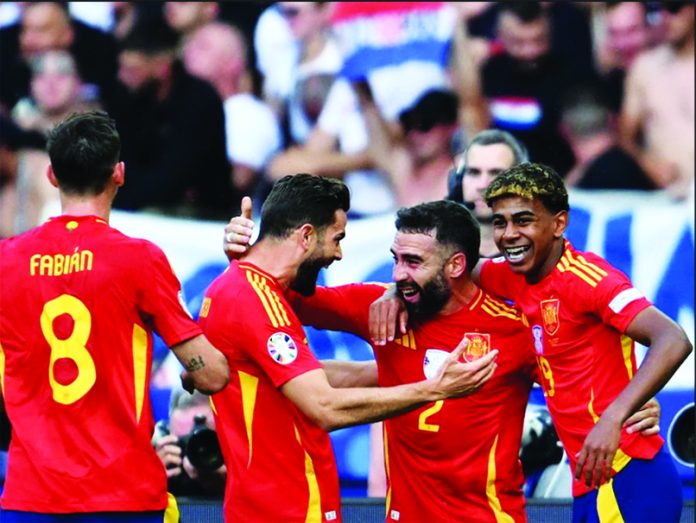
Two of UEFA’s most revered national teams go toe-to-toe in Gelsenkirchen as three-time European Championship winners Spain meet current holders Italy for the fifth tournament in succession. After producing one of the most eye-catching results of the opening round with a 3-0 win over Croatia, Spain may well have revenge on their mind here after suffering elimination at the hands of Italy in the last two Euros finals.
Spain’s opening day victory came on the back of some rampant form in qualifying (W7, L1), although their record against Italy over the years is balanced on a knife edge (W13, D16, L11). Extending that slender all-time H2H advantage would see La Roja qualify for a fifth successive knockout phase with a game to spare, although four of their seven meetings against Italy at the Euros have ended level.
Another stalemate would likely be enough to see both sides through to the knockouts early, but the two-time European champions Italy are unlikely to pull any punches in this one. The Azzurri had to do it the hard way in their opening game, launching a quickfire comeback victory against Albania – after conceding the earliest goal in tournament history – to maintain boss Luciano Spalletti’s hopes of emulating his predecessor in achieving maximum points in the group, just as they did in Euro 2020.
This is Italy’s eighth successive appearance at the finals, and a victory will ensure a fifth straight progression into the knockout rounds. A return of five wins from their last seven matches (D2) should boost hopes of toppling the Spaniards, although they may have to work with narrow margins as they scored two or fewer goals in six of those seven encounters ahead of this.