Home Blog Page 1370

No laid down protocol for testing chemicals, machines at CRIG -Witness

0
Law Court Complex, Accra

Reverend Father Dr. Emmanuel Kofi OkpotiOddoye, a former chairman of Committee on Testing Chemicals and Machines (CTCM) and Deputy Executive Director of Cocoa Research Institute (CRIG) has refuted the assertion that because he is an Animal Scientist, he doesn’t know the difference between foliar and liquid fertilisers.

According to him, the assertion by Dr. Alfred Arthur, a Soil Scientist at CRIG and Second Prosecution Witness (PW2) in the ongoing GH¢271 million cocoa fertiliser trial was not true.
He explained the difference between the two types of fertilisers, saying “generally, foliar fertilizers are liquid in appearance. Liquid is used to refer to the physical appearance as opposed to solid fertilizers, which are usually in the form of granules.

A foliar fertilizer is applied to foliage of the plant, the foliage being the leaves and stems in some cases.
“There are liquid fertilizers, which are not foliar fertilizers. A good example is fertilizer mixed with irrigation water and are, therefore, applied to the soil and taken up by the roots of the plant.”

Subpoenaed to testify for Seidu Agongo and Agricult Ghana Limited in the GH¢271.3 million cocoa fertiliser trial as Fourth Defence Witness (DW4), Rev. Fr. Dr. Oddoye stated that lithovit fertiliser, which is being contested by the prosecution to be foliar, therefore, powdery, did not have any issue as of the time he assumed office of the Deputy Executive Director of CRIG and chairman of the CTCM.

DW4 told the court no issue concerning lithovit fertiliser was brought to his attention until the year 2017, when a tribunal was set up at COCOBOD to try him on issues relating to lithovit liquid fertiliser.
The witness was put before the COCOBOD tribunal for withholding information on the testing of lithovit fertilizer from the process.

According to the prosecution, Lithovit Foliar fertilizer did not meet the full two to three years testing testing requirement.
Meanwhile, DW4 told the court that there was no laid down protocol for testing chemicals and machines at the scientific branch of the Ghana Cocoa Board (COCOBOD).
He said scientists in the various scientific divisions evolve their own protocols based on standard scientific procedures.

Benson Nutsukpui, counsel for second and third accused, Seidu Agongo and Agricult Ghana Limited, asked the witness while leading him in evidence to explain to the court on how he got to know that there was a protocol.
The witness, however, told the Land Division of the Accra High Court, presided over by Justice Aboagye Tandoh, on Tuesday, that he was unable to indicate exactly because he was not involved in those matters as at that time.

DW4 further stated that when he assumed the chairmanship of CTCM, the committee had reviewed reports on the testing of various agro chemicals and machines and that it was obvious that every scientific division had evolved its own methodology over time.
Seidu Agongo and Agricult Ghana Limited supplied lithovit fertiliser to COCOBOD in the year 2014, at the time Dr Stephen Kwabena Opuni was the Board’s Chief Executive.
The three had been put before the court on the claim by the Prosecution that the fertilizer was not good for purpose

Cross examination

Q: You know what is called re-evaluation?
A: Yes, I do.

Q:In relation to agrochemicals, fertilizers and machines, what has re-evaluation have to do with them?
A:When agrochemicals, fertilizers and machines are initially tested, if found to be suitable, a certificate is issued for one year period or one calendar year. For the purposes of issuing a new certificate for the ensuing year, there is the need to do some form of re-evaluation to ascertain that agrochemicals, fertilizers and machines are still effective.

Q:During this re-evaluation where do CRIG get the samples they re-evaluate from?
A: We would request samples from the chemical companies, but would also take samples from the various chemicals being used in the field.

Q:Tell this Court how often are these re-evaluation done?
A:They are done in the second half of the year preceding the year for which the certificates are issued.
Q: When you say the second half of the preceding year, please oblige this Court the month in which CRIG would start this re-evaluation.

A: Usually we start in July.

Q: What role do the chemical companies have in the re-evaluation?
A: The chemical companies supply samples of the various chemicals that they have sold to the Cocobod and in addition CRIG charges them a fee to facilitate the re-evaluation.

Q: Just for the avoidance of doubt outside what you have mentioned in your answer, do they have any other role in the re-evaluation?
A: That is their only involvement.
Q: Who initiates the re-evaluation?
A: The chairman of the CTCM in consultation with Executive Director.

Q: Do the companies have any role whatsoever in initiating the re-evaluation exercise?
A: No. It is the sole responsibility of CRIG.

Q: Take Exhibit 5. Yesterday the very last question. I asked you the product for which the re-evaluation fee was being requested and you answered lithovit. Do you remember?
A: Yes.
Q: Take your mind back to when you assumed duty as Deputy Executive Director of CRIG, did you come to know the product lithovit liquid fertilizer?
A: No. I did not.

Q: At the time you wrote Exhibit 5, did you know what the product lithovit liquid fertilizer was?
A: No. I will say it was just one of the many chemicals that CRIG had tested and which Cocobod had bought.
Q: When did you know that Cocobod bought the product lithovit foliar fertilizer?
A: When letters were being sent to the various chemical companies to inform them of that year’s re-evaluation, a list of the companies that were to be written to and the products that were to be tested formed the basis for the writing of the letters.

Q: This list how was it generated and how did it get to your desk?
A: The list was produced in conjunction with the office of Cocobod specifically the office DCE, Agronomy and Quality Control.

Q: And the product in Exhibit 5, lithovit liquid fertilizer, where did you get it from in relation to the list generated?
A: The product and the company which had supplied the product were on the said list.

Q: Oblige this Court, who was the Deputy Chief Executive, Agronomy and Quality Control at the time that list was generated and you wrote that letter?
A: The DCE, Agronomy and Quality Control at that time was Dr. Yaw Adu Ampomah.
Q: You Dr.Oddoye did not invent the name lithovit liquid fertilizer, did you?
A: No. I did not. It was the name that was already in use.

Q: Dr. Alfred Arthur told this Court differently constituted but the proceedings of which was adopted that you did not know the difference between lithovit foliar fertilizer and lithovit liquid fertilizer and you made a mistake. Is that correct?
A: No. it is not correct.

Q: Did you ever tell Dr. Alfred Arthur that because you are an animal scientist you do not know the difference between lithovit foliar fertilizer and liquid fertilizer.
A: No. I did not.
Q: Tell us just for our education whether it is true that foliar fertilizer cannot be liquid.

A: Generally foliar fertilizers are liquid in appearance. Liquid is used to refer to the physical appearance as opposed to solid fertilizers which are usually in the form of granules. A foliar fertilizer is applied to foliage of the plant, the foliage being the leafs and stems in some cases. There are liquid fertilizers which are not foliar fertilizers. A good example is fertilizers which are mixed with irrigation water and are therefore applied to the soil and taken up by the roots of the plant.

Q: You were appointed the Deputy Executive Director at CRIG in 2016? That is correct?
A: That is correct. September to be precise.

Q: Was there any issue or complain pending on lithovit liquid fertilizer before you assumed duty?
A: No. There was no such issue.
Q: What about when you assumed duty, was there any issue that was brought to your attention about lithovit?
A: No. There was no issue with lithovit until the latter part of 2017.

Q: Tell this Court if you know, was lithovit supplied to farmers while you were there as Deputy Executive Director.

A: I cannot give an exact answer. I do not know. CRIG tests and then advises Cocobod as to the suitability of any product brought to CRIG for testing. Thereafter, which product they buy when it is supplied to farmers and all that is not within our purview. Because it is on the list we were given one may assume that it was bought but whether it was being supplied to farmers as at the time I assumed office, I would not know.

Q: You said in your answer right now that “because it is on the list we were given”. Which list and who gave it to you?
A: I was referring to the lists of companies and their products as supplied by Cocobod to which letters for reassessment were to be written.
Q: That is the statement you gave to the police.
A: Yes.

Q: You signed it?
A: Yes, I signed it.

Q: It is in your hand writing?
A: Yes.

COUNSEL FOR 2ND AND 3RD ACCUSED: My Lord, we wish to tender the document through the witness.

COUNSEL FOR REPUBLIC: No objection.

COUNSEL FOR 1ST ACCUSED: No objection.

BY COURT: The police statement of Emmanuel Okpoti Kofi Oddoye aka Rev. Father (Dr. Emmanuel Kofi OkpotiOddoye) DW4/A3 and A3 is tendered in evidence without objection and same is admitted as Exhibit 143/DW4/A2 and A3

Q: You have Exhibit 143. Look at the first two lines. I was appointed Deputy Executive Director of CRIG effective September 2017. Is that correct?
A: That is correct.

Q: Look at the statement in which year were appointed Deputy Executive Director of CRIG?
A: I was appointed in 2017.

Q: Please look at Exhibit 5, look at the date you signed Exhibit 5. What date did you sign Exhibit 5?
A: Exhibit 5 has the date 7th July 2017.
Q: How long were you the Deputy Executive Director of CRIG before you signed Exhibit 5?

A: I would have been Deputy Executive Director for about 10 months but if it pleases the Court, it looks like I made a mistake or an error in the police statement (Exhibit 143) in the first page on the second line. In that I was appointed in September 2016 and not September 2017.

Q: Look at the very last sentence on page 2. You stated “a copy of the report indicates that the product was received as a powder which was then dissolve in water to form a foliar spray. Records also indicate that lithovit was tested on seedling in the nursery”. Which report are you talking about?
A: I am talking about the report on the testing of lithovit fertilizer written by CRIG and forwarded to Cocobod specifically DCE, Agronomy and Quality Control.

Q: And when you say records also indicate that lithovit was tested on seedling, which record are you talking about?
A: I was also referring to the same report that was sent to Cocobod.
Q: Please look at Exhibits B and B1. Is that a copy of the record you referred to?
A: Yes, it is.

Q: Yesterday I showed you the letter and Exhibit H which you wrote which stated that there was no laid down protocols. At the time of that report Exhibits B and B1, was there any protocol laid down.
A: There was. This letter was written to Mr. Akrofi to point out certain errors in his reply to a query written to him by DCE, Agronomy and Quality Control by Cocobod.

Q: You stated that there was no laid down protocols as such and that with the advent of testing chemical and machines at CRIG, scientists in the various scientific divisions evolve their own protocols based on standard scientific procedures and I asked you if you still stood by that statement and you said yes. Do you remember?
A: Yes. I did say yes.
Q: You wrote this in 22nd September 2017, Exhibit B is dated 20th January 2014. Is that correct?
A: That is correct.

Q: Tell this Court if you know. Was there a protocol on testing as at 20th January 2014?
A: Yes, there was.

Q: What was the protocol?
A: I am unable to say exactly because I was not involved in those matters as at that time.
Q: Tell us how you got to know that there was a protocol?

A: When I became the chair of CTCM and as the CTCM reviewed reports on the testing of various agro chemicals and machines, it became obvious that every scientific division had evolved its own methodology over time and that even within a division there could be slight variations in the methods used even though they were all scientifically acceptable. Regrettably, there was no documents in which the various methodologies had been listed as a guide and this is what I was referring to by that statement.

Q: Do you know what guidelines are?
A: I do.

Q: Take yourself back to CRIG and tell us if there is any guideline on testing of chemicals, fertilizers and machinery.
A: When I assumed the chair of the CTCM, there was no such unified documents. I started efforts to put one together based on what they were already doing in their various division. Whether the document is still in use, I cannot tell.

Q: Before we leave the issue of protocol, CTCM at what stage of the testing of fertilizers, chemical and machines does CTCM come in?
A: The CTCM is there at the beginning to receive the sample and related correspondence and ensure that a sample gets to the testing divisions. When all is done there report also comes to the CTCM for review.

Q: Let zero in on the testing itself. Does CTCM play any role in the actual testing?
A: Not directly and if I may explain. The CTCM is composed of scientists from the various divisions. If a scientist on the CTCM is asked to test any sample during the review of the report on the said sample, he or she is replaced by another scientist from the same division.

Q: In terms of the methodology that the scientists conducting the test decide to use, does the CTCM have any role?
A: Yes in a way. Unfortunately some of the thing do not have yes or no answers. As we tried to standardize procedures, we did so in consultation with the various divisions of CRIG. Reports from the field and new relevant scientific information was also considered.

For example, initially insecticide test covered one major period in August through October. Reports from the field indicated that new insects were having a few day in February/ March so the test had to be modified to take this into account.
Q: You said as we tried to standardize procedure, when was this?
A: This was from about the middle of 2017.

Q: This standardization you are talking about was well after the testing of lithovit.
A: Yes. That is true.

Q: All that I am asking is this. If you give a fertilizer sample to a scientist, does he have to come back with a sheet of paper to the CTCM stating how he will do the testing for approval.
A: No. The scientist in consultation with his or her head of division decides what methodology to adopt.
Q: And in conducting test generally scientists sometimes make inferences. That is correct?
A: That is correct. The inferences are made based on data and observation.

Q: What about the available knowledge?
A: It is standard scientific practice to go through available literature to find out what knowledge exist on a particular subject.

Q: Take Exhibit 42. The first page of Exhibit 42 is a letter signed by you. That is correct?
A: That is correct.
Q: You were requesting for samples of ammonia sulphate. That is correct?
A: The request was for two bags and it was meant for seedling trial.

Q: Turn to the next page. This is a memo from Dr. Alfred Arthur to you as the head of the CTCM on the laboratory test on the fertilizer sample of ammonia sulphate. That is correct?
A: That is correct.

Q: And it states in paragraph 2 “The result of the test conducted by the soil science and physiology and by the Biochemistry divisions indicates that the sample is of ammonium sulphate material. The approved report should be sent to Plantco Ltd through the address below”. That is correct?
A: That is correct.
Q: It provides the address of the company in Kumasi where it should be sent to. That is correct?
A: That is correct.

Q: Indeed, it was addressed to your good self. That is also true.
A: It was.

Q: The first minutes, numbered 2 is your minutes.
A: Yes.
Q: What does the EDCR mean?
A: It is the abbreviated form of Executive Director Cocoa Research.

Q: So does it mean that you were addressing the memo to the Executive Director, Cocoa Research.
A: Yes.

Q: You signed your signature there.
A: Yes. Signed and dated.
Q: It was dated 9th May 2017. That is correct?
A: Yes. The date stated is correct.

Q: Please read your memo to this Court.
A: Ammonium sulphate is such a well-known fertilizer. Once the sample has been confirmed, there may not be the need for further testing.

Q: You made that inference from knowledge of ammonium sulphate at the time. That is true.
A: Yes. Actually in consultation with the head of the Soil Science Division, Dr. Alfred Arthur (PW2).
Q: At this point that you made this inference, you as the head of CTCM was advising that they can dispense with further testing because of your knowledge of ammonium sulphate.
A: Yes.

Q: Look at minutes 3 on Exhibit 42. It is addressed to you the chairman of CTCM. That is correct?
A: That is correct.

Q: Can you identify the signature and whom it is coming from?
A: It is the signature of Dr. F. M. Amoah the then Executive Director of CRIG.
Q: And he addressed it to you in your capacity as the chairman of the CTCM. That is correct?
A: That is correct.

Q: He asked the first question “Does this report mean that the fertilizer could be okay without field test. Is that correct?
A: That is correct.

Q: And he further asked what is the view of the CTCM?
A: Yes. That is correct.
Q: Drawing inference from knowledge at the time by scientists conducting the test and the CTCM, is very normal in testing of agrochemicals, fertilizers and machines at CRIG. That is true?
A: Yes. Some inferences may be drawn.

Q: An inference like in Exhibit 42 where your knowledge in ammonium sulphate is enough to waive field trials. That is very normal at CRIG.
A: In this case, no. A special case is made here for ammonium sulphate and other common nitrogenous fertilizers like urea which had been in use since time immemorial.

Q: When you made this special case for ammonium sulphate and other nitrogenous fertilizers, in this case there was no need for further trials in the case of ammonium sulphate fertilizer brought by Plantco.

A: That is correct.
Q: Based on that it is true that where the nutrients of a particular fertilizer have been thoroughly researched by CRIG, the scientists made inferences when they are testing a new with the same nutrient.

A: No. That is not so. A special case is made for ammonium sulphate and as far as I can remember urea, all other fertilizers even if the nutrients are similar to what had been tested before must go through testing.

Q: This position that you have just stated, is it your personal position or that of the CTCM?
A: It is the position of the CTCM in consultation with Soil Science Division.

Q: In which year was that position decided?
A: I cannot say.
Q: Dr. Franklin Amoah (PW1) was very clear that there are no laid down protocol of the testing of fertilizers and machines just like your letter stated. Would he be correct?
A: Yes, he would.

Q: After you gave this advice per your minutes in Exhibit 42, what happened?
A: To be safe and in consultation with the Executive Director, CRIG we decided to write Exhibit 42 which forwards the report to Cocobod and also request fertilizer for the trial.

Q: What happened to your request?
A: To be honest I cannot remember.

Q: Up to the time you left CRIG, did you come across any other report on that fertilizer apart from this one that was tendered as Exhibit 42.
A: Again, I cannot remember. If I may explain. The volume of the materials that passed through my table was voluminous.

Q: You said in consultation with your Executive Director and to be safe you wrote Exhibit 42. What were you expecting the DCE, Agronomy and Quality Control to do?
A: I expected that he will forward the report to Plantco and also request the two bags of fertilizer for the trial.

Q: Do you know whether the fertilizer was received?
A: I do not remember.
Q: Do you know whether any further test was conducted?
A: I cannot remember.

BY COURT: Further evidence in chief of DW4/A2 and A3 to continue and the witness is temporarily discharged.

It’s a big lie, no NPP PC has been given 30 recruitment slots –Majority

0
Patricia Appiagyei, Deputy Majority Leader and MP for Asokwa

The Majority Group in the Parliament of Ghana has slammed the Ato Forson-led Minority Caucus for accusing parliamentary candidates affiliated to the New Patriotic Party (NPP) of getting favours from the government to recruit party loyalists into the security services ahead of the December 7 general elections.

At a press conference in Accra on Tuesday, May 21, 2024 addressed by the Deputy Majority Leader and Member of Parliament (MP) for Asokwa, Patricia Appiagyei, the Majority Group denied the allegation, noting that it is a desperate attempt by the Minority to incite public disfavor against the government as the 2024 general elections approaches.

The Minority Leader, Dr. Cassiel Ato Forson, alleged at a news conference on Monday, May 20, 2024 that each of the NPP parliamentary candidates, across the country, has been allocated 30 slots to select NPP loyalists and supporters to fill vacant positions within the security services, including the police and the army.

Dr Ato Forson then urged the President, Nana Addo Dankwa Akufo-Addo and the government, to halt the exercise, which he described as undemocratic behavior and emphasised the need for transparency and fairness in the recruitment processes within the security services.

“Notwithstanding the fact that the Minority raised serious concerns about the criteria adopted by the NPP government to recruit personnel into the security services, it has persisted in taking additional steps in the last few days that we have seen.

“The NDC Minority can authoritatively state that not long ago, the NPP government again illegally and fraudulently has given out 30 slots to all NPP parliamentary candidates across the country for recruitment into the security services”, he alleged.

But responding further, Madam Appiagyei, known in political circles as ‘Mama Pat’ and also known for her political dynamism, described the claims of the Minority as not only baseless but preposterous and urged the public to treat it with the contempt that it deserves.

“The Minority’s assertion that 276 NPP parliamentary candidates, including 138 sitting MPs, have each been given 30 recruitment slots, which is mathematically and administratively ludicrous.

“To suggest that 8,250 new recruits could be absorbed into our security forces, in a system that traditionally accommodates between 1,000 to 1,200 recruits annually, shows a profound misunderstanding of the operational and financial frameworks of our security institutions”, she noted.

She added, “The claims of Dr. Cassiel Ato Forson are a deliberate distortion of reality and a malicious fabrication aimed at undermining the integrity of the government. Such allegations serve only to provoke unwarranted tension and foster an environment of mistrust and political rivalry that our country does not need”.

Minister for the Interior, Henry Quartey, immediately after assuming office outlined the government’s recruitment strategy, which focuses on giving a second chance to qualified Ghanaians who previously applied but were not selected.

This strategy, according to Mdam Appiagyei “is not only fair but also thoughtful, avoiding unnecessary financial burdens on applicants by not reopening the recruitment process widely”.

Worried about the implications of disinformation, the deputy Majority Leader cautioned the Minority Group to refrain from such acts as they are beneath the dignity of the country’s democratic processes and could potentially endanger its peace and the security.

She assured of the government’s commitment to fairness, transparency, and the rule of law and called on the media to demand factual accuracy and to contribute responsibly to the political discourse of the country.

Stephen Odoi-Larbi reporting from Parliament House

From Gutters to Homes: The Impact of Flooding on Accra’s Residents

0
Wisdom Koudjo Klu, the writer

In recent times, Accra, the capital city of Ghana, has been increasingly plagued by recurrent flooding, causing significant distress among its residents. The latest flood events have not only inundated roads and disrupted public transport but also caused extensive damage to personal properties and businesses, leading to widespread economic and social disruption. The persistent nature of these floods has raised alarms, necessitating a closer examination of the underlying causes and the urgent need for sustainable solutions.

Flooding in Accra is not a new phenomenon; however, its frequency and intensity have increased in recent years. This alarming trend is due to a combination of factors, including rapid urbanization, inadequate infrastructure, and the impacts of climate change.

The city, home to over two million people, is particularly vulnerable due to its low-lying coastal geography, which exacerbates the effects of heavy rainfall. Each flood event serves as a stark reminder of the city’s infrastructural deficiencies and the pressing need for comprehensive urban planning and effective management strategies.

The human toll of these floods cannot be understated. Families are often displaced from their homes, losing not only their possessions but also their sense of security. In the aftermath of a flood, affected individuals face health risks from waterborne diseases and other hazards. Moreover, the economic impact on businesses is severe, with many enterprises suffering from property damage, loss of inventory, and disrupted operations.

The cumulative effect of these disruptions stifles economic growth and development, further entrenching poverty and inequality. Environmental degradation is another critical issue linked to the flooding in Accra. Natural waterways and wetlands that once acted as buffers against floods are being lost to urban sprawl.

The destruction of these natural landscapes reduces the city’s resilience to heavy rains and contributes to the severity of flooding. Additionally, the pollution from floodwaters, which often carry waste and toxins, poses long-term environmental and health risks.

Inadequate Drainage Systems and Choked Gutters

One of the primary culprits behind the flooding in Accra is the city’s inadequate and poorly maintained drainage systems. Many of the city’s drains are either undersized or poorly constructed, incapable of handling the volume of water generated during heavy rains. Over time, these drains become choked with silt, debris, and garbage, severely reducing their capacity to channel water away from populated areas.

The situation is compounded by the city’s waste management challenges. Accra produces a significant amount of waste daily, much of which ends up in gutters and drainage channels. The indiscriminate disposal of waste blocks these critical infrastructures, leading to water backflow and flooding during even moderate rainfall. This not only causes immediate damage but also creates health hazards as stagnant water becomes a breeding ground for mosquitoes and other vectors.

The Decline of the “Keep Ghana Clean” Campaign

A contributing factor to the waste problem is the decline of the once-vibrant “Keep Ghana Clean” campaign. This initiative, which dedicated a specific day each month to cleaning the environment, played a crucial role in maintaining urban sanitation. However, in recent years, participation and enforcement have waned, leading to a resurgence of litter and unclean public spaces. Revitalizing this campaign could be a significant step towards mitigating flooding by ensuring that gutters and drains remain unclogged.

Building on Waterways

Another critical issue contributing to Accra’s flooding is the rampant construction of buildings on natural waterways. Urbanization has led to the encroachment of floodplains and wetlands, areas that naturally absorb and channel excess rainwater. As these natural buffers are built over, rainwater has fewer places to go, resulting in surface runoff that floods streets and properties.

Regulatory enforcement is often weak, allowing developers to flout building codes and erect structures in prohibited areas. This not only disrupts natural drainage patterns but also places additional stress on the existing drainage infrastructure, which is already struggling to cope. The consequences are severe: homes, businesses, and infrastructure suffer repeated flood damage, leading to economic losses and decreased quality of life for residents.

The Role of Climate Change

While poor urban planning and waste management are significant factors, the role of climate change cannot be ignored. Climate change has led to more unpredictable and intense weather patterns, including heavy rainfall events that overwhelm existing drainage systems. These extreme weather events are becoming more frequent, highlighting the urgent need for resilient infrastructure that can withstand such shocks.

Economic and Social Impacts

The economic impact of flooding in Accra is profound. Businesses suffer significant losses due to damaged goods and disrupted operations. Public transport systems are paralyzed, affecting commuters and contributing to economic inefficiency. The cost of repairs and reconstruction after each flood event is substantial, diverting resources that could be used for other developmental needs.

Socially, flooding exacerbates the vulnerability of already marginalized communities. Those living in informal settlements, often located in flood-prone areas, face the brunt of the floods, losing their homes and possessions. This displacement leads to a cycle of poverty and hardship, as affected individuals struggle to recover and rebuild.

Urgent Need for Action

Addressing the perennial flooding in Accra requires a multi-faceted approach involving both immediate and long-term strategies. First, there is a pressing need for comprehensive waste management reforms. Ensuring that gutters and drains are regularly cleaned and maintained can significantly reduce the incidence of choked drainage systems. Public awareness campaigns to educate residents on proper waste disposal practices are also crucial.

Secondly, there must be stringent enforcement of building regulations. Authorities need to crack down on illegal constructions on waterways and ensure that urban development follows sustainable practices. This includes restoring and protecting floodplains and wetlands to serve as natural buffers against flooding.

Additionally, upgrading the city’s drainage infrastructure is imperative. Investing in larger, more efficient drainage systems capable of handling increased water volumes is essential. Such infrastructure projects should be designed with climate resilience in mind, ensuring they can cope with future climate variability. Finally, integrating flood risk management into urban planning is vital.

This involves creating and enforcing zoning laws that prevent construction in high-risk areas, implementing green infrastructure solutions such as permeable pavements and green roofs to reduce surface runoff, and developing early warning systems to better prepare for flood events.

Conclusion

The perennial flooding in Accra is indeed a cause for alarm, affecting the city’s economic stability, social cohesion, and overall quality of life. While the challenges are significant, they are not insurmountable. By addressing the root causes through improved waste management, stringent enforcement of building regulations, and resilient infrastructure development, Accra can mitigate the impact of flooding and safeguard its future. The time for action is now, and it requires a collective effort from the government, private sector, and residents to build a city that can withstand the forces of nature.

By Wisdom Koudjo Klu,

wisdomklu@gmail.com

Editor’s note: Views expressed in this article do not represent that of The Chronicle

Nigerian imprisoned 10yrs for trafficking cocaine through KIA

0
Pascal Okafor Ezugwu, the convict and the drugs

A 32-year-old Nigerian National, Pascal Okafor Ezugwu, has been sentenced to a 10-year prison term by an Accra High court, after being found guilty of attempting to smuggle 90 thumb-sized cocaine pellets, which weighed 1.54 kg.

On Friday, May 3, 2024 Mr Okafor Ezugwu was sentenced to a minimum of 10 years in hard labour and charged with a fine of ten thousand penalty units, while in the event of default, he will serve an additional three years in prison.

The court also ordered the destruction of the exhibit, which will be supervised by all the interested stakeholders in the presence of the court Registrar, state prosecutors and the defence counsel.

Mr Okafor Ezugwu was arrested on Wednesday 21 February, 2024 by officers of NACOC at the Kotoka International Airport, when he was going through pre-boarding formalities at the departure hall to board a flight to Hanoi, Vietnam.

A urine test conducted on him revealed traces of narcotic substances. He later expelled a total of 90 thumb-sized pellets during observation by officers, where a field test of the pellets proved positive for cocaine.

He was subsequently detained and later charged with three counts of narcotic offences relating to unlawful possession, attempted exportation of narcotic drugs and money laundering.

Mr. Ezugwu was arraigned before the Criminal Court Division of the Accra High Court, where he pleaded guilty to all three counts and was consequently convicted on his own plea.

NACOC re-affirms its commitment to protecting the public from the trafficking and use of illicit drugs, thereby, ensuring public safety.

The Commission emphasises that the possession, usage, and transportation of illegal drugs without lawful authorization remain prohibited under sections 40 (1) and 41 (1) of Act 1019 of the Narcotics Control Commission Act 2020, and urges the general public to be aware of the consequences and risks associated with such activities.

Source: Public Affairs Directorate

UK university orders Nigerian students to leave school over unpaid fees

0
UK Nigerian students

Nigerian students at Teesside University in the United Kingdom have been told to quit the school and return to Nigeria over unpaid fees.

According to BBC, Teesside University said the move was in line with the UK’s immigration regulations.

“Teesside University is proud to be a global institution with a diverse student population but is also very aware of its visa issuance and compliance obligations.

“These strict external regulations ensure that the university fully supports a robust immigration system and are outside of the university’s control,” BBC said, quoting a university spokesperson.

The university said it had “no choice” as failure to pay was a breach of visa sponsorship rules. It said it had made every effort to help the affected students, including with bespoke payment plans.

Meanwhile, many students who protested outside the campus on Tuesday accused the university of being “heartless” and unfair.

Adenike Ibrahim told the BBC she was close to handing in her dissertation when she was kicked off her course because she could not make a payment.

Despite having now paid her fees in full, she will have to leave the UK with her young son and cannot re-enrol.

“I did default [on payments], but I’d already paid 90 per cent of my tuition fees, and I went to all my classes,” she told the broadcaster. “I called them and asked to reach an agreement, but they do not care what happens to their students.”

Reacting to the development, the Home Office said the decision to offer or withdraw visa sponsorship rested with the sponsoring institution.

It said that when a visa was shortened or cancelled, individuals should “take steps to regularise their stay or make arrangements to leave the UK.”

In a letter, the Home Office told the students they had no right to appeal.

As of the time filing the report, the Nigerian Government under President Bola Tinubu is yet to response to the students’ ordeal in the UK.

This development comes amid Nigeria’s foreign exchange crisis and soaring inflation, which surged 33.69 per cent in April.

Credit: dailypost.ng


Cross River Assembly Impeaches Speaker Elvert Ayambem

0
Cross River State House of Assembly

Rt. Hon. Elvert Ekom Ayambem has been impeached as the Speaker of the Cross River State House of Assembly. The Speaker was impeached on Wednesday by 17 members out of the 25-member House over allegations of misappropriation of funds.

Majority of the lawmakers passed a no-confidence vote on the Rt. Hon. Ayambem, about 11 months in office.

The impeachment motion was moved by Hon. Effiom Ekarika representing Calabar South 1 Constituency and seconded by Hon. Omang Charles Omang representing Bekwarra State Constituency.

Rt Hon Elvert Ayambem was elected Speaker of the 10th Cross River State House of Assembly in June 2023.

Ayambem represents Ikom 2 State Constituency in the Houses of Assembly.

Channels Television’s reporter observed that a rowdy session ensued after Ayambem was impeached.

One of the lawmakers made a dash for the mace, which is the symbol of authority of the speaker.

However, the legislator with the mace refused to let go, leading to a struggle and a brawl in the the chamber.

According to the impeachment notice obtained by Channels Television on Wednesday, the lawmakers alleged that the impeached speaker misappropriated N48 million meant for the payment of electricity bills of the assembly complex and quarters.

They claimed alleged that Ayambem misappropriated 2 percent of all revenue collected by the Internal Revenue Service (IRS) monthly to the tune of N404 million.

“Misappropriation of the sum of N19,437, 844.00 (Nineteen Million, Four Hundred and Thirty-Seven Thousand, Eight Hundred and forty-five Naira) from Local Government deduction and 11 months deductions which he allegedly failed to disclose to members,” the impeachment notice reads.

Credit: channelstv.com

Africa must re-examine democracy inherited from the West –Obasanjo

0
Olusegun Obasanjo

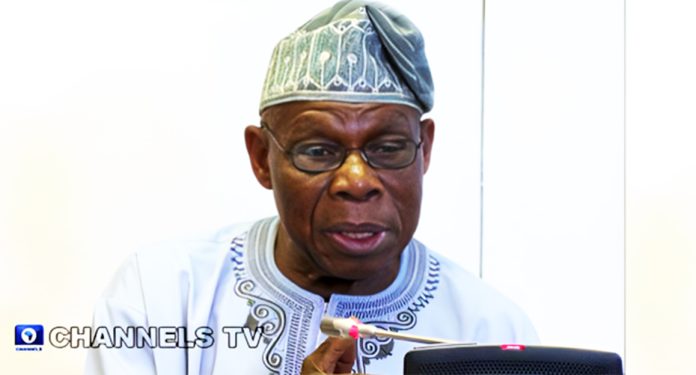
Former President Olusegun Obasanjo has advised African nations to re-examine the democracy inherited from the West. Obasanjo said Africa must build a model of democracy that is true to the African heritage and that caters for the welfare of the people.

He said this at a Summit on the State of Democracy in Africa held at the Yar’adua Centre in Abuja on Wednesday.

The former Nigerian President, who was a keynote speaker at the summit, advocated for a democracy that works for all.

He also charged African leaders to show an unwavering commitment to the welfare of the people.

Obasanjo said for democracy to be effective in Nigeria and Africa as a whole, it must be built on the principles of good leadership, strong institutions and rule of law.

He defined Democracy as a Government by the people’s consent, with clean mandate of the people, without corruption and for the welfare of the masses

The Summit is convened by Olusegun Obasanjo Presidential Library and Shehu Musa Yar’adua Foundation with sponsorship from Ford Foundation and Trust Africa.

The summit focused on the gains and challenges as well as threats to democracy in Africa.

Credit: channelstv.com

I will revive TOR

0
Former President John Dramani Mahama

John Dramani Mahama says the next government of the NDC will breathe a new life into the Tema Oil Refinery (TOR) through a joint private-public partnership.

Ghana’s troubled refinery, since 2017, when President Akufo-Addo assumed office, has had six different Managing Directors, with the hope of turning around the refinery, but none has succeeded.
At a meeting with players in the petroleum downstream sector in Accra, John Mahama said TOR would be given full attention under his next administration.

He said “We need to look again at how we can bring the refinery back in place. But I do think that the problems we have with running that refinery is because it is a state-owned enterprise.

“And we all know the inefficiencies that go with state-owned enterprises. So we are open to private partnership in terms of bringing that refinery back into operation and running it, but we think that whatever private partnership or private participation is invited, it must come through a transparent process.”
The ‘new’ TOR, he said would only be possible should Ghanaians vote for him and his party when they go to the polls on December 7, this year.

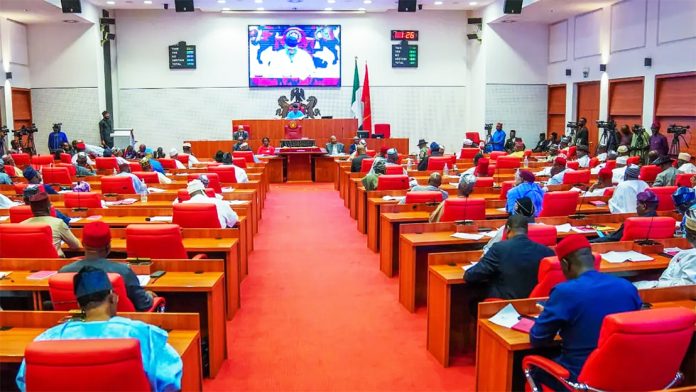
Senate probes Bayelsa explosion

0
Nigerian Senate

The Senate has constituted an ad hoc committee to investigate the recent explosion near the Gbarain-Ubie gas processing facility in Yenagoa, Bayelsa State.

This followed the adoption of a motion at plenary on Wednesday on the need for urgent action on massive explosion close to Gbarain-Ubie gas processing facility in Yenagoa, Bayelsa by Sen. Benson Konbowei (PDP- Bayelsa).NAN reports

Konbowei in his presentation, said the Gbarain-Ubie gas processing facility was one of the most valuable gas projects in Nigeria having cost multiples of billions of dollars to build. He said the plant had the capacity to process about two billion standard cubic feet of gas daily.

“The facility supplies gas to the Bonny terminal for export and is a big source of foreign exchange earnings for Nigeria, hence an important employer of labour,” he said.

The lawmaker said there were huge explosions from a crude oil pipeline on May 14 resulting in an inferno in the vicinity of the gas facility.

This, he said constituted a threat to safety of the facility, saying that it was a precious national economic asset.

“Observed that the explosions caused widespread panic among residents of the community where the explosion occurred.

“Concerned that this inferno resulted in the pumping of huge volumes of poisonous gaseous substances into the atmosphere resulting in massive pollution of the environment, with adverse impact on the health of the people within the vicinity.”

He said that the environment had been heavily polluted with impurities, which can cause difficulty in breathing, damage to the lungs and high risk for asthma patients.

He also expressed concern that the cause of the explosions was unknown, creating an atmosphere of suspense and uncertainty.

Sen. Diket Plang (APC-Plateau) urged companies involved in oil and gas explorations to endeavour to conduct Environmental Impact Assessment (EIA ) before embarking on explorations, saying that inhaling of carbon dioxide was dangerous to health.

Other lawmakers, who supported the motion included, Senators Seriake Dickson (PDP-Bayelsa) and Etang Williams, (APC- Cross River), who seconded the motion.

The Senate in its further resolution called on government to adopt measures for the protection of the environment from degradation and also called on operators of the pipeline to provide medical assistance and relief materials to the people affected by the pollution.

Credit: dailypost.ng

Police seize smuggled textiles worth GH¢500k in Kumasi

0
The seized items parked in front of the Ashanti Regional Police Command.

The Ashanti regional Police Command stormed the New Kumasi Market (Dubai) and seized textiles worth GH¢500,000 believed to have been smuggled into the country.

The operation, The Chronicle gathered, was conducted following a suspicion of intellectual property theft of Ghanaian textiles designs by some traders.

Information available to this paper has it that, these traders do not pay taxes, since their wares are unapproved.

Led by the police and officials of some personnel of textile companies, the security officers seized the textiles on grounds that the goods had some designs belonging to textile companies.

The development has rankled traders in Dubai to protest by closing their shops.

Textiles dealers at the New Kejetia Market (Dubai)closes down their shops to demonstrate against the police over the seizure of their wares.

They accused   the Ghana Police Service and some textile companies in the country of harassment.

The aggrieved traders argued that one Kia truck loaded with textiles have been impounded by the officials for committing no offense

Addressing the media, the Queen Mother for Cloth Sellers atKejetia, who doubles as the Chairperson for Ashanti Regional Cloth Sellers Association, Nana Yaa Boadu, said they have committed no offense in selling such products.

According to Yaa Boaduwaa, the clothes in question go through all the necessary documentations at the port, adding that she finds it difficult to comprehend what the police are doing.

Quizzed about want they intend to do about the seizure of their goods, she said the traders would embark on massive demonstration against authorities in the region, over the way they are being harassed.

Speaking to the Director of Sales at the Textiles Ghana Limited, which owes the trademark Ghana Textiles Printing (GTP)), Mr. Emmanuel Kissi, he confirmed the development, but indicated that they have no hand in what happened in Kumasi.

He, however, welcomed the seizure, emphasising that it is a good thing that was done because it is one of the things that “we have been hammering on this year that we want to see, how we can stop this menace in the trade.”

Kissi acknowledged the challenges fake textiles pose to Ghanaian textiles industry, stating “It is true that the textile industry is going through quite a number of challenges and the smuggling from other places being one of them.”

According to Emmanuel Kissi, they have done a number of educations in Accra and Kumasi, telling the market women to stop selling fake products since it is illegal.

“The designs that we produce are more or less done by ourselves. What happens is that we make the designs, but they are able to replicate that same design and sell them; I mean they put another label on it and sell as if it was theirs’

The most terrible one is that they are actually able to replicate the same thing like GTP and purport to put a GTP label on it as if it is coming from us and also go and sell.”

The Ghanaian Chronicle