Home Blog Page 1356

Pressure on Biden to let US weapons strike Russia

0
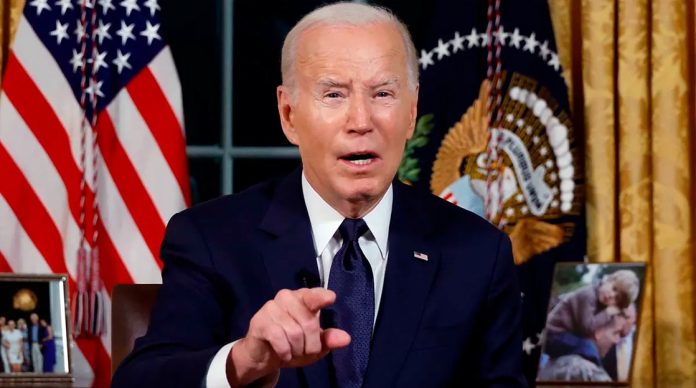
US President Joe Biden

Pressure is growing on US President Joe Biden to allow Ukraine to use West-supplied weapons to strike Russian territory. A number of US allies this week signalled they were open to this possibility, after months of concern about escalation.

Russia’s Vladimir Putin has warned of “serious consequences”, especially for what he called “small countries” in Europe. On Wednesday, US Secretary of State Antony Blinken said Washington’s stance on the matter would “adapt and adjust” based on changing battlefield conditions. He is currently in the Czech capital, Prague, for a meeting of Nato foreign ministers.

White House national security spokesman John Kirby said late on Wednesday that even though US support for Kyiv had evolved, “right now, there’s also no change to our policy”.

Ukraine has been struggling to counter a Russian offensive in the east of the country, while the city of Kharkiv has suffered weeks of deadly attacks, often launched by Russia from military outposts near the Ukrainian border.

Mr Blinken’s statement, during a trip to Europe, followed more direct comments made earlier this week by France’s President Emmanuel Macron, who said Ukraine should be “allowed” to use weapons supplied by the West against military sites on Russian territory – although strictly not on civilian targets. Mr Macron has for some time advocated for more direct intervention in the Ukraine war – but other Western leaders also appear to be softening to the idea.

Credit: bbc.com

What Is Hyperpigmentation, And What Can I Do About It?

0

Have you ever gotten rid of a pesky acne pimple but found yourself with a constant reminder in the form of a stubborn dark mark? Or have you recovered from a blistering burn courtesy of your curling iron or oven, only to be left with a lingering brown patch that never seems to fade? Perhaps you’ve been wondering about those feathery brown patches on your cheeks that get worse during the summer.

If any of those scenarios sound familiar, then you, like me, have been personally victimized by hyperpigmentation.

What Is Hyperpigmentation?

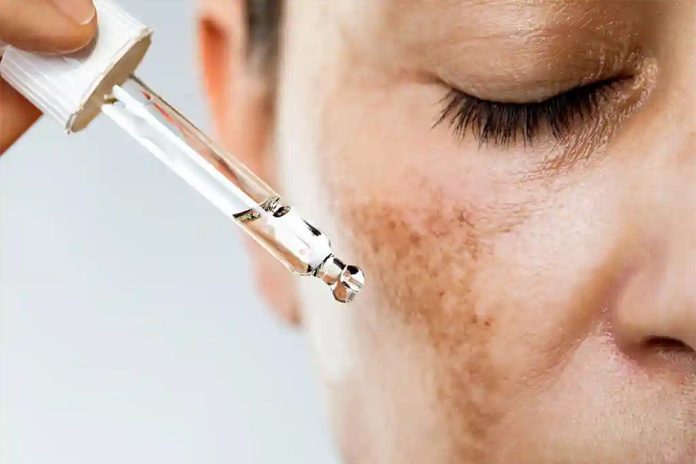
Hyperpigmentation refers to excess pigment within the skin, causing certain areas to appear darker due to an increase in melanin production. Melanin is responsible for our unique eye, skin, and hair color. Quick skin biology lesson: Skin color is determined by the activity of melanocytes, which are specialized cells responsible for producing pigment within melanosomes. Those with dark skin tones have larger melanosomes, which contain more melanin pigment relative to people with lighter skin. Melanin serves important functions in our bodies, such as absorbing harmful UV rays and protecting our cells from sun damage.

Although we recognize melanin’s critical role, we certainly don’t appreciate it too much and irregularly dispersed melanin deposition in our skin – also known as hyperpigmentation. Unfortunately, this is a very common skin concern that can have a huge psychological impact and negatively affect your quality of life.

What Are Common Causes of Hyperpigmentation?

There are many complex disorders of hyperpigmentation, but for now, let’s focus on the most common ones:

Post-inflammatory hyperpigmentation

Post-inflammatory hyperpigmentation (PIH) is most often seen in darkly pigmented skin. Not only is it more common in darker skin, but it tends to be more severe and last longer.

PIH develops after inflammation or injury to the skin. Examples include acne, bug bites, cuts and scrapes, and chronic skin conditions such as psoriasis and eczema. PIH is exacerbated by ongoing inflammation, so the number one rule in treating PIH is to treat the underlying problem.

Melasma

Another common cause of hyperpigmentation is melasma, a chronic, relapsing condition mainly driven by two things: sun exposure and hormones. It is most common in adult females and causes tan patches to appear in sun-exposed areas of the face (cheeks, temples, upper lip, forehead).

It is associated with states of elevated estrogen – most commonly in women on birth control pills and women who are pregnant. For this reason, it is nicknamed the “mask of pregnancy.”

Photoaging (sun spots)

Photoaging refers to skin findings that occur due to cumulative exposure to sunlight – namely wrinkles, sun spots, and loss of skin elasticity. Sun spots, or solar lentigines, go by a variety of names: liver spots, age spots, and senile lentigos. (Probably my least favorite of the nicknames!) They are most commonly in people with chronically sun-damaged skin. These round, oval, or irregularly shaped flat spots can be tan, light brown, or dark brown and are found on sun-exposed body parts.

How Is Hyperpigmentation Treated?

There are two common principles when it comes to treating most forms of hyperpigmentation: sun protection and patience. While PIH generally resolves over time, fading dark marks from the various causes can take weeks, months, or even years.

PIH, melasma, photoaging, and most other causes of hyperpigmentation are all exacerbated by ultraviolet (UV) exposure. If you are bothered by dark spots and are investing your time and money into fancy creams, lasers, and chemical peels, please don’t skip the sunscreen. A broad-spectrum (UVA and UVB) sunscreen with a minimum SPF of 30 should be worn when spending time outdoors; with prolonged exposure, don’t forget to reapply every 2 hours.

Aside from sun protection, there are a variety of therapies available to help speed up the resolution of hyperpigmentation. A combination approach employing both topicals and procedures might be the most effective.

Topicals used to treat hyperpigmentation include:

  • Hydroquinone
  • Retinoids
  • Azelaic acid
  • Cysteamine
  • Tranexamic acid
  • Vitamin C
  • Niacinamide
  • Kojic acid
  • Alpha/beta hydroxy acids (glycolic acid, lactic acid, mandelic acid, salicylic acid)

Procedures used to treat hyperpigmentation include:

  • Chemical peels
  • Intense pulsed light (IPL)
  • Microneedling
  • Laser
  • Dermabrasion

It is important to note that treatment – especially when it comes to devices – is not

one-size-fits-all and may vary by the specific underlying cause. Additionally, though many topicals are easily found on the shelves of your local store or online, some require a prescription. You may need to talk to an expert to determine which devices are safe for your skin type and whether you would benefit from prescription-strength management of your condition.

Source: webmd.com

Editorial: Why Our Chiefs Should Be Searched By Police, GIS

0
Editorial

On April 24, this year, the state owned Daily Graphic reported that some paramount chiefs constituting the Volta Regional House of Chiefs (VRHC) had bitterly complained about harassment and bullying at the hands of personnel of the Ghana Immigration Service (GIS) in recent times at the Sogakope and Asikuma inland checkpoints in the Volta and Eastern regions respectively.

The paper mentioned names of the complaining  paramount Chiefs as Amugo-Vego, Togbi Tenge Dzokoto Gligui VII; Paramount Chief of Tefle, Togbe Dugbaza VIII and Paramount Chief of Akoefe, Togbe Drake Tsigbe IV.

According to the Graphic report, the first to express his misgivings when the house met the Minister for Chieftaincy Affairs was Togbi Gligui. He cited an instance on Easter Monday, this year, when he was travelling with three of his brothers, three children and his sister from Anyako to Accra on his mini van, which he was driving with a bold inscription, “Amugo-Vego Traditional Authority (North Anlo).”

Togbi Gligui, who is also Dufia of Anyako and Head of the Anlo-Bate Clan said on reaching  Sogakope in-land checkpoint by the Sogakope Bridge, the GIS personnel signalled him to stop. He obeyed and rolled down the glass.

He said although he was in his full regalia and royal headgear, the GIS personnel insisted the back door of the van be opened for them to conduct a search and one of his children swiftly carried out that order.

As if that was not enough, the paramount chief said the GIS personnel demanded to see his passport as proof of his Ghanaian nationality. “At this juncture, I got out of the vehicle and insisted on meeting the officer in charge at the checkpoint, before they told me rudely to go,” he added.
In the case of Togbe Dugbaza, he said anytime he was commuting from Tefle to Sogakope, he was stopped and grilled over his identity while in his royal gear, adding that he found it demeaning to his status as a paramount chief of the area.

Because of our culture and tradition, which we have practiced for centuries, chiefs are highly revered in this country. It was, therefore, a complete disrespect for the GIS officials to have asked the chief to produce his passport. We stand to be corrected, but we do not think there is any law that states that Ghanaians should carry their passports along whilst traveling within the country.

In our view therefore, the said GIS officials should have been fished out to explain why he was asking the chief to produce his passport. As the chief himself pointed out to the Chieftaincy Minister, the conduct of the immigration officer to the extent of rudely asking him to go when he decided to challenge him for asking for his passport was a complete show of disrespect to a chief.

We do not, however, think the immigration officer erred when he stopped the chief and asked him to open the trunk of his car. The basis for our argument is the recent arrest of the driver driving a Toyota Hiace belonging to the Anlo Traditional Council.

Though Anlo Traditional Council had boldly been written on the mini bus, the driver was still using it to smuggle cocoa to Togo, but was fortunately arrested at the Adomi-Bridge after a hot chase by the police.

Cocoa is the backbone of our national economy, but unfortunately, unscrupulous characters have been smuggling the commodity to our neighbouring countries without looking at the economic implications. In this case we have just mentioned, if the police had given respect to the minis bus because it belongs to the Anlo Traditional Council, the smugglers would have succeeded in achieving their aim.

In the advanced countries such as USA, Germany and Britain among others, security personnel have no respect for individuals when it comes to enforcement of the law. Unfortunately and as we alluded to earlier, because of the respect we have for our chiefs, the laws are sometimes relaxed for them.

Regrettably, some of them are trying to take advantage of the respect society have for them by abusing the law. We must admit though that the Anlo Traditional Council did not certainly sanction the driver to smuggle cocoa with their mini bus to Togo.

It is, therefore, the hope of The Chronicle that the law will deal ruthlessly with the erring driver when fund guilty to serve as deterrent to others.

The case we are referencing should also serve as a wakeup call for the security agencies to show respect to our revered chiefs, but not compromising on what the law mandates them to do. Another area the police should also focus their attention on is those driving the Landcruisers.

The respect for them is too much and they can take advantage of the situation to also abuse the law, as the driver of the Anlo Traditional Council has done.

The Bartimeus Brand

0
Dr. Joyce Rosalind Aryee, Executive Director, Salt and Light Ministries

When he heard that it was Jesus of Nazareth, he began to shout, Jesus, Son of David, have mercy on me! – Mark 10:47 – NIV

INTRODUCTION

Each one of us has a personal brand, something that we’re well known or noted for, whether we know it or not. Our personal brand may be reflected by the unique way in which we style our hair, the way we laugh or even the way we speak. Regardless of our personal brand, sometimes we must break the status quo in order to be heard or noticed.

At other times, we simply need to make a nuisance of ourselves if we want something badly enough. These statements may sound extreme especially if we’ve never been in the shoes of Bartimeus, the blind man mentioned in the Bible.

Bartimeus Brand!

  • Blind Bartimeus, as many in Christendom know him, was at his usual spot doing his usual thing when he heard a large crowd passing by. Let’s take note of this: Bartimeus was blind but he was not deaf. He was blind but he was not mute or lame or deficient in any of his other senses. He could not see what was happening but his other senses were working sufficiently well enough for him to be able to detect the smells and sounds of several people walking past. He must have been curious about this unusual occurrence in his otherwise routine lifestyle. And so he enquired about what was happening and was told that Jesus of Nazareth was passing by.
  • Bartimeus must have thought to himself: ‘Jesus of Nazareth passing by my doorstep today?? This opportunity is too good to be true. I’m not passing it up for anything. I’ve waited all my life to see and if this Man is truly who they say He is, I’m going to give it all I’ve got if that is going to get my sight restored.’ Without thinking much about it, Bartimeus began to cry out ‘Jesus, Son of David, have mercy on me!’ And when those around him tried to hush his cries, we’re told that he cried out even harder (Mark 10:48). This reaction must have annoyed and even embarrassed those around him. You and I know this thing about human nature – how we try to comport ourselves well in the presence of those we revere and admire, to the extent that we want to dissociate with anything or anyone that seems out of place, undignified or unrefined.
  • And here we are with Bartimeus whose brand was already unsavoury: the blind beggar brand. To make matters worse, this blind beggar was now hollering like a lunatic, like a very uncivilized person and he wasn’t ready to stop until he got the attention he needed. And truly, his hoarse, unrefined, and unapologetic shouts did not go unheeded. Jesus Christ heard him and paid attention to him.

God’s Mercy

  • If you’ve never been in a desperate situation, you may never understand what Bartimeus did. When the odds are against us, when the situation looks and is impossible, when we are faced with the reality that something we need is completely out of our reach, we will understand the need for God’s mercy. When we cry out for God’s mercy, what we’re saying is this: God do not deal with me according to my foolishness and my sins. God intervene for me even though I know I don’t deserve this. God, make a way for me because I’ve tried every option I know and it only brought me to a dead end. God, this is the last chance I have for restitution and only You have the power to restore me. When we cry out for God’s mercy, we are confessing that He alone has the power to overthrow and nullify judgements, decisions, and rulings that work against us. We are admitting that without Him, we cannot make it through the darkness of the insecurity and limitations that life has thrust upon us.
  • Often, we do not know how much of God’s mercy we need until we actually need it. It takes a certain situation, a peculiar and unprecedented one to bring us to the realization that we need God’s mercy. When we are confronted with the reality of mortality, we realize our need for God’s mercy. When we are faced with the brevity of time, we realize that we need God’s mercy to fulfill our purpose and calling in Christ on time before we are called home to glory. When we witness the sudden relapse or rapid physical deterioration of someone who was once so full of strength, we recognize our need for God’s mercy so that we don’t suffer the same fate. When we realize how much we’ve messed up, how steeped we are in sin, we need no one to tell us that we need God’s mercy.
  • A genuine cry for mercy is never glamourous, never refined. We cry out for mercy from the depths of our heart, in raw anguish, because we see ourselves face to face with the reality of our wretchedness, our helplessness, our limitations. In crying out for mercy, we see no one except God. The sentiments and pointing fingers of the crowd do not matter – we’re pressing in to see God and that’s all that matters. In crying out for mercy, we are quick to put aside our brand no matter how impressive or luxurious it may be. Mark 10:50 tells us that when Jesus Christ asked Bartimaeus to come, he (Bartimeus) cast aside his garment and stepped forward to move towards the Messiah.

We do not know what Bartimeus’ garment looked like but what we all know for sure is this: a garment is used as a covering over the body. Whether his was black or white, washed or unwashed, smelly or fragrant, it was his garment. It was this garment that had been covering him until Jesus Christ called him over. Bartimeus’ garment was like his brand – it was synonymous with who he was and what he did. It was the garment of a blind beggar.

CONCLUSION

To God be the glory that when we call to Him for mercy, He does not first consider the type of garment that we’re wearing. He is not bothered by the nuisance we make of ourselves just to get His attention. As many times as we need and ask for His mercy, His promises remain true:

The steadfast love of the Lord never ceases His mercies are new every morning’ (Lamentations 3:22-23)

‘…. mercy triumphs over judgement’ (James 2:13)

‘Call unto me and I will answer and show you great and marvelous things’ (Jeremiah 33:3)

‘… He is also able to save to the uttermost those who come to God through Him’ (Hebrews 7:25)

Wherever we are today, may we refuse to be restrained and constrained by the crowds surrounding us. May we be bold enough to defy the expectations and regulations of the status quo – if in doing so, our cry of mercy will be heard by the Lord our God.

May we be liberated from the limitations of our personal brand for a moment, (the brand of refinement, the brand of composure, the brand of self-sufficiency, etc) so that we can cry out for God’s mercy whether in the solitude of our rooms or in the full glare of the public.

As for God, His ways are mercy and truth with those who keep His covenant and His testimonies (Psalm 25:10). And all His promises to us are yes and amen in Christ Jesus. He will hear our sincere cries for mercy and He will answer us. Selah.

  • Authored by: Hannah Arabella for Salt & Light Ministries

                                                                                            Stay blessed!

Please continue to join us on

Asempa 94.7 FM- Sundays 5:30 am, Sunny 88.7 FM – Tuesdays 5:30 am; and Y FM 107.9-Sundays 6.30 am; for our Radio Bible Study as well as Sunny FM 88.7 FM every Sunday at 3:30 pm, for Hymns and their stories.

Reviving Ghana’s Cleanliness: A Call To Action For Citizens And Authorities

0
Wisdom Koudjo Klu, the writer

Indiscipline has taken root in the attitudes of many Ghanaian citizens, leading to a drastic decline in the “Keep Ghana Clean” campaign. Our gutters and neighbourhoods are now engulfed in filth. It’s time to address this urgent issue. Mother Ghana is watching us, and she sees how dirty we have become as a people.

Why can’t Ghana emulate a country like Rwanda? What has gone wrong? It’s not everything that we should blame our president for; we must work on our attitudes as citizens, and law enforcement authorities must wake up. Our country is in a mess.

This mess is not just a superficial one; it runs deep into the fabric of our society. The accumulation of waste in public spaces is symptomatic of a broader issue of neglect and indifference. This indiscipline is evident in how we treat our environment, from the streets of Accra to the smallest villages. The sight of overflowing bins, plastic bags strewn across markets, and clogged drainage systems has become alarmingly common. Such conditions are not only unsightly but also create breeding grounds for pests and diseases, jeopardizing public health.

  • Lack of Civic Responsibility

There is a decline in civic duty among citizens. Improper waste disposal is rampant, with little regard for the environment. Many individuals see waste management as solely the government’s responsibility, not recognizing their role in maintaining cleanliness. This attitude is due to a lack of public education on environmental stewardship and the consequences of poor waste management. The disconnect between individual actions and their cumulative impact leads to widespread apathy.

  • Inadequate Infrastructure

Waste management infrastructure has not kept pace with population growth and urbanization. Insufficient waste bins, irregular collection services, and poorly maintained drainage systems worsen the problem. In urban areas, waste collection is often sporadic, leading residents to improper disposal methods. Rural areas face greater challenges with limited access to services and facilities. The lack of recycling facilities and programs further hampers sustainable waste management.

  • Weak Enforcement of Sanitation Laws

Sanitation laws are not adequately enforced. People often flout regulations, knowing penalties are rarely applied. Enforcement agencies lack the resources and support needed to carry out their duties effectively. Corruption and bureaucratic inefficiencies undermine law enforcement, leading to minimal consequences for violators. This lack of accountability creates an environment where littering and illegal dumping become norm6alized behaviours.

  • Public Apathy

A general sense of apathy prevails among the populace. Many do not see the immediate benefits of cleanliness, lacking motivation to change behaviour. This apathy is due to a lack of awareness about the long-term impacts of environmental degradation. The overwhelming scale of the problem leads to feelings of helplessness, where individuals believe their efforts won’t make a significant difference. Overcoming apathy requires raising awareness, educating the public, and fostering collective responsibility.

Lessons from Rwanda

 Rwanda offers a compelling example of how a nation can transform its cleanliness standards. Once plagued by similar issues, Rwanda is now renowned for its clean streets and orderly urban environments. This transformation can be attributed to several key strategies:

Rwanda’s success in environmental cleanliness is due to:

  • Strong Political Will and Leadership: Under President Paul Kagame, the government has shown a firm commitment to environmental cleanliness, setting a strong example and backing policies with necessary infrastructure and resources.
  • Community Participation: The monthly Umuganda program requires all able-bodied citizens to participate in communal cleaning activities, fostering collective responsibility, social cohesion, and community engagement with local leaders.
  • Strict Enforcement of Laws: Rwanda rigorously enforces sanitation laws with heavy fines and penalties for non-compliance. Well-equipped enforcement agencies and a comprehensive legal framework ensure effective waste management and public discipline.

Steps Ghana Can Take

To address the decline in cleanliness standards, Ghana can adopt strategies inspired by Rwanda’s success:

  • Revitalize Political Commitment: Leaders should prioritize cleanliness and environmental health through policies, budget allocations, and public involvement, demonstrating the importance of a clean environment to inspire nationwide action.
  • Promote Civic Responsibility: Intensify educational campaigns to instil a sense of civic duty from a young age. Schools, community groups, and influencers should advocate for cleanliness, and public recognition should be given to those who demonstrate outstanding commitment.
  • Enhance Infrastructure: Invest in robust waste management infrastructure, including waste bins, regular collection services, and modern technologies like recycling facilities. Public-private partnerships and sustainable urban planning are also essential.
  • Strengthen Law Enforcement: Enforce sanitation laws strictly with trained law enforcement agencies, significant penalties, specialized environmental courts, and measures to ensure transparency, accountability, and combat corruption.

The Role of Citizens

While government initiatives are crucial, the responsibility also lies with the citizens. It’s not enough to wait for directives from above; we must take personal responsibility for our surroundings. Simple actions, such as properly disposing of waste, participating in community clean-up efforts, and educating others about the importance of cleanliness, can make a significant difference. Every individual has a role to play in maintaining a clean environment, and small actions, when multiplied across the population, can lead to substantial positive change.

Cultivating a culture of cleanliness begins with education and awareness. Parents and schools should teach children from a young age about the importance of environmental stewardship and responsible waste disposal. Community leaders and influencers can use their platforms to advocate for cleanliness and model responsible behaviour. Media campaigns can highlight the impact of littering and pollution on health, the economy, and the environment, making the case for why everyone should care about maintaining a clean Ghana.

Highlighting these successes in the media can inspire a broader cultural shift towards valuing and prioritizing environmental cleanliness. Awards and incentives can be given to neighbourhoods that consistently maintain cleanliness, creating healthy competition and encouraging more communities to join the effort.

Conclusion

The current state of cleanliness in Ghana is a pressing issue that demands immediate and sustained action. By drawing lessons from Rwanda and implementing a multifaceted approach, we can restore the effectiveness of the “Keep Ghana Clean” campaign. This requires the concerted efforts of the government, communities, and individual citizens.

Mother Ghana is watching us, and it is our duty to rise to the challenge, clean our neighbourhoods, and take pride in our beautiful nation once again. It is time to act, for the health of our people and the legacy we leave for future generations.

Wisdom Koudjo Klu,

Educationist/Columnist,

Greater Accra Region.

wisdomklu@gmail.com

Editor’s note: Views expressed in this article do not represent that of The Chronicle

Feature: First Independent After Independence

0
Feature

Sixty-seven years gone and counting, after this country gain her independence. For a government of the people, the method of choosing the leaders of the nation is by popular voting. Those interested in that task had to belong to political parties, as the vehicle to attain power. The guide is the supreme law of the land called the Constitution.

Political rule was the rule of law. And of course it was, as well demonstrated during the first republic, where obnoxious laws were made that sought to entrench the rule of the party in power which was led by the head of state in the person of Dr. Kwame Nkrumah.

In 1966, the first government of the people was removed by force of arms, to liberate the people and the country moved from civilian dictatorship and take them to military dictatorship.

The civilians came back in 1969, with a galaxy of political parties led by chosen individuals contesting for power. Some absolute form of rule of law was installed until the military came back in 1972 to redeem the people. Enjoying some power, which could not have been the case in the military barracks, the leaders of the nation showed how supreme they were and demonstrated their intention to rule for life, until they did some musical chairs and later accepted that governance is for the people.

Just before starting the process of restoring the country back to the civilians through popular votes, in 1979, the junior ranks felt they must also be acknowledged. They came from the back to the front, led by a certainlost but found British governor, to revolutionise the process and also be accepted as humans, even if for just three months.

All the same, the process of choosing a civilian leadership took effect with the political parties, again, putting forward their best in a political pageant, to be selected. In 1979, the civilians were back, but for a short time, as the other ranks in the armed forces, returned in 1981 with a bang, promising that their stay was going to be very provisional.

The longest stay in power after independence came to be because if Ghanaians thought that the word provisional meant temporal, then they came to realise that in the military it could mean perpetual. After bastardising politicians and political parties, Ghana’s last British governor would not go but did some strip tease by removing his military garment and wore mufti to contest and win elections to lead the country for a mandatory eight years.

All along the system of selection through the ballot box, some individuals contested for seats for parliament, independently without support from a political party.

In 1956, Rev. Francis Richard Ametowobla was an independent MP. In 1969, Henry Sawyer of Osu Klottey, went to parliament on independent ticket.In 1979, Kwadwo Owusu-Sekyere of Sunyani did the same. In 1992, Gladys Abena Nsowah of Kintampo and Hawa Yakubu of Bawku Central went to parliament as independent MPs.In 2000, Boniface Siddique of Salaga; Joseph Akudibila of Garu/Tempane; Rashid Bawa of Akan and Victor Gbeho of Anlo got into parliament on independent tickets.

2004 saw Joseph Yaani Labik of Bunkpurugu/Yunyoo joining parliament as an independent MP; 2008 came with four independent MPs, namely Joseph Osei-Owusu (Bekwai), Edward Ofori-Kuragu (Bosme Freho), Seth Adjei Baah (Nkawkaw) and SaaniIddi (Wulensi).

In 2012 at least three independent MPs got into Parliament, Alhasan Dahamani (Tamale North), Paul Deriguba (Jirapa) and Joseph Kwadwo Ofori (Akan). 2016 saw no independent MP and then in 2020. The people ofFomenain Ashanti returned their MP, Andrew Asiamah to Parliament, but this time as an independent MP.

One thing that must be noted and I stand to be corrected is that the independent MPs were once active members and even former MPs of one political party or the other. And that was where they pulled their votes from.

For the presidential, a host of politicians attempted coming on board to be elected, but so far this has not been successful. For the 2024 General Elections, two fine gentlemen, Alan Kyeremanten and Nana Kwame Bediako have resolved to make the difference by becoming the first elected independent president after independence.

Alan’s association with the New Patriotic Party (NPP) and his great contribution to party, government and nation makes him a very serious contender in the race for the president. And because most or all the independent MPs were once active in some political parties, and Alan had also been a party guru, fortune seems to smile on his efforts. Nana Bediako on the other hand came onboard with no political party base to draw support from.

Many people have given reasons why Alan may not win the elections, but they sound more of academic argument, because the ground is showing a different picture. One point of reference is the recent bye-election at Ejisu. A former MP, Aduomi, who felt disappointed with his NPP, decided to join three others to run independent.

Coming from a more solid base, he caused a scare when he polled 43% of the votes to place second. And this was the first time in Ejisu that an NPP candidate polled less that 70% of the votes. If Alan, also coming from a strong political background, would come second in Ashanti in 2024, with 40% of the votes, then the overall presidential results will be interesting.

This is what the political technocrats and gurus must seriously be looking at before drawing conclusions. At any rate, the ground seems to be turning towards Alan as his popularity base keeps growing. His articulate views on how to make the economy work, which I will look at in my next write-up, are looking more as practical solutions than mere political talk.

What will happen if an independent candidate becomes president? If that should happen, we are going to first and foremost have a union government. Should Alan win the 2024 presidential election, he is mandated to appoint at least 51% of his ministers/deputy ministers from Parliament. He will enter the House and not look at party faithful, because he has no party, to have MPs. He will look at only those who he believes can deliver and pick from either side.

Can we imagine, just for once, a cabinet of ministers made up of Haruna Iddrisu, Sam George, Kwaku Kwarteng, Abena Asare and Okoe Boye among others sitting together at table, this time not arguing about who is right and who is wrong, but collectively bringing their expertise on board to come out with only good things for government and country?

The regional ministers will not be saddled with appointing fellow party members into positions they may not fit in, but for the sake of staying on the job. They will only go for the right ones. One thing here is that, when any minister, which includes the regional ones, is failing, they will not have godparents to plead with the president for them.

A minister or government appointee’s stay in office will depend solely on how well he performs. Once any one fails to produce results, he or she is out. There will be no party guru to convince the president that this one should be considered, especially where the president will need their support to go a second term.

This will fizzle down to all appointments made, as every appointee will know there is no rock to lean on when things do not go well in their performance of duty. What they should do is to make sure they always do the right thing.

One thing also. If any of Alan’s appointees wants to create an impact for himself in his political party, he would have to work so well to gain admiration from all Ghanaians. This will enhance his position in his party so that just in case he also wants to be president one day, the party will elect him at the primaries.

It is early days yet, to see where the pendulum is swinging to, but one can say that for political democracy to be enriched in Ghana, everyone must resolve to work harder and better without compromise. And this can be very possible if Ghana has her first independent president after independence.

Hon. Daniel Dugan

Fatau Dauda explains decision to select goalie Fredrick Asare

0
Goalkeeper Fredrick Asare

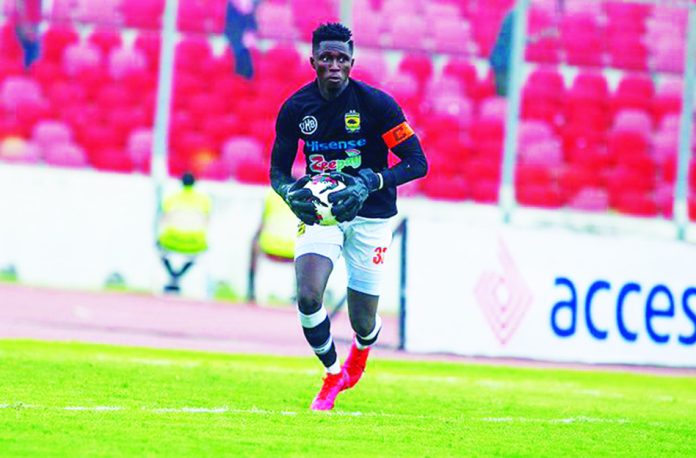
Black Stars goalkeepers trainer, Fatawu Dauda, insists there is no time to try no players, hence the inclusion of already tested Fredrick Asare in the Black Stars squad for the World Cup qualifiers against Mali and the Central African Republic. 

The Asante Kotoko goalkeeper was part of the Black Stars for the friendlies against Nigeria and Uganda in Morocco, despite not making an appearance.

Asare returned to the post for the Super Clash against Hearts of Oak after missing the game against Berekum Chelsea. His return was a huge boost for the Porcupine Warriors as they defeated their arch-rivals.

According to Dauda, he has a lot of goalkeepers he has been monitoring but Asare is the right man to join Lawrence Ati Zigi and Jojo Wollacot for the qualifiers.

“I have about five or six local goalkeepers in my books… but it’s about decision… We had 10 days in Morocco to prepare for those two matches… and we took them through a lot of tactics so the coach [Otto Addo] has a good idea about them,” he said.

“These are qualifying games and you can’t try a player now, the only time sometimes you can try a player is when you are going to play a friendly game, so I am very hopeful maybe another time when there’s a friendly match, we will give other goalkeepers chance to play.

“So these goalkeepers, I’ve been monitoring them both locally and foreign, they are in my books, I take data from them so we have a lot of goalkeepers who can play for the national team in the future.”

Credit: ghanasoccernet.com

Andre Ayew’s family accepts his exclusion from Ghana squad

0
Andre-Ayew

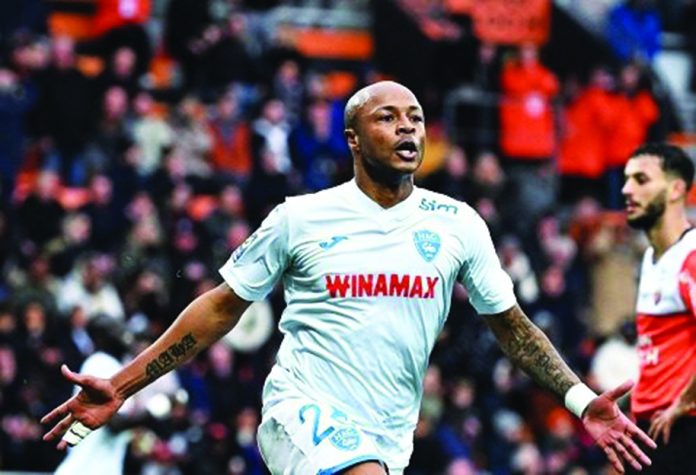
Solar Ayew, the uncle of Andre Ayew, has stated that the family is not surprised by the exclusion of the Black Stars captain from the squad and has accepted the decision in good faith.

Andre Ayew’s omission has dominated headlines following coach Otto Addo’s squad announcement for the upcoming 2026 World Cup qualifiers against Mali and the Central African Republic.

Ayew concluded the recent season on a high note, scoring crucial goals as Le Havre managed to avoid relegation from the French Ligue 1.

The former Dortmund talent coach revealed that he had a lengthy conversation with Ayew to communicate his decision.

Speaking on Asempa FM, Solar Ayew remarked, “We’ve taken Andre Ayew’s omission from the Black Stars squad normally. He was earning invites when he was unattached, so his omission will surprise not only me but everyone because he is at the top of his game now. This is normal for the Ayew family.”

“He has picked up his form, so maybe the coach has his reasons for not including him. I have been in the game for long, and I don’t think this is the normal thing to do.”

Despite the exclusion, Andre Ayew will undoubtedly support the team as they aim for victories against Mali and the Central African Republic to revive their World Cup qualification hopes. Ghana started the qualifiers with a disappointing three points from two games.

Ghana will face Mali on June 6 in Bamako, followed by a match against the Central African Republic on June 10 at the Baba Yara Stadium in Kumasi.

Credit: ghanasoccernet.com

Real Madrid clashes with Dortmund in the Champions League finals

0
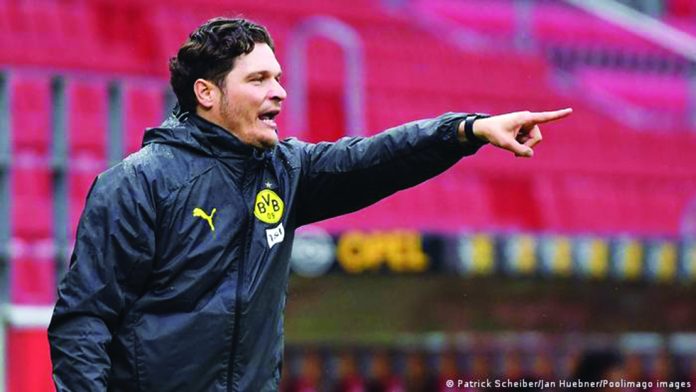
Edin Terzic

The scheduled match between Spanish giant Real Madrid and the pride of Germany Borussia Dortmund is set to take off tomorrow, Saturday June 1, 2024 at Wembley stadium, London. Los Blancos are the favourites as they are the leading team with most trophies in the competition.

Real Madrid is the most successful team in the history of the European Champions League, having won the tournament 14 times in 17 appearances in the final. If they beat Dortmund on Saturday, they’ll add to their massive title haul.

Real Madrid

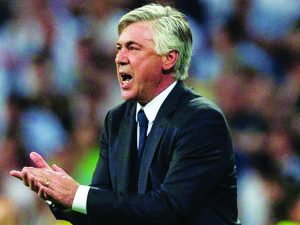
Ancelotti’s men astonishingly found a way to prevail against defending champions Manchester City – exacting revenge on their 2022-23 semi-final conquerors. The white angels went ahead into the semi’s and defeated German big boys Bayern Munich.

Carlo Ancelotti suffer, Real madrid

The first leg ended in a draw. Madrid were a goal down in the second leg and with 10 minutes to go they made a dramatic comeback to win 2-1, with brace from skipper Joselu.


Borussia Dortmund

Borussia Dortmund, known in their homeland as “die Schwarzgelben”, with regards to their traditional colours of black and yellow, are seeking their second European trophy since winning the trophy 27 years ago. Dortmund met Atletico Madrid in the round of 8. After losing to them in the first leg away from home, they returned home and made a comeback with goals from Julian Brandt, Ian Maatsen and Marcel Sabitzer saw them through to the semi’s.

Dortmund later met Paris Saint German where they won the first leg with just a goal, scored by Niclas Fullkrug in the 36th minute. They followed their first leg win with another one goal win scored by Mat Hummels, which saw them through to the finals.

Preview

Having losing the trophy to rivals Bayern Munich in 2013, they don’t want history to repeat itself. On Saturday, we expect no different. Last year’s final between Man City and Inter Milan was settled by a solitary goal, and lightning could strike twice in London, as Real Madrid reclaim their status as Europe’s top dogs.

By Jesse Otoo

Mahama’s Name Pops Up In A-G Dame Tape Saga

0
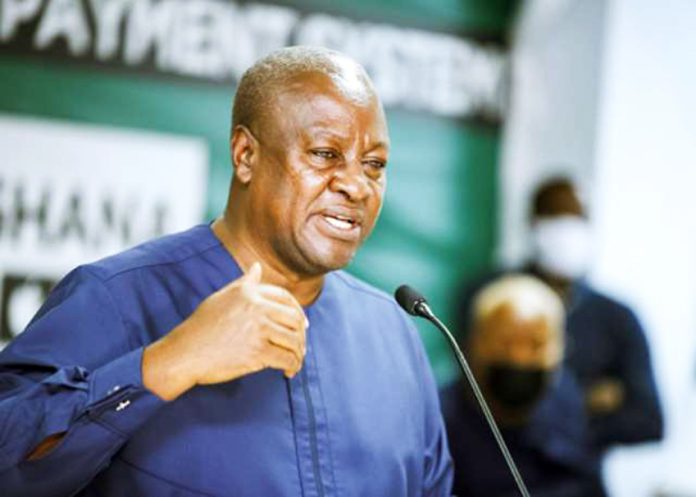
Former President John Dramani Mahama

The New Patriotic Party (NPP) has implicated former President John Dramani Mahama in the controversy surrounding the Dr Cassiel Ato Forson ambulance saga.

According to the NPP, the flagbearer of the opposition National Democratic Congress (NDC), demanded the discontinuance of the Ato Forson trial as a condition for the minority MPs to cooperate in Parliament, at the last emergency recall of the House.

“Pressure has come from every angle, including former President Mahama, the leadership of the minority in Parliament, clergy, business friends of Ato Forson, etc.

“Indeed, former President Mahama specifically maintained the discontinuance of the ambulance trial as a condition to get members of the minority in Parliament to agree to the recent recall of Parliament and has, on several other occasions, stated it as a condition for the cooperation of the minority in Parliament,” the NPP alleged.

Addressing a press conference on Tuesday, May 28, 2024 the chairman of the NPP’s legal and constitutional committee, Frank Davies, indicated that the NDC was hell bent on shielding its minority leader, Dr Cassiel Ato Forson.

FAITHFUL

The NPP has called on the NDC to stop jittering if they are convinced Dr Cassiel Ato Forson has no case to answer.

The NPP wants the NDC to remain faithful to the judicial system and “cease these malicious orchestrations targeted at bastardising our judicial system that prevent him from standing trial to conclusion.”

PERENNIAL DISLIKE

In the estimation of the NPP, the recent attack on the Attorney General by the NDC was the latest in a series of vile propaganda campaigns against Godfred Yeboah Dame.

While disagreeing with the NDC that the Ajumako/Eyan/Essian legislator, Ato Forson, was being persecuted, the NPP claimed that if there was any form of persecution, it was “the malicious and perennial dislike of the NDC towards the Attorney General since he assumed office and the several attempts to stultify his work.”

The NPP recalled that right from his appointment as Attorney General, the NDC had been on his neck, but Godfred Dame remained unfazed.

Frank Davies, speaking from the Asylum Down headquarters of the NPP, also recalled that the NDC filed a Motion for Censure to remove Godfred Dame from office as Attorney-General soon after his appointment, which failed.

The NPP claimed that their opponent had held 12 press conferences about Godfred Dame since his appointment.

The party argued that the latest allegation by Richard Jakpa, the third accused in the ambulance procurement transaction trial, is but a further ploy contrived to curtail the prosecution of Ato Forson and smear the Attorney General’s integrity and reputation.

The NPP was confident the latest ploy would not see the light of day. They believe that public officials, regardless of social standing must be equally accountable for their use of public resources, adding that the law is no respecter of persons.

DOCTORED 

The NPP’s press conference was a rebuttal to an earlier one by the NDC, on the same day.

The party argued that in respect of the 16-minute tape that the NDC played, there were “repetitions, overlaps, incoherence, voiceovers and distortions, demonstrating that the NDC has spent these past days doctoring whatever tape they played.

“Even on the doctored tape, the Attorney General never requested the witness falsify, fabricate, or concoct any evidence or testify in the prosecution’s favour,” the NPP argued.

RESIGN

However, the NPP said it was clear in its mind that the calls for the resignation of the Attorney General were misplaced and unwarranted.

The party has assured the NDC that the calls for Dame to resign would not stop the prosecution of Cassiel Ato Forson and his associates.

“The AG would not resign and would continue to remain witty, resolute, and focused in the delivery of his work,” the NPP said.

SUCCESS

The NPP highlighted what they described as the success record of the Attorney General, Godfred Yeboh Dame.

They said that in the 4th Republic, the current Attorney General has been one of the most successful both in and out of court.

The President, Nana Addo Dankwa Akufo-Adoo, said at the last State of the Nation’s Address that the AG had saved the state over GH¢10 trillion.

“This is beside the other several infrastructure and logistics improvements to the office of the Attorney General and Ministry of Justice, including the almost completed Law House,” Frank Davies said at the press conference Tuesday.

The Ghanaian Chronicle