Home Blog Page 1332

Afrobarometer report: Ghana’s Democracy Soars Among Peers …86% of voters say they exercise franchise in freedom

0
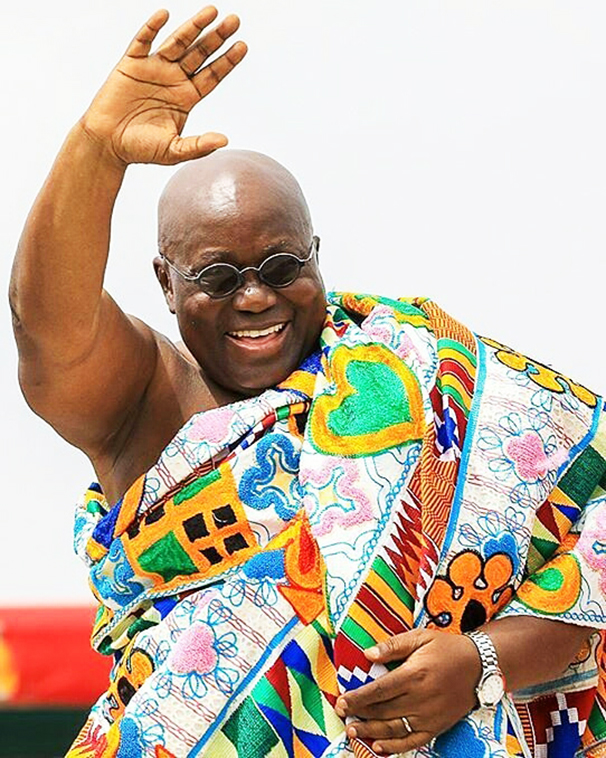
President Akufo Addo

The latest Afrobarometer report has revealed that 86% of Ghanaians say they vote freely without any pressure.However, 9% said they are somewhat free to exercise their franchise in Ghana. The data is contained in the Africa Insight 2024 report released by Afrobarometer.

The report comes at a time when Ghana is heading towards another general election this December. This will be the ninth general election since the beginning of 4th Republic in 1992.

Ghana was ranked sixth out of 39 countries that the survey covered from 2021 to 2023, with The Gambia, Zambia, Sierra Leone, Sao Tome and Principe, and Tanzania taking the top five positions respectively,with the highest mark at 92%.

Ghana’s neighbouring countries, Burkina Faso, Togo and Cote d’Ivoire scored 54%, 50% and 47% respectively, with Nigeria scoring 65%.

The report said that the quality of the election has taken centre stage in 2024, as it is a year packed with 23 national elections on the continent.

According to the report, 75% of Africans believe in elections as the best way to choose their leader, as more than six in ten citizens support elections in all surveyed countries.

Meanwhile, the report also observed a weakening support for elections, mentioning an 8% decline over the past decade.

Describing it as one of the troubling trends in popular commitment to democratic norms and practices, the report said the development may reflect some disillusionment after too many elections marred by low quality, disputes, and/or violence.

They also think that it could be due to the recognition that elections by themselves do not guarantee accountable governance or reliable public services.

“Citizens’ assessment of their most recent national elections as largely free and fair is down by 7 points since 2011/2013, from 66% to 59%.

And fewer than half of Africans think their countries’ elections ensure that members of Parliament (MPs) represent the views of voters (42%) or enable voters to remove leaders who fail to do what the people want (45%) (Figure 13).

Moreover, only four in 10 citizens (39%) say they trust their national electoral commission “somewhat” or “a lot,” while 57% express little or no trust,” the report said.

MILITARY RULE

In the same Afrobarometer report released this week, Ghana’s democracy scored high despite a decline in belief in democracy across Africa.
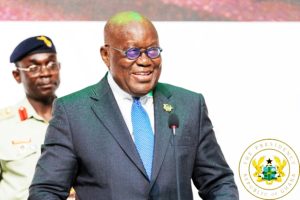
President Akufo-Addo

The survey on Africans’ perspectives on democracy, conducted across 30 countries, found that support for democracy has consistently declined in Africa over the past decade, while opposition to military rule has weakened by 11 points across these countries.

The survey said 45% of Africans think their countries are mostly or completely democratic and only 37% say they are satisfied with the way democracy works in their countries.

The report found that more than half of Africans (53% across 39 countries) are willing to accept a military takeover if elected leaders “abuse power for their own ends.”

According to the report, 55% of Ghanaians reject any calls for military intervention in Ghana’s governance.

The survey also found that 96% of Ghanaians believe they are free to choose whom to vote for, with 95% saying they are free to join any political organization. Also, 84% say they are free to express their thoughts without fear of intimidation.

NO FAITH

However, the survey found a worrying trend of loss of faith in elected leaders, particularly members of parliament.

The report indicated that 14% of the population believe their MPs often or always listen to them, while 35% say their local government councillors listen to their concerns.

Valley View Varsity, SDA Church honour Naa Torshi

0
Naa Torshie with the citation

The administrator of the District Assemblies Common Fund (DACF), Irene Naa Torshie Addo, and her non-governmental organisation (NGO), Renado Foundation, have been honoured with a special citation by the Seventh Day Adventist (SDA) Church in Ghana and Valley View University (VVU).

The recognition underscores her exceptional commitment to fostering spiritual growth and interfaith unity through her generous support of pilgrimages to Jerusalem, for leaders of all Christian denominations.

The Church, in the citation, observed that Naa Torshie Addo has facilitated these sacred journeys for several years, via her esteemed NGO, providing a unique opportunity for countless believers to deepen their faith and experience the Holy Land firsthand.

Part of the citation reads: “Her efforts have not only strengthened the spiritual lives of participants but have also fostered unity and collaboration among different faith communities.

“Hon. Irene Naa Torshie Addo’s dedication exemplifies the true spirit of service and commitment to the greater good, serving as an inspiration to all. Therefore, on the occasion of the 43rd Graduation Ceremony of Valley View University, we present this citation to Hon. Irene Naa Torshie Addo and her foundation, to the glory of God.”

It also included a heartfelt blessing that says: “May the Lord continue to open for you the heavens, the storehouse of His bounty, to send rain on your land in its season and to bless the work of your hands.” [Deuteronomy 28:12, NIV].

Pr. Dr. Thomas Techie Ocran, President of the Southern Ghana Union Conference of Seventh-Day Adventists; Pr. Dr. Kwame Annor Boahen, President of the Northern Ghana Union Conference and Prof. William Kofi Koomson, Vice Chancellor of Valley View University endorsed the citation.

Price Control On Cement Sparks Row

0
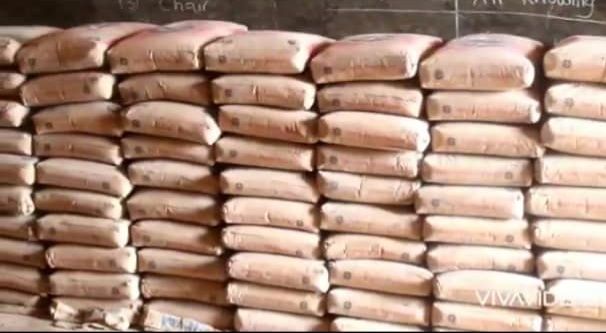
The bags of cement on display

A battle over cement pricing in Ghana reached a new stage this week when the Chamber of Cement Manufacturers (COCMAG) hit back at proposed government regulation. Frédéric Albrecht, the chair of the association, told a meeting that about 80% of local production costs linked to cement manufacture are related to the local currency exchange rate. So fixing the price would do little to address the main cause behind rises.

Albrecht was speaking at a stakeholders’ forum organised by the Ghana Chamber of Construction. The group was convened to discuss the government’s proposed Ghana Standards Authority (Pricing of Cement) Regulations 2024 that were formally presented in the country’s parliament in early July 2024.

The association argues that the cement sector has not been consulted properly over the proposal and that introducing it could have negative consequences for the construction sector as a whole. It says that imported clinker is subject to numerous taxes and that the average price of cement has actually lagged behind the rate of inflation.

The government is dealing with an economic crisis that forced it to default on its external debts in 2022 and ask the International Monetary Fund for support. This has led to depreciation of the local currency and high inflation.

Around the same time the authorities have also been attempting to regulate the cement sector more closely. In 2022 the Ghana Standards Authority (GSA) took action against a brand of cement, Empire Cement, that appeared to be on sale without any of the required permits.

Then in the autumn of 2023 the Ghana Revenue Authority (GRA) shut down Wan Heng Ghana’s grinding plant in Tema after the company failed to pay a major tax bill. Action by the GSA followed when it shut down three more plants in the Ashanti Region – Xin An Safe Cement Ghana, Kumasi Cement Ghana and Unicem Cement Ghana – for using inferior materials in cement production.

In April 2024 a nine-member committee was established to monitor and coordinate the local cement industry. Notably, cement producers have been required to register with the committee in order to secure a licence to manufacture cement.

Kobina Tahir Hammond, the Trade and Indus¬try Minister, then said in late June 2024 that the government wanted to intervene in cement pricing to protect consumers from what he described as the ‘haphazard’ increment in cement prices by manufacturers.

A legislative instrument doing just that was presented in parliament on 2 July 2024. Around the same time the GSA reportedly threatened to close down ‘several’ more cement plants for non-compliance.

The cement industry in Ghana is particularly vulnerable to currency exchange effects as it is dominated by grinding plants. One integrated cement plant, Savanna Diamond Cement, was launched in the north of the country in the mid 2010s.

However, this compares to 14 licensed grinding plants in the country reported in the local media. This includes units run by Ciments de l’Afrique (CIMAF), Dangote Cement, Diamond Cement (WACEM) and Heidelberg Materials subsidiary Ghacem and its CBI Ghana joint-venture amongst others.

This makes it one of the countries in Sub-Saharan Africa with the most grinding plants, along with places such as Mozambique and South Africa. When the Ministry of Trade and Industry started a consultation on regulating the cement sector in late 2023 it calculated that the country produced 7.2Mt of cement in 2021 and that the country had an overcapacity of 3.5Mt. This gives the country an estimated cement production capacity of just below 11Mt/yr.

Some sense of the growing costs that the cement sector in Ghana is facing can be seen in the Ghana Statistical Trade Report for 2023. Clinker was the country’s third biggest import by value at US$206m. It was only exceeded by diesel and other automotive oil products.

The Ghana Statistical Service reported that most of the country’s imported clinker in 2023 came from Egypt, South Africa and its neighbours in West Africa. Both Dangote Cement and Heidelberg Materials flagged up the country’s economy as being hyperinflationary in their respective annual reports for 2023.

Argument and counter-argument over cement pricing is prevalent around the world especially in Africa. Fellow West African country Nigeria, for example, has endured plenty of very public dialogue and debate about the price of cement.

In Ghana’s case it seems more likely than not that factors beyond the control of the local cement companies are driving the prices given the grinding-dominated nature of the sector with lots of different companies involved.

Negative currency effects and inflation look more likely to be driving cement prices than anything else, although one should always be wary of the potential for cartel-like behaviour by cement producers. The economic crisis in Ghana certainly fits the bill for the conventional introduction of price controls on selected commodities but getting the fine tuning right could be difficult in practice.

Fixed prices will reassure consumers in the short term provided supplies hold. Beyond this the actual causes of the high cement prices should emerge in time.

By David Perilli

This article was earlier published by globalcement.com

Hamid advises LPG marketing coys to accept CRM

0
Dr Mustapha Abdul-Hamid, C.E.O. NPA

Dr Mustapha Abdul-Hamid, The Chief Executive of the National Petroleum Authority (NPA), has advised LPG marketing companies to re-consider their rejection of the Cylinder Recirculation Model (CRM) and rather embrace it.

According to him, the policy is being applied in all the countries in the West African sub-region and that Ghana could not be left behind.

Mr. Herbert Krapa, Minister of State at the Ministry of Energy

Addressing  the 2024 Ghana International Petroleum Conference (GhIPCon) in Accra, on Wednesday, this week, Dr Mustapha Abdul-Hamid  said he had noticed the aggressive advertisements being run by LPG marketing companies (LPGMCs) promoting the current LPG filling station concept.

He acknowledged that it may be within the rights of the LPGMCs to run the advertisements, but urged the companies to adjust and accept the change, since it would ensure safety and convenience in the distribution and use of LPG in the country.

“I urge you to reassess your opposition to the CRM policy because all across the world, very few countries still adopt the filling station concept, as far as LPG distribution is concerned.

“All across the West African sub-region -Cote d’Ivoire, Burkina Faso, Senegal, Togo and everywhere else people are running the CRM model.

“I don’t think Ghana can afford to continue to lag behind. I think that it is important that we catch up with the modern trends and adapt to the flow”, he stressed.
Dr. Abdul-Hamid said CRM had the potential to create more jobs along the value change. He mentioned the operations of LPG bottling plants, depots, exchange points and transportation of filled cylinders as some of the job opportunities in the CRM value chain.

The two-day conference, organised by the NPA, in collaboration with the Chamber of Bulk Oil Distributors (CBOD), the Association of Oil Marketing Companies (AOMC) and the Ministry of Energy was held on the theme: “‘The Petroleum Downstream: Building a Future for Growth, Efficiency and Sustainability’.

This year’s GHIPCON, the sixth in the series, has the overall objective of addressing critical issues and exploring opportunities within the petroleum downstream sector.

Dr. Abdul-Hamid said that over the years, the petroleum downstream industry had evolved into a vibrant and dynamic industry with increased private sector participation.

“It has become a key contributor to the growth and development of the economy, we estimate that the sector had a monetary value of over GHS71 billion, representing about 8.4% of the country’s 2023 GDP.

“Over the past seven years, the industry returned an average annual value of over GHS35 billion,” he said.

The NPA Boss said as a result of improvements in the performance of the economy driven by deliberate government policy initiatives aimed at expanding the productive sectors of the economy, Ghana’s neighbouring countries such as Mali, Niger, Cote D’Ivoire, Togo and Burkina Faso had been importing petroleum products from the country’s petroleum downstream industry.

He said the volumes of petroleum products re-exported and transited to the neighbouring countries totalled 385,154,100 litres in 2023.


Dr Abdul-Hamid said the increase in volumes of the exports was a testament of significant successes in the NPA’s efforts towards curbing illicit fuel activities in the country.

He indicated that the Authority has intensified its collaboration with the navy, marine police and immigration to continue to arrest people engaged in illicit activities.

He announced that Senegal and Gambia had also begun the importation of petroleum products from Ghana.

The Vice President, Dr. Mahamudu Bawumia, in a speech read on his behalf by the Minister of State at the Ministry of Energy, Mr. Herbert Krapa, noted that since the last GhIPCon  in 2022, Ghana has made significant progress towards an efficient and sustainable energy industry.

He said the government had introduced and implemented the Gold for Oil Programme, which had reduced the demand on forex reserves required for the importation of petroleum products, increased local product supply volumes and reduced premiums from significantly resulting in a relative reduction in the prices of petroleum products.
Besides, the Vice President said the Board of the Petroleum Hub Development Corporation had been sworn in and a $12 billion Agreement with TCP-UIC Consortium had been signed for the development of the first phase of the Petroleum Hub project at Jomoro, in the Western Region.

He said the country had also seen the nation’s accessibility to LPG increase from 25% in 2020 to 40% at the end of 2023, and through this period, government launched the National LPG Promotion Programme with LPG cookstoves and related accessories being distributed to first-time users.

In their remarks, the CEO of the Chamber of Bulk Oil Distributors, Dr. Patrick Ofori, and the CEO of the Association of Oil Marketing Companies, Dr. Riverson Oppong, affirmed their commitment to collaborate with the NPA to promote the growth and sustainability of the petroleum downstream industry.

Ghanaian Private Sector Excited over introduction of Electric Vehicles

0
Deputy Director, Policy Planning, Monitoring and Evaluation Directorate, Ministry of Transport, Daniel Essel speaking on Eye on Port

Ghana’s announcement of an electric vehicle (EV) policy at the United Nations Climate Change Conference (COP28) in the United Arab Emirates last year, was welcomed by international environmentalists as a progressive step towards climate responsibility among developing countries.

Here in Ghana, the Ministry of Transport has disclosed that following the launch of Ghana’s Electric Vehicle Policy, several private sector players are enthusiastic about partaking and claiming their stakes.

The Deputy Director at the Policy Planning, Monitoring, and Evaluation Directorate at the Ministry of Transport, Daniel Essel, revealed that some private sector companies have proactively begun the setup of assembly plants, while some others have developed charging infrastructure, and others have begun using electric vehicles for courier services, among others.

He was updating the national public on Ghana’s progress in the transition to electric vehicles during a conversation with Eye on Port’s Kennedy Mornah on Accra-based Metro TV.

He said ordinary consumers are also eager to move in the direction of electric vehicles, but cost remains a barrier.

“When you take an EV, you are just replacing the fuel tank with a battery and then an engine with a motor. These are the two key components of an EV. The biggest cost of that whole vehicle is the battery, which is about 30 to 40% of the cost, so if the car is 20,000 USD, then you might have the battery alone costing about 8,000 USD. That’s how costly it is. Apart from your initial FOB price of that vehicle, the add-on duties also make it very expensive,” Mr. Essel explained.

The Deputy Director at the Policy Planning, Monitoring, and Evaluation Directorate at the Ministry of Transport said the government has taken cognizance of this, culminating in the budget announcement for the waiver of import duties on electric vehicles for public transport for 8 years.

Import duties would also be exempted for semi-knocked-down and completely knocked-down electric vehicles brought into the country by registered EV assembly companies for the same 8-year period, he said.

He considered this good news for the automobile sector as it will cut down the prices of EVs and revealed that the Ministry of Finance has declared its commitment to its implementation.

He said current targeted incentives prioritize public transport as the government seeks to gradually transition to local manufacturing.

“Commercial operators do about 200 to 300 km a day, so their frequency of use is huge, and there’d be more impact in terms of the emission savings,” he noted.

On concerns of insufficient charging infrastructure in-country, Mr. Daniel Essel intimated that the Ministry is collaborating with the private sector to set these up nationwide, and this has already led to six public charging centers in Accra at the A&C Mall, Madina Mall, Kaneshie, Movenpick Hotel, Total Energies – Liberation Road. However, as it is typical of the private sector, they are gauging the socio-economic environment to ensure investments align with local demand.

On the other hand, while private individuals can have their own charging infrastructure, he detailed that the Energy Commission is ensuring such installations meet sustainable standards.

He advised that Ghana follows the example of developed nations to map out the charging needs of the various areas in the country.

He also advised that, if possible, private companies develop “DC Fast Charging Infrastructures,” which can refill a battery under 30 minutes, saving hours of wait time, something “Level 1 and 2 chargers” cannot do.

According to the Deputy Director, Policy Planning, Monitoring, and Evaluation, at the Ministry of Transport, Daniel Essel, plug-in hybrids constitute 19,000 vehicles in Ghana, whereas Pure EVs account for 2000. Daniel Essel also revealed that there’s growing uptake of two and three wheelers running on batteries.

Over 2k tonnes of filth collected in Accra -Reg Min

0
Daniel Nii Kwartei Titus Glover

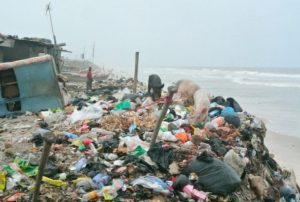
The Greater Accra Regional Coordinating Council (RCC) has said it collected more than 2,000 metric tonnes of plastic, sand and other forms of debris from various key areas at the recent comprehensive clean-up exercise.

Accra filth

Daniel Nii Kwartei Titus Glover, Minister for the Greater Accra region and chairman of the Council, said the successful removal of waste underscores plans for a comprehensive review to refine strategies and ensure sustained cleanliness in the city.

The minister said this when he convened the first RCC meeting of the year, outlining key priorities aimed at enhancing environmental cleanliness, security and infrastructure within the region.

According to him, the clean-up exercises cost the council a lot of resources, manpower and time, which ought not to have been so.

The minister was of the view that such initiatives and the orientation of people will cause a change of mindset as well as negative attitudes towards the environment.

“Thirty days into my tenure, we initiated a robust clean-up campaign building on previous efforts under the theme: ‘Operation Clean Your Frontage,” noted Minister Glover.

Emphasising collaboration, he cited active engagements with stakeholders, including the Ga Traditional Council and Zoomlion Ghana Limited, leading to the launch of the 2024 Homowo Clean-up exercise in June.

The initiative, commenced on July 2nd within the Accra Metropolitan Assembly, saw substantial participation across critical areas, such as the Central Business District, Circle, Agbogbloshie, Jamestown, Bukum, Chokor, Agbogloshie, CMB, Kwame Nkrumah Circle and the Ministries.

He said each Ga clan will be presenting 30 members in furtherance of promoting cleanliness in Accra.

The Minister expressed concern over encroachments on Ramsar Sites, vital for flood control in the region, saying either the Metropolitan Municipal and District Assemblies Chief Executives are looking at these developments unconcerned or helpless.

He called upon the MMDCEs to enforce development regulations rigorously, safeguarding these ecologically sensitive zones from further degradation.

Filth at Chorkor Beach

Moreover, Minister Glover addressed societal challenges, including the recent unauthorised livestock rearing along the Dr. Hilla Limann Highway, underscoring the need for strict enforcement of by-laws to maintain public order.

The meeting also underscored ongoing developmental projects across the region, with Minister Glover, stressing the need for their timely completion amidst preparations for the upcoming elections. He encouraged MMDAs to focus on existing projects to avoid commitments beyond their terms.

Minister Glover announced the imminent distribution of streetlights to MMDAs to combat darkness and bolster security across communities.

This is to restore defunct traffic lights, which were also prioritised to enhance traffic management and safety.

Minister Glover highlighted three critical focus areas for the year, namely Sanitation and Waste management, Rehabilitation of non-functioning Street and traffic lights and the bolstering of Security measures.

These initiatives, he stressed, are pivotal to fostering conducive environment for the wellbeing of Greater Accra’s residents and are in tandem with President Akufo-Addo’s vision of making Accra the cleanest city in Africa.

He said the next stage of the clean-up exercise will be conducted at the various beaches to improve their sanitation conditions.

Regrettably, he noted the importance of beaches in tourism, as a gold mine in other countries and improving their economies, whereas in Ghana no value is placed on the various beaches.

The Minister acknowledged international collaborations aimed at enhancing local economic development, particularly with Chinese and Nigerian representatives.

He indicated that upcoming initiatives in industrial cooperation and cultural exchanges are expected to benefit residents of Greater Accra.

Mr. Glover reaffirmed his commitment to diligent service, urging all stakeholders to sustain momentum in achieving the region’s developmental goals.

The RCC plans to disseminate comprehensive reports through official channels to ensure transparency and accountability for the public.

The Minister reiterated that the MMDCES should complete all projects and refrain from starting new ones.

We will work hard to transform our road network -Annoh-Dompreh

0
Mr Frank Annoh-Dompreh at the swearing-in ceremony

The Majority Chief Whip, Frank Annoh-Dompreh, has assured President Nana Addo Dankwa Akufo-Addo that he will work tirelessly, together with his Board Members, to improve the country’s road networks, ensuring they are safe and efficient for all.

After being sworn into office by the Minister of Roads and Highways, Francis Asenso Boakye, in Accra, on Thursday, July 18, 2024 Annoh-Dompreh pledged to prioritise a culture of maintenance and increase budgetary allocation to the Fund, under his leadership.

“We owe it to ourselves, our children and future generations to get this right. No more potholes, no more accidents and no more delays. We will work tirelessly to make our roads a symbol of progress and development,” he declared.

Potholes on most of the country’s road networks, particularly on major highways and community roads have become a source of frustration for many.

Poor maintenance culture and insufficient budgetary allocations are the main issues hindering the progress of the road networks in the country.

Annoh-Dompreh, also the lawmaker for Nsawam-Adoagyiri, sees these challenges as detrimental to road development and assured of his team’s renewed commitment to the government’s policy of maintenance culture.

“I don’t have a magic wand but I can assure the Ghanaian people that we are not going to take our work lightly. It’s not going to be business as usual. The work begins now and we must get the necessary resources to prosecute the work. Together with our board members, we will support the Minister of Roads and Highways to succeed,” he noted.

Annoh-Dompreh, who succeeded Alexander Afenyo-Markin as Board Chair, was sworn into office alongside two others; Kwasi Agyei, Acting Controller and Accountant General and Alhaji Hamid Abdul Rahman, Chief Director, Ministry of Local Government and Rural Development.

Mr. Asenso Boakye, after administering the oath of office and secrecy to the three, charged the board to maintain their focus on the government’s new policy shift on road maintenance.

He announced that the Ministry intends to launch an application for reporting potholes, which will be available in the next week or two.

He expressed optimism that the three, together with their ten other colleague Board Members, will bring their expertise to bear to transform the country’s road networks.

By Stephen Odoi-Larbi 

Editorial: AyekooTo GRA But…

0
GRA

The Ghana Revenue Authority (GRA) has reported a robust performance in its mid-year tax collection surpassing expectations, despite initial challenges in the first quarter of 2024.

Ms Julie Essiam, Commissioner General of GRA, at a recentmedia briefing in Accra made known the Authority’s significant achievements and outlined plans for the remainder of the fiscal year.

According to her, GRA collected GH₵68.49 billion in the first half of 2024, exceeding the mid-year target of GH₵67.9 billion by GH₵138.6 million, marking a 0.2 percent increase. “This accomplishment represents a notable 37.6 percent growth compared to the same period last year, reflecting the Authority’s resilience and strategic adjustments,” she said.

She also told the journalists that her outfit’s performance in June was particularly outstanding, surpassing the monthly target by an impressive 21.2 percent. She attributed this success to a 90-day strategic plan implemented by GRA leadership to steer the Authority back on track, following a sluggish first quarter.

One of the major problems confronting most of the Sub-Saharan African countries is their failure to collect adequate taxes to meet the ever growing demands of their people. Whilst the developed countries are able to collect taxes and even get surplus, which they give to us in the form of grants and loans, Africa is unable to do same.

We cannot, however, blame our leaders for this shortfall because of the high unemployment rate in Africa. Whilst majority of the people in the advanced countries are working and can, therefore, be taxed, the situation is not the same in our part of the world. Majority of the youth in Africa, though have the requisite skills, are still at home doing virtually nothing because there are no avenues for them to be employed.

This is what is making it impossible for our governments to collect the needed taxes to spur development. The Chronicle is, however, happy that despite this setback, the GRA has been able to exceed its target for the first half of the year. AsMs Julie Essiam told the journalists, the revenue collecting agency has been able to achieve this feat because of the innovative strategies they have adopted.

The development also tells a story that our national economy is gradually bouncing back after Covid-19 and other economic factors that have slowed down growth in the past three years or so. But whilst praising Ms Essiam and her team for the good job done, they must also admit that there are more rooms for improvement.

In our opinion, tax collection policies have been focused mainly on the formal sectors of the economy, whilst that of the informal sector has been relegated to the background. Despite the challenge we have as a nation when it comes to employment, there are thousands of workers working in the informal sector.

We can mention masons, carpenters, painters and electricians – just to mention a few – who are earning decent incomes, but the focus is not on them to pay taxes. Someone earning GHS3, 000 in the formal sector cannot compare himselfor herselfto these artisans, yet whilst the former is being taxed, the latter has been left off the hook.

The Chronicle is, therefore, advising the GRA to come out with a strategy that would rope in all these informal sector workers into the tax bracket. We believe that if this is done, a lot more taxes will be collected to support the development of the country. The tax collection agency has done a yeoman’s job, but there is still more room for improvement and we urge them to work harder.

(The Art of Finding Work cloum) Being Angry At Employers For Looking Out  For Their Interests Won’t Land You A Job

0
Opinion

The current job market is a stark reminder of a fundamental truth: The employee-employer relationship is inherently asymmetrical. This asymmetry is the default of the employer taking on the risk of investing capital while employees only invest their time. Employers have the upper hand, and the right to work ultimately depends on their decisions, as evidenced by layoffs.

Employees don’t own their jobs; their employers do.

In the face of rejection after rejection, job seekers become frustrated and angry, blaming employers for being unreasonable, greedy, or only looking out for their interests, as if employers are in the business of hiring people. This mindset is counterproductive and will only hinder your ability to land a job.

I don’t think job seekers are angry with employers. I think they’re angry because they were in demand, and now they’re not. Recently, the tech industry has had more than its share of layoffs. Most likely, until now, those laid off had only experienced being highly sought after. A shift of this kind requires humility, which is lacking amid all the anger directed at employers.

When making a hiring decision, the employer rightfully prioritizes its interests over those of the job seeker. Employers seek candidates who can deliver value and contribute to their organization’s success. In contrast, job seekers look for roles that fit their skills, experience, and career goals. Employers looking after their interests aren’t wrong or nefarious; it’s simply smart business.

Employers’ self-interests are not your enemies. Instead, use them to your advantage by identifying them and positioning yourself as the solution. Demonstrating how you’ll support the employer’s interests will turn you from a generic candidate into an asset.

Three strategies can be used to align your self-interests—presumably landing a job—with those of an employer (Envision, “You scratch my back, and I’ll scratch yours.”):

Understand the employer’s priorities, the obvious being to generate profit.

Job seekers tend to focus solely on the job description and the required qualifications and overlook the company’s overall goal(s). Knowing (read: researching) the company’s goals will enable you to explain how your skills and experience can support their goals.

Suppose you’re applying for a marketing coordinator role at a rapidly growing tech startup. The job posting lists key responsibilities, including managing the company’s social media accounts, creating content, and planning events. However, after studying the company holistically, you find, like most companies, it prioritizes gaining new customers.

With this knowledge, you can position yourself as a candidate who can help drive that growth by emphasizing, using quantifying numbers (e.g., In eight months, increased Instagram followers from 1,200 to 32,000.) in your resume, LinkedIn profile, cover letter and during your interview, your experience developing high-performing social media campaigns attracting new leads for previous employers.

You could mention your innovative ideas for using user-generated content to raise brand awareness or partnering with industry influencers. The key is to show that you possess the required functional skills and understand the company’s overall goals and how you can help achieve them.

Explain how you’ll make your ‘to-be’ boss’s life easier.

Your ‘to-be’ boss is juggling a million competing priorities, budget constraints, and pressure from their boss to optimize their team’s productivity.

Position yourself as the candidate who’ll simplify your ‘to-be’ boss’s life, and you’ll differentiate yourself from other candidates. During the interview, make it a point to understand the specific pain points and challenges your ‘to-be’ boss is facing—I outright ask, “What keeps you up at night?”—and then present yourself as a solution.

Perhaps the department has a retention problem. You could tell a STAR (Situation, Task, Action, Result) story, demonstrating your ability to build strong cross-functional relationships and create a positive work culture that boosts employee engagement and loyalty.

Educating your prospective boss that by hiring you, they’ll have one less headache is a hard-to-ignore value proposition.

Show how their success is equal to yours.

Hiring boils down to finding candidates who can drive measurable business results. Don’t rely solely on your skills and experience. Outline how you can deliver tangible benefits to the employer. Quantify the value you’ve brought to previous employers.

If you’re applying for a sales role, share data on the year-over-year revenue growth, client retention rates, and customer satisfaction scores you achieved in your previous positions. Quantify the value you brought to the organization, then explain how you can replicate or exceed that level of performance in the new role.

Say you’re interviewing for an IT support position. In addition to highlighting your technical expertise, again using a STAR story, highlight your expertise in streamlining processes, reducing downtime, and providing exceptional customer service. Tie those accomplishments back to the employer’s need to maximize productivity and minimize disruptions.

The key is to make a compelling case that the employer also succeeds when you succeed.

It’s understandable to feel frustrated by rejection, but the most successful candidates recognize that employers have legitimate business priorities. Identifying an employer’s interests and showing how you can support them will improve your chances of landing a job. Stop expecting an employer to save you. Save an employer.

By Nick Kossovan

_____________________________________________________________________


Nick Kossovan, a well-seasoned veteran of the corporate landscape, offers “unsweetened” job search advice. You can send Nick your questions to artoffindingwork@gmail.com.

The views expressed in this article are the author’s own and do not necessarily reflect The Chronicle’s stance.

Nigeria commits to ending pediatric HIV infection

0
Nigeria to end HIV infection

As Nigeria faces urgent challenge in ending Mother-to-Child HIV transmission, the Federal government has taken a decisive step in the fight against HIV & AIDS by inaugurating a Prevention of Mother-to-Child Transmission (PMTCT) and Paediatric HIV Scale-Up Acceleration Plan Committee at the national level.

The move comes amid disturbing statistics revealing that an estimated 170,000 children under 14 are living with HIV in Nigeria.

The Minister of State for Health and Social Welfare, Dr Tunji Alausa who inaugurated the committee at the National Agency for the Control of AIDS, NACA, headquarters in Abuja, said in line with global best practices, the multi- sectoral committee, comprising technocrats and bureaucrats, was inaugurated to ensure delivery on the mandate, tracking implementation along the federal four pillars of plan.

Alausa stated that the federal government is committed to ensuring that no child is born HIV positive and that those who are positive receive quality care, saying government will  unlock value chains by collaborating with those willing †o commence domestic production of HIV commodities, ensuring health security.

“Through the National Agency for the Control of AIDS (NAC A) and the National AIDS and STIs Control Programme (NASCP), we will provide effective governance for this programme. Working with all our partners and other departments within the ministry, we will faciIitate efficient, equitable, and quality healthcare for our children.

“This will ensure that no child is born HIV positive and that those who are positive receive quality care. We will also unlock value chains by collaborating with those willing to commence domestic production of HIV commodities, ensuring health security for our children.”

Credit: vanguardngr.com


The Ghanaian Chronicle