Home Blog Page 1324

Editorial: Police Efforts In Crime Rate Reduction Commendable

0
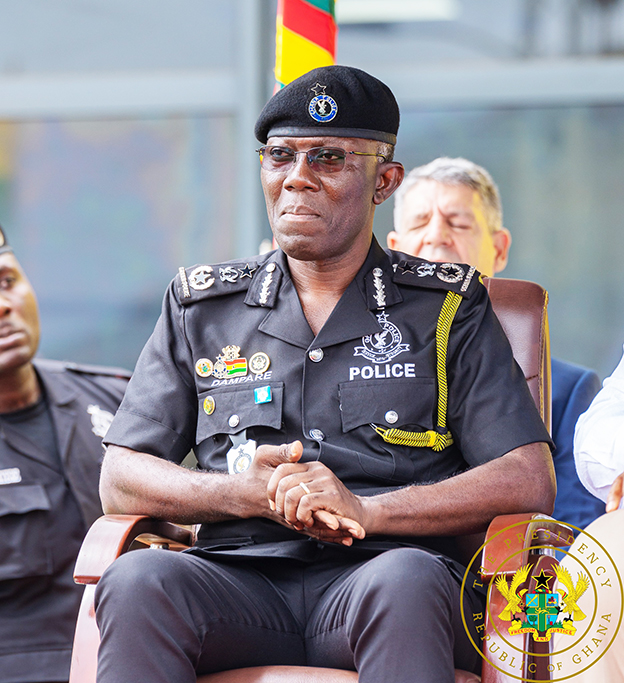
The Inspector General of Police, Dr. George Akuffo Dampare

The Inspector-General of Police (IGP), Dr. George Akuffo-Dampare, says the crime rate in Ghana has reduced significantly. According to IGP Dampare, recent programmes and policies initiated by the Police leadership are making rolls.

Speaking at the commissioning of some 320-bedroom apartments for Police Officers at Tesano in Accra, IGP Dampare attributed the decline in crime rate to Policing dynamics that have been introduced.

“We have been able to deploy policing to the doorsteps of communities which they had never seen, such that now policing has come so close to the doorsteps of the communities and members of the communities in such a way that it has affected the dynamics of crime in this country. As a result, Ghana has become one of the most peaceful countries in the world,” the Inspector-General of Police said.

The Chronicle commends the IGP and his team for the good job they have done and continue to do to reduce crime rate in the country. This achievement is largely due to the innovative programmes and policies being implemented by the police leadership.

This community-centric approach to policing has proven to be a game-changer, fundamentally altering the relationship between the police and the public. The reduction in crime rate reflects the tangible changes in Ghana’s policing dynamics.

The deployment of policing to local communities represents a strategic shift from traditional security provision methods. It places officers directly within neighborhoods, allowing for quicker response times, better familiarity with local issues and a more personalised approach to law enforcement. This proactive strategy not only deters potential criminals but also builds trust and cooperation between the police and the communities they serve.

The significant reduction in crime rates is a testament to the effectiveness of these new policies and the dedication of the Ghana Police Service. Ghana’s ability to maintain peace and stability sets it apart, as a beacon of hope and a model for other nations in West Africa and beyond.

This recognition is not only a source of national pride but also a crucial factor in attracting foreign investment, boosting tourism and fostering a sense of safety and well-being among citizens and residents.

The commissioning of new apartments for police officers is another step in the right direction. Providing decent housing and improved living conditions for law enforcement officers is essential for maintaining high morale and ensuring that they can perform their duties effectively. It is commendable that the government and the police leadership recognise the importance of supporting the welfare of their officers.

However, maintaining and building upon these successes require continuous effort and vigilance. Crime is ever-evolving and so too must be the strategies to combat it. The police must stay ahead of emerging threats, adapt to new challenges and continually engage with the communities they serve. Citizens must remain vigilant, report suspicious activities and collaborate with law enforcement agencies to sustain the current peace and security.

Moreover, while we celebrate the successes, it is crucial to address any remaining challenges within the police force. The role of religious leaders, traditional authorities, community and the inhabitants in supporting these policing efforts cannot be overstated. Their influence and moral authority can significantly enhance the effectiveness of crime prevention strategies.

As we move forward, let us continue to support and build upon these successes, ensuring that Ghana remains a peaceful, safe and prosperous nation for all.

Opinion By Edward Boateng: Revitalizing African Union: A call for radical change and innovative leadership

0
Opinion


As African Foreign Ministers gather in Accra this week, the search for a new African Union (AU) Head has officially begun. This meeting marks a critical moment for the continent, as leaders contemplate the direction of Africa’s premier multilateral body. The stakes are high, and the choice of a new leader comes at a pivotal juncture.

I recall with pride my involvement in the dialogues transitioning from the Organization of African Unity (OAU) to the AU. Working alongside iconic leaders like Julius Nyerere, Nelson Mandela, Thabo Mbeki, Olusegun Obasanjo, Abdelaziz Bouteflika, Muammar Gaddafi, and Alpha Oumar Konaré was not just an honor but a profound learning experience. These leaders embodied a vision for Africa that was bold, united, and forward-thinking. Today, however, it is clear that the AU needs a radical transformation to live up to the legacy they left behind.

Africa stands at a pivotal moment in its history. Despite having a predominantly youthful population—60% are under the age of 25—and boasting many of the world’s fastest-growing economies, the continent remains plagued by high youth unemployment, weak institutions, and political instability. As the AU contemplates its next leader, it is critical to seize this moment for monumental transformation.

The AU needs a leader who embodies the spirit of innovation, dynamism, and a forward-thinking vision. The duality of a youthful population and rampant unemployment have created a feeling of disenfranchisement among the youth. This population, if well harnessed, represents a powerful force of creativity, energy, and potential. Thus, many commentators on Africa’s political affairs feel the time is ripe for the AU to have a leader who resonates with and understands the aspirations of this tech-savvy and vibrant demographic.

Criteria for the Ideal 2024 AU Head

Beyond innovation, the ideal candidate should possess:

  • Visionary Leadership: Ability to articulate and drive a bold, united, and forward-thinking vision for Africa’s future.
  • Intergenerational Bridge: Capability to bridge generational divides within the AU, fostering intergenerational dialogue and including the perspectives of all age groups in policymaking processes.
  • Technological Proficiency: Engagement with modern technologies, social media, and contemporary global trends to bring fresh perspectives and innovative solutions to the continent’s challenges.
  • Conflict Resolution: Strong leadership in addressing conflicts and crises effectively, with a coherent strategy for conflict resolution across the continent.
  • Institutional Reform: Commitment to spearheading institutional reforms, enhancing financial sustainability, and streamlining decision-making processes to address the AU’s bureaucratic challenges.
  • Economic Development: Drive economic reforms, attract investment, and foster a business-friendly environment to tap into Africa’s vast resources and young population.
  • Democracy and Human Rights: Firm stance against electoral irregularities and human rights violations, supporting efforts to strengthen democratic institutions and processes.
  • Empowerment of Women and Youth: Promotion of policies that enhance gender equality and provide opportunities for young people to participate in governance and economic activities.

The AU, since its inception, has played a crucial role in fostering peace, unity, and cooperation across the continent. However, like any longstanding institution, it requires periodic reorganization to stay relevant and effective. The AU must streamline its operations, embrace digital transformation, and adopt a more inclusive approach to leadership that aligns with current geopolitical trends. An innovative leader is imperative, bringing fresh perspectives and innovative ideas essential for tackling longstanding issues such as economic development, regional integration, and sustainable governance.

The selection of the new leader has been zoned to East Africa and so far, candidates from Seychelles, Djibouti, Kenya, and Somalia have shown interest in the post of AU Commission Chairmanship. Analysts across the continent have been examining these candidates, who are experienced and possess numerous positive attributes. However, broadening the search to include more potential candidates, such as Amina Mohamed of Kenya, Donald Kaberuka of Rwanda, and January Makamba of Tanzania, plus others will bring a greater variety of perspectives and strengths to the fore. This expanded scope ensures the selection of a leader who embodies the innovative spirit needed to drive the AU forward.

Africa’s future depends on leaders who are not just experienced but also visionary and attuned to the current global landscape. An innovative leader brings creativity, energy, and a deep understanding of the aspirations of Africa’s youth to the AU. This can catalyze transformative change, strengthen unity among member states, and position the AU as a proactive force in advancing Africa’s interests on the global stage.

The AU’s leadership at this critical juncture requires more than experience; it requires innovation, youthful energy, and a visionary approach. Africa deserves a leader who can reorganize and modernize the AU, much like what Dr. Akinwumi Adesina has accomplished at the African Development Bank (AfDB). Under Adesina’s leadership, the AfDB has undergone significant transformation, embracing innovation to enhance its operational efficiency and impact. Adesina introduced the “High 5” development priorities—Light up and Power Africa, Feed Africa, Industrialize Africa, Integrate Africa, and Improve the Quality of Life for the People of Africa. These initiatives have been instrumental in mobilizing resources, fostering sustainable development, and promoting economic growth across the continent. His emphasis on leveraging technology and innovation has positioned the AfDB as a catalyst for change, driving progress in critical areas such as energy, agriculture, industrialization, and infrastructure development. This type of visionary leadership is precisely what the AU needs at this pivotal moment.

This is the moment for a new generation to step forward and lead Africa into a prosperous and dynamic future.

Source: citinewsroom.com

Agogooso residents threaten to vote against NPP over neglect

0
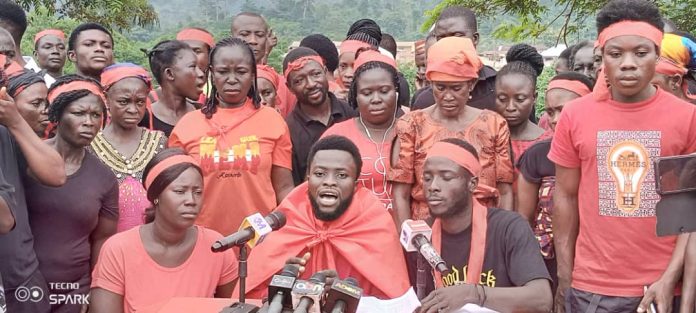
Gideon Ababio (sitting middle) addressing the media

Residents of Agogooso No 2 near Dompoase in the Adansi North District of Ashanti region have threatened to vote against the ruling New Patriotic Party (NPP) at the December 7 elections, if the government does not work to improve their lot.

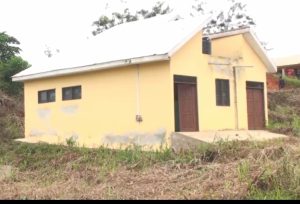
Speaking to the media after a demonstration in the town on Tuesday, July 23, 2024, in protest, the people said after voting for the party for 32 years since 1992 the community can boast of only a 10-seater water closet toilet which cannot even be used due to structural defects.

Spokesperson Gideon Ababio mentioned that since the toilet cannot be used, the people have resorted to indiscriminate open defecation in the community.

The 10-seater WC toilet which cannot be used due to structural defects

This practice, he disclosed, is now spreading to the classrooms and other public places and thus posing a health hazard to the children, teachers and the community at large.

He also mentioned that mobile network is not operative in the community forcing residents to climb trees to enable them receive calls.

Another major concern of the people, the Spokesperson said is the lack of adequate accommodation for teachers and called for the construction of teachers’ quarters as most of the teachers stay outside the community and travel more than 14 kilometers every day to and fro’ work which makes teaching and learning ineffective.

On health, Gideon Ababio stated that due to the unavailability of a health facility in the community, accessing healthcare is a problem especially for pregnant women and called for the provision of a CHPS Compound for the community.

He also complained of lack of computers to aid the students in the community in ICT education adding, “this should not happen to any community as we are currently in a digital era.”

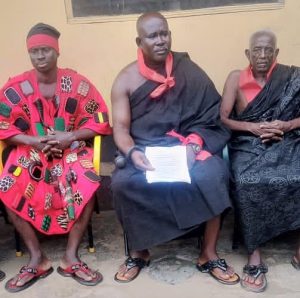
Nana Berko Asamoah (middle) Odikro of Agogooso speaking to The Chronicle

Both the Odikro of the town Nana Berko Asamoah and the assemblyman Kennedy Oduro Asante in separate interviews with The Chronicle expressed their fullest support for the youth in their resolve to vote against the NPP if their concerns are not addressed in the shortest possible period.

From Frederick Danso Abeam, Agogooso No 2

Bawumia downplays Mahama’s development efforts in the north

0
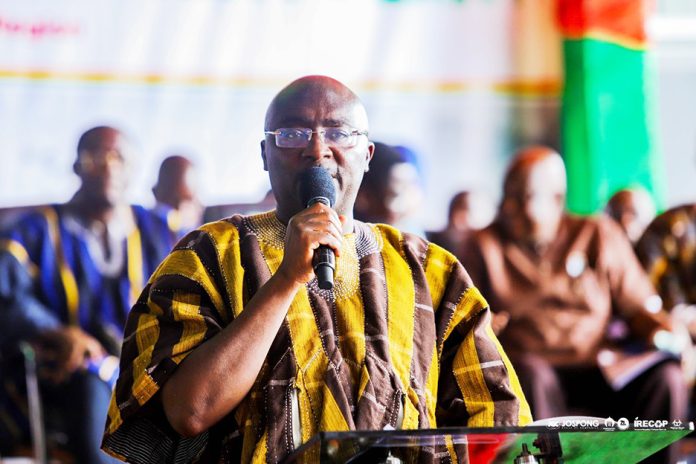
Vice President Bawumia

Vice President Dr. Mahamudu Bawumia has criticised the effectiveness of the Savannah Accelerated Development Authority (SADA), initiated by former President John Mahama’s development efforts for the north.

Dr. Bawumia questioned the tangible impact of SADA’s projects in the North, stating “there is very little John Mahama as president can show in the North, as far as development is concerned. Hundreds of millions of dollars were allocated, but where are the projects?”

Addressing a gathering of supporters and chiefs in Lambussie on Tuesday, 23 July, 2024 Dr. Bawumia highlighted the stark choice facing voters in this year’s historic election, a choice between two northern candidates: himself and Mahama.

He emphasised the significance of this electoral opportunity for the North, urging voters to consider who would best serve both theUpper West Region and the country.

Dr. Bawumia contrasted his track record with Mahama’s, noting that during the latter’s presidency, there was minimal visible progress in the North.

He criticised the SADA initiative, which was intended to drive northern development, pointing out the lack of notable projects in the Lambussie constituency and beyond.

“If you look at the vehicle that he produced to develop the northern parts of Ghana, SADA, you cannot point to a single project in Lambussie. We spent hundreds of millions of dollars, yet the results are invisible,” he said.

Dr. Bawumia also reviewed his own accomplishments, contrasting them with Mahama’s record. He cited the introduction and expansion of the Free Senior High School (SHS) education program, which has seen a dramatic increase in student enrollment from 800,000 to 1.4 million.

Dr. Bawumia emphasised that the northern regions have seen the greatest benefit from this initiative, with the top five regions in SHS enrollment being from the North.

Further, Dr. Bawumia defended his administration’s achievements, including the restoration of the teacher and nursing training allowances and the implementation of the National Health Insurance Scheme.

He highlighted the numerous social interventions and projects initiated by the current government, such as the Northern Development Authority’s 963 completed projects, and the agenda 111 initiative to build district hospitals in every district.

Dr. Bawumia also touched on technological advancements, noting the successful implementation of mobile money interoperability and the digitalization of medical records across Ghana’s hospitals.

He outlined plans for continued focus on agriculture, including the One Village, One Dam initiative and support for farmers through machinery and loans.

Dr. Bawumia reiterated his commitment to improving the standard of living in Ghana through innovative policies like individualized credit scoring. He assured the people that his administration would continue to prioritise development and address the needs of the people.

“Ultimately, we have a choice between two candidates. If we look at what has been achieved, it is clear that our administration has made significant progress. There is much more to be done, and I am committed to continuing this work for the benefit of all Ghanaians,” Dr. Bawumia stated.

Denmark donates Cybersecurity Equipment to GIS  

0
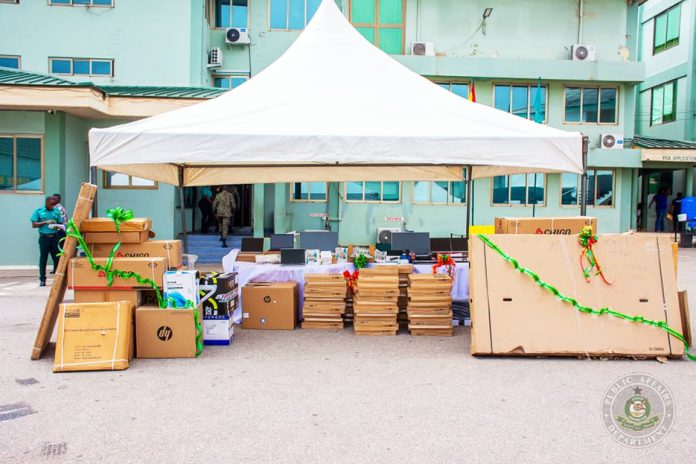
A picture of the cyber-security equipment donated to the GIS

The Government of Denmark has donated cybersecurity equipment to the Ghana Immigration Service (GIS) to enhance efforts in combating irregular migration through improved detection and investigation of document fraud.

This donation is part of the second phase of the Strengthening Border and Migration Management (SMMIG) initiative, aimed at bolstering border and migration management in Ghana.

The donated equipment includes; 80 laptops, 5 desktops, 63 software licenses (including antivirus, Microsoft Suite, and cybersecurity tools), 10 CCTV cameras, 4 CCTV monitors, 2 digital cameras and a 3-in-1 industrial copier.

Others include 2 printers, 6 IP phones, 6 uninterruptible power supplies (UPS), 6 steel cabinets, 11 desks/workstations, 18 office swivel chairs, 12 visitor chairs, 3 metal safes, 8 air conditioners, a generator set (12.5 kVA) and 2 IT infrastructure setups for LAN/WAN.

Addressing the gathering at the short ceremony, Comptroller General of GIS, Kwame Asuah Takyi, emphasised the crucial role of the new information technology and cybersecurity equipment in enhancing border and migration management in Ghana.

He highlighted that this donation is intended to strengthen the service’s capacity to combat irregular migration by improving the detection and investigation of document fraud at the regional level.

“The realisation of this objective led to the establishment of a fraud office under the Ashanti Regional Command in Kumasi, which serves the Ashanti, Bono, Bono East and Western Northern Regions,” he stated.

The project also aims to enhance the service’s response to irregular migration by strengthening its legal department’s capacity to investigate, prosecute, and secure conventions related to document fraud and other migration-related cases.

According to the Comptroller General, the project has facilitated the training of 30 prosecutors and 30 investigators at both basic and advanced levels, along with training for 25 officers in intelligence and subscriptions for digital legal resources.

Additionally, the project has assisted GIS in evaluating its strategic plan from 2018 to 2022, developing a new strategic plan for 2023 to 2029, and revising various Standard Operating Procedures (SOPs) for office assistants, which are currently being finalized.

The initiative has also contributed to enhancing the institutional and professional capacities of the service in cybersecurity. Ten officers successfully completed a cybersecurity certification program and recently visited the Czech Republic to study the operations of other immigration service cybersecurity units.

“The project has procured cybersecurity equipment, furniture, and other necessary items for establishing a dedicated office within the service.

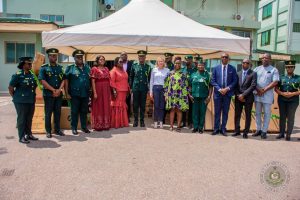
Dignitaries present at the ceremony in a group photograph

“Today’s handover includes laptops for selected offices to aid in investigation, prosecution, monitoring, evaluation, and intelligence gathering,” he added.

He expressed gratitude to the Danish government for the financial assistance that has made these achievements possible, as well as to the International Center for Migration Policy Development. Deputy Denmark Ambassador, Vibeke Sandholm Pedersen, stated that since 2018 the Danish government has been supporting Ghana in managing migration by strengthening border and migration management.

She noted that the SMMIG project has been particularly effective in helping Ghana’s migration services combat irregular migration by enhancing the detection and investigation of document fraud at regional levels.

“The provision of essential tools and equipment will ensure the sustainability of the project’s outcomes. Recognizing that the GIS collects and processes sensitive traveler information daily, the project has established and operationalized a dedicated cybersecurity unit within the service,” she added.

Deputy Minister of the Interior Naana Eyiah Quansah commended both the Danish government and the International Center for Migration Policy for their ongoing support to Ghana’s Immigration Service over the years.

Mid-Year Budget Review: International Reserves increase to 3.1 months of import cover

0
Minister for Finance and Economic Planning, Dr. Mohammed Amin Adam

Ghana’s economy is showing promising signs of recovery and growth, as highlighted in the mid-year budget review presented by the Minister for Finance, Dr. Mohammed Amin Adam. The Minister addressed Parliament on Tuesday, July 23, 2024 emphasizing key achievements and outlining government’s plans for the remainder of the year.

Dr. Adam began his address by acknowledging the global economic challenges but expressed confidence in Ghana’s economic trajectory. One of the most notable achievements mentioned in the review is the increase in international reserves.

The Minister announced that Ghana’s international reserves have improved significantly, now standing at 3.1 months of import cover. This marks a substantial recovery and provides a stronger buffer against external shocks.

“Gross International Reserves reached 3.1 months of import as at end June 2024 against 2.5 months of imports in the same period last year.

“Mr. Speaker, it is evident that we are on the right trajectory. Things are looking better than we anticipated. The choices we have made and the policies we are implementing are yielding results. We have reversed the negative trends, all the indicators are looking better,” he said.

The Minister attributed this achievement to effective fiscal management and strategic negotiations with international partners. Successful negotiations with the International Monetary Fund (IMF) have resulted in crucial support, including a $600 million tranche from the IMF and a $2.8 billion debt relief from the Paris Club and other creditors. This support has not only bolstered reserves but also contributed to stabilizing the economy.

Inflation, a key concern for many Ghanaians, has seen a notable decline. Inflation has dropped by 31 percentage points since 2022, and the government is committed to maintaining this downward trend. This improvement in inflation rates, coupled with a stabilization of the exchange rate, is expected to ease the cost of living for citizens.

Dr. Adam also highlighted the government’s significant investments in social programs and infrastructure. Over GH¢5.4 billion has been disbursed for various social programs, including LEAP, the School Feeding Programme, and the NHIS. Additionally, nearly GH¢10 billion has been invested in the road sector since January 2024.

Education remains a priority for government, with substantial funding allocated to the Free SHS programme. In the first half of 2024, GH¢1.5 billion was invested in the Free SHS programme, ensuring that the youth have access to quality education. This investment is part of the broader strategy to build a skilled and educated workforce for the future.

The Finance Minister did not shy away from discussing the challenges and risks ahead. He cautioned that while significant progress has been made, the country must remain vigilant. Key economic risks, including fluctuating commodity prices and global economic uncertainties, could impact Ghana’s growth trajectory. Nevertheless, he expressed optimism that with continued fiscal discipline and strategic planning, Ghana would navigate these challenges effectively.

We are living within our means; No need for supplementary funds

0
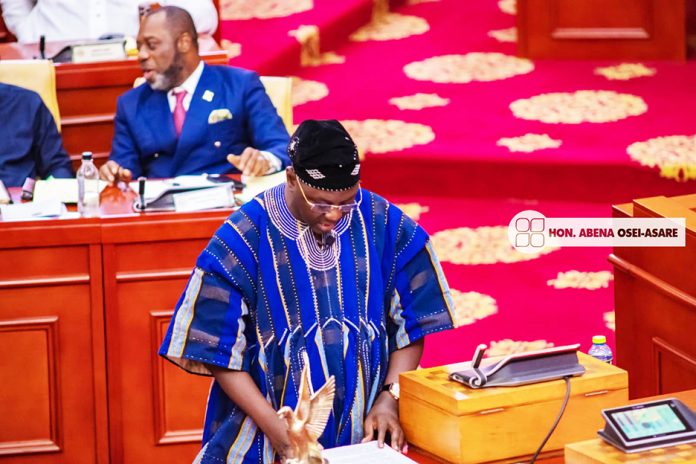
Minister for Finance, Dr. Mohammed Amin Adam entering Parliament House

The Minister for Finance and Economic Planning, Dr. Mohammed Amin Adam, says the government does not need any supplementary funds for the remainder of the fiscal year, 2024.

According to him, the government is living within its means, as it has been prudent with expenditure, as approved in the 2024 budgetary appropriation by Parliament.

He made this announcement on Tuesday, July 23, 2024 on the floor of the House, in his maiden mid-year budget review, since he took over as the minister for finance.

“We have reined in expenditures to ensure we are within 2024 Budget Appropriation and exceeded the mid-year non-oil revenue target by 3.7 percent. In effect, Mr. Speaker, we are living within our means.

“Indeed, consistent with our programme with the IMF, we are on course to achieving a primary surplus of 0.5 percent of GDP by end of the year,” he said.

The Minister for Finance presented the mid-year fiscal policy review in fulfilment of section 28 of the Public Financial Management Act, 2016 (Act 921).

He told Parliament that over the last six months, the government has sought to bring some urgency and speed to the implementation of key programmes and also provided the necessary support for growth-enhancing initiatives.

PROGRAMMES

Among others, he said the government had successfully concluded the second review of the Extended Credit Facility with the International Monetary Fund (IMF), leading to the disbursement of the 3rd tranche of US$360 million.

He also said the government has completed the debt restructuring programme with the Official Creditor Committee (OCC), covering US$5.1 billion, resulting in approximately US$2.8 billion of debt relief.

The government has also concluded negotiations with five of the seven Independent Power Producers (IPPs), which will lead to a saving of some of US$6.6 billion over the lifetime of the Power Purchase Agreements (PPAs).

“We have disbursed GH¢5.4 billion to support LEAP, the School Feeding Programme, the Capitation Grant and NHIS since January 2024, to reduce the burden on the vulnerable in our country.

“We have spent about GH¢1.5 billion to support 1,488,575 students under the Free SHS programme between January and June this year,” the Minister said.

He continued that: “We have paid about GH¢12 billion to bondholders under our Domestic Debt Exchange programme since February, to demonstrate our commitment to the programme. We have invested almost GH¢10 billion in the road sector since January 2024 to enhance transportation and spur growth.

ABOUT DEBT

The Minister for Finance giving an update on the public debt developments in 2023 and the first half of 2024 indicated that, as of end-December 2023, the provisional central government and guaranteed debt in nominal terms was GH¢608.4 billion.

He explained that the figure was made up of GH¢351.1billion and GH¢257.2billion for external and domestic debt, respectively.

He also said that the provisional total central government debt as of end-June 2024 stood at GH¢742.0 billion, equivalent to 70.6 percent of GDP.

This, he noted, indicates an increase of 22.0 percent due to the effect of the cedi depreciation and disbursements from creditors.

He observed that the stock consists of external debt of GH¢452.0 billion and domestic debt of GH¢290.0 billion, representing 60.9 percent and 39.1 percent of the total debt stock, respectively.

As a percentage of GDP, external and domestic debt represented 43.0 percent and 27.6 percent, respectively.

CABINET APPROVAL

Meanwhile, the minister for finance announced that Cabinet has also granted approval for the disbursement of an additional GH¢1.5 billion to provide relief and bailout for those whose funds have been locked up in the fund management companies.

He also said approval has been given by the cabinet for the establishment of a framework “for the re-introduction of road and bridge tolls in 2025.”

Cabinet, the minister announced, has also approved the operationalisation of the integrated property tax system and a review of the Fiscal Responsibility rules to include a debt rule to support debt sustainability, as well as the establishment of an independent Fiscal Council.

Court slaps 2 freight forwarders with GH¢2M bail

0
Accra High Court

The Dansoman Circuit Court is currently presiding over the trial of Frank Osei and Fiifi Bright Mensah, both accused of defrauding Mutala Masawood Akime, a businessman based in Madina, of a substantial sum of money.

The accused, self-acclaimed freight forwarders appeared before Her Honour Halimah El-Alawa Abdul Baasit on July 18, 2024 and have pleaded not guilty to the charges brought against them.

The court session saw the granting of bail to Frank Osei and Fiifi Bright Mensah, set at GH¢1,000,000.00 with three sureties each.

Notably, two of these sureties must be public servants earning no less than GH¢10,000.00 per month and residing within the jurisdiction of the court. One surety is required to present title deeds to justify their status.

As part of their bail conditions, both accused persons are required to deposit their Ghana Card with the court Registry and report to the Police Investigator weekly.

The case, which stems from allegations of fraudulent activities, involves the accused presenting themselves as legitimate car dealers to Akime.

According to the complaint filed, Ernest Boakye, a mutual friend, introduced Frank Osei and Fiifi Bright Mensah to MutalaMasawood Akime.

Subsequently, the accused allegedly showcased several Honda CRV vehicles purportedly available for sale, which Akime agreed to purchase following negotiations.

MutalaMasawood Akime transferred the agreed sum in cash, US$48,000 and GH¢95,000 to Frank Osei and Fiifi Bright Mensah.

However, after receiving the payment, the accused failed to deliver the vehicles as promised and subsequently became unreachable, leading Akime to pursue legal action against them.

Following diligent police investigation and interrogation, Frank Osei and Fiifi Bright Mensah were apprehended on July 16, 2024 at their hideout in Tema.

Given the complexity and gravity of the case, the presiding judge noted that due to the amount involved exceeding prosecutorial limits, the matter would be referred to the Attorney-General for further guidance and potential elevation to higher courts.

Court discharges 2 workers of SF Company Ltd

0
A court gavel

The Dansoman Circuit Court, presided over by Her Honour Halimah El-Alawa Abdul Baasit, has discharged Yaw Somg and Hassan Shabeer, both of SF Company Limited, a logistics firm based in Dzorwulu, Accra.

Yaw Somg, 41, is the Deputy Chief Executive and Hassan Shabeer, 25, is the Logistics Officer at SF Company Limited.

The court acted upon the application by Chief Inspector Nyarko to retract charges of defrauding by false pretence and conspiracy to commit crime against the accused persons.

The legal proceedings began on July 11, 2024 when it was stated that the financial sum involved in the case, amounting to US$80,000 exceeded prosecutorial limits of the police.

Consequently, the court advised forwarding the case docket to the Attorney-General’s office for further direction.

On July 16, 2024 the court approved the prosecution’s request to withdraw charges against Yaw Somg and Hassan Shabeer, leading to their discharge.

The bail application filed by Farouk Wumpini Esq on behalf of the accused persons, who were previously on remand, became irrelevant following the withdrawal of the charges.

Yaw Somgand Hassan Shabeerhad initially pleaded not guilty to the charges leveled against them.

However, the case has unveiled a broader scope, implicating other key figures at SF Company Limited, the CEO, Qiu Liangbin and the Marketing Officer, Akosua Amoako Achia, but currently evading law enforcement.

The accusations revolve around an alleged scheme to deceive Joseph Kofi Asempa, owner of a printing company at Kwame Nkrumah Circle, Accra.

The prosecution’s facts alleged that Akosua Amoako Achia approached Mr. Asempa in April 2024, promising to facilitate the importation of six printing machines and accessories from China through SF Company Limited.

Despite assurances, SF Company Limited purportedly failed to deliver the equipment within the agreed timeline, providing Mr. Asempa with continual delays and excuses.

The situation escalated when it was discovered that both Qiu Liangbin and Akosua Amoako Achia had absconded, prompting Mr. Asempa to report the matter to the police on July 9, 2024.

Following the report, investigations led to the arrest of Yaw Somg and Hassan Shabeer, while efforts continue to locate Qiu Liangbin and Akousa Amoako Achia, who are currently fugitives.

Akufo-Addo commissions 320 new houses for Police

0
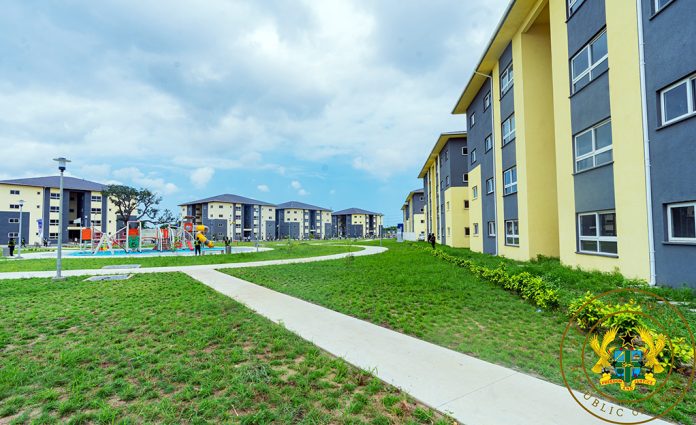
Some of the houses in picture

The President, Nana Addo Dankwa Akufo-Addo, has commissioned 320 new houses for use by personnel of the Ghana Police Service.

Located on the precincts of the National Police Academy Training School, Tesano, Accra, the houses were commissioned on Tuesday, July 23, 2024 at a brief ceremony.

COMPONENTS

The 320 new housing units at the Tesano Police Training School include 122 two-bedroom type A and 208 three-bedroom type B apartments.

There is also an Officer’s Mess, a social centre, two multiple-purpose playing courts, and a kindergarten school.

IMPACT

In his address at the commissioning ceremony, President Akufo-Addo indicated that the project will have a positive impact on the police community. He said it will serve as a model for other security services and illustrate dedication to delivering high-quality housing solutions that meet current standards of comfort, sustainability and safety.

“The benefits of this ambitious project extend beyond providing shelter. It also improves the quality of life for our police officers and their families, creating a sense of security and stability that I am confident will be reciprocated in their wholehearted enthusiasm to duty,” he remarked.

HOUSING PROJECT

The 320 new housing units project is part of the Akufo-Addo government’s Security Services Housing Project, which began in 2018, is aimed at providing decent housing for the men and women in black uniform.

The President stated that the programme, spearheaded by the Ministry of Works and Housing, through its housing directory, has seen the successful delivery of 536 housing units under phases one and two.

According to the President, phase one entailed the construction of 168 housing units for the then Bureau of National Investigations in Tema, which started in 2012 and was completed in 2014.

Phase two involved the construction of 368 housing units for the Ghana Navy in Tema New Town and was completed in 2018.

MOTIVATION

President Akufo-Addo asserted that a well-housed police force was more motivated and productive.

He added that the new housing units meant that the government was taking a crucial step towards creating an environment that allowed the police to focus on its critical duties, rather than worry about their living conditions.

He said that the government recognised the challenges faced by police officers and their families and was determined to provide solutions that would alleviate those difficulties.

The Tesano Housing Project, the President opined, “is a reflection of our broader agenda to ensure that every Ghanaian, regardless of their profession or rank, has access to decent and affordable housing.”

OTHER PROJECTS

The Minister for Works and Housing, Kojo Oppong Nkrumah, indicated that the units at Tesano, which is the third phase of the security services housing project, bring to a total of 1,000 homes for the security services since 2017.

He explained that those 1,000 homes are exclusive of the 1,700 affordable homes constructed by the Tema Development Corporation at Kpone, being occupied by health workers, doctors, nurses and other public servants.

“They are also exclusive of the 405 homes by the National Home Ownership in Community 22. These homes are also exclusive of the 822 homes that the State Housing Company has put up in various locations since 2017,” Kojo said.

He continued that, “they are also exclusive of the nearly 600 homes for civil servants currently under redevelopment through the Bungalow Redevelopment Programme here in Accra, led by the Ministry of Works and Housing.

“They are also exclusive of the 8,000 homes that work has commenced on in the Pokuase enclave and the 200 extra homes that the State Housing Company is constructing in Amrahia.”

LEGACIES

The Inspector General of Police, George Akuffo Dampare, in a welcome address highlighted what he described as some legacy projects of President Akufo-Addo in the police service.

He mentioned that the Akufo-Addo government has provided volumes of logistics, including “over 4,000 motorbikes spread across the length and breadth of this country.”

He also said that the police have been able to establish 181 regional formed police units made up of an average of 35 police officers with vehicles and motorcycles across the country.

“We can say that Ghana is at peace with itself when it comes to security, Mr. President, all because of you.”

The Ghanaian Chronicle