Home Blog Page 1313

GSA wants president to assent to new shippers’ Bill

0
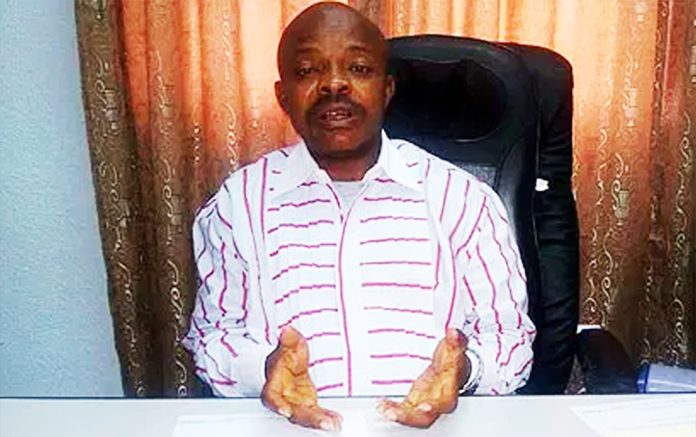
Mr. Emmanuel Kofi Arku, the Director of Business Development and Commercial Services at the GSA

The Ghana Shippers Authority (GSA) has indicated that the newly passed GSA Bill will improve the shipping industry in Ghana and fulfill the Authority’s mandate if assented by the President.

Mr. Emmanuel Kofi Arku, the Director of Business Development and Commercial Services at the GSA, speaking at a Ghana Ports and Authority (GPHA) media platform, said the law would empower the GSA to regulate shipping service provision within the country.

Mr. Arku noted that even though the GSA had addressed shippers’ challenges over the years, the new legislation provided more robust sanctions to ensure the decisive dealing with long-standing industry issues, particularly illegitimate charges and disputes between shippers and service providers.

He explained that among the key provisions of the new law is the bringing together of the establishment law, the Ghana Shippers Council Act, 1974 (NRCD 254), the Ghana Shippers’ Authority Regulations, 2012 (LI 2190), and others into a single, comprehensive legal framework.

He said the new legislation provided the GSA with the mandate to address unfair shipping charges compared to the current law, which allowed the Authority to highlight and negotiate disputes over unjustifiable fees but did not have the legal power to impose final determinations.

Mr. Arku said with the new law, the GSA was empowered to approve or reject charges that do not conform to international best practices, noting that that would help prevent the imposition of arbitrary fees such as administrative charges and container cleaning fees on shippers.

“You bring in clean cargo, yet you are still charged for container cleaning. Shippers are paying an excess of $20 to $30 million a month in these unjustified charges, money that could otherwise be reinvested into their businesses,” he stated.

Another key element of the new law, he said, was the introduction of a dispute settlement mechanism. Under the new framework, the Ghana Shippers’ Authority can make binding pronouncements on disputes between shippers and service providers, ensuring that business continues to flow smoothly.

The GSA’s Director of Business Development and Commercial Services said another key element of the new law was the introduction of a dispute settlement mechanism in which the GSA could make binding pronouncements on disputes between shippers and service providers, ensuring that business continued to flow smoothly as prolonged disputes result in significant delays and the accumulation of demurrage and other charges.

He said determinations reached for disputes under the new law would stand until it is overturned by a competent court, adding that this would relieve shippers from being in a worse situation when disputes arise, with the aim of promoting smoother operations in Ghana’s ports and other trade points.

The bill, he added, also emphasised the promotion of local content and participation in the shipping services sector by encouraging greater local involvement in the shipping services value chain, saying that they will soon come out with legislation and regulations that would allow Ghanaians to take charge of shipping businesses.

The new law also mandates transparency and accountability in the determination of port fees and charges.

By Laudia Sawer  

GNA 

Editorial: KNUST Don Has Said What The Church Is Refusing To Say

0
Editorial

An Associate Professor at the Department of Construction Technology and Management of the Kwame Nkrumah University of Science and Technology (KNUST), Prof. Anthony Kwame Danso, has according to a story we have published today, asked Ghanaian youth not to rely on prayers as the only means to success, but to work hard as well.

According to him, the over indulgence in prayers and fasting could not make one successful and that the prayers should always go with hard work. “If you always pray and fast without working, it will lead to nought and you won’t see any breakthrough. On the other hand, if you are Christian and you are not prayerful, it won’t help you either. So work hard,pray hard and serve God genuinely and live in Ghana. Pray as if everything hinges on prayers and work hard as though prayers do not exist. This will make you succeed,” he said, whilst addressing a Baptist Church youth congregation in Kumasi recently.

Prof.Anthony Kwame Danso did not end his admonition there, but went further to also advise the youth to stay and work in Ghana and that, they should only contemplate of  moving abroad to seek greener pastures if they have the opportunity.”It is good to travel, but if you did not get such an opportunity, stay in Ghana and work hard, regardless of your academic laurels. Do not say I am a graduate so you do not deserve to do some kind of job. Even if the only job available is selling bread, do it.

“Hard work pays. Even if it is an ice water business, please do it. It doesn’t negate your title as a graduate. My wife was a Computer Science graduate yet she was into pastries. Work hard and life will get better so that you become a responsible person in society,” he advised the youth.

In our view, the university don has stated what the church and society are refusing to acknowledge – that prayers alone are not the answers to problems confronting us as a nation and as individuals. As a newspaper that is deeply rooted in Christian principles and values, it will be a taboo for us to state that prayers are not good, because it is part and parcel of the Christian doctrine.

We are, however, concerned about the way some of our youth have banked all their hopes on prayers instead of working hard to achieve success in life. The Bible even teaches Christians that a hand that does not work must not eat. Unfortunately, there are hundreds, if not thousands of our university graduates, who are sitting at home doing practically nothing, because there are no white collar jobs for them.

As Prof Danso also acknowledged, all these things are happening because the graduate young man or woman thinks because he or she had attained university level of education, some of the  jobs are below them. Based on this weird mentality, these graduates would rather turn their ‘anger’ onto God by praying all day and night hoping that manner will fall from heaven.

They have forgotten that the days manna fell from heaven was completely over and that they have to start doing something with their hands, for God to use that as a process to bless them. Unfortunately, because the church has become the means, through which some of our so-called pastors are using to enrich themselves and their families, they are refusing to preach the right sermon to their respective congregations. They are rather interested in the offerings from these vulnerable people without telling them that they must start ‘working on something small’, for the God Almighty to use it as a spring board to bless them.

Again, as Prof Danso noted in his sermon to the Baptist youth, countries such as Japan, China and other Asian giants ‘do not know God’ and yet they are prospering, but Ghana, with majority of Christian population is struggling to survive. This tells a strong story that the answer to our problems is hard work, backed by prayers and not the latter alone. It is the hope of The Chronicle that the youth especially will heed the advice of Prof Danso and find something to do with their hands for God to bless them.

World Leaders Must Re-boot Global Cooperation for Today and Tomorrow

0
Opinion

Final negotiations are underway in New York for this month’s Summit of the Future, where Heads of State will agree on reforms to the building blocks of global cooperation.

The United Nations has convened this unique Summit because of a stark fact: global problems are moving faster than the institutions designed to solve them.

We see this all around us. Ferocious conflicts and violence are inflicting terrible suffering; geopolitical divisions are rife; inequality and injustice are everywhere, corroding trust, compounding grievances, and feeding populism and extremism. The age-old challenges of poverty, hunger, discrimination, misogyny and racism are taking on new forms.

Meanwhile, we face new and existential threats, from runaway climate chaos and environmental degradation to technologies like Artificial Intelligence developing in an ethical and legal vacuum.

The Summit of the Future recognizes that the solutions to all these challenges are in our hands. But we need a systems update that only global leaders can deliver.

International decision-making is stuck in a time warp. Many global institutions and tools are a product of the 1940s – an era before globalization, before decolonization, before widespread recognition of universal human rights and gender equality, before humanity travelled into space – never mind cyberspace.

The victors of World War II still have pre-eminence in the UN Security Council while the entire continent of Africa lacks a permanent seat.  The global financial architecture is heavily weighted against developing countries and fails to provide a safety net when they face difficulties, leaving them drowning in debt, which drains money away from investments in their people.

And global institutions offer limited space for many of the major players in today’s world – from civil society to the private sector. Young people who will inherit the future are almost invisible, while the interests of future generations go unrepresented.

The message is clear: we cannot create a future fit for our grandchildren with a system built for our grandparents. The Summit of the Future will be an opportunity to re-boot multilateral collaboration fit for the 21st century.

The solutions we have proposed include a New Agenda for Peace focused on updating international institutions and tools to prevent and end conflicts, including the UN Security Council. The New Agenda for Peace calls for a renewed push to rid our world of nuclear arms and other Weapons of Mass Destruction; and for broadening the definition of security to encompass gender-based violence and gang violence.

It takes future security threats into account, recognizing the changing nature of warfare and the risks of weaponizing new technologies. For example, we need a global agreement to outlaw so-called Lethal Autonomous Weapons that can take life-or-death decisions without human input.

Global financial institutions must reflect today’s world and be equipped to lead a more powerful response to today’s challenges – debt, sustainable development, climate action.  That means concrete steps to tackle debt distress, increase the lending capacity of multilateral development banks, and change their business model so that developing countries have far more access to private finance at affordable rates.

Without that finance, developing countries will not be able to tackle our greatest future threat: the climate crisis. They urgently need resources to transition from planet-wrecking fossil fuels to clean, renewable energy.

And as leaders highlighted last year, reforming the global financial architecture is also key to jump-starting desperately needed progress on the Sustainable Development Goals.

The Summit will also focus on new technologies with a global impact, seeking ways to close the digital divide and establish shared principles for an open, free and secure digital future for all.

Artificial Intelligence is a revolutionary technology with applications and risks we are only beginning to understand. We have put forward specific proposals for governments, together with tech companies, academia and civil society, to work on risk management frameworks for AI and on monitoring and mitigating its harms, as well as sharing its benefits. The governance of AI cannot be left to the rich; it requires that all countries participate, and the UN is ready to provide a platform to bring people together.

Human rights and gender equality are a common thread linking all these proposals. Global decision-making cannot be reformed without respect for all human rights and for cultural diversity, ensuring the full participation and leadership of women and girls. We are demanding renewed efforts to remove the historic barriers – legal, social and economic – that exclude women from power.

The peacebuilders of the 1940s created institutions that helped prevent World War III and ushered many countries from colonization to independence. But they would not recognize today’s global landscape.

The Summit of the Future is a chance to build more effective and inclusive institutions and tools for global cooperation, tuned to the 21st century and our multipolar world.  I urge leaders to seize it.

source: UN Information Centre, Accra

The views expressed in this article are the author’s own and do not necessarily reflect The Chronicle’s stance.

Obuasi Municipal Assembly Commissions New Health Facility 

0
Minister Simon Osei Mensah, Ashanti Regional Minister being assisted by Adansi-Bona to commission the facility

A new Health facility has been commissioned at Obuasi, by Mr Simon Osei Mensah, the Ashanti Regional Minister and Mr Elijah Adansi-Bona, the Chief Executive of the Obuasi Municipal Assembly.

The GHC1.6 million project, funded from Mineral royalties of the Municipal Assembly, is expected to take care of the health needs of the residents of Obuasi, especially around the Central market and beyond.


The 2-storey health center, christened Adansi-Bonah Health Center, after the Obuasi Municipal Chief Executive, is to replace the defunct Jemima Maternity Home which provides health care services to traders in the Obuasi Central Business district and neighbouring areas.

The facility comprises an Out-Patient Department, two Consulting Rooms, Pharmacy, Store, Female ward, Male ward, Maternity ward, seven Washrooms, Laboratory, Counselling unit, Office, a bedroom flat, Nurses accommodation, two urinals and two water closet toilets.

Mr. Simon Osei Mensah, while commissioning the facility, commended the Obuasi Municipal Assembly for putting its share of the Mineral royalties into productive use, adding that prioritising the healthcare needs of the people with proceeds from minerals royalties is exemplary and laudable.

He noted that the Ashanti Region, which was rated low in the pecking order, in terms of national health infrastructure has witnessed a significant improvement in health facilities since 2017.

He noted that the government has so far completed a number of health facilities inherited from the opposition National Democratic Congress, which includes Konongo, Tepa, Bekwai, Fomena, Kumawu and Sawua hospitals.

The new Adansi-Bona Health Facility at Obuasi

Mr. Elijah Adansi-Bona, the Municipal Chief Executive of Obuasi, said the construction of the health facility lends credence to the Assembly’s judicious use of mineral royalties, contrary to reports issued by the Center for Democratic Development on the impact of gold mining royalties on development projects in some mining districts.

The report suggested that the Obuasi Municipal Assembly could not account for projects constructed, using mineral royalties and lack of stakeholder engagements.

Mr. Adansi-Bonah said the report was false and mentioned that the Kokoteasua Experimental school building and Sanso Nurses quarters and other projects were all funded through the Assembly’s share of the mineral royalties.

Mr. Martin Safo Osei, the Municipal Health Director lauded the efforts of the Assembly in putting up the facility.

He said the facility furnished with quality equipment will further enhance effective health care delivery in the Obuasi Municipality.

The Health Director assured that management would ensure that the facility is properly maintained to stand the test of time.

Loans: China will mortgage Nigeria’s future, Dangote Refinery can’t save us – Primate Ayodele

0
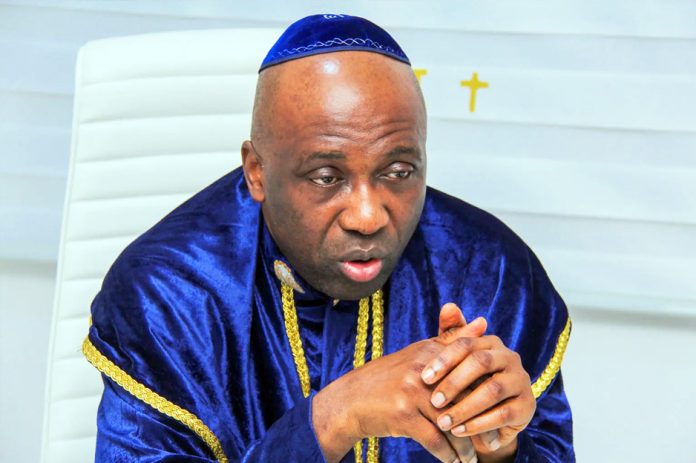
The Leader of INRI Evangelical Spiritual Church, Primate Elijah Ayodele

The Leader of INRI Evangelical Spiritual Church, Primate Elijah Ayodele has warned the Nigerian Government over its business dealings with China.

Ayodele warned that China will mortgage Nigeria’s future for the next 100 years.

The prophet said Nigeria has all it needs to be independent of foreign loans but the government is too lazy to put necessary things in place for the country’s freedom.

Speaking in a statement by his Media Aide, Oluwatosin Osho, Ayodele warned that 10,000 Dangote refineries can’t save the country if the government is inefficient.

He noted that no amount of refinery can help Nigeria until the government is ready to do the needful.

Ayodele said: ‘’It’s unfortunate that Nigeria has all it takes, but we are still going to China to beg for money. These loans will suffer Nigeria’s economy and China is about to mortgage the future of Nigeria. With the way this economy is going, they will only talk, the government is confused.

‘’Our mineral resources can lift us from borrowing but our government isn’t responsible. Nigeria will be in a huge debt that will make the rich and poor cry in less than 9 months.

“Dollar cannot come down and petrol will not reduce because 10000 of Dangote’s refinery, Port Harcourt refinery can not save us except the government does needful.”

NLC confirms Ajaero’s arrest, whereabouts unknown; threatens showdown

0
Joe Ajaero

Operatives of the Department of the State Service, DSS, have arrested the President of the Nigeria Labour Congress, NLC, Joe Ajaero.

Vanguard gathered that he was arrested this morning at the Nnamdi Azikiwe International Airport, Abuja. Ajaero was about to board a flight to the United Kingdom, UK, for an official assignment when DSS picked him up.

Although details of the arrest and the reasons are still sketchy, sources said he has been handed over to the National Intelligence Agency, NIA.

According to sources, Ajaero was billed to attend the conference of Trade Union Congress, TUC, in the UK holding today.

NLC threatens showdown

The NL has confirmed that “security operatives abducted its President, Joe Ajaero, and forcefully whisked him away without a warrant”.

Following the arrest, the NLC alerted all its affiliates, state councils, and Nigerian workers, urging them to remain vigilant and on high alert.

The NLC, in a statement by its Head Media/Information, Benson Upah, described the arrest as “an unmistakable demonstration of the height of lawlessness being perpetuated by the Nigerian government and its agencies in their bid to silence every voice of dissent and opposition in the country as the economic policies of the government continue to afflict the people with monumental suffering and hardship.”

Summons, terrorism, felony allegations …

Meanwhile, recall that Ajaero has been on the radar of security agents recently.

The NLC President had Thursday, August 20, honoured an invitation by the Intelligence Response Team, IRT, arm of the Police Force.

This followed the Police summons on August 19, asking him to appear the next day, and threatening him with arrest should he fail to comply.

But Ajaero, through human rights activist, Femi Falana (SAN), wrote to the Inspector General of Police, IGP, explaining why he could not honour the summon on the said date.

He, however, informed the IGP that he would come on August 29, to respond to the alleged criminal conspiracy, terrorism financing, treasonable felony, subversion and cybercrime.

By Victor AhiumaYoung

Source:  Vanguard

Three killed, 17 injured in Lagos multiple crashes

0
The scene of the accident

No fewer than three persons lost their lives, while 17 others sustained varying degrees of injuries, in multiple accidents along the Maryland area of Lagos State in the early hours of Sunday.

The Head of the Public Affairs Unit of the Lagos State Emergency Management Agency, Nosa Okunbor, disclosed this in a statement on Sunday.

Okunbor explained that the first accident occurred when a diesel-laden tanker experienced brake failure and rammed into several vehicles, resulting in the deaths of three people and injuries to an unspecified number of others.

He added that upon the LASEMA team’s arrival at the scene around 1 a.m., they discovered another crash involving a containerised truck that had collided with a MACK truck, leaving the container truck driver with a leg injury.

He recounted, “Upon the arrival of the LASEMA Response Teams at the scene of the incident at 0113hrs, the LRT encountered a multiple-vehicle accident involving an oil tanker, registration number unknown, fully laden with diesel.

“The tanker reportedly suffered a mechanical failure (brake failure) while in motion, lost control, and crashed into several cars, resulting in numerous casualties.

“The second accident involved an articulated truck, registration number unknown, carrying a fully loaded 40-foot container, which reportedly collided with a MACK truck, also unregistered, loaded with refill industrial bottles. The crash was attributed to reckless driving and speeding.

“Sadly, three fatalities were reported in the multiple accidents, with the bodies removed before the LRTs arrived. An unspecified number of people were critically injured and had already been taken to various hospitals by the time the LRTs reached the scene.”

Okunbor identified the vehicles involved in the accidents as two Volkswagen Vanagon commercial buses, one Mitsubishi Space Bus, two mini-buses (Korope), and one Honda car.

He added that emergency responders were able to secure the area and implement critical safety and traffic control measures, which led to the temporary closure of the road and bridge.

The LASEMA spokesperson continued, “Recovery efforts for the accident trucks and other vehicles began immediately upon the arrival of equipment at the scene.

“The two LASEMA Response Teams, along with other responders, worked tirelessly to recover all vehicles involved in the road accident and to alleviate the traffic gridlock caused by the incident.”

Reacting to the incident, the LASTMA General Manager, Olalekan Bakare-Oki, extended his condolences to the family of the deceased and wished the injured victims a swift recovery.

Bakare-Oki, who spoke through LASTMA’s Director of Public Affairs and Enlightenment, Adebayo Taofiq, noted that the agency would continue to ensure the safety of road users while confirming that 17 people were injured.

“Our hearts go out to the families and loved ones affected by this tragic accident. We remain committed to ensuring the safety of all road users in Lagos State,” he stated.

Emergency responders at the scene included the LASEMA team, the police, and operatives from the Lagos State Fire and Rescue Service and LASTMA. Source: The Punch

Banking Sector Records Mixed Performance In First Half Of 2024  

0
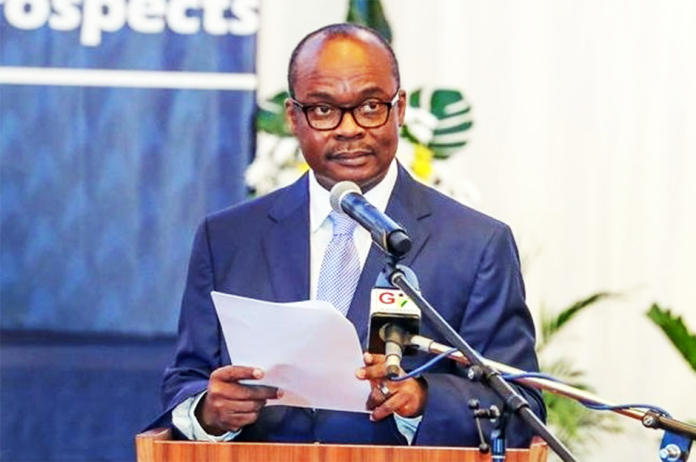
Dr. Ernest Addison, Governor of the Bank of Ghana

The Bank of Ghana has disclosed that the banking sector has recorded a mixed performances in terms of commission, gross income, operating expenses and financial assets.

The BOG said net fees and commissions recorded a slower growth of 16.8 percent in June 2024, from 30.6 percent the previous year while other income recorded a sharp contraction of 16.2 percent to GH¢2.4 billion in June 2024, from GH¢2.8 billion in June 2023.

These developments in the different income lines according to the central bank in its Monetary Policy report for the month of July,  culminated into a sharp increase in industry’s operating income to GH¢16.8 billion in June 2024, from GH¢14.9 billion in June  2023.

It said similarly, gross income increased to GH¢23.0 billion in June 2024, from GH¢20.1 billion in June 2023.  The BOG said the cost lines recorded similar increases in June 2024, but at lower growth rates compared to the same period in 2023.

The central bank said the industry’s operating expenses grew by 15.5 percent in June 2024, compared to 44.9 percent in June 2023, on the back of slower growth in staff costs and other operating (administrative) expenses.

It also said impairment losses on financial assets, as well as provisions for bad debt and depreciation, contracted by 39.5 percent in June 2024, compared to 32.7per cent increase in June 2023.

The Central bank noted that the banking sector’s performance in June 2024 pointed to continuing recovery from the macroeconomic challenges since 2022.

However, it said asset quality concerns remained a drag on the performance of the sector noting that the banking sector remained profitable, liquid, and generally efficient during the review period.

The central bank said stability in solvency reflected the rebound in profitability in the industry post-Domestic Debt Exchange Programme (DDEP) implementation, as well as the ongoing recapitalisation effort by banks.

The bank said that outlook remained stable, but recapitalisation and enforcement of stringent credit underwriting standards, and intensified loan recovery efforts were critical to ensuring good performance of the banking sector in the medium term.

The Bank of Ghana (BOG) also disclosed that the banking industry remained profitable for the first half of 2024.   The banks recorded higher profit-before-tax (PBT) and profit-after-tax (PAT) in June 2024 relative to the same period last year.

However, the growth rate in profit moderated to 25.5 percent in June 2024 relative to 51.4 per cent in the recent same period last year, BOG said.

The Bank said generally all income lines of the banking sector increased but at a lower growth rate in June 2024 relative to the same period last year.

The Bank said net interest income grew by 19.4 per cent to GH¢11.8 billion, lower than the corresponding period’s growth of 41.4 per cent in 2023.

In year-on-year terms, the Bank said interest income increased to GH¢18.0 billion from GH¢15.1 billion, representing a growth of 19.1 percent relative to 44.3 per cent in June 2023.

The Bank attributed the lower growth in interest income to relatively lower rates on money market instruments this year compared to the first half of 2023, as well as a decline in lending rates.  It said interest expenses also rose to GH¢6.2 billion in June 2024, representing a lower growth rate of 18.6 percent compared to the 50.0 percent recorded in June 2023.

By Jibril Abdul Mumuni   

GNA  

Newmont inaugurates GH¢4.4m police complex

0
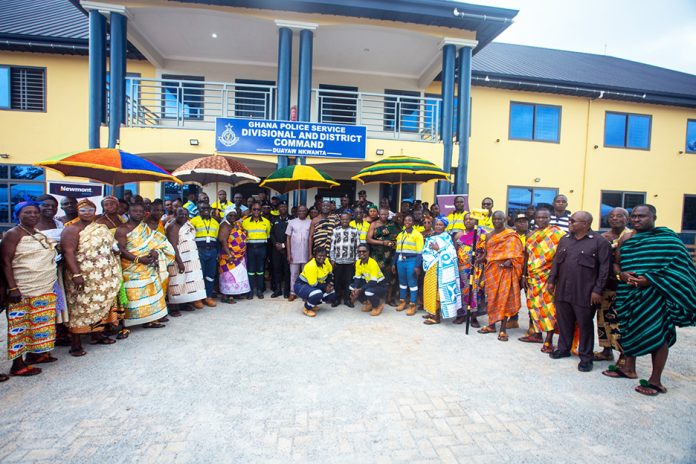
Newmont officials and chiefs in a group photograph in front of the new complex

Newmont Africa has inaugurated a state-of-the-art Police Complex for the Tano North Divisional and District Police Command, constructed at the cost of GH¢4.4 million in the Ahafo Region.
According to Mr Abraham Agbozo, the Head of Government Relations, Newmont, the facility, situated at Duayaw-Nkwanta, the Tano North Municipal capital, would position the police well to combat crime in the area.

He said population growth had increased in the area because of the Ahafo North Project of the mine, hence the need to support the police to attend and control crime wave too.
Mr Agbozo said the Ahafo North project was one of Newmont’s valuable investments in the country and Africa, saying with the project, the company aimed at helping to create jobs and improve lives through sustainable and responsible mining, as well as ensuring the safety and security of the people.

Mr George Yaw Boakye, the Ahafo Regional Minister thanked Newmont for its continuous support towards the development of the region and expressed the hope that the police would also maintain the facility regularly.
Mr Ernest Kwarteng, the Tano North Municipal Chief Executive said enhanced security remained essential for the mine’s operations and expressed appreciation to the company for the facility.

The Deputy Commissioner of Police (DCOP) James Annor, the Ahafo Regional Police Commander, said the gesture would inspire the police intensify their efforts at improving security in the area saying that would boost the confidence of the people in the police.
He appealed to wealthy people, corporate bodies and philanthropic organisations in the area to also support the police with other logistics to enhance their work, saying modern policing remained shared responsibility.
Nana Boakye Bonsu, the Acting President of the Duayaw-Nkwanta Traditional Council also attended the event.

From Michael Owusu Duodu, Duayaw-Nkwanta

GNA

GIS enhances officers’ skills in community engagement

0
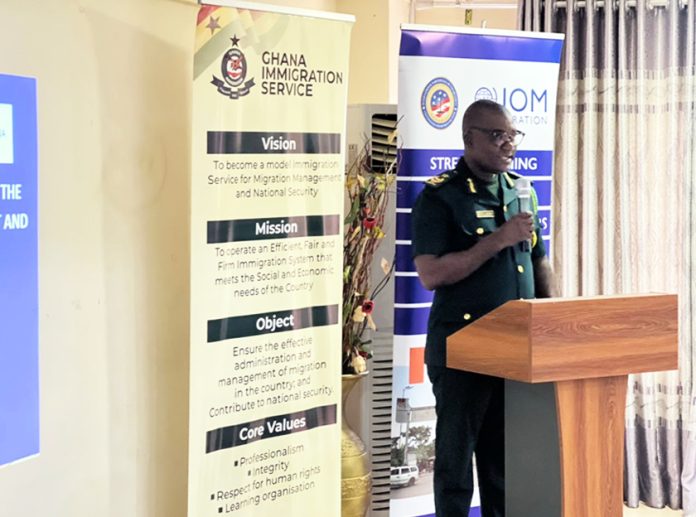
DCOI Emmanuel Laryea Kwei delivering his remarks

Eleven Officers of the Ghana Immigration Service (GIS) have completed a 5-day Trainer of Trainers course on Community Engagement and Policing (CEP) at the Eastern Premier Hotel in Koforidua.

Speaking on behalf of the Comptroller-General of Immigration (CGI) at the closing ceremony, the Head of Border Management, Deputy Commissioner of Immigration (DCOI) Emmanuel Laryea Kwei, enumerated that border security is not simply about guarding boundary lines, but also concerns the safety and peace of border residents.

In line with the National Security Strategy which highlights a human-centred inter-agency approach, the Head of the Border Management Department charged that Officers consider themselves as serving people and communities in all friendliness, even as they remain vigilant.

According to DCOI Kwei, border residents remain important allies of the GIS in the execution of its mandate of border protection, especially in the face of threats of terrorism and violent extremism.

“As citizens, however, they are also the reason why we protect the borders – the ultimate beneficiaries, and their welfare must not be lost on us”, DCOI Kwei charged.

Immigration and Border Governance Officer, Mr Kojo Wilmot giving his remarks

Speaking on behalf of the Senior Programme Manager of the Immigration and Border Governance (IBG) Unit at the International Organisation of Migration, Ghana (IOM Ghana), IBG Officer, Mr. Kojo Wilmot, explained that the project formed part of the five strategic areas of IOM Ghana, namely; Border Infrastructure and Equipment, Information Management and Digitization, Contingency Preparedness and Response, Community Engagement, and Regional Cooperation.

Having supported the GIS, especially in areas of infrastructure and information management by renovating border posts such as Namoo, Mognori and Pulimakom in the Upper East Region, equipping facilities with the Migration Information and Data Analysis System (MIDAS) and several other logistics, the workshop formed part of efforts to deepen the Service’s engagement and promote healthier border communities, Mr. Kojo Wilmot explained.

He encouraged participants to implement the lessons from the workshop and pass on the knowledge received to other Officers.

On her part, Acting Head of the Policy, Planning, Monitoring and Evaluation Department (PPMED), Assistant Commissioner of Immigration (ACI) Elizabeth Danso expressed profound gratitude to the Bureau of International Narcotics and Law Enforcement Affairs (INL) of the United States (US) for sponsoring the workshop and IOM Ghana for the well-timed project.

She encouraged the participants to count themselves fortunate to have been selected and trained as the first trainers for the all-important concept.

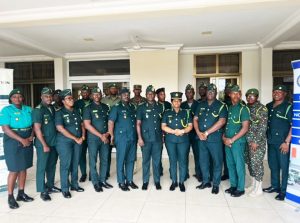
Participants in a group photograph with facilitators and other members of the CEP Committee

Head of Public Affairs, ACI Michael Amoako-Atta, who facilitated the workshop with Immigration Control Officer (ICO) Abigail Peters and Assistant Immigration Control Officer I (AICO I) Pious D. Serwonu, encouraged participants to deploy cultural intelligence, conflict resolution and good communication skills in order to address existing issues of animosity towards Officers in certain areas.

The workshop assembled Public Affairs and Community Engagement (PACE) Officers from different Commands across the country with the objective of boosting their capacity to collaborate with community members in addressing local challenges.

The curriculum included courses on Community Engagement and Policing, Peacebuilding, Conflict Resolution, Community Safety Initiatives and Problem-solving, Fighting Transnational Organized Crimes, Gender Equality and Women Empowerment, Cultural and Religions Orientation, among others.

The Ghanaian Chronicle