Home Blog Page 1300

Akufo-Addo Commissions $52m Bolgatanga Regional Hospital

0
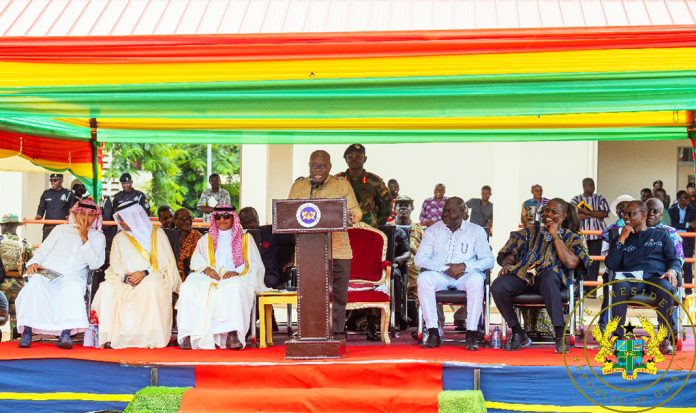
President Akufo-Addo speaking at the commissioning

The President, Nana Addo Dankwa Akufo-Addo, has officially commissioned the rehabilitated and refurbished Bolgatanga Regional Hospital. He commissioned the facility on Thursday, August 15, 2024 in the Upper East Region, at a colourful ceremony.
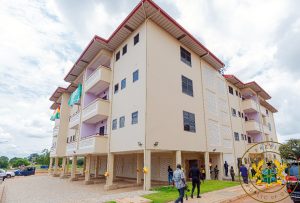
The rehabilitated Bolgatanga Regional Hospital

The state-of-the-art facility, which has seen several renovations over the years, was done at a cost of $52 million. The facility has, among others, a modern kitchen, a central sterile supply department, a mortuary block, staff accommodation and medical equipment installations.

The development was funded through a $20 million concessional loan from the Saudi Fund for Development, which funded the second and third phases of the project.

An additional $32 million from the same fund ensured the completion of critical infrastructure.

CHALLEGES

Speaking at the commissioning ceremony, President Akufo-Addo acknowledged the challenges faced during the execution of the project, particularly funding issues that threatened to limit its scope.

He also stressed that, through persistent efforts by the Ministry of Health, the necessary resources were secured, allowing for the comprehensive upgrade of the hospital.

Adding that, the result is a modern facility equipped to meet the growing healthcare needs of the region’s population.

GRATITUDE

HE expressed gratitude to the Saudi Fund for Development for their financial support and to all stakeholders who contributed to the successful completion of the Bolgatanga Regional Hospital project.

He called on the people of Bolgatanga and the Upper East Region to take ownership of the hospital, care for it and support the health workers serving the community.

“The Akufo-Addo government remains committed to the development and well-being of every Ghanaian. We act without bias or discrimination,” he asserted.

QUALITY HEALTHCARE

The President, in his address, emphasised the importance of accessible and quality healthcare, adding that it is a fundamental right for every Ghanaian.
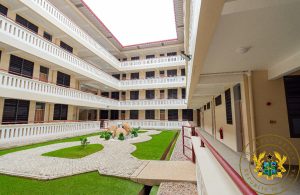
Another view of the Bolgatanga Regional Hospital

“Access to quality healthcare is a fundamental right of every citizen, and it is the responsibility of government to ensure that the exercise of this right is not just theoretical but more importantly, practical,” the President stated.

He highlighted that the revitalised hospital is a testament to his government’s unwavering commitment to ensuring that no Ghanaian is left behind in the quest for quality healthcare.

AGENDA 111

The President ceased the platform to outline his administration’s broader healthcare agenda, including the ongoing Agenda 111 initiative, which aims to construct 111 district hospitals and regional facilities across the country.

He announced that as of May 2024, work on 96 sites was actively progressing, with several expected to be completed by the end of the year.

President Akufo-Addo assured the nation that his government remains committed to promoting the development of all regions, regardless of their political leanings.

“The NPP government remains dedicated to promoting the development of this region, even though the region has consistently not supported our political objectives,” he remarked.

UNEVEN DISTRIBUTION

In addition to infrastructure, the President highlighted the need to address the uneven distribution of healthcare workers, particularly in rural and underserved areas.

He urged the Ministry of Health to expedite the finalisation of an incentive package to attract and retain medical professionals where they are most needed.

Reflecting on his government’s achievements in the healthcare sector, President Akufo-Addo noted the recruitment of over 200,000 medical personnel since 2017 and the significant expansion of the National Health Insurance Scheme (NHIS), which has seen a 69% increase in active membership under his administration.

He also pointed to the addition of 8,665 hospital beds across the country as a clear indication of his government’s determination to expand healthcare infrastructure.
National Security Swoops On Eight Black Market Operators … seizes GH¢156,074 and CFA5,000 from the suspects

0
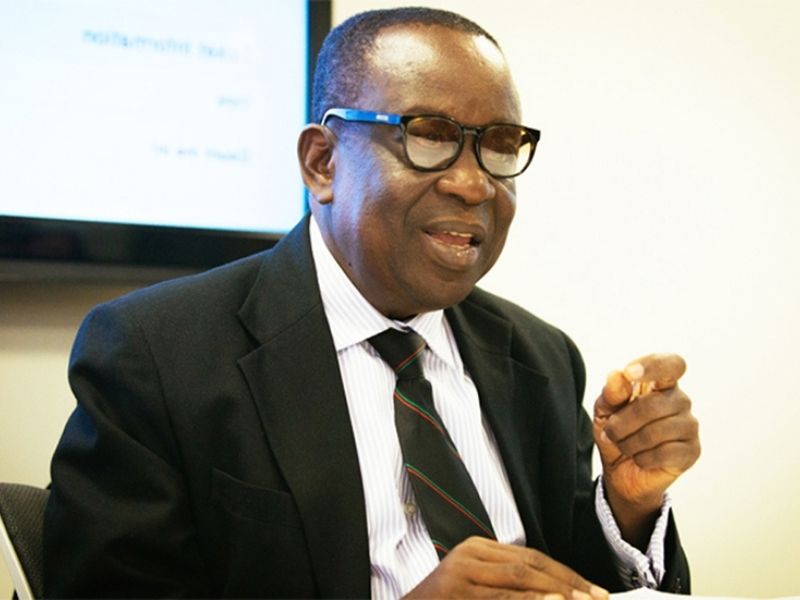
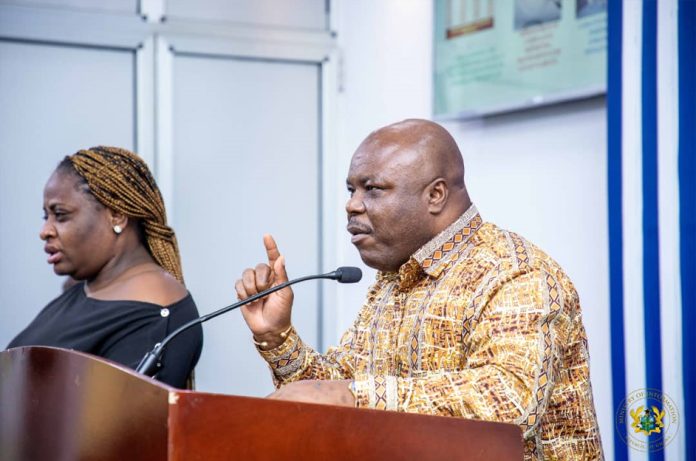
Mr Albert Kan Dapaah, Minister for National Security

Eight individuals engaged in illegal forex trading, also known as Black Market, have been apprehended, following a joint operation by national security task forces.

The arrests were made on Thursday, August 15, 2024 during the joint operation that took place in Osu, Tudu, Kwame Nkrumah Circle and the Airport area.

Information available to this paper indicates that the illegal forex traders have since been handed over to the appropriate security agencies for further processing before being taken to court.

The eight suspects include six foreign nationals and two Ghanaians. The operation also resulted in the seizure of GH¢156,074 and CFA5,000 from the suspects.

Two individuals, Abdulrahman Younoussa and Yakubu Mohammed, were arrested at Osu. Upon arrest, a total of GH¢8,444.00 and CFA5,000 were found on them. Abdul Razak Abdul Karim was also arrested at Tudu, where GH¢30,050 was retrieved from him.

At Circle, the task force arrested Nasil Nuhu and Abdul Waheed and retrieved GH¢18,495 from them.

The other suspects include Zakari Suley, who was arrested at Circle with GH¢40,520.00 and Abdulai Karim, alias Nii Tettey Addo, and Sani Iddrisu Mohammed, who were both arrested at the Airport area, with GH¢18,445 and GH¢40,120 retrieved from them respectively.

TASKFORCE

The operation carried out was part of an ongoing effort by various security agencies to curb the depreciation of the Ghanaian cedi and regulate the forex market.

The swoop was conducted by a joint task force comprising the Ghana Police Service, the National Intelligence Bureau, the National Fusion Center of the Ministry of National Security, the Financial Intelligence Center (FIC), the Bank of Ghana (BOG), the Ghana Immigration Service and other security and intelligence agencies.

THE LAW

Section 3(1) of the Foreign Exchange Act, 2006 (Act 723) prohibits individuals from dealing in foreign exchange without a license.

The Act prescribes punishment for those involved in illegal forex trading under Section 29 (1a), which states that anyone engaging in forex trading without a license commits an offense and may face a fine of up to 700 penalty units or imprisonment for up to 18 months, or both.

Additionally, pricing, advertising, paying or receiving payment for goods and services in foreign currency in Ghana is prohibited, with similar penalties for violations.

NEW REGULATION

The Bank of Ghana (BoG) has announced that effective August 1, 2024 all licensed Foreign Exchange Bureaux will be required to demand the Ghana Card of customers before transacting business with any person.

The directive followed the launch of a centralised foreign exchange trading platform, in line with its objective to ensure the integrity and development of the financial system.

“Effective August 1, 2024 all licensed Foreign Exchange Bureaux will be required to use this platform for the buying and selling of foreign currencies.

“This initiative marks a milestone in the Bank’s efforts to ensure safe and sound operations of the foreign exchange business,” a statement from the BoG said.

The statement added that the platform has been integrated with the National Identification System to ensure all purchases and sales of foreign currencies are performed by verified individuals.

This, it said, will also be integrated with the national payment platform to support electronic payments and the receipt of Ghana Cedis for foreign currency transactions at bureaux.

“The public is reminded that the buying and selling of foreign currencies shall only be conducted with Bank of Ghana licensed foreign currencies dealers,” the statement concluded.

Gov’t Moves To Tackle Challenges Facing SOEs

0
Minister for Public Enterprises, Joseph Cudjoe

In its desire to deal head-on with the challenges confronting State Owned Enterprises (SOEs), the government has outlined a series of new initiatives.

These measures, aside from addressing key challenges, are to improve operational efficiencies and enhance the performance of state enterprises.

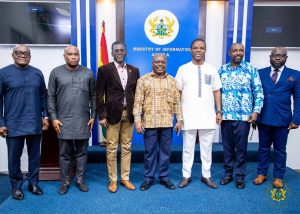
Dignatries at the press briefing

The Minister for Public Enterprises, Joseph Cudjoe, announced the initiative in Accra on Thursday, August 15, 2024 at the regular Ministers’ Press Briefing spearheaded by the Ministry of Information.

According to the Minister, the initiative marks a significant step in the government’s ongoing effort to reform and optimise SOEs to better serve the public and contribute to national development.

“State Enterprises play a crucial role in our economy and it is imperative that we ensure they operate at their maximum potential. Our new initiatives are designed to address the systemic issues that have hindered their performance and to foster a culture of accountability, efficiency and innovation,” the minister stated.

ASSESSMENT

The Minister indicated that the implementation of rigorous performance assessments is one of the key components of the new strategy.

He said that the government plans to conduct detailed evaluations of state enterprises to identify areas of inefficiency and to set clear performance benchmarks.

These assessments would be complemented by the development of customized improvement plans tailored to the specific needs of each enterprise, he noted.

“The performance reviews will be conducted in collaboration with independent consultants to ensure objectivity and thoroughness; we want to have a clear understanding of each SOE’s strengths and weaknesses, so that we can develop targeted interventions,” Minister Codjoe explained.

CAPACITY

In addition to performance reviews, the minister further announced that the government is prioritizing capacity building for State Enterprises management teams.

He explained that it would involve specialized training programmes aimed at equipping leaders with the skills and knowledge needed to drive organisational change and enhance operational effectiveness. He also emphasised the importance of strong leadership in achieving the desired outcomes.

MODERN PRACTICE

While outlining the initiatives, the minister mentioned the adoption of modern management practices. He explained that the government is advocating the use of technology and data-driven approaches to streamline operations and improve decision-making processes within state enterprises. This includes the implementation of digital tools for better financial management and performance tracking.

The Minister also highlighted the government’s commitment to fostering a culture of accountability within state enterprises, which involves the establishment of clear performance targets and ensuring that there are mechanisms in place to hold management accountable.

“Our goal is to create a culture where performance is measured, results are achieved and accountability is upheld. We believe that these measures will not only improve the performance of our SOEs but also restore public confidence in their ability to deliver essential services,” the Minister said.

The Minister expressed optimism about the potential outcomes and reiterated the government’s commitment to supporting SEs in their journey towards greater effectiveness.

Konongo Residents Cry Over Galamsey Activities

0
Galamsey operations underway along the Kumasi-Accra Highway under the watch of the Konongo assembly

The uptick of illegal mining operations (Galamsey) in the Ashanti region appears not to be ending soon, as Konongo and its surrounding areas have become the epic centre of the menace.
The situation is so dire that excavators for illegal mining have found their way into the middle of Konongo, a few meters from the Kumasi-Accra highway.
Impeccable information emanating from Konongo has it that illegal mining has taken a strong turn in the enclave, pollluting the River Oweri, leading to outrage among the residents.

Apart from Oweri, areas such as Kyekyerewere, Akranteabesa, Atunsu and Agyareagu, among others, have been affected.
The residents are unhappy about the ongoing destruction that is occurring under the nose of authorities.

One of the dangerous areas where the mining is underway is a few meters from the Kumasi-Accra Highway, under the watch of the municipal and regional authorities.
In an interaction with a resident who gave his name as Agyapong, he expressed worry about the pollution of River Oweri, a water source that serves the people of Konongo since time immemorial.

He bemoaned why such an illegality, which is threatening the survival of the residents, would be allowed to fester without any action from traditional leaders and the assembly.
Adding his voice to the issue was the Head Pastor of the New Life Church of Light, Rev’d Raphael Oppong, who expressed his outburst at the environmental degradation going on at Konongo, which is not far from his chapel.

The Environmental Protection Agency and the Minerals Commission have stated that they are unaware of the mining in the area, emphasising that the EPA is only aware of a dredging exercise being carried out by the Asante Akim Central Assembly and is not aware of the mining activities.

Reached on phone, the Municipal Chief Executive of Konongo, Mr. Robert Yaw Kwakye, told The Chronicle that the ongoing illegal mining in the centre of the city has been stopped.
According to him, the Municipal Security Council (MUSEC) has waded into the issue, disclosing that ongoing illegal mining at Owiremu has been stopped and that the excavators have been taken away.
Asked about illegal mining in Kyekyerewere, Akranteabesa, Atunsu and Agyareagu, Kwakye could not respond to the question, except to say he would call back.

Transforming Education: The Power of Branding Public Schools in Ghana

0
Wisdom Klu, the writer

In Ghana, the government has a crucial responsibility to construct school buildings and provide essential facilities. This foundational duty ensures that every child has access to a place of learning. However, the question arises: Is it also the government’s responsibility to maintain these facilities across thousands of schools?

While the Ministry of Education and the Ghana Education Service play commendable roles, the onus ultimately lies on school managers to enhance and brand their schools through innovative means.

The concept of school branding may seem foreign or even unnecessary to some headteachers. Conversely, it is crucial to understand that branding is not merely about aesthetics or marketing. It is about creating an environment that reflects the school’s values, goals, and commitment to quality education.

A well-branded school can significantly boost morale among staff and students, fostering a sense of pride and belonging that translates into improved performance and engagement.

The Role of Head teachers in School Branding

Head teachers, as the leaders of their schools, must challenge the status quo and move beyond being mere caretakers. Paulo Freire, in his seminal work “Pedagogy of the Oppressed”, emphasizes the role of educators as transformative agents who must actively engage in the process of change.

He writes, “The teacher is, of course, an artist, but being an artist does not mean that he or she can make the profile, can shape the students. What the educator does in teaching is to make it possible for the students to become themselves” (Freire, 1970).

This notion aligns with the responsibility of head teachers to take proactive steps towards rebranding their schools, rather than waiting for government intervention to effect minor changes. This proactive stance involves coordinating and collaborating with various stakeholders, particularly parents, to share their vision and inspire support for its implementation.

Leveraging Government Policies and Community Support

A common challenge faced by head teachers is the question of funding. Since these schools are government-owned, many administrators struggle to identify sources of income for branding initiatives. However, it is essential to shift the perspective and recognize that the government is not an abstract entity but a collective representation of the people, including the school community itself.

Many school administrators are unaware of how to effectively utilize holistic government policies at the micro level. By gaining a deeper understanding of these policies and how they can be applied, head teachers can unlock potential resources and support for their schools. Additionally, fostering a strong sense of community involvement is crucial. Parents, local businesses, and community leaders can be invaluable allies in the quest to rebrand and improve school facilities.

Practical Steps for Effective School Branding

  • Assess the Current State: Conduct a thorough assessment of the school’s current state, identifying areas that require improvement. This could include infrastructure, learning materials, extracurricular activities, and overall aesthetics.
  • Develop a Vision and Plan: Create a comprehensive vision and action plan for the school’s rebranding. This plan should include short-term and long-term goals, strategies for achieving them, and a timeline for implementation.
  • Engage Stakeholders: Actively engage parents, teachers, students, and community members in the rebranding process. Host meetings, workshops, and events to gather input, share progress, and build a sense of collective ownership.
  • Seek Funding and Resources: Explore various funding opportunities, including government grants, partnerships with local businesses, fundraising events, and donations. Transparency and accountability in the use of funds will build trust and encourage continued support.
  • Implement Incremental Changes: Start with small, manageable projects that can have an immediate impact. This could include painting classrooms, creating a school garden, or organizing extracurricular activities. Visible improvements will build momentum and encourage further participation.
  • Celebrate Achievements: Recognize and celebrate milestones and achievements along the way. This could be through school assemblies, social media, and community events. Celebrating success will reinforce the positive changes and motivate continued efforts.

The Impact of a Well-Branded School

A well-branded school creates a positive and motivating environment for both staff and students. This idea echoes John Dewey’s philosophy in “Democracy and Education”, where he states, “Education is not preparation for life; education is life itself” (Dewey, 1916).

When students see their school as a place of pride and opportunity, they are more likely to engage actively in their education. Teachers, too, feel more valued and inspired to give their best when they work in an environment that reflects their dedication and effort.

Moreover, a strong school brand can attract additional resources and support. Local businesses may be more willing to invest in a school that demonstrates a clear commitment to excellence and community engagement. Parents may be more likely to volunteer their time and resources when they see tangible improvements and a shared vision for their children’s education.

Final Reflections

The transformation of government schools in Ghana through effective branding is not just a possibility but a necessity. Head teachers must take the lead, challenging the status quo and embracing innovative approaches to improve their schools. By employing government policies, engaging stakeholders, and implementing practical steps, schools can create environments that inspire and motivate both staff and students.

Let us rebrand our government schools now, not only to enhance educational outcomes but to build stronger, more vibrant communities. The future of our children and our nation depends on it.

Written by:

Wisdom Koudjo Klu,

Educationist/Columnist,

Greater Accra Region.

wisdomklu@gmail.com

The views expressed in this article are the author’s own and do not necessarily reflect The Chronicle’s stance.

Editorial: Let’s Avoid Exacerbating Tension Ahead Of The Elections (II)

0
Editorial

In our Editorial on Wednesday, August 14, 2024, we urged politicians to tone down on their rhetorics and avoid aggravated tensions, ahead of the December 7 general elections.

That piece acknowledged that the major political parties – the New Patriotic Party and the National Democratic Congress – are confident of securing a decisive victory in the 2024 elections. However, we stated that the true measure of success will not be in winning, but in respecting the democratic process and the will of the people.

We intend to dedicate today’s Editorial to the same subject, considering that we have noticed mounting tensions on the political landscape, as parties prepare towards the elections. The presence of social media, for instance, is threatening further the calm atmosphere we are enjoying as a nation.

We deem it a duty to lend our platform to preach peace and advocate tolerance, while urging political actors to be decorous in their language, as Ghanaians prepare to go to the polls on December 7 to elect a P/resident and Members of Parliament.

The two most glamorous parties – NPP and NDC – in particular, have hit the ground running, in their bids to effectively sell their respective candidates and their messages to the electorates.

In view of this, the use of self-indulgent words and politically incorrect language by politicians is gradually gaining currency in the political space, in the run-up to the general elections.

For instance, the pronouncement by the politician, which we cited in our Wednesday’s piece was flagged by many political watchers as unhealthy for the sustenance of our democratic discourse.

As a matter of fact, though the comment we referenced was bad in taste, the kind of responses that it has generated are equally condemnable, as both have the propensity to incite party foot-soldiers from both sides of the political divide.

The Chronicle is extremely worried about these misguided commentaries by politicians and the kinds of unsavory tantrums they throw at each other during electioneering periods.

For instance, the Rwandan genocide has become a textbook case of the ways in which hate speech, especially the use of the spoken word on radio, can spark genocidal violence. The United Nations International Criminal Tribunal for Rwanda (ICTR) found two radio journalists and a print journalist guilty of inciting genocide. Additionally, the Liberian civil war and the recent political upheavals in Guinea, Mali, Burkina Faso and Niger are all fallouts of electoral disagreements and provide valuable lessons that we must learn from.

Our politicians must, therefore, not take the relative peace we are enjoying in the country for granted and walk on dangerous path of war, with reckless and inciting comments that can set the nation ablaze.

In the view of The Chronicle, if politicians have the convincing power through the words of their mouths to get the electorate persuaded in their numbers to cast their votes for them, then it is equally wise for them to appreciate the fact that any inciting comments from them could equally have dire consequence.

We, therefore, call on the National Peace Council and all other relevant institutions to wake up to the call and crack the whip by calling out erring politicians publicly to engender a sense of awakening among the political class.

Ghana is the only country we have, therefore, all well-meaning Ghanaians must intensify the call on politicians to avoid making inflammatory comments which have the tendency of jeopardising our fledgling democracy.

Politicians must understand the fact that the ordinary Ghanaian voter cannot be taken for granted and must, therefore, think wisely when making public utterances before, during and after the elections.

The worry of The Chronicle stems from the fact that though we pride ourselves as a beacon of democracy in the sub-region, we don’t seem to place a higher premium on the sustenance of our political gains. The gods of this land will never forgive us if we fail to sustain our political gains.

MP inspects construction of Oxygen Manufacturing Plant at Dunkwa

0
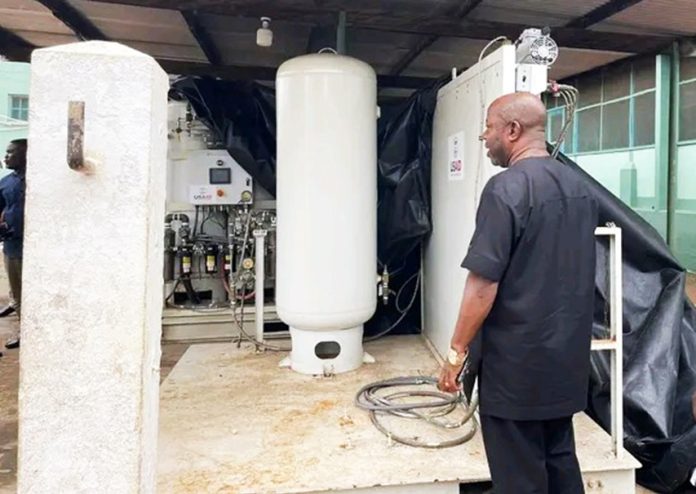
Dr. Festus Awuah Kwofie inspecting the plant under construction

The Member of Parliament for Upper Denkyira East Constituency, Dr. Festus Awuah Kwofie, has inspected work on the construction of an oxygen manufacturing plant at the Dunkwa Municipal Hospital.

He was accompanied by the Municipal Chief Executive, Ebenezer Forson Appiah and Dunkwa Municipality Health Director, Dr. Benjamin Annang and conducted around the facility by the management of Dunkwa Municipal Hospital.

The oxygen plant is expected to serve surrounding towns, including Praso, Obuasi, Diaso, Wassa Akropong, Bogoso, Sefwi and others.

It is being constructed by USAID RISE, Alpha Engineering Services Limited and Arraypro Company Limited within three months.

The Dunkwa Municipal Hospital had been without an X-ray machine since 2009, until the Nana Akufo-Addo government provided a new one last year. Once completed, the facility will become a major source of oxygen supply for the Central Region.

Dr. Kwofie commended the contractors for the pace at which the project was being executed and thanked the hospital management team for their continued support.

The MP also inspected a state-of-the-art industrial X-ray machine that he had lobbied for the hospital.

Subin NDC PC organises Free Health Screening for Constituents

0
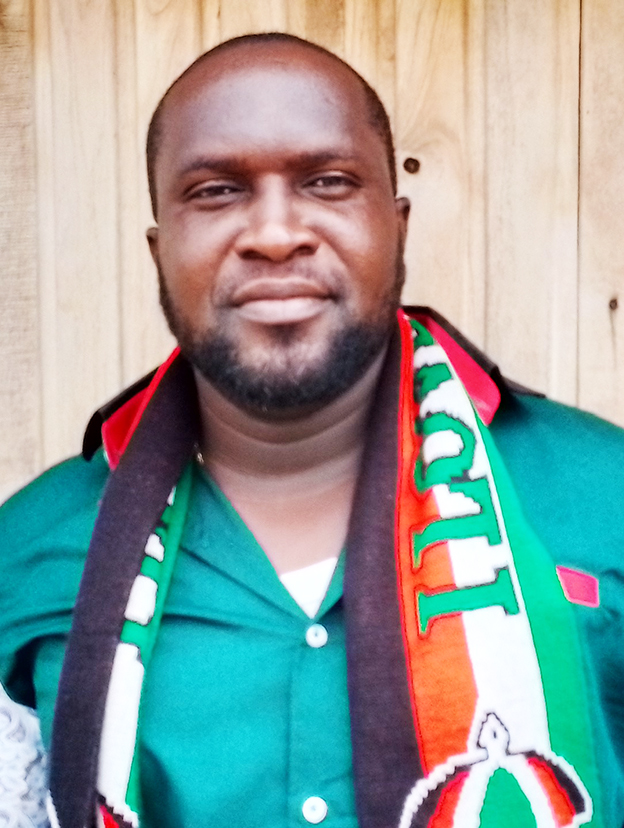
Nana Akwasi Denkye Agyekum, Subin NDC Parliamentary Candidate

Nana Akwasi Denkye Agyekum, the Subin Parliamentary candidate of the opposition National Democratic Congress (NDC) has embarked on a free health screening exercise for the constituents.

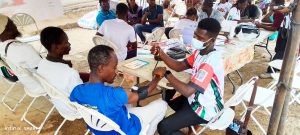
Subin constituents checking their health status

About 800 constituents were screened under the exercise for blood pressure, HIV, diabetes, malaria and tuberculosis. He has urged the constituents to vote based on policies that could better their lot.

According to him, elections are about development to improve the living standards of the voters, hence the need for every voter to cast their vote based on a party or candidate that could help improve their lives, irrespective of one’s political dispensation.

The parliamentary candidate said the motivation behind the exercise is to showcase the NDC’s passion for the welfare of the people, especially in terms of healthcare delivery anytime the party is in government, and to appeal to the electorate to vote massively for the NDC to win the upcoming general elections.

Nana Agyekum said the exercise confirmed that the people are suffering and cannot even seek a basic checkup for their healthcare because most of them are unemployed and announced that about 500 traders would be offered interest-free loans to expand their businesses and trading activities within the constituency.

He pleaded with the Subin electorate to vote the NPP out in the upcoming December 7 general elections to enable the NDC to transform their fortunes.

Sampson Awingobit to contest PNC National Chairmanship position

0
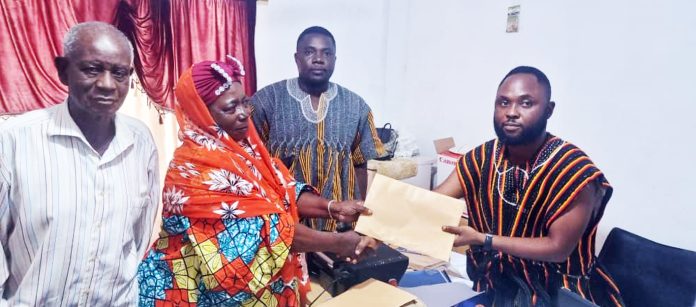
Philip Akutey Azu and a couple of party executives at the PNC party office to pick Awingobit's nomination forms

Samson Asaki Awingobit, the Executive Secretary of the Importers and Exporters Association of Ghana, has expressed his intention to vie for the National Chairmanship position in the internal elections of the People’s National Convention (PNC) scheduled for August 31, 2024.

Mr. Awingobit’s media aide, Philip Akutey Azu, together with key party executives, picked the former’s nomination forms at the PNC’s headquarters in Accra.

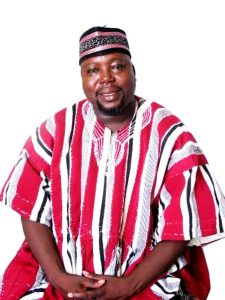
Sampson Asaki Awingobit

Mr. Azu told The Chronicle via the telephone on Wednesday that Mr. Awingobit’s journey from modest beginnings to his current role in the national socio-political sphere underscores his dedication to hard work and perseverance.

“Having previously stood as the party’s parliamentary candidate for Ashaiman in 2008 and contested the party’s flag-bearership race in 2020, when he secured the runner-up position to the eventual winner and flagbearer, David Apasera, Mr. Samson Asaki Awingobit, champions the spirit of open competition and is committed to adhering to the principles governing the PNC’s internal election campaign,” Mr. Azu added.

He said Mr. Awingobit’s professional background in trade and entrepreneurship, coupled with his unwavering commitment, positions him as a formidable contender for the National Chairman role.

In conclusion, Mr. Azu said “Mr. Awingobit believes that his expertise and vision are aligned with the PNC’s objectives and eagerly anticipates engaging with party members and supporters in the forthcoming days as he launches his nationwide campaign to garner the support of the rank and file of the PNC.”

Ghanaians warned against electoral violence

0
Apostle John Botwe

Apostle John Botwe, the National Chairman and outgoing pastor of Christ Revival Church-Ghana, has appealed to the Ghanaian electorate to eschew electoral violence and prioritise peace before, during and after the upcoming December 7 general elections.

He cautioned the citizenry to embrace one another as one people before the elections and not allow themselves to be divided by politicians for political gains.

According to him, Ghana is the only country we can boast of as a people, which should be our core priority to always protect.

The Minister of God made the appeal during his send-off service at the church premises at DK Brefo Memorial Temple at North Suntreso in Kumasi.

He reminded the youth to tread cautiously as the 2024 general elections approach and not allow themselves to be used by politicians to ferment trouble for their parochial interests against their aspirations as future leaders.

He said involvement in acts of violence could jeopardise the prevailing peace and co-existence we are enjoying, which makes Ghana’s democracy the beacon of Africa.

He disclosed that for the past ten years the church has chalked major successes in terms of evangelisation to win souls for Christ, in spite of challenges.

Apostle Botwe, who is on transfer to head the Techiman branch in the Bono East Region, advised the youth to desist from the attitude of becoming rich overnight because there is no easy way to victory at any point in life.

He entreated the youth to be patient in all that they do in shaping their lives for a better future and contribute their quota meaningfully to the development of the socio-economic growth of Ghana.

Apostle Philip Kingsley Damptey, the current Chairman, commended Apostle Botwe for the yeoman’s job done for the Headquarters at North Suntreso the past ten years.

According to him, Apostle Botwe has left a good legacy for emulation by the upcoming youth and future generations.

He disclosed that Rev. Botwe’s hard-working spirit and commitment to the service mean a lot to the entire church and the young ones who are also aspiring to become leaders in the church and in the field of any working environment.

The Ghanaian Chronicle