Home Blog Page 130

SOCO Project Empowering Women And Youth –Ahmed Ibrahim

0
Mr Ahmed Ibrahim speaking at the conference

More than 16 million people in Northern Benin, Côte d’Ivoire, Ghana and Togo face rising threats from climate change, conflict and economic insecurity.

At the SOCO Regional Conference in Côte d’Ivoire, Ghana’s Minister for Local Government, Chieftaincy and Religious Affairs, Ahmed Ibrahim, highlighted how the US $150 million SOCO Project is helping vulnerable border communities build resilience, promote social cohesion and empower women and youth to protect their livelihoods.

Representing President John Dramani Mahama, the Local Government, Chieftaincy and Religious Affairs minister addressed delegates from Ghana, Côte d’Ivoire, Togo, Benin, the World Bank and other development partners, emphasising the interconnected nature of climate pressures, insecurity and limited livelihoods in Northern Ghana and neighbouring Sahel countries.
“Across the northern corridor of the Gulf of Guinea, our countries face shared challenges that strain communities dependent on agriculture, cross-border trade, and local economic activities,” he said, adding “Social cohesion is essential not only for development, but for peace and stability within our borders.”

Ahmed Ibrahim referenced recent attacks on Ghanaian tomato traders in Burkina Faso, illustrating how insecurity in one country can ripple across borders.

“These are ordinary citizens whose daily economic activities sustain families. No nation can confront these risks alone,” he warned, calling for coordinated regional action.

He also stressed that youth unemployment increases vulnerability to extremist recruitment. “Where hope is fragile, extremist groups find space to recruit. Addressing insecurity requires investment in people, jobs, and functional local systems,” he said.

Climate Change and Gender Vulnerabilities

Changing rainfall patterns, declining soil productivity, and water scarcity are compounding challenges for northern border communities.

The Local Government, Chieftaincy and Religious Affairs minister highlighted that women and girls bear the greatest burden, yet remain central to household survival and community stability. He called for climate adaptation measures that deliberately include women and youth in economic and decision-making processes.

Since its inception, Ghana’s SOCO Project has reached 1.5 million people across 48 districts, covering about 1,700 communities organized in clusters. The project has improved access to schools, health facilities, water systems, sanitation, local markets, energy, and climate adaptation infrastructure, restoring confidence in local governance and promoting peaceful coexistence.

By January 2026, Ghana had completed 950 infrastructure subprojects, spanning social services, energy access, water and sanitation, and connectivity improvements.

The Local Economic Development component has supported 1,554 Common Interest Groups, benefiting over 46,000 people, nearly 80 percent of whom are women and youth. These groups engage in farming, agro-processing, and income-generating activities, providing alternatives to unemployment and economic exclusion.

“Where young people have work, where women participate in decision-making, and where communities see progress, cooperation improves and the risk of conflict declines,” the Minister said.

Cross-Border Cooperation is Critical

The Local Government, Chieftaincy and Religious Affairs minister stressed that regional challenges – climate stress, transhumance pressures, livelihood disruptions and insecurity require collective solutions.

Conferences like the SOCO Regional Forum enable countries to exchange lessons, coordinate interventions and address vulnerabilities before they escalate into conflict.

“Through cooperation, inclusion and sustained investment, border communities can transform from zones of vulnerability to zones of opportunity,” he said.

Ghana reaffirmed its commitment to working alongside sister countries and development partners, including the World Bank, to promote social cohesion, resilient livelihoods and peace across the Gulf of Guinea.

Ahmed Ibrahim concluded by urging delegates to continue collaboration to support vulnerable border communities, empower women and youth and foster sustainable regional development.

“The SOCO Project demonstrates that early inclusive investment in people and communities is the most effective tool for reducing vulnerability and enhancing stability,” he said, calling on all partners to strengthen regional coordination and shared responsibility.


OSP withdraws charges against two accused in NPA Trial

0
Court Complex

The Office of the Special Prosecutor (OSP) has withdrawn charges against two persons who were standing trial together with former Chief Executive of the National Petroleum Authority (NPA), Dr Mustapha Abdul-Hamid, and others in an alleged extortion case.

The development was communicated to the High Court in Accra on Tuesday, by Principal Prosecutor, Adelaide Kobiri-Woode, before the court presided over by Justice Francis Apangar Achibonga.

According to the prosecution, the fourth and fifth accused persons, Albert Ankrah, a Director at KEL Logistics Unit and Isaac Mensah of King’s Energy Limited have been turned into prosecution witnesses after voluntarily approaching the OSP through their lawyers and agreeing to testify for the state.

Adelaide Kobiri-Woode told the court that at the last adjourned date, the Republic informed the court that the fourth accused had engaged authorised officers of the OSP and expressed his willingness to cooperate with investigators and testify as a prosecution witness.

She said after the previous sitting, the fifth accused, Isaac Mensah, accompanied by his lawyer from the chambers of Thaddeus Sory, also met with officials of the OSP and agreed to assist the prosecution.

She explained that the decision required the filing of a fresh charge sheet to reflect the new development, reducing the number of accused persons from ten to eight.

The prosecution, therefore, prayed the court to strike out the earlier charge sheet numbered CR/0030/2026 to enable the state to proceed with the new one.

Justice Achibonga subsequently struck out the charge sheet and discharged the accused persons listed on it, formally removing the fourth and fifth accused from the trial.

The remaining accused persons were re-arraigned on the new charge sheet and pleaded not guilty to all charges.

Counsel for Dr Mustapha Abdul-Hamid, first accused, Joseph Dindiok Kpemka prayed the court to maintain the earlier bail conditions granted to the accused, arguing that they had consistently complied with all directives of the court and the Office of the Special Prosecutor, since they were first granted bail in July, 2025 and again in December 2025 when a substituted charge sheet was filed.

He urged the court to adopt the previous bail terms to avoid difficulties the accused persons would face in executing fresh bail conditions.

The court, however, admitted the accused persons to bail in the sum of GH¢2 million each with two sureties to be justified.

One of the sureties must be a public servant earning not less than GH¢5,000 monthly, while the other must deposit documents covering landed property at the court registry.

The court further ordered the accused persons to deposit their passports at the registry, report to the lead investigator at the OSP once every two weeks, and remain on the stop list at all entry and exit points of the country.

Justice Achibonga granted leave for the accused persons to remain on their previous bail conditions temporarily while they take steps to satisfy the new bail terms.

The accused persons were also directed to file a list of witnesses they intend to rely on, if called upon to open their defence.


Those standing trial include Jacob Kwamina Amuah, Wendy Newman, Bright Bediako-Mensah and Kwaku Aboagye Acquah, together with former NPA boss, Dr. Mustapha Abdul-Hamid.

The case, which has attracted significant public attention, centres on an alleged extortion scheme linked to officials connected to the NPA.

The matter has been adjourned to April 15, 2026, for Case Management Conference.


Court Dismisses Second Stay Application by Gifty Oware Mensah in NSA Trial

0
Gifty Oware-Mensah

The Criminal Division of the High Court in Accra, presided over by Her Ladyship Justice Audrey Kocuvie-Tay, has dismissed another application filed by former Deputy Executive Director of the National Service Authority (NSA), Gifty Oware Mensah, seeking a stay of proceedings in her ongoing criminal trial.

This is the second time the court has refused an application by Mrs. Oware Mensah to halt proceedings in the case in which she is facing charges of wilfully causing financial loss to the state, using public office for profit, and money laundering.

Moving the motion on March 9, counsel for the accused, Gary Nimako Marfo, argued that the defence had filed an interlocutory appeal at the Court of Appeal challenging an earlier order by the High Court directing the accused person to file the names and addresses of witnesses she intends to call.

According to counsel, the appeal raises serious constitutional issues relating to the 1992 Constitution, particularly the presumption of innocence under Article 19(2)(c), and the right not to be compelled to give evidence in a criminal trial.

He submitted that compelling an accused person to disclose witnesses before the prosecution closes its case undermines the constitutional protection afforded to accused persons.

Counsel further argued that the Practice Direction on Case Management and Disclosure Proceedings, 2018, which requires such disclosure, is inconsistent with the Constitution and the Evidence Act, which places the burden of proof solely on the prosecution.

He told the court that failure to stay proceedings pending the determination of the appeal could lead to a miscarriage of justice and prayed the court to exercise its discretion in favour of the accused.

Opposing the application, Principal State Attorney, Dufie Prempeh, submitted that the Republic had already filed an affidavit in opposition and urged the court to dismiss the motion.

She argued that the order directing the accused to disclose witnesses was made in accordance with the Constitution, the Criminal Offences Act, and the Practice Direction aimed at ensuring orderly and efficient trials.

The prosecution further stated that filing an appeal does not automatically warrant a stay of proceedings and that such orders are only granted in exceptional circumstances.

According to the Republic, the accused had failed to demonstrate any special circumstances to justify halting the trial, adding that granting the stay would delay justice and undermine public interest, especially considering the nature of the offences.

The prosecution also noted that the appeal is interlocutory and not against a conviction, and therefore the trial would not be rendered invalid even if the appeal succeeds.


Court dismisses application

After hearing arguments from both sides, the court adjourned the matter and dismissed the application for stay of proceedings on the returned date, March 23.

After the dismissal of the application, defence counsel Nana Benyin Ackon, holding brief for Gary Nimako Marfo, informed the court that another application for stay had been filed, but counsel was unable to attend court due to ill health and prayed for a short adjournment.

However, the court noted that although the application for stay of proceedings pending an interlocutory appeal filed on February 17, 2026, had been served on the Republic, the supplementary affidavit filed on March 11, 2026, had not been served.

Principal State Attorney Dufie Prempeh confirmed that the prosecution had not received the supplementary affidavit. Justice Kocuvie-Tay consequently ordered the defence to ensure proper service of the supplementary affidavit on the Republic. The case has been adjourned to April 15, 2026 for continuation of proceedings.

Ghana, EU Sign First-Ever Security and Defence Partnership

0
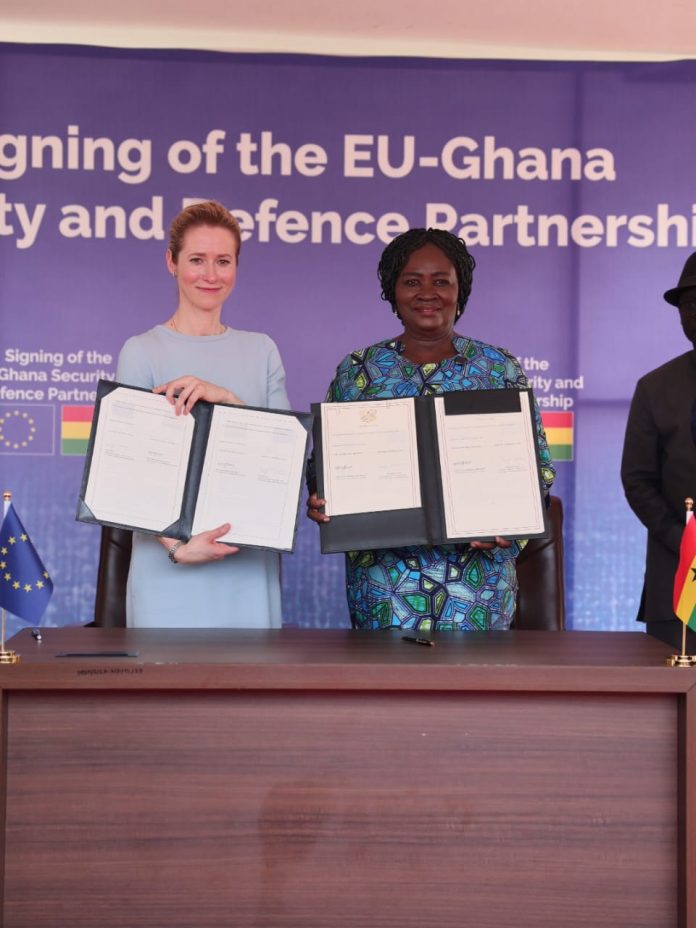
The partnership was signed by High Representative Kaja Kallas on behalf of the European Union and by Naana Jane Opoku-Agyemang, Vice-President of Ghana, for the Republic of Ghana on display

Government has signed a landmark Security and Defence Partnership (SDP) with the European Union (EU), marking the first such agreement between Ghana and the bloc aimed at strengthening cooperation on security and stability.

The partnership establishes a structured framework to enhance collaboration in addressing emerging threats, including terrorism, maritime insecurity, cyber threats and the spillover of instability from the Sahel.

Speaking at the signing ceremony in Accra, the Vice President, Prof. Jane Naana Opoku-Agyemang, described the agreement as a significant milestone in Ghana-EU relations and a reflection of their shared commitment to peace, stability and sustainable development.

She noted that the evolving security landscape in West Africa, coupled with recent tragic incidents such as the killing of Ghanaian traders in Burkina Faso, underscores the urgency for stronger international cooperation.

“In the face of these challenges, partnerships like this are essential to protect lives and maintain peace and stability across the sub-region,” she said.

The Vice President commended the EU for its continued support to Ghana under the European Peace Facility (EPF), through which the country is benefiting from assistance valued at €50 million.

She explained that two key assistance measures adopted in July 2023 and April 2024 are enhancing the operational capacity of the Ghana Armed Forces (GAF).

The 2023 support package, valued at €20.25 million, provided equipment in areas such as intelligence and surveillance, electronic warfare, mobility, military engineering, riverine operations and explosive ordnance disposal. This included the delivery of 105 militarised vehicles to improve operational readiness.

A second package worth €25 million, adopted in April 2024, is currently being implemented and focuses on medical support, military engineering, logistics training, intelligence, communication systems and explosive ordnance disposal. Deliveries are expected to continue through 2026.

She added that additional equipment supplied over the years, including drones, jammers and surveillance systems, has significantly improved Ghana’s situational awareness and operational coordination.

Under the new partnership, Ghana and the EU will deepen cooperation in key areas such as maritime security in the Gulf of Guinea, counter-terrorism, conflict prevention, crisis management and cyber security. The agreement also covers climate-related security risks, capacity building and support for African-led peace initiatives.

The National Security Coordinator, Mr Abdul Razak, described the agreement as a major step forward in strengthening Ghana’s security architecture.He stressed that in the face of increasingly complex global threats, strong partnerships and coordinated strategies remain critical.

“These initiatives are vital to enhancing our resilience and effectiveness in addressing security challenges,” he said, assuring that all equipment provided would be used strictly for its intended purpose.

The EU has supported more than 30 security-related projects in Ghana, covering areas such as counter-terrorism, border management, maritime security and cyber security. In the Gulf of Guinea, over 40 training sessions have also been conducted for military and civilian security personnel.

The partnership is expected to strengthen Ghana’s capacity to respond to threats, improve coordination with international partners and contribute to peace and stability in West Africa.

Government reaffirmed its commitment to working closely with the EU to address the root causes of insecurity, including poverty, marginalisation and youth unemployment.


Telcos abandon Tain communities; residents climb trees for network

0
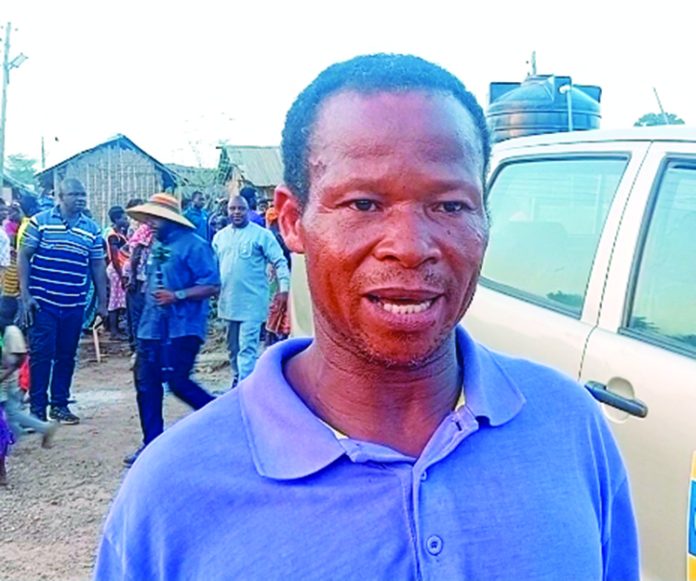
Nana Kwaku Firi, Acting Odikro of Agyawiam in Tain District

Residents of Agyawiam in the Tain District of the Bono Region are literally risking their lives in a desperate search for a mobile network, as they climb trees and trek to hilltops just to make emergency calls.

A visit by The Chronicle to the community uncovered a disturbing reality of total telecommunications blackout, where residents are trekking through bushy hills and exposing themselves to poisonous reptiles just to stay connected.
The situation, best described as both inhumane and dangerous is not limited to Agyawiam.

Assembly member, Hon Prince Wayini

The Chronicle checks revealed that Bofourkrom and Abronye communities are equally cut off from telecom services, leaving thousands of residents stranded in the digital wilderness.
In Agyawiam, a community of over 1,500 people, the absence of a network has turned basic communication into a life-threatening gamble.

Residents are forced to walk long distances to hilly and bushy areas, where they often encounter snakes and other poisonous reptiles, while searching for network signals.
Some residents told The Chronicle that they have narrowly escaped scorpion and snake bites during these dangerous attempts, while others have suffered attacks.

Yet they have no choice but to continue risking their lives to stay connected.
The situation, the residents noted, has turned medical emergencies into life-threatening ordeals, where motor riders are forced to race against time to nearby towns, such as Nsawkaw and Badu, in search of vehicles or ambulances to transport pregnant women in labour and critically ill patients.

Acting Odikro of Agyawiam, Nana Kwaku Firi, expressed outrage over what he described as years of neglect.

“Our people are suffering. In emergencies, there is no way to call for help. Now our people even risk snake bites just to get a network.

“This is unacceptable. We are pleading with authorities and telecom companies to come to our aid immediately,” he said.
The Assembly Member for the area, Prince Wayini, also raised serious concerns, warning that the lack of telecommunications infrastructure is stifling development across the area.

“This situation is affecting the development of our communities. Without a network, businesses cannot grow, education is suffering and emergency response is almost impossible. We are appealing to the government to take immediate action to address this problem,” he stressed.

Ms. Immaculate Derry, a female plumber and resident, lamented the deepening hardship caused by the lack of connectivity. “If your partner lives outside this community, you cannot communicate at all. In this age, we cannot even go on social media. The youth are missing so many opportunities. It is no longer funny,” she said.

As Ghana pushes forward with digital transformation, the residents are calling on the Tain District Assembly, the Ministry of Communications and Digitalisation and telecom providers to urgently extend network coverage to the affected areas.
Attempt by The Chronicle to get some responses from the District Chief Executive for Tain, Mr. Iddrisa Salia was unsuccessful, as he was said to be out of the district for other official engagements at the time of our visit.

By Edmond Gyebi

Beyond the Headlines: How Cocoa Marketing Actually Works in Ghana

0
Dr Wisdom Kofi Dogbey

Ghana’s cocoa marketing architecture is one of the most frequently discussed, yet widely misunderstood, institutional systems in global commodity trade. In media commentary, parliamentary debate, and industry conference panels alike, the mechanics of how Ghanaian cocoa moves from farm gate to international buyer are routinely reduced to oversimplified narratives. The purpose of this piece is not to defend any single institution, but to set out the operational realities that shape, and should inform, every serious conversation about Ghana’s cocoa sector.

At its core, Ghana’s cocoa marketing system is defined by institutional coordination. It is neither a free market nor a command economy. It is a structured, rules-based system in which different actors fulfil discrete and interdependent functions across a vertically integrated supply chain. Farmers produce the raw commodity.

Licensed Buying Companies handle domestic procurement under conditions set by regulation. Quality assurance systems operate to preserve the physical and reputational integrity of Ghanaian cocoa at every stage of the pipeline. And the Cocoa Marketing Company, CMC, functions as the exclusive commercial interface between Ghana’s cocoa supply and the international market.

This division of roles is not a relic of a bygone era. It is the deliberate architecture through which Ghana has maintained one of the most bankable and reputable cocoa origins in the world for over seven decades. Buyers from multinational chocolate manufacturers to commodity trading houses to artisanal bean-to-bar producers transact through CMC because the system provides something increasingly rare in global agriculture: counterparty certainty, quality consistency, and institutional credibility.

Yet the very complexity of this system makes it vulnerable to mischaracterisation. When the purchasing function is conflated with the marketing function, or price-setting mechanisms are mistaken for trading strategy, the result is a distorted public conversation. That distortion carries real consequences: it misinforms policy, confuses investment analysis, and weakens the confidence of international buyers who depend on clarity and predictability from origin-country institutions.

The commercial distinction is significant. CMC does not merely broker transactions. It manages a forward sales programme tied to global price benchmarks, principally ICE London. It structures contracts, manages counterparty risk, handles logistics coordination, and ensures delivery performance across dozens of markets. These are functions that demand both institutional continuity and real-time market intelligence. They are not reducible to a single headline or political sound bite.

Understanding Ghana’s marketing system is also essential to supply chain planning at the processor level. Unlike origins where spot market fragmentation introduces delivery uncertainty, Ghana’s coordinated system provides the long-horizon visibility that large-scale blending operations require, particularly as compliance environments tighten under frameworks such as the EU Deforestation Regulation. The bankability of Ghanaian cocoa is not incidental; it is the product of institutional design.

Any reform conversation must therefore be grounded in a rigorous understanding of what the current system actually does. Ghana’s cocoa marketing model represents a form of industrial coordination that has delivered tangible results: reliable foreign exchange earnings, sustained buyer confidence, a global quality premium, and decades of market continuity. Assumptions shaped by incomplete narratives, however well-intentioned, are a poor foundation for policy.

In the media space, there is an opportunity to raise the quality of public discourse. CMC is committed to demystifying the cocoa marketing process through structured engagement, editorial briefings, and fact-based exchanges. The cocoa sector is too important to Ghana’s economy for public understanding to remain hostage to guesswork or speculation.

In an era when agricultural commodity systems face unprecedented scrutiny from regulators, civil society, and consumers, Ghana’s cocoa marketing framework deserves to be understood on its own terms, as a system of coordinated excellence, not bureaucratic opacity. And it is the responsibility of the institution charged with bringing Ghanaian cocoa to the world to make that understanding accessible to every stakeholder with a stake in this sector’s future.

By the Managing Director, Cocoa Marketing Company (Ghana) Limited

Cocoa is not just a commodity. In Ghana, it is a national institution. And institutions earn trust not only through performance, but through transparency.

Editorial: Asokwa Interchange Transformation Is A Powerful Statement About The Potential Of The Youth

0
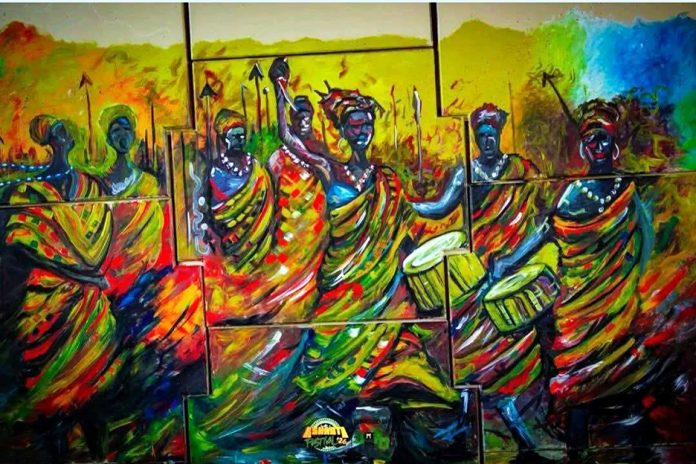
Drawings and paintings by the Students

The Asokwa Interchange has undergone a remarkable transformation, evolving from a typically congested transport hub into a vibrant open-air gallery, as part of the Ashantifest 2026 celebrations. This change has been driven largely by visual arts students from Senior High Schools across Kumasi, who used their creativity to produce striking murals that celebrate Ghanaian culture, leadership and identity.

Among the standout pieces are detailed portraits of Otumfuo Osei Tutu II and John Dramani Mahama, painted with impressive precision and symbolic depth. The artworks have not only enhanced the visual appeal of the interchange but also slowed the pace of daily activity, as commuters pause to admire and photograph the murals.

The initiative, spearheaded by the Ashanti Region minister, Dr Frank Amoakohene, has received widespread praise for promoting youth talent, while beautifying public infrastructure. Residents have called for similar projects to be replicated across the city, highlighting the potential of such initiatives to nurture creativity and improve urban spaces. Ultimately, the project has turned an ordinary commute into a meaningful cultural experience.

The transformation of the Asokwa Interchange into a vibrant cultural canvas is more than a beautification exercise it is a powerful statement about the untapped potential of Ghana’s youth. At a time when public discourse is increasingly dominated by reports of indiscipline and misconduct among Senior High School students, this initiative offers a refreshing and necessary counter-narrative.

Led by students themselves, the project under Ashantifest 2026 demonstrates what young people can achieve when given opportunity, guidance and purpose. The murals featuring icons such as Otumfuo Osei Tutu II and John Dramani Mahama reflect not only artistic excellence but also a deep engagement with Ghana’s cultural and political heritage. These are not idle expressions; they are thoughtful interpretations that show discipline, focus and pride.

In recent months, the nation has grappled with troubling incidents involving students ranging from violent clashes to acts of vandalism and defiance of school authority. Such episodes have raised serious concerns about youth development and values.

Yet, the work at Asokwa reminds us that these incidents, while worrying, do not define an entire generation. There exists a larger, often quieter majority of students eager to learn, create and contribute meaningfully to society.

This is why the role of leadership in shaping youth engagement cannot be overstated. The vision of Dr Frank Amoakohene in championing this initiative deserves commendation. By creating a platform where students can channel their energy into productive and culturally enriching activities, he has demonstrated a model that other regions would do well to emulate.

Art, in this context, becomes more than decoration, it becomes education, discipline and identity-building. It teaches patience, teamwork and critical thinking. It also instills a sense of ownership in public spaces, which can discourage the very acts of vandalism and disorder that society seeks to curb.

The lesson is clear – when students are engaged positively, they rise to the occasion.

AGA commissions water supply systems for three communities in Obuasi

0
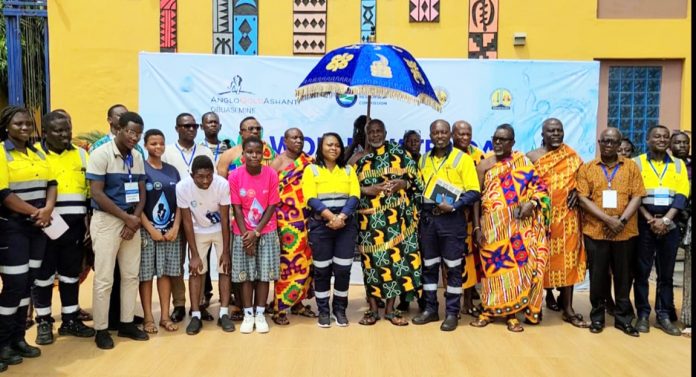
Stakeholders pose for the camera

AngloGold Ashanti (AGA), Obuasi Mine has commissioned Water Supply Systems for three Communities in Obuasi, in addressing accessibility to safe and reliable portable water.

The communities are Sampsonkrom, Ewiase and New Nsuta-Emuye, each of which was provided with seven stand pipes.

The commissioning of the projects, estimated to cost GHC4,891,839 was performed at Sampsonkrom to coincide with the commemoration of World Water Day, under the theme: “Where Water Flows, Equity Grows”.

Nana Serwaa Bruwaa II, Nananom, AGA Staff in a group picture after the programme

The Water System is expected to reduce the burden of water collection for women and children and also improve overall quality of life in the beneficiary communities.

Speaking at the ceremony, Mrs. Mavis Nana Yaa Kyei, Social Development and Gender Superintendent of AGA, said the company is concerned with the safe and healthy water, hence the intervention.

She said in 2024 and 2025 the company provided six communities including Ntonsua, Kwabrafoso, Kriki and Bidieso with similar facilities.

The Social Development and Gender Superintendent charged the beneficiary communities to take good care of the facilities and also adhere to strict maintenance culture to prolong the lifespan of the projects.

A lady draws water from one of the seven stand pipes

Mrs. Eugenia Kromo Sarpong, Principal Programmes Officer of the Environmental Protection Agency (EPA), Obuasi office, expressed concern over the current deplorable nature of rivers in the Adansi area, citing the Jimi River as an example, and called for stringent measures from stakeholders towards protecting the rivers and other water bodies from being destroyed by galamsey activities.

The Akrokerrihemaa, Nana Serwaa Bruwaa II said currently it is not easy to come by portable drinking water and expressed her appreciation to AGA for intervention for the three communities.

The Assemblyman for Sampsonkrom Electoral Area, Seidu Dramani said portable and clean water has eluded his constituents for some time now and thanked AngloGold for the projects.

He stated that Sampsonkrom depended on an old underground water, which is not currently in use for obvious reasons, and appealed to AGA Water Department to maintain it as a backup for the new water system.

From Frederick Danso Abeam, Sampsonkrom, Obuasi

SHS Visual Arts students beautify Kumasi

0
A female student displays her drawing skills

Visual Arts students from selected Senior High Schools (SHS) in Ashanti Region have engaged in a Street Arts festival by decorating the Asokwa Interchange with murals and designs as part of activities marking Ashanti Festival 2026. This has given Kumasi a real facelift

A section of the young artists at work

The project has already turned the Asokwa Interchange into a colourful landmark of paintings and drawings, offering a glimpse of the creativity to be celebrated in the impending Ashanti Festival 2026.

The Schools involved include St. Louis SHS, Toase SHS, SIMMS, Barekese SHS, Achiase SHS, Wesley Girls, Prempeh College, Opoku Ware School, Kumasi Technical Institute, Kumasi Anglican SHS and T.I. Ahmadiyya SHS.

Drawings and paintings by the Students

Under the guidance of their teachers and heads, the students demonstrated their talents on the Asokwa Interchange by drawing to the admiration of the general public.

The Coordinator of the Festival, Mr. Emmanuel Opoku Anane, said the exercise is designed to showcase creativity, build confidence and involve students in national development.

He added that the festival seeks to highlight Ashanti region’s potential by bringing together all sectors to boost the regional and national economy.

708 Nigerians evacuated from Niger arrive in Kano

0
Nigerians evacuated

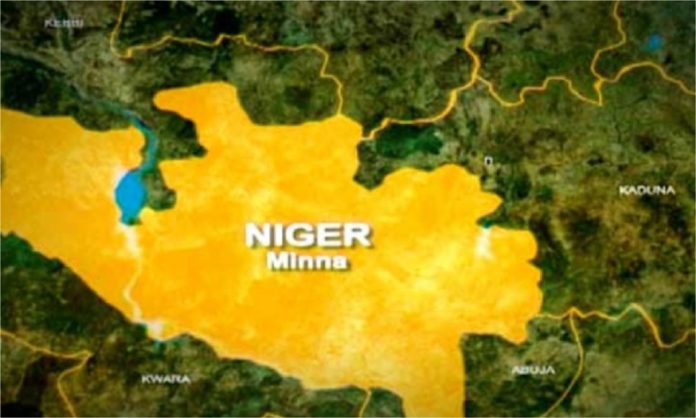
The National Emergency Management Agency (NEMA) on Monday received 708 Nigerians who had been stranded in Niamey, Niger Republic, in a government-led evacuation operation.

Dr. Nura Abdullahi, Head of Operations at NEMA’s Kano office, told journalists at Malam Aminu Kano International Airport that the returnees arrived around 4:08 pm in 12 buses and were immediately registered and screened.

The group includes 292 males and 416 females, consisting of both adults and children, from states including Katsina, Kano, Jigawa, Benue, Borno, Yobe, Zamfara, Kaduna, Kogi, and Niger. Medical teams from the Nigerian Red Cross attended to those in need, while serious cases were referred to state hospitals.

Abdullahi also urged Nigerians, especially young people, to avoid risking their lives by traveling abroad illegally in search of better opportunities.

Hajiya Luba Liman, Kano Field Coordinator for the National Commission for Refugees, Migrants and Internally Displaced Persons (NCFRMI), described the evacuation as a coordinated effort involving several government agencies in collaboration with the Nigerian Embassy in Niamey and the Ministry of Foreign Affairs.

She emphasized that the return was voluntary and specifically arranged for those who could not afford to make the journey home on their own.

Credit: dailypost.ng

The Ghanaian Chronicle