Home Blog Page 1297

Editorial: Perennial Bagre Dam Spillage And Matters Arising

0
Editorial

SONABEL, the power utility company of Burkina Faso says it will begin the spillage of water from the Bagre Dam today, Monday, August 19, 2024 according to a report by graphiconline.

A statement signed and copied to the Ghana News Agency by the White Volta Basin Secretariat of the Water Resources Commission, said the update from SONABEL indicates that the current water level of the dam was 232.8 metres and keeps rising.

The spillage is expected to cause the White Volta River in Ghana to overflow its banks and occupy its normal flood plains, the statement added. The statement, therefore, advised residents especially those residing and working along the banks of the White Volta River to take precautionary measures to avoid being adversely affected by the spillage.

“This is to inform you of your further action relating to flood management. We will furnish you with additional information on this matter as this becomes available to us,” it stressed.

The Chronicle would like to commend the White Volta Basin Secretariat of the Water Resources Commission for their proactive communication. By serving prior notice, theyhave demonstrated a commendable commitment to transparency and public safety, allowing residents in the affected areas, particularly those along the banks of the White Volta River to take necessary precautions.

The spillage, expected to cause the White Volta River in Ghana to overflow its banks and occupy its normal flood plains, poses a significant risk to the lives and properties of those residing in these vulnerable areas. The importance of early warning systems cannot be overstated in such situations.

The advance notice provided by SONABEL, along with the timely update from the White Volta Basin Secretariat of the Water Resources Commission, plays a crucial role in keeping people on their toes, encouraging them to relocate to higher ground and take other precautionary measures to safeguard their lives and belongings.

However, while we acknowledge the importance of these warnings, it is equally vital to address the broader implications of the spillage on the communities along the White Volta River. The annual nature of this event necessitates a comprehensive and long-term approach to mitigate the impact on those most at risk.

First and foremost, we urge the relevant authorities to ensure that adequate measures are in place to support residents who may be adversely affected by the spillage. This includes providing temporary shelters, emergency relief supplies and medical assistance to those displaced by the flooding. Additionally, there should be a concerted effort to assess the damage to properties and provide compensation or assistance to rebuild homes and livelihoods.

Particular attention must be given to the most vulnerable populations, including the elderly, children, women and persons with disabilities, who may require additional support during such emergencies.

While immediate relief efforts are essential, they are not enough. The recurring nature of the Bagre Dam spillage demands a long-term solution that goes beyond annual emergency responses. We call on the government, in partnership with regional and international stakeholders, to explore sustainable strategies for flood management in the White Volta Basin.

One potential approach is the construction of flood control infrastructure to regulate the flow of the spillage. Such infrastructure could help prevent the White Volta River from overflowing its banks, thereby reducing the risk of flooding in the surrounding communities.

It is time for a comprehensive and sustainable approach to flood management that goes beyond crisis response. By investing in infrastructure, enforcing land use regulations and fostering regional collaboration, we can ensure that the Bagre Dam spillage becomes a manageable event rather than a yearly disaster.

The People’s Constilution

0
Opinion

Those days, we hear their war cry: “People! Revolution!!!, People! Revolution,” and later it became “People! Hormor, ye wor!!!” when the revolution was not bringing food and the people started getting hungry. That was in the early days of the PNDC era.

Those were the days, when we were told by semi-literates that the degree holders know nothing. These school drop-outs would say they were more brilliant in class than those in higher positions, like doctors, managers and lecturers. Unfortunately, their parents could not afford to pay school fees for them to advance in education, that was how they ended up where they were.

These academically weak students, we were told,had rich parents who bought exams questions for them, that was how come they got to where they were. So, any highly educated Ghanaian was brainless and corrupt and must be disregarded.

Yearslater, the leader of the revolution, J.J Rawlings, acquired two honorary doctorate degrees and oh, how proud he felt to wear the same academic gowns, he had earlier mocked. He grabbed the opportunity to use the easiest way to acquire a degree, he once condemned as useless.

Meanwhile, some of his disciples, devoted time to go through the hard way to acquire degrees and how proud and honoured they feelwith the title, “Doctor.” How they could afford the courses, is another question.

People! Revolution!!!, and the beat went on. Yes, those were the days when anyone close to the corridors of power, could descend on Ghanaians and command as law any stupid thing that would comefrom his mouth.

Ghanaians were told not to water their lawn or wash their car, because they would waste precious water. We were told not to construct fence walls with concrete, because blocks and cements are meant only for constructing buildings. We were told not to harvest fresh maize but let them dry on the stalk so that there will be enough for corn flour and dough. So, no more boiled or roasted corn.

This was what came from the mouths of the disciples of the revolution, who would gather vulnerable people to demonstrate against management and take over the operations of the workplace.

Ghana Textiles Printing Corporation (GTP), once had its management taken over by a gang of semi-literates belonging to the Workers Defense Committee (WDC). Things took a deep downturn and Rawlings had to restore sanity to save GTP.

In fact, some of the things that came out from the minds and mouths of these revolutionary were too lethal to comprehend. A university student and revolutionary told me, while we were walking the streets of Labone, that our agriculturists were useless, because they should be able cultivate corn on the tarred streets but they could not. I quietly said to myself, “Ghana, we have arrived!”

Unfortunately, it was these people who composed the majority of the members on the Consultative Assembly which drafted our 1992 Constitution. Even though, it is the longest constitution spanning over thirty years and counting, it is the one that people have more problems with. Because when it comes to understanding some of its articles, confusion always erupt.Sometimes, even most of those who sat down and wrote the Constitution, do not understand what they wrote.

Recently, a simple self-explanatory, article in the Constitution, about the minimum number of justices to be appointed on the Supreme Court, created confusion in the House of Parliament.

Article 128 (1) states: The Supreme court shall consist of the Chief Justice and not less than nine other Justices of the Supreme Court.” There is nothing here that suggests that there must be a limit for justices on the Supreme Court. The mathematical proponent here is “not-less-than (<∕)” and nothing else. It had nothing to do with upper limits. So, nothingin Article 128, mandates that there should be an upper limitof justices on the Supreme Court.

As to whether this issue was debated on the floor of the Consultative Assembly, Ghanaians were never told and even if it was, who cares? One is only interested in buying cassava and not what went into its production.

Hon. Mahama Ayiriga of the NDC who raised this nonexistent clause of upper limit of justices on the Supreme Court, might have been inspired by the propaganda on social media comparing the nine justices on US Supreme Court to the fifteen in Ghana’s.

If he had done his research, he would know that the USA has one federal supreme court, with nine justices and fifty-two state supreme courts for the fifty states, with a total of three hundred and forty-four justices.

The state supreme courts’ rulings on state laws are final, but their rulings on federal laws can be appealed to the Supreme Court of the United States. There are 353 supreme court justices in the US.

Currently, we have fifteen justices on our Supreme Court. At one point in time there were sixteen sitting justices during NDC 1 and 2 regimes, under Rawlings.

If the law is silent on the upper limit of appointees, why should the issue be raised? This habit of just opening one’s mouth during the days of the revolution, and what came out should be law, has entered this current constitutional era.

So, now we can safely say, “People! Constilution!!!”And keep being disillusioned about things around us.

By Hon. Daniel Dugan

Editor’s note: Views expressed in this article do not represent that of The Chronicle

NPP mend differences in Ejisu constituency

0
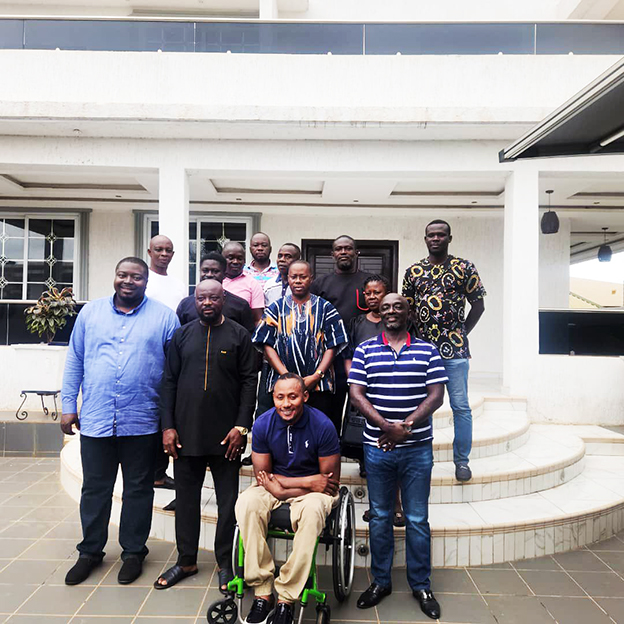
The Chairman of the Ashanti Region Reconciliation Team, Amb. Edward Boateng, in a group photograph with former executives of Ejisu constituency

In an attempt to attained a unified front and convincing win in the Ejisu New Patriotic Party (NPP) in the Ashanti Region, ahead of the December 7 General Elections, the Chairman of the Ashanti Region Reconciliation Team, Amb. Edward Boateng, on Saturday, August 18, 2024 held a crucial meeting with former constituency party executives in Ejisu.

Marshalled by Ing. Dr. Kwame Agyeman-Budu, the meeting seeks to foster unity as it enhances effective collaboration among the leadership of the party and members in the region.

The high-level meeting is akin to the recent engagement with Hon. Ing. Kwabena Owusu-Aduomi, last week, where similar concerns were raised.

High on the table included the recognition of the importance of peacebuilding, cohesion, and teamwork within the Party in the Ejisu constituency in the Ashanti Region.

Speaking at the meeting, Chairman of the Ashanti Region Reconciliation Team, Amb. Edward Boateng, posited that there is an urgent need for all members to work together towards a common goal, particularly as the party prepares for the upcoming electoral activities.

He emphasised that “a team divided in war struggles,” rallying for cooperation and understanding to ensure that victory is within reach.

Amb Boateng indicated that the Reconciliation Team continues to work tirelessly to ensure that all party members in the region are united and focused on the task ahead.

In an assertion prompting the intention of the committee to extend the olive branch to every nook and cranny of the party, Amb. Edward Boateng assured attendees that more of such engagements will be sustained to maintain momentum and resolve any lingering conflicts within the party.

In attendance at the all-important meeting was the incumbent Member of Parliament for the Ejisu constituency, Hon. Kwabena Boateng (Esq), who doubles as the party’s parliamentary candidate, a positive step signalling a collective commitment to strengthening party structures for victory in December.

The Chairman of the Ashanti Region Reconciliation Team, Amb. Edward Boateng, in a group photograph with former executives of Ejisu constituency.

President Akufo-Addo Highlights the Role of AfCFTA in Africa’s Economic Transformation

0
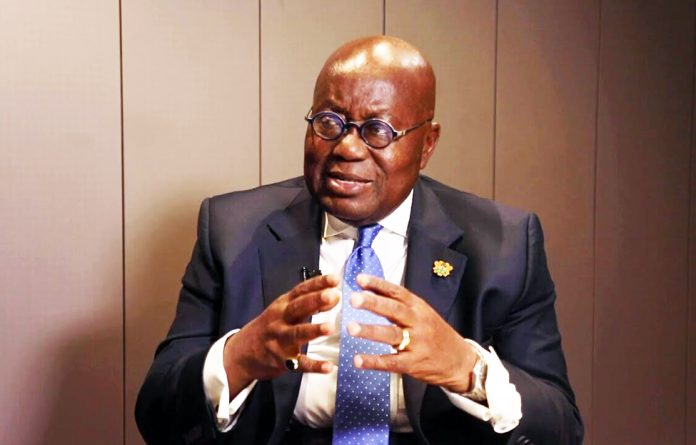
President Akufo-Addo

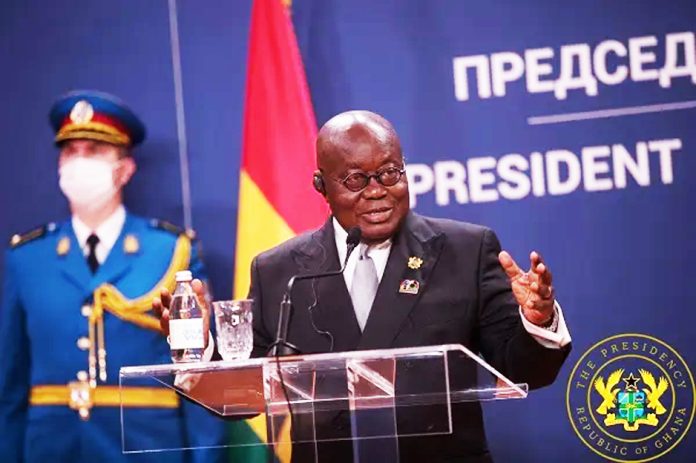
During the 5th anniversary celebration of the Council on Foreign Relations Ghana, President Nana Addo Dankwa Akufo-Addo delivered a keynote speech emphasising the transformative potential of the African Continental Free Trade Area (AfCFTA) Agreement in driving Africa’s economic integration and industrialisation.

Speaking on the theme: “The Limits of the Current Development Co-operation Framework for Africa’s Transformation,” the President highlighted the AfCFTA as a key component of a new paradigm for development cooperation in Africa.

The AfCFTA Agreement, according to President Akufo-Addo, represents a bold and transformative initiative aimed at accelerating intra-African trade, promoting industrialisation and fostering economic integration across the continent.

He noted that the agreement seeks to create a single market for goods and services, encompassing 54 countries and over 1.3 billion people, and has the capacity to significantly boost intra-African trade.

“Enhanced economic integration can lead to economies of scale, increased competitiveness, and greater market access for African businesses,” President Akufo-Addo stated.

He cited a United Nations Economic Commission for Africa (UNECA) report which projects that intra-African trade could be 34% higher by 2045 with the AfCFTA than without it.

President Akufo-Addo also highlighted the potential of the AfCFTA to drive industrialisation and create decent jobs for Africa’s growing population.

He emphasised that one of the serious challenges facing Africa is the reliance on the export of raw materials with little value addition.

The AfCFTA Agreement, he argued, provides an opportunity to shift towards industrialisation and value addition by creating a larger market for manufactured goods and promoting regional value chains.

By encouraging investment in manufacturing and processing industries, the AfCFTA can help create jobs and drive economic growth across the continent.

“The establishment of a continental free trade area should magnify Africa’s attractiveness as an investment destination,” the President stated, adding that the implementation of the AfCFTA Agreement can create a more predictable and stable business environment, attracting both domestic and foreign investment.

In his speech, President Akufo-Addo also addressed the role of small and medium enterprises (SMEs) in Africa’s economies, noting that they contribute significantly to employment and income generation.

He pointed out that SMEs often face challenges related to market access, financing, and regulatory constraints.

The AfCFTA, he argued, can provide new opportunities for SMEs by expanding their market reach and reducing trade barriers.

The President highlighted the SME Growth and Opportunity Programme he recently launched, which aims to provide targeted financing solutions and technical assistance to SMEs in Ghana. The program, he explained, is an important step towards creating a viable SME ecosystem that will empower businesses with high-growth potential to scale up and create impact across their communities.

In conclusion, President Akufo-Addo reiterated the transformative potential of the AfCFTA Agreement, stating that it represents a central component of the new paradigm for development cooperation in Africa.

He expressed confidence that by leveraging the opportunities presented by the AfCFTA, Africa can drive economic integration, industrialization, and inclusive growth, ultimately achieving the transformative change to which the continent aspires.

Gov’t, CETAG to meet today to find ways of ending the strike 

0
CETAG

The Ministry of Labour and Employment Relations (MLER), through the Fair Wages Commission has invited the leadership of the Colleges of Education Teachers Association Ghana (CETAG) and other stakeholders to a meeting on Monday morning at the MLER.

The meeting, among other things, would discuss concerns of CETAG members, who are currently on a nationwide strike, which is two months old and has led to a halt in academic work at all 46 colleges of education in the country.

Other stakeholders invited to the meeting include the President of CETAG, Ministry of Finance, Director Tertiary (Ministry of Education), Principals of Colleges of Education (PRINCOF), Director General, GTEC, The Head, Public Financial Management Unit (CPMU) and MoF.

In a letter dated 14th August 2024 and signed by the Chief Executive Officer of the Fair Wages Commission, Ing. Benjamin Arthur, also copied the Minister of Finance, Education and the Deputy Minister of Finance.

Background 

CETAG members in all 46 colleges of education on 14th June embarked on strike action over the government’s delay in implementing their National Labour Commission’s Arbitral Award and negotiated service conditions.

Some of their demands include the payment of one month’s salary to each member for additional duties performed in 2022 and applying agreed rates of allowances payable to public universities to deserving CETAG members.

The impasse has brought academic activities on all campuses of colleges of education to a halt, affecting teaching and learning.

Leadership of the College of Education Students Association has therefore proposed closure of the colleges so they could go home while the issue was being resolved.

This, the government has kicked against vehemently stating that there has been a breakthrough with CETAG and soon they will come back to campus to teach.

The President of Princof, Prof. Samuel Atintono, has, in one breath, assured the nation that they were ready to fix the academic calendar and restore academic work to normal, as soon as the CETAG members come back to campus.

APC blasts NWC for disregarding court ruling

0
APC

The All Progressives Congress, APC, Rivers State chapter has responded to its National Working Committee, NWC, regarding its response to the reinstatement of the Emeka Beke-led executives in the state.

In a statement released on Friday by Publicity Secretary, Darlington Nwauju, the state chapter expressed concern that the NWC’s response indicates a deviation from the rule of law.

The statement voiced disbelief that a major organ of the ruling party could disregard a legitimate court decision in a democratic society, an action it said could deter investors.

It emphasized that a business environment cannot thrive without the rule of law.

“The response casts Nigeria as a country operating outside the rule of law, yet, this is a Party and Government that resorts to the courts of the land from time to time.

“Without resorting to throwing punches or unreasonable diatribes, our very first response is that of utter consternation as to how a serious organ of the ruling party could fall for the calamitous mistake of scorning at a valid decision of Court in a constitutional democracy.

“The danger signal is incalculable and has the potency to scare away investors as no business or investment can thrive in an atmosphere bereft of the rule of law.”

The state chapter of the party clarified that court bailiffs have correctly delivered the court’s decision to the National Secretariat.

It further said that no one is authorized to act on behalf of the APC Rivers State chapter without approval from the officially elected leaders under Emeka Beke, adding that acting otherwise would violate the court’s order and compel the state chapter to seek judicial intervention.

Nwauju, in the statement also refuted claims by Deputy National Secretary of the APC, Festus Fuanter, who “incorrectly” stated that the court had dissolved the APC Rivers State executives.

The statement criticized Fuanter’s understanding of the situation and the judgement that reinstated the state executives as flawed.

Credit: dailypost.ng

39 shops burnt as fire razes Abuja’s Kaura Market

0
Kaura Market

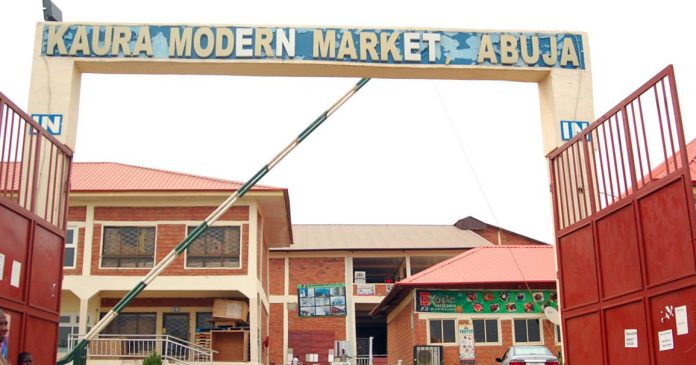
A block of 39 open shops at the Kaura Modern Market in Abuja was completely destroyed by fire late Friday night, following an electrical spark that ignited a devastating blaze.

The fire, which began around 11 pm, raged for several hours before it was brought under control at approximately 2am on Saturday by a combined team of firefighters from the Federal Capital Territory (FCT) Fire Service and the Federal Fire Service (FFS).

According to MT Ibrahim, the spokesman for the FCT Fire Service, the fire was triggered by an electrical spark on a power changeover device installed in one of the shops.

The presence of a generator filled with petrol inside the shop where the fire originated exacerbated the situation, leading to a rapid spread of the flames.

Items lost in the fire included foodstuffs, generators, refrigerators, fruits, umbrellas, electrical appliances, household items, and parts of the market’s roof.

Engr. Adebayo Zacchaeus, the Acting Director of the FCT Fire Service, commended the firefighters for their swift and coordinated efforts in extinguishing the blaze.

The incident added to the growing concern over fire safety in markets across the country, particularly those with inadequate electrical installations and the improper storage of flammable materials.

Credit: dailypost.ng

Torrential rain wreaks havoc in Katsina village, destroys 250 houses

0
Houses destroyed by torrential rain

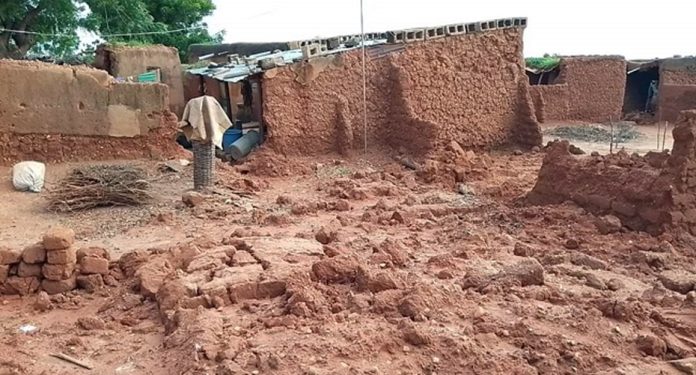
At least 250 houses were destroyed following a heavy downpour at Natsinta village in Jibia Local Government Area of Katsina State. The State has witnessed one week of unprecedented rainfall since Saturday last week.

Although no life was lost during the torrential rain which lasted for three days, precisely between the last Thursday, Friday, and Saturday without respite, several persons were said to have sustained various degrees of injury.

Channels Television gathered that the disaster left most of the affected houses’ occupants in a state of distress and uncertainty.

It was also gathered that the absence of proper drainage systems in the area contributed to the destruction.

A resident of the village, Mas’udu Lawal, attributed the disaster to the disruption of a crucial drainage channel which had exacerbated the magnitude of the disaster.

Another victim, simply identified as Abdurrahman Ibrahim, while sharing his experience on the incident, said the residents lost not only their homes but also valuables running into millions of Naira.

On Saturday, August 17, 2024, the member representing Jibia Local Government Area at the Katsina State House of Assembly, Hon. Mustapha Yusuf, visited the affected area.

He assured the affected residents of the Assembly’s commitment to work diligently to ensure immediate intervention of the state government, urging all stakeholders, including government officials, political leaders, and entrepreneurs, to contribute generously to support the affected individuals during this challenging time.

Credit: channelstv.com

Nigeria remains backward because of self-centred leaders –Obasanjo

0
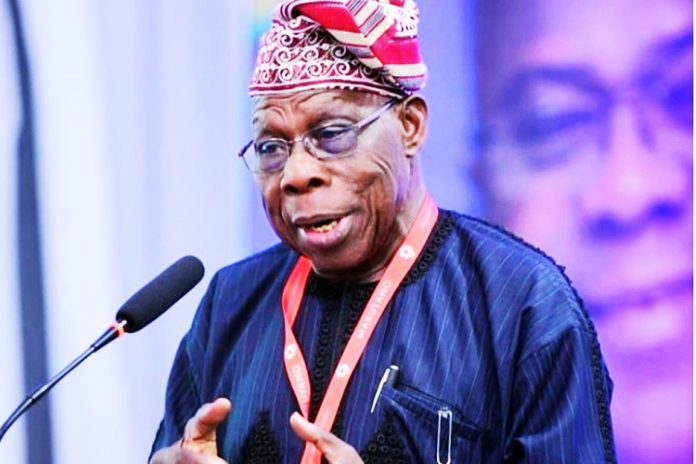
Former president Olusegun Obasanjo

A former President of Nigeria, Olusegun Obasanjo, says the socioeconomic and political situations in the country have remained stagnant because of leadership deficit, concluding that the only way out is for “self-centred” leaders to give way.

He spoke in Abeokuta, the Ogun State capital, on Saturday as Special Guest of Honour at the Leadership Empowerment International Conference, where 25 distinguished Nigerians were conferred with honorary Doctorate in leadership by a South Africa-based Immanuel Theology Institute International in affiliation with Priesthood Leadership Development Initiative Inc.

According to him, for Nigeria to progress from its present dilemma, the present crops of those he labelled “self-centred leaders” occupying offices at all levels of governance must loosen their hold on the country.

He said the country is presently plagued at all levels by a band of self-centred leaders who are deficit of knowledge, bereft of understanding and demonstrating a leadership style that does not see service as the centrepiece for development.

He challenged Nigerians to seek, by all means possible, an end to the culture of enthroning transactional leaders as against transformational leaders who will deliver good governance. Obasanjo commended the International Coordinator of Priesthood Leadership Development Initiative incorporated, Prof. Olusesi Obateye, and the President of the South Africa–based Institute, Prof. Van Den Berg Edward Alfred, for recognising and encouraging some Nigerians with leadership capacities.

Credit: channelstv.com

Akufo-Addo Advocates for a New Development Cooperation Paradigm Centered on Partnership and Mutual Accountability

0
President Akufo-Addo

In a speech delivered at the 5th anniversary of the Council on Foreign Relations Ghana, President Nana Addo Dankwa Akufo-Addo called for a new development cooperation paradigm that is centered on partnership, mutual accountability, sustainability, and local ownership.

Addressing the theme “The Limits of the Current Development Co-operation Framework for Africa’s Transformation,” the President highlighted the need for a shift from donor-recipient relationships to genuine partnerships that recognise the mutual interests and shared responsibilities of all stakeholders.

President Akufo-Addo emphasized that African countries must take the lead in defining their development priorities and shaping the agenda for cooperation. “Development cooperation should be based on genuine partnerships that recognise the mutual interests and shared responsibilities of all stakeholders,” he stated.

He urged development partners to support these priorities and align their efforts with national development plans.

Mutual accountability, the president argued, is fundamental for effective development cooperation.

He called for transparent monitoring and evaluation mechanisms to track progress and ensure that development interventions are delivering tangible outcomes.

“By promoting mutual accountability, we can heighten the effectiveness and impact of development cooperation,” he noted.

The President also underscored the importance of sustainability in development cooperation. He called for a focus on long-term, sustainable solutions that target the root causes of underdevelopment and promote inclusive growth.

Additionally, President Akufo-Addo emphasised the need to integrate environmental sustainability into development planning and implementation to ensure that development gains are resilient and enduring.

In his speech, President Akufo-Addo addressed the limitations of the current development cooperation framework, which he said often limits the involvement of local communities and civil society organizations in the planning, implementation, and monitoring of development projects.

He argued that this lack of local participation can lead to a lack of relevance, sustainability, and accountability in development interventions.

To alleviate this limitation, the President called for more inclusive and participatory approaches to development. He stressed the importance of empowering local communities, enhancing the capacity of civil society organizations, and ensuring that development interventions are responsive to the needs and aspirations of local people. “By encouraging local ownership and participation, we can enrich the sustainability and impact of development cooperation,” he stated.

President Akufo-Addo also highlighted the importance of good governance and strong institutions in achieving sustainable development.

He noted that the current development cooperation framework often pays insufficient attention to governance and institutional development, which he described as fundamental to sustainable development.

The President called for governance reforms and institutional development, emphasising the need to strengthen democratic institutions, promote transparency and accountability, and build the capacity of public institutions.

In conclusion, President Akufo-Addo called on African leaders and development partners to work together to build a new paradigm for development cooperation that is based on partnership, mutual accountability, sustainability, and local ownership.

He expressed confidence that by tackling the limitations of the current framework and embracing a more holistic and inclusive approach, Africa can achieve the transformative change to which it aspires.

The Ghanaian Chronicle