Home Blog Page 1293

US man arrested for allegedly sparking California’s Line Fire

0
Nearly 2,000 firefighters have been deployed to battle the Line Fire

Police in California have arrested a man on suspicion of starting the Line Fire – a major wildfire that has burned more than 34,000 acres (53 sq miles) in the state.

Justin Wayne Halstenberg, a 34-year-old resident of Norco, California, was stopped on Tuesday for arson and is being held in lieu of bail, officials said.

The Line Fire is one of three major wildfires sparked in the last week that are burning out of control in southern California, stretching firefighter resources and threatening thousands of homes.

As of Wednesday morning, the Line Fire was 14% contained. Police did not provide details on how Mr Halstenberg is alleged to have sparked the massive blaze, which is burning in San Bernardino County, about 60 miles (96km) east of Los Angeles.

Thousands of people have been forced to evacuate the area and the fire threatens over 65,000 structures.

CalFire officials say the blaze continues to grow in steep terrain, making access difficult, especially near the Big Bear area.

The fire has been fueled by strong winds and dry conditions, though firefighters hope cooler weather forecast for later in the week will help their efforts.

The structures under threat, both homes and commercial properties, include some 13,300 in areas currently under evacuation orders.

No fatalities or structural damage have been reported as a result of the Line Fire to date. However, photos taken by the Los Angeles Times appear to show at least one building in Running Springs, a community in the San Bernardino Mountains, has been destroyed.

Nearly 2,000 firefighters are battling the blaze. The California National Guard is also supporting the fire response with crews and aircraft, including helicopters for water bucket dropping operations.

Credit: bbc.com

Feature: The Future Of Insurance Through The Crystal Ball: Navigating Tomorrow’s Landscape

0
Feature

As we stand on the cusp of a new era in technology and societal change, the future of insurance is more dynamic and complex than ever. Gazing into the  crystal ball reveals a landscape where innovation and adaptation redefine the industry. Here’s a forward-looking exploration of what the future might hold for insurance.

 Hyper-Personalisation Through AI and Data Analytics: The days of one-size-fits-all policies will soon be outmoded. The future of insurance will see a significant shift towards hyper-personalisation, driven by advancements in artificial intelligence (AI) and data analytics. AI can analyse vast amounts of data to create highly customised policies.

Insurers will harness vast amounts of data from driving habits to lifestyle choices to tailored policies with unprecedented precision. Imagine a world where your insurance premium adjusts in real-time based on your health metrics or driving behaviour, providing a customised experience.

Lemonade, an Insurtech startup, uses AI to process claims and offer personalised insurance policies. Their AI-driven platform allows for rapid underwriting and claims processing, exemplifying how AI can tailor insurance offerings to individual needs with remarkable precision.

 Blockchain for boosted transparency and Efficiency: Blockchain technology is poised to revolutionise the insurance industry by enhancing transparency, security, and efficiency. Smart contracts powered by blockchain could automate claims processing and reduce fraud.

By creating immutable records of transactions, blockchain can ensure that all parties involved have access to the same information, fostering trust and reducing disputes. Blockchain technology will revolutionise the insurance industry by offering enhanced transparency and efficiency. Smart contracts on blockchain can automate and streamline claims processing.

Etherisc, a blockchain insurance startup, is developing parametric insurance products for natural disasters, where claims are automatically triggered based on predefined parameters. This approach reduces administrative costs and minimises fraud by ensuring transparent transactions.

The upsurge of Parametric Insurance: Parametric insurance is set to become a more common feature in the future landscape. Unlike traditional insurance, which relies on detailed claims processes, parametric insurance pays out automatically based on predefined parameters. If a natural disaster hits, a policy might trigger an automatic payout once certain criteria (like wind speed or rainfall levels) are met.

This approach simplifies the claims process and speeds up financial relief for policyholders. For instance, Flock Insurance in London uses parametric models to offer drone insurance. Claims are processed automatically if a predefined risk threshold is met, such as weather conditions or equipment malfunction.

Digital Transformation and Customer Experience: The digital revolution will continue redesigning customer expectations and experiences in the insurance industry. Expect more intuitive, user-friendly interfaces for managing policies, filing claims, and receiving support. Virtual assistants and chatbots will become standard, providing round-the-clock assistance and streamlining interactions.

Companies like Root Insurance in the United States are at the forefront of this shift, offering a mobile-first experience where users can manage policies, file claims, and receive support entirely through an app. This digital approach simplifies interactions and provides a more seamless experience for tech-savvy consumers.

It is worth noting that the digital transformation agenda is rising in Ghana, with several insurance companies leading the way. The Hollard Purple app offers end-to-end policy management,  Enterprise Advantage App, and My Super Star App, to mention a few.

Integration with the Internet of Things (IoT): The Internet of Things (IoT) will further refine  insurance offerings by integrating real-time data from connected devices. Home insurance policies could adjust based on data from smart home devices that monitor for fire, flooding, or break-ins. Similarly, health insurance could leverage data from wearable devices to offer personalised wellness plans and detect potential health issues before they become serious.

For example, Metromile, a pay-per-mile car insurance provider in the United States, uses telematics devices to monitor driving habits. This data allows for personalised pricing based on actual mileage and driving behaviour, reflecting a more accurate risk assessment and offering potential savings for low-mileage drivers.

The Easy As Taking A Picture (ETAP) app is another worthy example of the application of intelligent technologies in Africa. Coming soon into Ghana, this app rewards safe driving behaviours by carefully collecting and analysing data using telematics. ETAP offers instant coverage, crash notification, emergency support, seamless claims processing, and more.

 Insurtech Disruption: Insurtech startups drive innovation in the insurance sector, pushing traditional insurers to rethink their approaches. These startups are developing new technologies, business models, and customer experiences that challenge established norms.

The future will see increased collaboration between traditional insurers and Insurtech, fostering a more dynamic and competitive industry. Companies like Hubtel, Npontu, Redpear, and Sasai are leading these collaborative platforms for insurance companies in Ghana to increase their reach and tap into the uninsured markets and the informal sectors of the Ghanaian economy.

By focusing on technology and customer-centric solutions, Insurtech is pushing the barriers of traditional insurance markets and challenging established insurers to innovate and adapt.

Sustainability and ESG: As the impacts of climate change become more pronounced, Insurers are increasingly focusing on sustainability, Environmental, Social and Governance (ESG) factors. This includes investing in renewable energy projects, launching ESG-focused products and incorporating ESG factors into underwriting and investment decisions.

Climate change will push insurers to incorporate more sophisticated risk assessment tools to evaluate environmental risks. Insurers also play a crucial role in promoting sustainability by offering incentives for eco-friendly practices and investments in green technologies.

Swiss Re’s “Climate Resilience” platform uses advanced analytics to evaluate the impact of climate change on insurance portfolios, helping insurers adjust coverage and pricing to reflect new environmental realities.

On-Demand and Usage-Based Coverage: The future may bring innovative insurance coverage models. On-demand insurance, where coverage is activated only when needed (such as for a specific event or period), will likely gain traction. Additionally, usage-based insurance could become more prevalent, particularly in sectors like auto insurance, where coverage is based on actual usage patterns rather than static factors.

Trov insurance startup, based in the United States, offers on-demand coverage for personal items like electronics and camera equipment. Users can activate or deactivate coverage via an app, paying only for the time the items are covered, which reflects a growing demand for flexible, usage-based insurance solutions.

Vehicle Electrification: The future of electric cars and insurance is rapidly changing due to technological advancement and shifting customer needs. Electric Vehicles (EVs) will introduce changes to insurance, including rates,  coverage, pricing, and claims handling, to mention a few. EVs will be an enabling platform for autonomous driving and connectivity, with more potential for disruption coming from their direct-to-consumer sales model.

Micro and SME  Insurance in Focus: The future of micro and SME  insurance is rapidly changing because of shifting customer needs and digital transformation. Insurers are adopting a more customer-centric approach to meet the unique needs of SME customers.

SME’s and micro-based customers constantly seek simple yet affordable comprehensive bundled products that meet their changing needs and expectations. Insurers seek partnerships with telcos, fintech, insurtechs, banks, market associations, trade unions, etc. Indeed, the future is inclusive insurance.

 Ethical and Privacy Considerations: As data collection and analysis become more integral to insurance, ethical and privacy considerations will be paramount. Balancing personalised service with data protection will be a critical challenge. Insurers must navigate regulatory landscapes and build robust systems to safeguard customer information while delivering value.

Future developments will require privacy protections and transparent data practices to address consumer concerns and comply with evolving regulations. Regulation requirements would become more stringent as the world pushes for compliance with General Data Protection Regulations (GDPR).

Impact of rising cyber security concerns on Insurance: Cyber security continues to pose significant threats to individuals and businesses across the globe. Cyber threats have become increasingly disruptive and incessant than a decade ago.

This risk is ranked 4th by the World Economic Forum in the 2024 Global Risk Report over the next 2-year period. This emerging risk would drive new products to help individuals and businesses better protect their technology resources and respond when cyber-attacks them.

The impact on claims arising from business interruptions can be more devastating than most traditional property insurance risks because of the potential to disrupt global services and networks. Just imagine the impact and cost of the recent CrowdStrike cyber interruptions a few weeks ago. That single cyber event resulted in multi-dimensional insurance claims with far-reaching implications.

Evolving Regulatory Landscapes: Insurance regulation will continue to evolve in response to technological advancements and new risks. Regulators will face the challenge of keeping pace with rapid changes while ensuring consumer protection and market stability. For instance, Ghana’s National Insurance Commission (NIC) introduced a regulatory sandbox to promote innovation.

It allows insurance firms, Insurtech’s and fintech’s to test new products and services in a controlled environment. The International Association of Insurance Supervisors (IAIS) is working on guidelines to address emerging technologies and their impact on the insurance sector. In the future, there may be more global harmonisation of insurance regulations, facilitating cross-border operations and consumer protection.

In Conclusion, the insurance industry stands on the verge of profound transformation. The future promises to be exciting but challenging, from AI-driven personalisation and blockchain innovations to new coverage models and evolving regulations. By embracing these changes and proactively addressing emerging issues, insurers can navigate the complexities of tomorrow’s landscape and continue to provide value in an increasingly digital and data-driven world.

Looking through the crystal ball, it’s clear that the future of insurance will be defined by adaptability, innovation, and a commitment to meeting the evolving needs of consumers in an ever-changing world.

By Nashiru Iddrisu

Source: citinewsroom.com

Ronaldo criticises Ten Hag, says Man Utd must ‘rebuild everything’

0
Ten Hag and Ronaldo

Cristiano Ronaldo has criticised Manchester United manager Erik ten Hag and said the club must “rebuild everything” in order to compete for football’s biggest prizes again.

The Dutch boss is under pressure after United’s eighth-placed finish last season – their lowest in Premier League history – and two defeats in their opening three games at the start of this campaign.

And Ronaldo, who had two spells at the club before leaving for Saudi Arabian side Al-Nassr, questioned Ten Hag’s mentality.

“The coach says they cannot compete to win the [Premier] League and Champions League,” he told the Rio Ferdinand Presents podcast, external, which comes out on Thursday.

“As Manchester United coach, you cannot say that you’re not going to fight to win the league or Champions League.

“Mentally [you can] say maybe we don’t have that potential, but I cannot say that. We’re going to try, you have to try.

“What I wish for Manchester [United], it’s what I wish for me – [to be] the best team they can.

“I love that club… I’m not that kind of guy that forgot the past.”

In his six-year first spell at United, Ronaldo won three Premier League titles, the Champions League, two League Cups and an FA Cup – as well as the Fifa Club World Cup and Community Shield – before transferring to Real Madrid in 2009.

He re-joined United from Juventus in August 2021 and scored a total of 145 goals in 346 appearances for the club before he moved to Al-Nassr in December 2022.

Just a month earlier, Ronaldo had told presenter Piers Morgan he was being “betrayed” and pushed out in a controversial television interview.

And speaking to former United team-mate Ferdinand on his podcast, the Portugal forward said there had been “no evolution” following former boss Sir Alex Ferguson’s retirement in 2013.

United have not won a Premier League title since then, but co-owner Sir Jim Ratcliffe wants to restore them to their former glories after purchasing a 25% stake in the club and his Ineos team taking over football operations.

Ronaldo added: “They need to rebuild everything, in my opinion.

“The club needs time to rebuild because it’s still one of the best clubs in the world, but they need to change. They understand that this is the only way.

“This is why they show, they start to change again, the structure of the club, the infrastructures and everything. The owners of the club are investing in the training ground so I’m happy [because things are changing].

“I believe that the future will be bright. I believe, but they don’t depend only on the talents. They have to rebuild from the bottom. If not, they cannot compete. It will be impossible.”

Ronaldo, however, has praised the club’s decision to recruit another former team-mate Ruud van Nistelrooy to Ten Hag’s backroom staff.

“If Ten Hag listens to Ruud, maybe he can [help himself],” he added.

“I think it can help a lot because he knows the club and the club should listen [to] the guys who were there.

“You [Rio] or Roy Keane or Paul Scholes or Gary Neville [or] Sir Alex Ferguson. You cannot rebuild a club without knowledge – not guys who work in [the] office.

“The people who understand the football are the people who were there in the dressing room. They know how to deal with the players.

“So I believe that Ruud is going to help because he was inside the club. He knows the club, he knows the fans. If the coach listens to him, I think they can improve a little bit the club.”

Credit: bbc.com

Driver jailed over deadly Australian wedding bus crash

0
Driver jailed

The driver responsible for one of Australia’s deadliest road incidents – a wedding bus crash which killed 10 people – has been jailed for 32 years.

Twenty-five people were also injured when the coach overturned on 11 June 2023, while coming back from the celebration in the Hunter Valley wine region in New South Wales.

Brett Button, 59, was in the grips of a prescription opioid dependency and driving too fast at the time of the crash.

Initially charged with manslaughter, he instead pleaded guilty to a string of dangerous driving offences after taking a prosecution deal.

Surviving passengers and loved ones of those who died travelled from around the country to see Button sentenced, sobbing and hugging each other as the judge ruled he could not be released on parole until May of 2048.

Button had taken a large amount of Tramadol – a powerful drug which can cause drowsiness, brain fog and poor vision – to manage his chronic pain on the day of the crash but said that he did not realise he was impaired.

However passengers told the court they were terrified by his erratic driving, and some had urged him to slow down.

Shortly after, he lost control of the bus on a roundabout, causing it to tip on its side and slide along a guard rail.

It was carrying 35 passengers and everyone on board, except Button, was injured or killed.

Two whole days were devoted to listening to statements from more than 30 of those impacted in a hearing the judge called unprecedented in scale.

Credit: bbc.com

Hearts deny giving coach Ouattara ultimatum amid poor start to season

0
Hearts of Oak coach Aboubakar Ouattara

Hearts of Oak have strongly denied recent reports suggesting that head coach Aboubakar Ouattara has been handed a five-game ultimatum to secure his job.

The club’s management has labelled these rumours as “entirely false and fabricated.”

Ouattara, who took charge in February 2024, has struggled to find consistency, registering just seven wins and eight losses since his appointment.

The club lost their opening game as they were beaten 1-0 by Basake Holy Stars after battling to escape relegation last season.

This mixed record has led to growing concerns from fans and pundits regarding the club’s direction this season.

However, in an official statement, the club refuted claims that the Ivorian coach has been given any ultimatum.

The club’s statement read: “The management of Accra Hearts of Oak Sporting Club PLC would like to emphasize and notify all of our stakeholders and the general public that reports circulating in some media outlets claiming that head coach Aboubakar Ouattara has been given a 5-match ultimatum are entirely false and fabricated and should therefore be disregarded.”

The club also urged fans to rally behind the team, calling for unity and support as they navigate the new season.

“Coach Ouattara, his technical team, and players deserve our support, which is crucial to our resolve to achieve success,” the statement continued.

Hearts of Oak concluded by encouraging media outlets to verify any reports about the club to prevent the spread of misinformation.

Credit: ghanasoccernet.com

Ghana hunt for new home venue after ban

0
Ghana Stadium

The Ghana Football Association is on a the hunt for a new stadium to host the Black Stars’ upcoming matchday 3 Africa Cup of Nations qualifier against Sudan following CAF’s ban of the Baba Yara Stadium.

The continent’s governing body withdrew its approval of the Baba Yara stadium on Wednesday, September 11, 2024, citing technical infractions, including an unsuitable playing field as a reason for the ban.

This means the Black Stars will play their next home game away from Kumasi with Ivory Coasts’ Felix Houpheout Boigny stadium being considered as an alternative.

However, it will also depend on the availability of the stadium, which host two of Ghana’s games during the Africa Cup of Nations in Ivory Coast early this year.

The FA could also be considering a venue in Benin or Togo with the approval of CAF.

Meanwhile, the Baba Yara Sports Stadium has been closed for refurbishment following the opening AFCON qualifier between Ghana and Angola.

During the game between Ghana and Angola last week in Kumasi, both teams complained over the state of the playing surface at the Baba Yara Stadium, with coach of the Sable Antelopes stating ‘a country like Ghana deserves a better pitch.’

The Black Stars will engage Sudan in October in a two-legged game as the Africa Cup of Nations qualifiers return.

Credit: ghanasoccernet.com

Protests in Mexico as controversial judicial reform passed

0
Demonstrators managed to enter the building where the Senate was debating the reform

Mexico’s Senate has approved a controversial judicial reform under which judges will be elected by popular vote.

Its supporters say the changes will make judges more accountable to the Mexican people but critics argue it undermines the country’s system of checks and balances and will strengthen the power of the governing Morena party.

The bill has triggered strikes and protests, with demonstrators earlier breaking into the building where the vote was due to take place.

The Senate vote was the last major hurdle facing the legislation, which has the backing of President Andrés Manuel López Obrador.

During a dramatic late-night session, the debate had to be paused when protesters chanting “the judiciary will not fall” stormed the chamber where senators were gathered.

After lawmakers moved to a different building, the vote went ahead in the early hours of Wednesday local time.

Senators were called one by one by their names and asked to cast their vote.

Senator Miguel Ángel Yunes broke ranks with his opposition National Action Party and voted in favour of the reform, meaning it gained the two-thirds majority needed for constitutional change.

Legislators then continued to debate a number of points in detail before giving the reform its final approval. Its passage is a victory for President López Obrador, whose term is coming to an end on 30 September.

Credit: bbc.com

Ukraine presses allies to end limits on long-range missile use

0
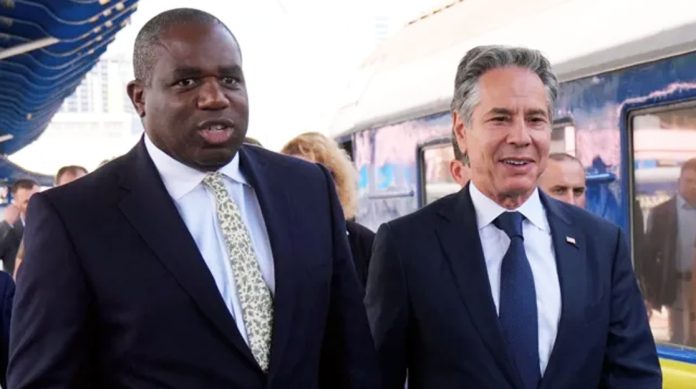
US Secretary of State Antony Blinken and UK Foreign Secretary David Lammy

US Secretary of State Antony Blinken and UK Foreign Secretary David Lammy have arrived in Kyiv on a joint visit as Ukraine continues to press for the right to use US and British long-range missiles against Russia.

The two men travelled together to the Ukrainian capital after talks in London. They are due to meet President Volodymr Zelensky, who has repeatedly called on Washington to loosen the limits on US-supplied weapons.

Blinken said one of their goals was to “hear directly from the Ukrainian leadership” about their “objectives and what we can do to support those needs”.

Earlier, US President Joe Biden said his administration was “working” on whether to lift the restrictions.

The policy will come under further scrutiny when UK Prime Minister Sir Keir Starmer meets Biden at the White House on Friday.

Ukraine’s Prime Minister, Denys Shmyhal, thanked Lammy for the UK’s military support for Ukraine throughout the war.

But he added: “We hope that long-range equipment for strikes on the territory of our enemy will be reached and we will have it and we hope for your help and support in this issue.”

At the moment, the US and UK have not given Ukraine permission to use long-range missiles against targets inside Russia for fear of escalation.

The UK has given Ukraine Storm Shadow missiles, which have a range of about 250km (155 miles). So far, they have been used only against Russian targets in occupied Ukrainian territory.

But Ukrainian leaders say they need the missiles to target air bases used by Russian warplanes to launch devastating glide bombs against Ukraine. These weapons are often launched from deep inside Russian territory.

The Kremlin said on Wednesday that Russia would respond “appropriately” if the US were to allow Ukrainian missile strikes on its territory.

Credit: bbc.com

Why hasn’t the game changed after 32 years? -Prof. Isaac Boadi

0
The flag of the NDC

The National Democratic Congress (NDC) has been a major political force in Ghana since its formation in 1992, evolving from a revolutionary government into a key player in the country’s multiparty democracy.

Over the past 32 years, per my weak mathematical background, the NDC has spent significant time both in government and opposition, shaping Ghana’s political, economic, and social landscape. However, despite these 32 years of political engagement, many of the socioeconomic problems that have plagued the country, including unemployment, public debt, corruption, inequality, and weak institutions persist. This raises the question: if 32 years in both government and opposition have not been enough for the NDC to deliver transformative change, what more can be done with just four years under the leadership of John Dramani Mahama?

As Ghana heads toward the 2024 general elections, the National Democratic Congress (NDC) is positioning its manifesto as a transformative roadmap aimed at addressing the country’s pressing socio-economic issues. The NDC’s 2024 manifesto is expected to offer policies that the party believes can “change the game,” especially in the context of Ghana’s current economic challenges.

Permit me to explore and discuss some of the key NDC manifesto policies aimed at “Changing the Game”, followed by a critical examination of why these policies may fall short of that goal.

First and foremost, the NDC is expected to focus on restoring fiscal discipline, restructuring Ghana’s public debt, and renegotiating IMF agreements to create fiscal space for development. The party proposes a more diversified economy, reducing the reliance on borrowing. The game-changing potential of this policy focus is successful debt restructuring and fiscal discipline that could stabilize the economy, restore investor confidence, and create room for public investment in infrastructure and social programs. For instance, the NDC aims to diversify exports, promote local manufacturing, and reduce the dependency on imports, which would help manage the balance of payments and reduce external borrowing. While the NDC’s manifesto promises ambitious reforms, limited fiscal space and debt constraints may prevent this policy from truly changing the game in Ghana’s political and economic landscape. Ghana’s high public debt and limited fiscal space severely restrict the government’s ability to fund new initiatives without accumulating more debt. Debt restructuring, while necessary, is a complex and lengthy process that may not immediately free up resources for development projects. A clear example is the NDC’s past reliance on public borrowing and external loans during previous administrations led to Ghana’s current debt challenges. Without a clear strategy for revenue generation, these policies may only exacerbate the fiscal crisis.

Industrialization and Job Creation remain the next policy focus and the game changer for the 2024 NDC manifesto. The NDC is likely to prioritize industrialization, focusing on Agro-processing, manufacturing, and technology-based industries to create jobs, especially for the youth. The party could also emphasize public-private partnerships to develop key industrial sectors. The potential game-changer potential considered by the NDC is a strong push for industrialization that could reduce unemployment, enhance Ghana’s economic resilience, and boost exports, contributing to sustained economic growth. A good example of this policy focus is the creation of industrial hubs or zones to encourage local production, particularly in agriculture and small-scale manufacturing, which could generate employment and reduce Ghana’s reliance on imports. The Industrialization and Job Creation policy focus, however, requires significant investments in infrastructure, skilled labor, and technology, all of which are costly. The NDC has promised industrialization before, but previous initiatives have often fallen short due to poor execution, weak institutional capacity, and a lack of long-term planning. A case in question is the NDC’s previous attempt to establish industrial zones in the 2012-016 administration did not yield significant results due to lack of financing, bureaucratic hurdles, and inadequate infrastructure support.

Another policy focus of the NDC is in the energy sector reforms. The NDC is expected to focus on addressing Ghana’s energy challenges and the high cost of electricity. The party also emphasizes the adoption of renewable energy sources. The potential game changer in this policy focus is the stable and affordable energy supply would boost industrialization, attract foreign investment, and reduce the cost of living, making Ghana more competitive. For instance, the proposals to reform the Electricity Company of Ghana (ECG) and invest in solar energy could reduce Ghana’s energy reliance on hydroelectric and thermal sources. It is critical to point out that transitioning to renewable energy is expensive and requires significant upfront investment in infrastructure, technology, and expertise. While it is a laudable goal, Ghana’s energy sector is hampered by inefficiencies, corruption, and legacy issues in the ECG and Volta River Authority (VRA). This is an example just to remind readers that the NDC’s past promises to solve the “dumsor” crisis through energy sector reforms did not lead to a lasting solution, as power outages remain a problem. Addressing systemic inefficiencies in the energy sector requires more than policy statements; it requires deep institutional reform.

Anti-corruption and governance reforms remain a key policy focus considered as a game changer by NDC. Strengthening anti-corruption measures and improving governance are key points in the NDC’s 2024 manifesto. The party proposes reforms to ensure transparency, accountability, and efficiency in public institutions. The game-changer potential in this policy direction is by curbing corruption and promoting good governance, the NDC could improve public trust in institutions, attract more foreign investment, and ensure that public resources are used more effectively. For instance, establishing an independent anti-corruption body with prosecutorial powers and introducing digitized public procurement processes to reduce human interference. What remains to be seen by NDC in the fight against corruption is the strong will to deal with corruption-related matters. Anti-corruption efforts have been a cornerstone of many political manifestos, yet corruption persists. The NDC itself has been criticized for corruption during its previous administrations, casting doubt on the party’s ability to implement meaningful reforms.

In the 2024 manifesto of NDC, industrialization, and job creation are considered as priorities in terms of policy direction. One of the major pillars of the NDC’s 2024 manifesto is expected to be industrialization to create jobs, especially for the youth. This will likely involve policies that encourage local manufacturing, Agro-processing, and expanding Ghana’s export base. As a game changer, according to the NDC, with a well-executed industrialization plan, the NDC could create long-term, sustainable employment opportunities, address unemployment, and reduce the country’s dependency on imported goods. The NDC might reintroduce or expand on past initiatives like the establishment of industrial zones and the promotion of public-private partnerships to boost manufacturing sectors such as textiles, agribusiness, and technology. This policy focus cannot be a game changer because of the short-term political focus of this political party. Like many political parties in developing countries, the NDC has often focused on policies that deliver immediate results to appeal to voters rather than long-term development strategies. The electoral cycle pressures political parties to prioritize projects that yield visible outcomes quickly, often sacrificing investments that may take a decade or more to bear fruit. Infrastructure projects, job creation schemes, and social interventions that are short-term in nature tend to dominate manifestos, but they do not address the underlying issues that Ghana faces. For transformative change to occur, the NDC needs to shift its focus from electoral cycles to governance cycles, where policies are sustained across administrations regardless of who is in power.

If 32 years of alternating between government and opposition have not brought the desired change, then what can be done differently? My two coins.

Over the years, the NDC has been perceived as shifting away from its ideological roots of social democracy. While it once championed policies that aimed to reduce inequality and promote state intervention in the economy, its recent policies often appear like those of its main rival, the NPP. This ideological convergence has led to voter apathy, as many Ghanaians struggle to distinguish between the two major parties. For the NDC to regain its transformative potential, it must return to its core principles while also innovating to meet the demands of a modern, globalized world. By presenting a clear ideological alternative to the NPP – one that promotes inclusive growth, social welfare, and state intervention in strategic industries – the NDC can reposition itself as a true game-changer.

The NDC has had a long history of engaging with the grassroots, but over time, this connection has weakened. Political engagement in Ghana is increasingly characterized by patronage networks, where party loyalty is rewarded with jobs and contracts, rather than policies that benefit the broader populace. This system of patronage stifles civic engagement and limits the public’s role in holding leaders accountable. If the NDC is serious about changing the game, it needs to rekindle its grassroots activism, focusing on empowering citizens to participate in the political process meaningfully. This can be done by creating platforms for community engagement, prioritizing local governance, and ensuring that party structures are more inclusive and transparent.

While the NDC’s 2024 manifesto offers bold promises aimed at addressing Ghana’s pressing challenges, its ability to deliver true game-changing policies is constrained by economic, institutional, and implementation hurdles. Issues such as debt sustainability, the capacity to industrialize, systemic education problems, healthcare deficits, and corruption require deep structural reforms that may go beyond the promises outlined in the manifesto. Without clear, sustainable strategies for addressing these underlying challenges, the NDC’s policies may not achieve the transformative impact they aim for.

Akrokerri Hard Hit By Galamsey … Residents accuse Queen mother, Gyasehene, but they have denied any wrong doing 

0
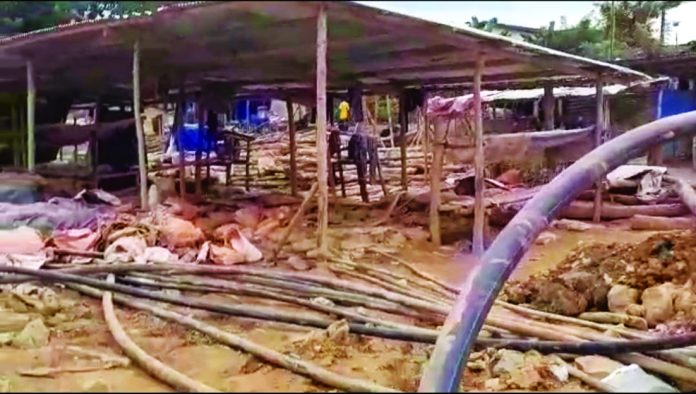
A mining site at old Refuse dump at Bronikrom
Nana Serwaa Bruwaa – Queen mother Akrokerri

Residents of Akrokerri in the Adansi North District in the Ashanti region are up in arms against illegal mining in the enclave.

They are angry with Nana Serwaa Bruwaa, Queen mother of Akrokerri and Nana Kofi Berchie, Gyasehene and regent of Akrokerri, who they have accused of failing to stop the illegal practice.

Nana Kofi Berchie – Gyasehene, Akrokerri

They have been in charge of affairs as far as the Akrokerri sub-Traditional Council is concerned since 2001, when the late chief, Nana Asare Bediako II passed on.

The residents have accused the traditional leadership of superintending over illegal mining activities in the Akrokerri Stool lands, which are bounded on the North by Bekwai and Dunkwa on the Southern boundary, along the Offin River.

As a result of the development and the Queen mother’s apathy in addressing the galamsey canker, the residents are contemplating going on a demonstration to draw the attention of the authorities to the prevailing conditions in the community.

They have appealed to Otumfuo Osei Tutu II to intervene and call them to order and stop the traditional leadership in its tracks, to help save the people from the hazardous effects of illegal mining.

According to them, the traditional leadership has not put in place any pragmatic measures to fight the galamsey menace in the area.

Illegal mining activities are commonplace in Akrokerri and surrounding communities where several acres of Asakyire-Bonkyi Stool lands, across the Adansi enclave, have allegedly been sold to the illegal miners.

At Domeabra, a suburb in the community, the miners are using dynamites to break the rocks in an old concession of Goldstone mining firm to access gold nuggets, at the expense of residents whose houses are developing cracks from the explosives.

At Bronikrom, near Akrokerri, houses are precariously sitting on a time bomb as the miners have dug pits beneath them to extract gold.

The Community Water system has broken down, following the illegal mining activities.

A house at Bronikrom at the verge of collapse

The Queen mother’s source of water for domestic use from the boreholes she constructed at the cost of GHc10,000 have been rendered useless, as the miners have diverted the flow of water from her facility for their activities.

Despite this, the Queen mother would also not budge even when she lost her own brother who fell in an uncovered mine pit a few metres from her Akrokerrifie residence.

Two weeks ago, Nana Serwaa Bruwaa allegedly engaged machomen and land guards to assault some residents of Wamase, when they resisted attempts to take over their farmlands to sell for illegal mining activities.

Reacting to the allegations, Nana Serwaa Bruwaa denied complicity in the galamsey operations, but admitted that she is aware the menace is ongoing in her jurisdiction, except that her efforts to fight it have been insignificant.

The Queen mother, who defended the allegations through a spokesperson, Asubonteng, claimed she is a farmer and does not indulge in illegal mining.

She, however, said a number of complaints have been made to the police, but the miners are not deterred as they threatened to deal with her for standing in their way, hence her inaction to effectively deal with the situation.

She also believed troublemakers in the chieftaincy dispute among the royal family members are seeking to tarnish her image by the allegations, because her son is about to be enstooled the chief of Akrokerri, at the instance of the Asantehene, Otumfuo Osei Tutu II, hence the smear campaign against her.

Nana Serwaa Bruwaa said she has not received any consideration from galamsey operators and explained that other unscrupulous members of the extended family might be collecting such monies from the illegal miners in her name.

She also confirmed the reported assault of residents of Wamase by macho men, but said she has no hand in it, and mentioned that the Assemblyman for the Wamase electoral area is privy to the incident.

According to her, she cannot sell the lands at Wamase because an Odikro is the custodian of the community.

Meanwhile, The Chronicle has gathered that the Fomena NPP constituency chairman, Mr. Akwasi  Adom, is fronting for illegal miners whose operations are affecting the livelihoods of residents.

He goes round paying compensation of GHc5,000 to residents for the nuisance and inconvenience caused by the blasts of dynamites in the neighbourhood, which complicity is evident by a conversation on tape with one of the residents when he paid the amount with the promise of paying additional monies with time.

His complicity explains why the queen mother is unable to fight illegal mining at Akrokerri and neighbouring communities for fear of reprisal.

The Ghanaian Chronicle