Home Blog Page 127

W/A Must Act Swiftly On Climate Change And Conflict Risks –Ahmed Ibrahim

0
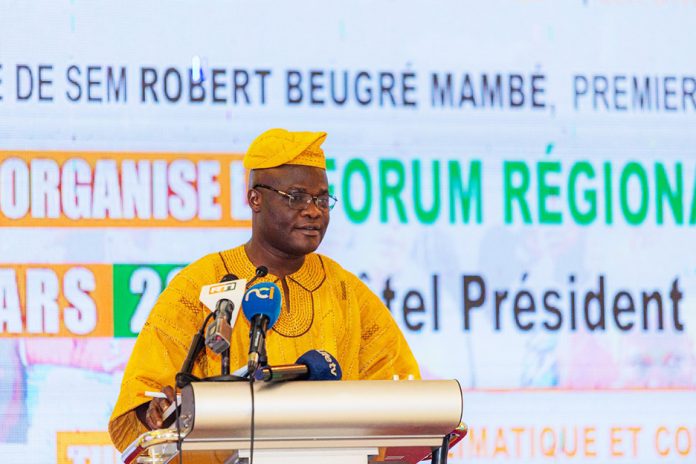
Mr Ahmed Ibrahim, Minister for Local Government, Chieftaincy and Religious Affairs

Mr Ahmed Ibrahim, the Minister for Local Government, Chieftaincy and Religious Affairs and the Member of Parliament has called on West African countries to take urgent and coordinated action to address rising conflict and climate-related risks across the sub-region.

He made the call at the opening of the Social Cohesion (SOCO) Conference in Yamoussoukro, Côte d’Ivoire, where regional leaders gathered to deliberate on strategies to safeguard vulnerable border communities.

Mr Ahmed Ibrahim, Minister for Local Government, Chieftaincy and Religious Affairs addressing the conference

Delivering a keynote address on behalf of President John Dramani Mahama, the Minister stressed that conflicts in West Africa are becoming increasingly complex, spreading across borders and driven by climate stress, economic hardship and social fragility.

“We are no longer dealing with isolated crises,” he told delegates. “These challenges move, they spread and they demand a collective response.”

The conference brought together government officials, development partners and regional stakeholders to review progress under the SOCO Project, which focuses on strengthening stability in border regions of countries, including Ghana, Benin, Côte d’Ivoire and Togo.

A key issue highlighted during discussions was the growing impact of climate change on social cohesion.

Delegates pointed to erratic rainfall, land degradation and diminishing natural resources, particularly in the Sahel and northern zones, as factors intensifying competition and fueling local tensions.

“These pressures are not abstract,” the Minister noted. “They are already influencing how communities interact, how resources are shared and, in some cases, how conflicts emerge.”

The Minister for Local Government, Chieftaincy and Religious Affairs warned that without targeted interventions, climate-induced stress could worsen existing vulnerabilities, especially in underserved border communities where access to services and economic opportunities remains limited.

He also observed that such communities continue to bear the brunt of these overlapping challenges, citing high youth unemployment, weak local economies and limited infrastructure as key risk factors for instability.

The Minister, however, acknowledged progress made under the SOCO Project, including investments in infrastructure, local enterprise development and initiatives aimed at strengthening community trust.

“These are real gains,” he said, “but they are not enough.”

Mr Ahmed Ibrahim also raised concern over gaps in early warning systems for conflict prevention, noting that although communities often detect warning signs early, information flow to decision-makers is frequently delayed.

“In many cases, communities see the warning signs first, but the information does not move fast enough,” he stated.

Mr. Ibrahim identified the SOCO Knowledge Management Platform as a vital tool for improving cross-border coordination, while stressing the need for its effective implementation and accessibility.

Calling for decisive action, the Minister urged participating countries and partners to strengthen information-sharing systems, invest more in local economic opportunities, particularly for youth and women, and sustain long-term efforts in conflict prevention.

The Minister for Local Government, Chieftaincy and Religious Affairs emphasised that economic empowerment through agriculture, small businesses and local enterprise development remains central to building resilience and reducing vulnerability to conflict.

As deliberations continue, the conference has reinforced the view that climate change is not only an environmental concern but also a critical factor influencing peace and security in West Africa.

The message from Yamoussoukro was clear: without stronger coordination, increased investment in communities and a unified regional approach, the combined pressures of climate change and fragility could outpace efforts to maintain stability.

“This is not just about responding to today’s challenges,” the Minister concluded.

“It is about preventing the crises we have not yet seen.”


For more news, join The Chronicle Newspaper channel on WhatsApp: https://whatsapp.com/channel/0029VbBSs55E50UqNPvSOm2z

Royal Bretuo Family Debunks Dekyirahemaa’s Purported Destoolment Of Nyinawusuhene

0
Abusuapanin Kwadwo Ofori (middle) and Kinsmen

Nana Kwadwo Ofori, Head of Royal Bretuo family of Nyinawusu in the Upper Denkyira East District of the Central Region, has refuted claims by Nana Ama Ayensua Saara III, Denkyirahemaa, that Nana Baffour Awuah II has been destooled as the Chief of Nyinawusu.

Bullet ridden Pick-up during an attack on Nyinawusuhene

Emmanuel K. Nanah Esq., Legal Advisor to Denkyirahemaa had stated that Nana Baffour Awuah II has been destooled by his own kinsmen, even before the installation process could be finalised.

In an exclusive interview with The Chronicle, the Abusuapanin stressed that Nana Baffour Awuah II is “still” the Chief and Custodian of Nyinawusu Stool and stool lands.

Nana Kwadwo Ofori explained further that no charges have been preferred against the chief, neither has he done anything wrong to warrant his destoolment.

The family head stated that Nyinawusu does not owe any allegiance to the Denkyira Paramountcy, explaining that the Denkyira Traditional Council rather delegates an envoy to witness the enstoolment ceremony of Nyinawusuhene at Nyinawusu.

He also explained that as Head of family, he leads the enstooled Chief to pay homage to the Denkyirahene at Junkwa, out of respect.

The Abusuapanin said as a result Nana Baffour Awuah has, accordingly been introduced to the Denkyira State two years ago, which qualifies him to the title of “Kronkohene” of the Denkyira Traditional Council, as an indispensable entity of the Denkyira State.

An abandoned School project at Nyinawusu due to land dispute

He has challenged the Denkyirahemaa and her Counsel to make public the traditional and customary processes that indicate the destoolment of their chief or face legal action for the malicious claims.

Abusuapanin Kwadwo Ofori also indicated that Nyinawusu is the oldest town in the Denkyira enclave after their forebearers had fought with Aowin people to secure the present day location, before the Denkyiras came from Kyiraa to their present location at Junkwa.

Abusuapanin Kwadwo Ofori indicated that Nyinawusu Stool consists of 18 communities, including Akwaboso, which shares boundaries with Manso Nkwanta (in the Ashanti Region) to the North and Sefwi-Nkurodua to the South.

He attributed the current impasse between the Denkyirahemaa and Nyinawusuhene to ongoing stool land dispute, leading to the alleged use of ‘machomen’ by the Denkyirahemaa to stop the mobilization of royalties by the Nyinawusu Divisional Council from mining activities.

The Head of family questioned a request by the Denkyirahemaa that all issues pertaining to lands and mining at Akwaboso and Adaboye, among other towns should be brought before the Denkyirahemaa at Junkwa.

He quizzed: “how can a Chief /Queenmother of a different Clan (Agona) presides over stool lands of a different Clan (Bretuo)”, which he stressed smacks of intent to forcefully take over the Akwaboso lands by the Denkyirahene and the Denkyirahemaa.

This, he argued, was the reason why the Denkyira-Kyekyewere Kontihene has been stationed at Subin-Akwaboso to act as the liason Officer between the Queenmother and the miners.

He disclosed that Nana Awuah’s life has been threatened on several occasions and now lives in fear resulting in stalled development projects in the area.

Abusuapanin Kwadwo Ofori has, therefore, called for the intervention of the President, Inspector-General of Police, National House of Chiefs as well as Central Regional House of Chief.

From Oswald P. Freiku, Nyinawusu, C/R


For more news, join The Chronicle Newspaper channel on WhatsApp: https://whatsapp.com/channel/0029VbBSs55E50UqNPvSOm2z

MIIF Records GH¢5.3bn in Mineral Royalties in 2025 – Up from GH¢4.91bn in 2024

0
Justina Nelson, CEO of MIIF addressing the journalists

When the Chief Executive Officer (CEO) of the Minerals Income Investment Fund (MIIF), Justina Nelson, addressed editors and senior journalists in Accra, yesterday, she set the tone with a defining statistic, MIIF recorded GH¢5.3 billion in mineral royalties in 2025, the highest since its establishment under Act 978 in 2018.

“I feel humbled to report that, as a team, we recorded GH¢5.3 billion in mineral royalties, so far the highest in the fund,”

Justina Nelson said at the fund’s maiden media training workshop. The figure surpasses the GH¢4.91 billion recorded in 2024, reflecting strong growth.

A Broader Transformation Agenda

Beyond the headline figure, she made clear that the story of MIIF is no longer just about collections, but about transformation.

The CEO of the MIIF outlined a strategic shift anchored on legal reform, institutional strengthening and long-term value creation from Ghana’s mineral wealth.

Central to this shift is the Minerals Income Investment Fund (Amendment) Act, 2024 (Act 1137), which she described as a major turning point in the fund’s evolution.

She further signalled that aspects of the law may require refinement, positioning the media as key stakeholders in driving informed public discourse and policy attention.

Three Strategic Priorities

Justina Nelson outlined three pillars guiding the fund’s future direction. The first is expanding royalty collection.

Despite changes to its revenue share, MIIF retains a critical role in ensuring that mining companies comply with payment obligations. Stronger enforcement, monitoring and verification systems remain central to this mandate.

The second pillar is sustained investment growth. With reduced inflows under the amended law, the fund must increasingly depend on returns generated from its existing asset base to maintain relevance and deliver long-term value.

The third is institutional strengthening. The CEO of the MIIF acknowledged that gaps in internal controls and monitoring had existed, but emphasised that reforms are underway to build a more resilient and accountable institution.

With assets under management now estimated at GH¢7.3 billion, she reiterated MIIF’s ambition to become a globally competitive sovereign wealth fund.

Justina Nelson was candid about the importance of rebuilding internal systems to support the fund’s ambitions. She stressed that strong governance, effective oversight and credible operational structures are essential to sustaining performance and attracting investor confidence.

The fund is, therefore, reinforcing its internal architecture, including improved monitoring and evaluation systems and stronger policy frameworks to guide decision-making.

This institutional reset, she suggested, is as important as financial performance in determining MIIF’s long-term success.

Justina Nelson also addressed the implications of recent legislative changes, particularly the restructuring of mineral revenue flows.

While MIIF continues to play a central role in managing mineral wealth, the amended framework alters how resources are distributed across government.

She indicated that adapting to this new structure will require a sharper focus on efficiency, strategic investment, and value creation. At the same time, she reaffirmed the fund’s commitment to transparency and accountability.

“We are committed to ensuring that Ghana’s mineral wealth delivers enduring value for present and future generations,” she said.

What Is Driving the Numbers

Providing further detail on the record performance, Chief Finance Officer, David Awuah Mensah attributed the growth to a combination of elevated gold prices, increased production, and stricter enforcement of royalty payments.“If you are mining our resources, then you have the obligation to pay the requisite royalties,” he said.

He highlighted manganese as a strong contributor, noting that royalties from the mineral increased significantly due to enhanced monitoring in producing regions.This forms part of MIIF’s zonal operational strategy, which divides the country into northern, middle, southern, and coastal belts to strengthen oversight.

Gold, however, remains the dominant source of mineral income, supported by both major operators and mid-tier mining firms. Dividend income from state equity holdings also contributed, though less consistently.

Awuah Mensah explained that the most significant change affecting MIIF was not just the growth in royalties, but the restructuring of how those revenues are shared.Under the previous framework, MIIF retained approximately 77.6 percent of mineral income after statutory deductions, providing substantial capital for investment. However, under Act 1137, the fund now receives only two percent of total mineral income.

All royalties are first paid into a central Minerals Income Holding Account, from which disbursements are made. A portion continues to go to the Minerals Development Fund, while the bulk is transferred to the Consolidated Fund to support government expenditure, particularly infrastructure development.

This shift, he noted, significantly changes the balance between long-term investment and immediate fiscal use of mineral revenues.

Legal Interpretation and Emerging Questions

MIIF’s Head of Legal, Dr. Tuinese Edward Amuzu, clarified that the new law amends rather than replaces the original Act 978.“The law remains Act 978 as amended,” he said.

He described the reduction of MIIF’s share to two percent as clear and unambiguous, but pointed to areas where interpretation remains uncertain.

In particular, the law does not explicitly state whether the fund can access additional resources from the central holding account for investment purposes.

“It is not clear in writing because the law does not say anything directly about that,” he noted.

Dr. Amuzu also highlighted other changes, including adjustments to the fund’s authority over equity holdings, increased flexibility in procuring asset managers, and the introduction of “stabilised parties” as investment partners.

He added that some provisions may require further clarification as implementation progresses.

Rising Kidney Disease Burden Triggers Fresh Push for Food Labelling Reform

0
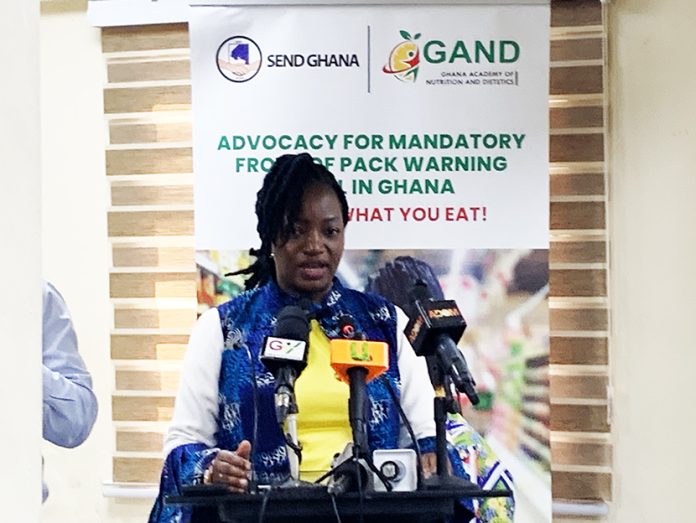
Madam Levlyn Konadu Asiedu, Project Lead of SEND Ghana, addressing journalists during a media briefing on the rising burden of kidney disease and the need for front-of-pack food warning labels in Accra

A growing body of scientific and public health evidence is raising alarms over the rapid rise of Chronic Kidney Disease (CKD) in Ghana. Policy advocates are now calling for urgent reforms to the country’s food labelling system to curb what they describe as a “silent epidemic.”

At a press briefing in Accra, Levlyn Konadu Asiedu, Project Lead at SEND Ghana, warned that Ghana’s evolving food environment marked by the proliferation of ultra-processed foods is accelerating the burden of non-communicable diseases (NCDs) and placing mounting strain on households and the national health system.

“Ghana is facing a quiet but dangerous public health crisis,” Asiedu said, citing Ministry of Health figures presented in Parliament indicating that over four million Ghanaians are currently living with kidney disease, with about 400 new cases of end-stage renal failure recorded annually.

A Silent Disease with Costly Consequences

Medical experts note that CKD often progresses without early symptoms, leaving many patients undiagnosed until the disease reaches advanced stages. At that point, treatment options such as dialysis or kidney transplantation become not only clinically complex, but financially prohibitive for most families.

The result is a dual burden: overstretched health facilities and deepening household financial distress. Treatment costs frequently exceed average incomes, forcing families into long-term economic hardship.

The broader epidemiological context is equally troubling. The World Health Organization estimates that NCDs account for roughly 45 percent of all deaths in Ghana, driven in part by diet-related conditions such as hypertension, diabetes, and stroke—all known to increase the risk of kidney failure.

Food Environment under Scrutiny

At the center of the debate is the role of ultra-processed foods—ranging from instant noodles and sugary beverages to packaged snacks—which are increasingly accessible across urban and rural markets.

“These products are cheap, convenient, and widely marketed, even to children,” Asiedu noted. “But they are often high in salt, sugar, and unhealthy fats, and low in essential nutrients.”

From a physiological standpoint, excessive intake of sodium, sugar, and trans fats contributes to metabolic imbalances that damage blood vessels and organs over time. The kidneys, which filter waste and regulate fluid balance, are particularly vulnerable to sustained metabolic stress.

The Case for Front-of-Pack Warnings

To address this, SEND Ghana and its partners are advocating for the rollout of a mandatory Front-of-Pack Warning Labelling (FOPWL) policy—a system that uses clear visual symbols on food packaging to indicate high levels of harmful nutrients.

Unlike traditional back-of-pack nutrition panels, which are often technical and difficult for consumers to interpret, FOPWL systems provide simplified, at-a-glance warnings designed to influence purchasing decisions in real time.

Evidence from countries such as Chile and Mexico suggests that these labels can significantly reduce the consumption of unhealthy foods. In Africa, South Africa has already begun implementation, while Nigeria and Kenya are developing similar frameworks.

Economic Stakes and Policy Urgency

The economic cost of inaction is substantial. Government spending on chronic disease management continues to rise, with the recently established Ghana Medical Trust Fund allocating GH¢2.9 billion in 2026 alone to support specialist care for kidney failure and cardiovascular diseases.

Public health experts argue that while such expenditures are necessary, they underscore the need for preventive strategies that reduce disease incidence at its source.

“This is not about banning products or targeting industry -It is about empowering consumers with the information they need to make informed choices,” Asiedu emphasised.


For more news, join The Chronicle Newspaper channel on WhatsApp: https://whatsapp.com/channel/0029VbBSs55E50UqNPvSOm2z

PAC sitting ends abruptly following recall of NDC majority side 

0
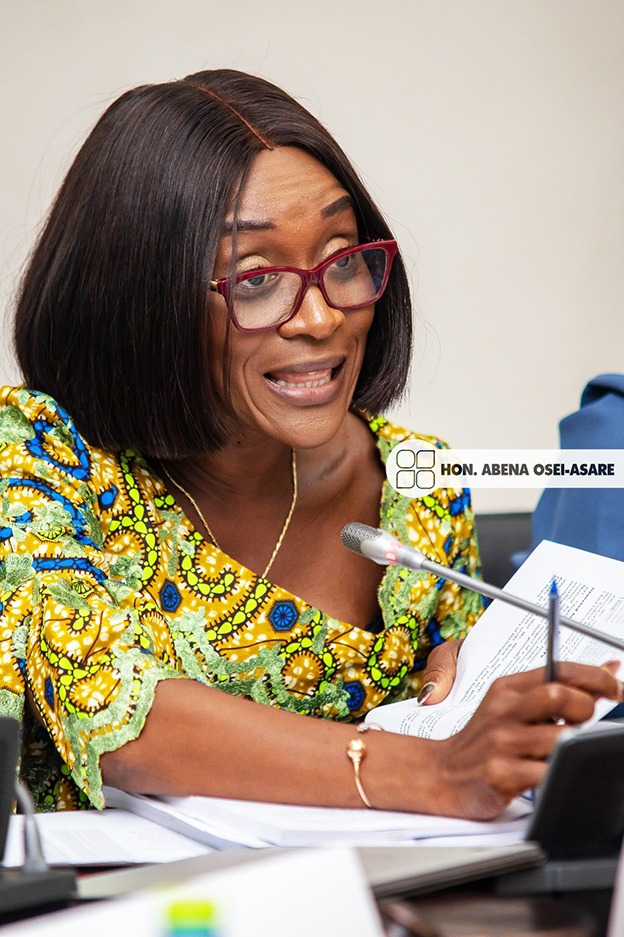
Abena Osei Asare

Proceedings of Parliament’s Public Accounts Committee (PAC) ended abruptly yesterday following the whipping of the majority members of the committee.

According to the chairperson of the committee, Abena Osei Asare, the meeting reluctantly had to end to accommodate a request by the majority side of the House. At the time of the incidence, the ministry of energy was before the committee.

The PAC session had proceeded for about an hour when the chairperson announced unexpectedly that proceedings had to come to an end. She explained to the minority members who were present and the guests who visibly looked shocked that “a majority chief whip” had called members of the majority on the committee to the chamber.

She said, “Respectfully, the whip from the majority side says their members are needed in the chamber even though we are also doing our national duty. So, respectfully, without an available ranking we cannot continue. So, on this note, we have to bring our proceedings to an end to accommodate the request of the majority, even though they submitted this report in Parliament, and Mr Speaker directed that the Public Accounts Committee sit on this report and in three weeks come up with our findings.

“He walked in, he is standing out there and whipping members. Once the ranking leaves and there is no available ranking, this meeting cannot continue. You know we abide by rules and laws. So sorry. Thank you,” the PAC chair added.


PRACTICE

It is normal practice that a committee of Parliament sit simultaneously as business proceeds in the chamber. Some committees may sit early before chamber work begins or meet after adjournment, but the same does not negate the practice that a committee sitting may occur while plenary session is ongoing. It was not immediately known the reason for the whipping by the majority whip.


PLENARY

However, when this paper checked in on the floor from the PAC sitting, the major item on the floor of the House was the correction of votes and proceedings of the previous day. The chairperson of the PAC raised the matter on the floor, minutes after reluctantly ending the meetings and apologising to the invitees.

She repeated what she had told the invitees at the PAC about why the meeting had to end and sought direction on the way forward with regard to the time frame given to the committee to work and submit its report.

The Majority Chief Whip, Rockson-Nelson Dafeamakpor, explained that there was a need for the whipping statement to be activated.

He said that “we met yesterday and” decided that “committee activities should be suspended till Friday” in order to have the numbers to transact government business on the floor.

He indicated that the options available were for committee meetings to be held from 8am to 10am before the plenary or after adjournment.

“But if you fix committee activity that clashes with the time of the plenary, it is hurting our numbers. Because they [minority] are the same people who may raise issues of quorum,” he added.

The Member of Parliament for Nsawam-Adoagyiri, Frank Annoh-Dompreh, who is the Chief Whip of the minority, rebutted, saying that the statement from Dafeamakpor that the minority would turn around to raise the issue of quorum “was most unfair.”

He stated that quorum was a right to both sides of the House, but not peculiar to the minority only, adding that “maybe you [majority] are not exercising it.”

While sharing in the concerns raised by the PAC chair, he stressed that “a simple engagement could have avoided this embarrassing situation, referring to the inconvenience Parliament had created for the people it invited to meet the PAC.

He urged that the leaders of the committee should meet to agree on a way forward so they could transact their business.


QUORUM

According to Article 102, at least one third of members of parliament are expected to be in the chamber to form a quorum for business.To satisfy the dictate of Article 102 by the current 276 members of Parliament, only 92 of the legislators are needed.Meanwhile, the majority in Parliament that prosecutes the business of their government are over 180, and the minority is less than 90.

The First Deputy Speaker, Bernard Ahiafor, indicated that the hands of the speaker were tied, as Ghana’s Parliament runs the whip system. He said that no speaker could truncate the whipping system. He urged the leadership to meet and iron out all the issues.


For more news, join The Chronicle Newspaper channel on WhatsApp: https://whatsapp.com/channel/0029VbBSs55E50UqNPvSOm2z
A Crippled Security Recruitment Process: A Threat To National Security Architecture

0
The writer, Derrick Desmond Nyame

The fairness of national security institutions in recruitment is a pillar in ensuring stability, peace and resilience of any given state. However, over the last few years, issues of transparency, fairness and credibility of recruitment exercises aimed at offering young citizens an opportunity to serve their country have risen. What ought to be a noble and patriotic avenue of entry into Security service is being increasingly seen as undermined, thus becoming a serious threat to national security.

The fundamental aspect of this concern is the increasing belief that the process of recruiting into the security services has not been based on National interest, but it has been politically driven. The process is supposed to be non-partisan and professional means of choosing qualified and dedicated persons interested in serving Ghana. Unfortunately, it has become a platform where political players pursue their personal interests. This damage the confidence of the people and the pillars of professionalism, neutrality, and competence that have to be the back-bone of security institutions.

With references to the ongoing recruitment, according to data published by the sector Minister, about half a million agile youth applied to the various security services, out of which approximately 400,000 were painfully disqualified.

Again, a particularly troubling issue has emerged regarding the purchase of recruitment forms. The Minister emphatically made a statement encouraging applicants to purchase multiple forms for different security agencies, on the premise that success in one may compensate for failure in another and this raises  serious concerns.

Such guidance not only places an unnecessary financial burden on already vulnerable youth, but also suggests a lack of coordination and coherence within the recruitment framework. It creates an impression of a system driven more by revenue generation than by the objective of identifying the most qualified candidates.

More so, the fact that most applicants are not satisfied with the process also contributes to a lack of trust in the process. The existence of disqualifications on dubious or vague grounds has been reported, hence causing a lot of frustration. Of utmost importance is the aptitude testing phase, which is aimed at objectively determining the intellectual and analytical abilities of the applicants.

The aptitude tests were conducted by TRYBNET, where the questions were artificially generated, which contradicts the purpose of security services. The questions were totally irrelevant, and does not fit to measure the competencies of the applicants. The validity of the results is questionable when assessment tools are viewed as poor and biased.

There are far-reaching consequences of such flawed procedures. Constant feelings of unfairness, marginalization, and deceit among the youth may one day lead to serious violent extremism. Youth that experience a sense of systematic marginalization or exploitation can slowly lose their trust in the institutions of the state.

In the long run, such a loss of trust may provide fertile soil to social instability, disillusionment, and radicalization. To manage these issues, the recruitment structure should be thoroughly and carefully redesigned. To begin with, the process should be institutionalized to open up every level of the process. Clear instructions, terms and conditions that are easily accessible and transparent system should be prioritized to restore confidence among applicants.

Secondly, the recruitment exercises are to be acutely inaccessible to political interference. Accountability and fairness can be increased by setting up independent oversight mechanisms or engaging bona fide third parties during the process.

In addition, the aptitude test that was carried out under the auspices of the Interior Ministry in collaboration of Trybenet, has been highly criticized that it lacks any credibility. Aptitude test is an important instrument, which is used to measure the cognitive and reasoning capabilities and general qualifications of candidates to hold high security positions.

Conclusively, a flawed recruitment process is not just an administrative failure, but it is a direct danger to National Security. The security services rely on the integrity of the people recruited and any form of compromise in the process has a long-lasting effect. The government must act decisively to deal with these challenges and make sure that the recruitment system is amenable to principles of justice, equity and national interest. Only at that point can the country create a security apparatus that will be effective as well as trusted by its citizens.

By Derrick Desmond Nyame

Security Expert

The views expressed in this article are the author’s own and do not necessarily reflect The Chronicle’s stance.


For more news, join The Chronicle Newspaper channel on WhatsApp: https://whatsapp.com/channel/0029VbBSs55E50UqNPvSOm2z
Editorial: Ghana Is Paying Billions To Treat A Disease It Could Have Prevented

0
Kidney diseases

Four million Ghanaians, according to available statistics, are living with chronic kidney disease, but regrettably, most of them do not know it.

The condition advances without symptoms, recruiting patients silently until it reaches the stage where the only available interventions, dialysis and transplantation, are beyond the financial reach of the overwhelming majority of families in this country. By the time the diagnosis arrives, the damage is done not only to the body, to the household economy, but increasingly to the national budget.

This is not a distant threat, as it is a crisis already in progress and Ghana is paying for it in the most expensive way possible at the back end, when prevention has failed and treatment is all that remains.

The newly established Ghana Medical Trust Fund has allocated GH¢2.9 billion in 2026 alone to treat kidney and cardiovascular diseases. That figure is not a measure of the government’s generosity. It is a measure of how badly the country has already lost ground on prevention.

The question that demands an answer is not whether Ghana faces a public health emergency. The World Health Organisation (WHO) estimates that non-communicable diseases — hypertension, diabetes and the kidney failures account for roughly 45 percent of all deaths in Ghana. The question is why in the full view of these figures, the country still lacks a mandatory front-of-pack warning labelling policy for food products high in sugar, salt and unhealthy fats.

The link between diet and this disease burden is not contested. Ultra-processed foods, instant noodles, sugary beverages, packaged snacks have flooded Ghana’s urban and rural markets over the past decade. They are cheap, heavily marketed, including to children.

But they are nutritionally corrosive, contributing to the metabolic stress that according to experts destroy blood vessels, strains the heart and overwhelms the kidneys. The food environment has changed faster than the regulatory environment designed to govern it and this preventable gap is killing people.

Chile demonstrated over a decade ago that mandatory front-of-pack warning labels measurably reduce the purchase and consumption of harmful food products. Mexico followed. In Africa, South Africa has begun implementation. Nigeria and Kenya are developing their own frameworks.

Ghana, meanwhile, has basic labelling requirements and an advocacy campaign, but no operational policy, no gazetted regulation, no parliamentary instrument and no published timeline for when one might arrive.

This is where The Chronicle thinks the Food and Drugs Authority (FDA) must be pressed to give a direct account of itself. The FDA is not a weak institution. It is among the more capable regulatory bodies on the continent, with the technical competence and the legal mandate to act.

What it has not done is move. The question of why, whether industry resistance has slowed internal deliberations, whether the relevant ministerial directive has stalled, whether a draft policy exists, but has not been brought to Parliament, deserves a public answer. Regulatory silence on a question of this consequence is not neutrality. It is a choice and Ghanaians are entitled to know whose interests that choice serves.

The Chronicle certainly supports SEND Ghana and its partners’ push for mandatory front-of-pack warning labelling. But support for the policy is insufficient without accountability for the delay. The FDA should publish, within a reasonable time, a clear timeline for operationalising a mandatory front-of-pack warning label framework. The Ministry of Health should require it; Parliament’s health committee should demand it.

Ghana is spending billions treating what better information, delivered earlier and more clearly, could help prevent. That, we dare say, is not a health policy – it is an admission of failure dressed as a budget line.


For more news, join The Chronicle Newspaper channel on WhatsApp: https://whatsapp.com/channel/0029VbBSs55E50UqNPvSOm2z
Damang Mine marks World Water Day with call for Gender-Inclusive Water Governance

0
Participants at the water forum

Gold Fields Limited Damang Mine has marked this year’s World Water Day with a strong call for inclusive water governance, highlighting the critical role of women in water management and sustainability.

The event, held under the theme “Water and Gender,” brought together university students, senior high school students, and members of the Damang Water and Sanitation (WATSAN) committees to engage on responsible water use and community participation.

Speaking at the occasion, the Operations Manager of Damang Mine, Sampson Arthur, described the observance as more than a symbolic event, stressing that it represents a shared responsibility across communities and industries.

“Water is life. It drives industries, shapes ecosystems and ultimately defines our resilience. Without it, there are no growth story, no sustainability narrative and no future to negotiate,” he said.

Mr. Arthur emphasised that the 2026 theme challenges stakeholders to move beyond infrastructure and compliance and focus on people, particularly women and girls, who play central roles in water access and management.

“In matters of water, women are not merely participants. They are decision-makers and custodians, often forming the backbone of water provision at household and community levels,” he noted.

He indicated that Damang Mine was shifting from awareness to action by promoting inclusion, transparency, and measurable impact in its water governance approach. According to him, involving women in water management is not only socially responsible, but also a strategic business decision that strengthens accountability and sustainability.

“When women are actively involved, systems become more accountable, communities more resilient and solutions more practical,” he added.

Mr. Arthur also encouraged students from University of Mines and Technology and Queen of Peace Senior High School to take an active interest in water management, noting that the future of the sector depends on the next generation of leaders.

Also addressing participants, Dr. Desmond Asare, Unit manager for Environment underscored the need for equitable access to water and responsible usage, describing water as a scarce, but essential resource.

He explained that mining operations rely heavily on water, particularly in mineral processing, and assured participants that Damang Mine continues to prioritise water conservation and responsible usage.

“It is a key reporting indicator for us. We monitor our water consumption and usage every month because we recognise that water is scarce globally,” he stated.

Dr. Asare said the programme was also designed to educate students and community members on mining processes and how the company is working to conserve water resources.

On her part, the Unit Manager for Occupational Health and Safety at Damang Mine, Irene Aboagye-Akari, highlighted the intersection between water management, safety and inclusion.

“Water is life but it is also risky, needs responsibility and discipline. Safe water management is about protecting people, ecosystems and ensuring that today’s systems do not become tomorrow’s hazards,” she said.

She stressed the importance of mentorship and capacity building, noting that sustainable systems depend on the people who manage them. “This engagement is not just an event; it is a pipeline—a deliberate investment in awareness, capacity, and leadership,” she added.

Mrs. Aboagye-Akari further commended members of the WATSAN committees for their frontline role in translating water policies into everyday practices within communities.

The event reinforced Damang Mine’s commitment to sustainable water management, community engagement, and creating opportunities for women and girls to actively participate in water governance.

Participants were urged to adopt responsible water practices and contribute to safeguarding water resources for present and future generations.


For more news, join The Chronicle Newspaper channel on WhatsApp: https://whatsapp.com/channel/0029VbBSs55E50UqNPvSOm2z

Naira records first appreciation against US dollar

0
Naira appreciates

The Naira appreciated on Tuesday against United States dollar at the official foreign exchange market for the first time in two working days.

The Central Bank of Nigeria’s data showed that it strengthened on Tuesday to N1,382.63 from N1,388.38 traded on Monday.

This means that the Naira gained N5.7 against the dollar at the official market on a day-to-day basis. Naira’s uptrend on Tuesday comes after its recorded N34.48 declined on Monday.

However, at the black market, the Naira remained unchanged on Tuesday at between N1,410 and N1,412 per dollar, the same rate as the previous day, according to multiple Bureau de Change operators in Wuse Zone 4, Abuja.

The development comes as Nigeria’s foreign reserves dropped to $49.61 billion as of 23rd March from $49.78 billion on the 18th, according to CBN’s data.

Recall that the Naira paused its rally on Wednesday last week at the official foreign exchange market before the Eid-ul-Fitr holidays and resumed on Monday in the same sentiment.

Credit: dailypost.ng

Why I’m contesting for senatorial seat –Ex-Rep Onuigbo

0
Chief Sam Onuigbo

A chieftain of the All Progressives Congress, APC, in Abia State, Chief Sam Onuigbo, says his ambition to represent Abia Central Senatorial District in the Senate is driven by a desire to contribute meaningfully to Nigeria’s economic and political development.

Onuigbo made the declaration in an interview with the News Agency of Nigeria (NAN) in Abuja on Wednesday, stating that he would leverage his legislative and administrative experience to deliver effective representation if elected.

The former member of the House of Representatives represented Ikwuano/Umuahia North/Umuahia South Federal Constituency, where he sponsored and championed the Climate Change Bill that was later signed into law.

According to him, his quest for a seat in the upper legislative chamber is not motivated by personal interest but by a commitment to serve and advance the development of his senatorial district and the nation.

“I say this with every sense of modesty, but most importantly to put it on record that the mandate I seek as senator is not for selfish aggrandisement.

“Rather, I feel elated that I am not only doubly qualified to serve our zone as senator, but also confident of bringing honour and accomplished representation,” he said.

Onuigbo added that his aspiration aligns with the Renewed Hope Agenda of President Bola Ahmed Tinubu, noting that he intends to bring his wealth of experience to bear in advancing policies that would benefit Nigerians.

“I am bold to say that my journey to the Nigerian Senate is to invest my rich experience and reflect hope as encapsulated in the Renewed Hope Agenda of our leader, President Bola Ahmed Tinubu,” he said.

He stressed that Nigeria currently requires selfless leaders with the intellectual capacity to enact laws that would position the country competitively among nations of the world.

Credit: dailypost.ng

The Ghanaian Chronicle