Home Blog Page 1224

Man United secure crucial win over Brentford, ease pressure on Erik ten Hag

0
Manchester United midfielder Casemiro stretches for the ball

Manchester United came from behind to secure a crucial victory over Brentford at Old Trafford and ease the pressure on manager Erik ten Hag.

United trailed at the break thanks to Ethan Pinnock’s controversial injury time header which came while Matthijs de Ligt was off the pitch being treated for a head wound.

But at the start of the second half, Alejandro Garnacho ended the home side’s 316-minute Premier League goal drought as he applied a magnificent first-time finish to Marcus Rashford’s cross.

Striker Rasmus Hojlund won it for the hosts in the 62nd minute when he ran onto Bruno Fernandes’ sensational flicked pass with the outside of his boot to calmly chip the ball over Brentford keeper Mark Flekken, who slid out to block it.

It wasn’t quite as exciting as 12 months ago when Scott McTominay’s injury time double ended Brentford’s hopes of a first win in this stadium since 1937.

Credit: bbc.com

Messi scores hat-trick as Inter Miami set points record

0
Lionel Messi scored a hat-trick

Lionel Messi scored a hat-trick to help Inter Miami beat New England Revolution 6-2 as his side set a points record for a regular Major League Soccer campaign.

The victory in their final game of the 34-match regular season took Miami to 74 points and meant they beat the previous record of 73 points set by the Revolution in 2021.

Miami, who had already secured the MLS Supporters’ Shield, which is given to the club with the best regular-season record, went 2-0 behind against the Revolution following goals from Luca Langoni and Dylan Borrero.

Luis Suarez double levelled the match before the introduction of Messi after 58 minutes helped Miami kick on to claim victory.

The 37-year-old Argentina forward, who scored a hat-trick in midweek for his country against Bolivia, played a part in Benjamin Cremaschi putting Miami 3-2 in front.

Messi scored his first goal of the match when he powered in a left-foot shot from just outside the area after combining with former Uruguay international Suarez.

He then side-footed in a second before adding his third – and 20th of the MLS season – following a Suarez cross.

Credit: bbc.com

Harry Kane nets hat-trick as Bayern Munich beat Stuttgart

0
Harry Kane netted a hat-trick

Harry Kane netted a hat-trick to guide Bayern Munich to an impressive victory against Stuttgart.

Kane’s goals – plus one from Kingsley Coman – helped Bayern end a three-game winless run in all competitions.

They faced a tough task against a Stuttgart side who sat back and limited their chances, leading Vincent Kompany’s side to enter the break frustrated and with the deadlock unbroken.

Bayern eventually found a way past Stuttgart’s steely defence when Kane drilled a low effort into the bottom corner from around 30 yards.

Having waited until the 57th minute to get the better of Alexander Nubel, it took under three minutes for the next to arrive with Kane producing an excellent bit of skill to flick the ball home from close range.

He was then in the right place to bundle home again after a Kimmich effort deflected off a visiting defender and grab his third goal of the game.

Substitute Coman inflicted a late fourth blow, taking advantage of another deflection before smartly turning inside and firing into the far corner.

Credit: bbc.com

Feature: ‘We Are Poisoning Ourselves’: Ghana Gold Rush Sparks Environmental Disaster

0
Feature

Water from a polluted river in Ghana was so thick and discoloured that an artist was able to use it as paint to depict the environmental devastation caused by the illegal gold mining that has spread like wildfire in the resource-rich West African state.

Mercury is increasingly being used to extract gold by miners digging on a massive scale in forests and farms, degrading land and polluting rivers to such an extent that the charity WaterAid has called it “ecocide”.

“I could actually paint with the water. It was so bad,” Israel Derrick Apeti, better known as Enil Art, told the BBC.

He and his friend Jay Sterling visited the Pra River – around 200km (125 miles) west of the capital, Accra – to make a point about the environmental catastrophe unfolding because of “galamsey”.

This is the term used by locals to describe the illegal mining taking place at thousands of sites around the country – including the forested regions famous for their cocoa farms, as well as their vast gold deposits.

The West African state is the world’s sixth-biggest gold exporter, and the second-biggest cocoa exporter.

Demonstrators recently took to the streets of Accra to demand that the government take action to end the illegal mining. The police responded by detaining dozens of protesters accused of holding an illegal gathering. They were later released as anger grew over the arrests.

The hashtags #stopgalamseynow and #freethecitizens were used to galvanise young people across Ghana and the diaspora, particularly in Canada and the UK, to voice their concerns.

Apeti told the BBC that he had decided to contribute to the campaign through art.

“What is art for?” he said, adding: “On our way to the river, I just thought I could perhaps paint with the polluted water. It just came to me like that. So, we got there, I tried it and it worked out.”

Communities along the river – one of the biggest in Ghana – lamented to Apeti that the water was “once so clean that you could see the fish and crocodiles that lived in it”, but it had been transformed “into a yellowish-brown body of water”.

Ghana’s music stars have also thrown their weight behind the campaign.

Black Sherif – who hails from Konongo town in the Ashanti region, which has been badly affected by the illegal mining – stopped his set at The Tidal Rave Concert in Accra earlier this month to show a video of the devastation.

Truth Ofori, who was part of Black Sherif’s set, then sang a patriotic song called “This is our home”, while Stonebowy used his set to perform “Greedy Men”, which targeted those behind galamsey.

The devastation has been caused by the fact that the nature of illegal mining has changed – previously, young unemployed men dug with picks and shovels, or their bare hands, to search for gold.

They also relied on panning – the washing of sediment through a sieve so the gold settles at the bottom.

But Chinese businessmen – who first moved to Ghana around 18 years ago – have made it a more sophisticated industry.

They are accused of ignoring environmental concerns and taking to heart an age-old saying: “There is no land in Ghana which doesn’t have gold, even in the top soil. Ghana is gold.”

Indeed, during colonial times the country was known as the Gold Coast.

Some local businessmen and politicians are widely suspected to have joined them in what has been dubbed “the mad gold rush”, buying out cocoa farms and turning them into illegal mining sites.

They have also been accused of using intimidation if a farmer refuses to sell by digging up footpaths, and forcing them to eventually give up the land.

An estimated 4,726 hectares of land – more than the size of European cities like Athens and Brussels – have been destroyed in seven of the country’s 16 regions, and 34 of its 288 forest reserves, Ghana Forestry Commission head John Allotey was quoted as saying in August.

Agricultural development consultant Dr John Manful told the BBC that “precious, valuable land” in the forest belt had been destroyed by the gold-seekers.

“Illegal small-scale mining has been taking place for decades in Ghana. However, in recent years, it has been getting out of control, having catastrophic effects,” he said.

The mining has led to the felling of trees, and the clearing of vast areas of forest vegetation. Excavators are then used to dig out the top soil and subsoil.

The soil is then deposited at gold-washing plants stationed in rivers, and water is pumped to wash the soil and crushed stones.

During the washing process, various chemicals, including mercury and cyanide, are used to help extract the gold from the soil, polluting big and small rivers.

Highlighting the dangers of this, Dr George Manful, a former senior official in Ghana’s Environmental Protection Agency, said: “Mercury can remain in water for up to 1,000 years. The water in these rivers is so turbid that it is undrinkable.”

In an interview with local broadcaster Joy FM, he also pointed out that mercury could affect the entire food chain, as it accumulates in fish and can enter crops irrigated with the water.

“We are slowly poisoning ourselves,” Dr Manful added.

For its part, WaterAid urged the government to take “immediate action to end the ecocide”, while the state water utility warned that Ghana risked becoming an importer of water by 2030 if the illegal mining was not curbed.

In September, the government said that 76 people, including 18 foreign nationals, had been convicted of illegal mining since August 2021, and more than 850 others were being prosecuted.

The illegal mining has also affected cocoa production, with the Ghana Cocoa Board saying in 2021 that more than 19,000 hectares of farmland had been destroyed in key cocoa-growing areas like the Western and Ashanti regions.

Repeating the board’s concerns earlier this week, its chief executive Joseph Boahen Aidoo said the production of cocoa – the key ingredient of chocolate – had fallen.

“Yes, it has [taken] a toll on the industry,” he was quoted as saying by Ghana’s Chronicle news site.

The illegal mining has also affected other crops, with a rice farmer in the Ahafo region telling the BBC that she could no longer use her nearby river for irrigation purposes.

“I have to set up a whole plant that involves digging deep to find water, which is very expensive,” she said.

The farmer, who asked not to be identified, said she feared that the crisis would continue if the powerful individuals behind the illegal mining were not arrested and prosecuted.

“When I see arrests by the military in poor communities, it’s just a symbolic gesture of appearing to maintain law and order. The people making big money out of it are in offices, not on the field,” she said.

The government did not respond to a BBC request for comment.

The gold rush has also been fuelled by the fact that the global price of the precious metal has risen to new heights, and is expected to continue doing so.

Ghana’s illegal syndicates are, therefore, boosting production.

The gold is smuggled out – possibly to countries like the United Arab Emirates, China and India – to be refined, mixed with legal gold, and sold on international markets, BBC business reporter Jewel Kiriungi told a World Service podcast that explored the topic.

The illegal industry has also boomed because Ghana, despite being resource-rich, is facing its most severe economic crisis in a generation, with unemployment worsening and the cost of living escalating.

As a result, many poor or jobless people – especially in rural areas – have either been employed by the illegal syndicates, or have simply taken up gold mining on their own, earning up to 2,000 cedis ($125; £96) a week – the average monthly salary of a teacher.

Apeti, the artist, said that when he visited the Pra River, he was told by locals that officials regularly carry out raids, destroying the equipment of miners.

“But that wouldn’t be enough to deter them from their quest for gold, as they would return at night to start mining all over again,” he said.

As protests took place in Accra to highlight the devastation, Ghana’s President Nana Akufo-Addo responded last week by ordering the deployment of naval boats “to ensure the immediate cessation of all mining activities, legal or illegal, in and around these water bodies”.

But some senior officials in the ruling National Peoples Party (NPP) said they did not expect a major crackdown, as many of their supporters in mining districts were involved in galamsey – and the party could not risk losing their votes in the December general election.

The popularity of galamsey was borne out by a survey conducted by WaterAid in communities involved in illegal mining in Ghana’s Upper East Region, particularly the Bongo and Bawku West districts.

More than 75% of those surveyed saw the practice as a lucrative source of income despite 97% of them acknowledging it harmed the environment and water sources.

“Alarmingly, 79% reported health issues, such as chest pains, directly linked to their work in illegal mining,” WaterAid added.

When President Akufo-Addo first took office in 2017, he acknowledged that some security personnel, businessmen and politicians were involved in galamsey.

He vowed “not just to stop it, to reclaim the land, to let our rivers work again”, but also to help “all the abled-bodied young men involved in this activity to find an alternative livelihood”.

With Akufo-Addo due to step down at the end of his two terms, his critics say that he failed to fulfil his promise and the problem rather got worse during his tenure, jeopardising – as he put it in 2017 – “the very survival of our nation”.

By Mark Wilberforce & Favour Nunoo (In London & Accra)

Source: bbc.com

Why Would You Need a Shampoo for an Itchy Scalp?

0
woman shampooing her hair

Having an itchy scalp can be unbearable. You might even have trouble sleeping or concentrating. Your scalp could also feel dry, flaky, scaly, or have red patches.

Special shampoos for an itchy scalp can help relieve your symptoms, as they have ingredients that target different causes of itching, such as dandruff, psoriasis, or head lice. For some scalp problems, you may need to get a prescription from your doctor. Finding out what is causing your itchy, dry scalp symptoms will help you choose the right shampoo. Here are some of the best types of shampoos for an itchy scalp.

Shampoos for Dandruff

Dandruff is a common scalp problem, but it isn’t contagious. If you see lots of tiny flakes of skin on your shirt or in your hair, eyebrows, or facial hair, it’s probably dandruff. Dandruff is caused by an overgrowth of yeast that lives on the scalp. This triggers your body’s immune system, causing itchiness. The symptoms of dandruff can get worse with stress or during cold, dry weather.

To treat dandruff, use a dandruff shampoo in place of your regular shampoo once or twice a week. Follow the directions on the back of the bottle, as different types of dandruff shampoo have different instructions. You are supposed to lather some shampoos and leave them in for 5 minutes before rinsing. Other dandruff shampoos shouldn’t sit for a long time on your skin, and you should rinse them out right away.

If the first type of dandruff shampoo doesn’t work well enough, try a different kind. Some people find that one type of shampoo will work for a while, then they have to switch. It’s OK to alternate among two or three types of dandruff shampoo. Some fight the fungus that can lead to dandruff, while others are meant to help with the symptoms of dandruff.

Best shampoos for dandruff

The following are common dandruff shampoos. These options are the most effective types of dandruff shampoos available. You can buy them over the counter or with a prescription from your doctor, depending on the strength of your shampoo’s ingredients.


Shampoos for Psoriasis

Psoriasis happens when your immune system attacks your skin cells. In response, your body makes lots of new skin cells, which pile up and form red patches with a silvery-white shine to them. Scalp psoriasis can appear in small patches or can cover the whole scalp and spread to the forehead or neck. These patches, known as plaques, can cause itchiness. An itchy scalp is a common symptom of scalp psoriasis, affecting 70% to 90% of people with the condition.

Other symptoms include dryness, hair loss, bleeding, and a burning feeling on the scalp. Talk with your doctor about treatment options such as topical medications, medicated shampoos, and laser treatments.

Best shampoos for psoriasis

Over-the-counter (OTC) shampoos can help treat mild psoriasis symptoms. During a flare-up, OTC shampoos can help soften and wash away scale so that your prescription topical medication can get through to your scalp.

Shampoos for Ringworm

Ringworm has nothing at all to do with worms. It is a fungal infection common in children. Ringworm on the scalp, also known as tinea capitis, can look like a swollen red patch or bald spot. You may also see black spots, or a stubble-like texture. Like other fungal infections of the scalp, ringworm can cause itching.

You can treat some types of ringworm with over-the-counter antifungal cream, but for ringworm of the scalp, you usually need to take a prescription oral medication (pills) for 1 to 3 months. Using over-the-counter or prescription antifungal ketoconazole shampoos can help keep symptoms under control. Ketoconazole is an antifungal medicine that slows the growth of fungi, including ringworm.

Shampoos for Head Lice

Itching is one of the most common symptoms of head lice, tiny insects that live on or near a human scalp. Lice are not linked to poor hygiene or an unclean environment. Clean hair is actually more attractive to lice than dirty hair. The best way to find out if a person has head lice is to see one of the lice crawling in the person’s hair.

You might also see tiny lice eggs (known as nits) clinging to strands of hair. Over-the-counter lice medicine is called pediculicide. Pediculicide shampoos treat lice by paralyzing and killing them. But pediculicide shampoos don’t get rid of lice eggs, so you may need to repeat the application after a week or two. Follow the directions on the box carefully.

Shampoos for Eczema

Eczema is a skin condition that shows up as red, itchy, scaly areas on your skin. Atopic dermatitis, a type of eczema, can make your scalp dry and itchy. Eczema tends to come and go. A dermatologist or family doctor can suggest ways to keep symptoms to a minimum. When eczema flares up, your doctor may prescribe topical treatments – medications or therapies that you apply to your skin – or a specific shampoo to use.

The key is to find a gentle shampoo that won’t make eczema worse. Look for shampoos that are fragrance-free, because scented ingredients can be irritating. Also steer clear of shampoos that contain sodium lauryl sulfate, or SLS, which makes products foamy but may irritate your eczema. If those options are still too harsh or unhelpful, try a medicated shampoo for dandruff. Look for dandruff shampoos that contain coal tar or zinc pyrithione, which are ingredients that can relieve itching, redness, and swelling.

Allergies and an Itchy Scalp

If you have an itchy rash on your scalp, you could be having an allergic reaction, also called contact dermatitis. Itchiness can be a side effect of hair products like shampoos, dyes, and styling products. The treatment is to stop using the product you’re allergic to. If you have trouble figuring out what ingredient is bothering you, a dermatologist may be able to help you narrow it down.

Source: webmd.com

COP women’s ministry donates to Koforidua PENSEC

0
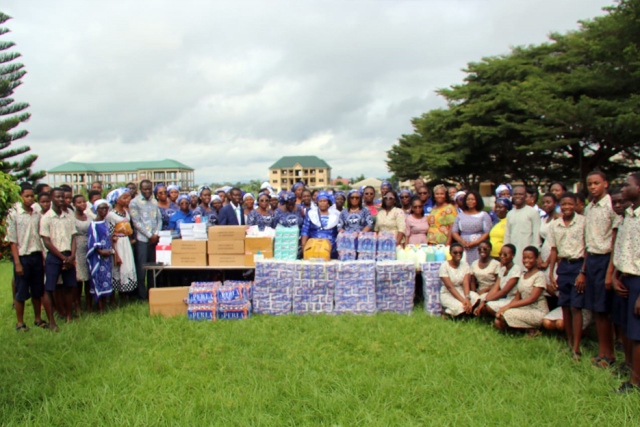
The Koforidua Area Women's Ministry and Schools Outreach Ministry of the Church of Pentecost (COP) in a group picture with the students after the donation

The Koforidua Area Women’s Ministry of the Church of Pentecost (COP), in collaboration with the Schools Outreach Ministry, have donated items worth GH₵10,000 to Pentecost Senior High School (PENSEC) in Koforidua.

The items donated include sanitary pads, 1,400 exercise books, 30 boxes of pens, five rims of A4 paper, six gallons of liquid soap, laundry bleach and 350 pieces of toilet paper among others.

The kind gesture forms part of the celebration of this year’s International Day of the Girl Child, which is globally observed annually on October 11 to highlight the voices and leadership of girls worldwide.

Cross-section of the students at the function

The celebration, themed “Girls’ Vision for the Future: Unleashing the Girl Child for an Impactful Future,” aligned with the Church’s Vision 2028 agenda of “possessing the nation and transforming our world.”

The event included fellowship with students and a passionate call by the leadership of the ministry on the need for students to craft visions for their future and develop skills essential for success.

The Koforidua Area Women’s Ministry Leader, Deaconess Dr. Gertrude Ansaaku Yirenkyi-Antwi urged the girls to embrace teamwork, effective communication, self-belief and problem-solving skills to overcome challenges and achieve their goals.

She emphasised the importance of self-awareness, confidence, good mentorship and avoiding bad influences and allowing Jesus to take centre stage in their lives.

Probational Overseer Theophilus Buadee, head of the Koforidua Area Schools Outreach Ministry, encouraged the students, especially the girls, to stay grounded in Christ to resist the negative influences of the world, particularly from social media.

Expressing her gratitude, Mrs. Evelyn Osae-Abeasi, Assistant Headmistress (Academic), noted that the engagement and donation would positively impact both the students and the school.

GHS targets over six million children in Polio vaccination campaign

0
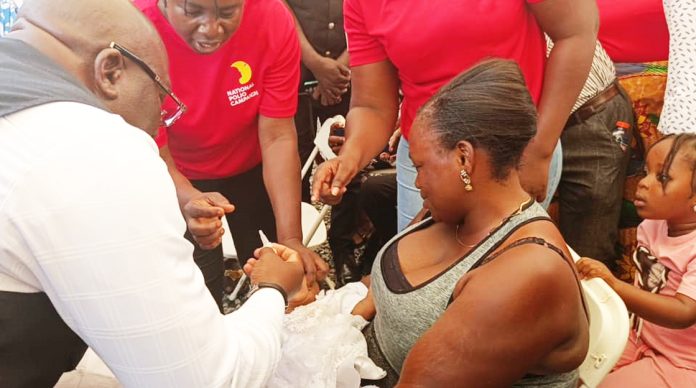
The Eastern Regional Minister Hon. Seth Kwame Acheampong (with his back to the camera) in a ceremonial immunizilization of a child at the programme.

The Ghana Health Service (GHS) has launched an ambitious campaign to cover over six and a half million children across the country in the polio vaccination campaign, in an effort to eradicate the wild poliovirus in the country.

According to the Director-General of GHS, Dr. Kuma-Aboagye, the detection of an environmental polio virus was a warning that polio might be circulating silently within communities in Ghana, despite the fight that had been waged against it for years.

He revealed that the poliovirus could survive in sewage, water systems and other environmental reservoirs, posing an ongoing risk, especially to unvaccinated populations with its corresponding deaths and physical deformities.

The Director-General of Ghana Health Service Dr. Kuma-Aboagye speaking with the media at the second launch of the 2024 National Polio Immunization Days Campaign in the Eastern Region

Speaking at the second launch of the 2024 National Polio Immunisation Days Campaign in the Eastern Region, Dr. Kuma-Aboagye said that the prevention efforts by the government formed part of the country’s broader strategy to close the immunity gaps that allowed poliovirus to persist.

“With enhanced environmental surveillance, consistent and continuous routine immunization, and targeted risk communication and education, we can stop polio at its source and prevent its resurgence,’’ he said.

He urged all caregivers of children under five years to look out for the vaccination teams and ensure that their children are vaccinated.

Dr. Kuma-Aboagye enjoined the media to use their platforms to provide accurate information about polio, the benefits of vaccination and the importance of immunizing every child.

“This campaign will not succeed without the involvement of every community member. We must work together to educate, raise awareness and build trust in vaccines.

“I call on parents to ensure their children receive all scheduled polio vaccinations as well as the one being provided during this campaign,’’ he said.

Dr. Winfred K. Ofosu, the Eastern Regional Director of Health Service articulated that the campaign was part of the broader efforts to strengthen the health system in Ghana and to build resilience against preventable diseases.

He added that Ghana was at a critical stage in fighting against polio, a disease that once struck fear into the hearts of families around the world.

“In Ghana, we have made remarkable progress through the tireless efforts of health professionals, dedicated volunteers and our development partners. We have significantly reduced the burden of polio.

“However, we are not yet at the finish line. As long as there is a single case of polio anywhere in the world, every child remains at risk. It is for this reason that this campaign is so crucial,’’

Dr. Winfred Ofosu indicated that the National Polio Immunization Campaign is not just another health initiative, but a bold statement of Ghana’s commitment to protect future generations.

The Eastern Regional Minister, Seth Kwame Acheampong, hinted that Ghana has made tremendous strides in eradicating this deadly and crippling virus as he praised the Ministry of Health, GHS and other partners who have worked tirelessly to develop and implement robust immunization programs aimed at protecting every child from vaccine-preventable diseases.

Seth Acheampong assured that the region would continue to support the Ghana Health Service, local health workers, and community leaders to ensure the vaccine reaches every child in every corner.

Dr. Frank John Lulu, Officer-in-Charge of the World Health Organization (Country Office in Ghana) urged districts and facilities to leverage the polio campaign to integrate routine immunization.

Libyan arrested in Germany on suspicion of planning Israeli embassy attack

0
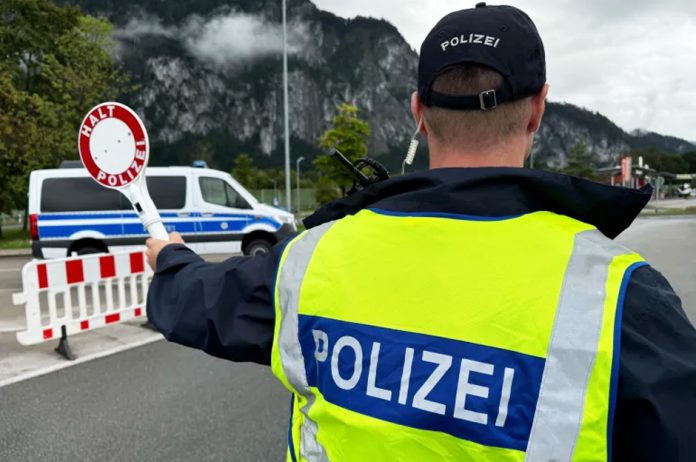
Police and other security forces arrested the suspect in Bernau

A Libyan national with suspected ties to the ISIL (ISIS) group who was planning an attack on the Israeli embassy in Berlin has been arrested in Germany, the authorities said.

Police and other security forces arrested the man on Saturday evening in Bernau, a town just outside the capital, Berlin, and searched his home, the Federal Prosecutor’s Office said in a statement on Sunday.

The prosecutor’s office identified the 28-year-old man only as Omar A in keeping with Germany’s strict privacy laws.

“He intended to carry out a high-profile attack with firearms on the Israeli Embassy in Berlin,” the statement said. “The accused exchanged information with a member of [ISIL] in a messenger chat.”

Security forces also searched the home of another person near the city of Bonn, who was considered a witness but not a suspect, the statement said.

German newspaper Bild said the Libyan man was believed to have entered Germany in November 2022 and to have made a request for asylum the following January, which was rejected in September 2023. Interior Minister Nancy Faeser said German security authorities “struck in time to thwart possible plans to attack the Israeli Embassy in Berlin”.

The suspect is expected to be brought before an investigating judge at the country’s highest court, the Federal Court of Justice in Karlsruhe, on Sunday, the prosecutor’s office said.

The authorities acted after receiving a tip-off from an unspecified foreign intelligence agency, local media reported, with a heavily armed elite police unit storming the suspect’s home in Bernau.

Credit: aljazeera.com

Hamas leader Yahya Sinwar was killed in a ruined house

0
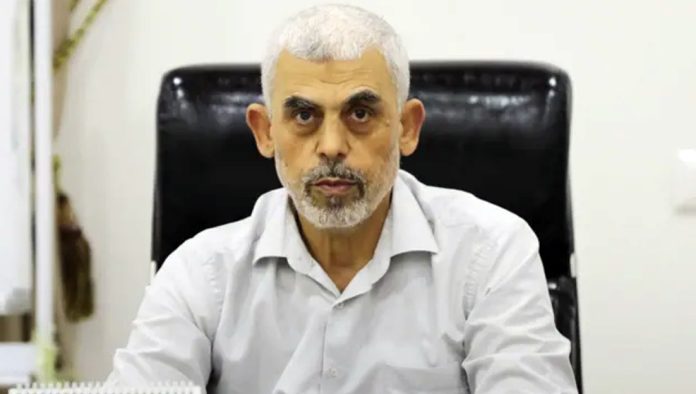
Yahya Sinwar

A Palestinian man from Gaza has told the BBC that the house the former Hamas leader Yahya Sinwar was killed in was his home for 15 years before he had to flee in May.

Ashraf Abo Taha said he was “shocked” as he identified the partially destroyed building in Israeli drone footage of the incident as his home on Ibn Sena street in Rafah, southern Gaza.

Sinwar, the key figure behind the 7 October attacks on Israel, was killed by Israeli troops on Wednesday.

The Israeli military released drone footage that it said showed Sinwar in a partially destroyed house before he was killed.

Mr Abo Taha told BBC Arabic’s Gaza Lifeline that he had left his home in Rafah for Khan Younis on 6 May, when Israel ordered evacuations and began an operation against Hamas fighters, and had not received any news of his house until now.

Mr Abo Taha said his daughter first showed him the footage purportedly capturing Sinwar’s last moments on social media, saying it depicted their house in Rafah. He initially didn’t believe her, he said, until his brother confirmed the house was indeed his.

“I was like ‘yes this is my house’ and I saw the pictures and here I was shocked”, Mr Abo Taha said.

He said he had no idea why Sinwar was there or how he got there.

“Never ever did me and my brothers and sons have anything to do with this,” he said.

The BBC has verified that pictures and videos provided by Mr Abo Taha of his home match imagery of the house where Sinwar was killed.

BBC Verify compared and matched images of the home’s window archways, external decorations on doorways, shelves, and armchairs from the footage.

The BBC cannot independently verify that Mr Abo Taha owned the home.

Credit: bbc.com

Russian cash-for-votes flows into Moldova as nation heads to polls

0
Moldova President Maia Sandu (right) is running for re-election

The sniffer dogs at Chisinau Airport have been working extra hard in recent months, searching for money that might be evidence of Russian meddling in Moldovan politics.

Ami, a black retriever, gives every suitcase that rolls in on the baggage claim belts a good sniff on all sides. If she detects cash, she will freeze. Back in May she was doing that a lot.

That is when customs officers began finding large amounts of money on passengers arriving via connecting flights from Moscow. People who had never left Moldova before were returning from a few days in Russia with wads of notes.

“Almost everyone had money: 2,000, 3,000, 7,000 euros”, the head of customs at Chisinau Airport, Ruslan Alexandrov, remembers. The amounts themselves were not illegal but the patterns were suspicious.

“There were certain flights: Moscow-Istanbul-Chisinau, Moscow-Yerevan-Chisinau,” the customs chief explains. “Normally people don’t come in with that much money. Not from Moscow.”

So police and prosecutors began seizing the cash. In one day alone they say they scooped $1.5m (£1.2m). No-one ever asked for their money back.

The authorities believe the cash mules were part of a major and ongoing operation to buy political influence run by a fugitive Moldovan oligarch named Ilan Shor. Convicted of major fraud in Chisinau, he is now resident in Russia which will not extradite him.

Ahead of two key votes this weekend, the capital’s airport is on alert. Flights from all “high risk” routes are met by sniffer dogs and at least half the passengers are pulled over for extra baggage scans.

Credit: bbc.com

The Ghanaian Chronicle