Home Blog Page 1166

Ghana’s growth has been positive but not sufficient -World Bank

0
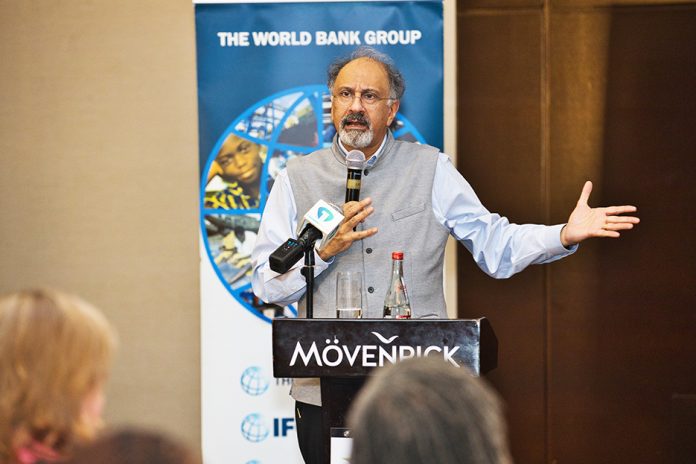
The Chief Economist, Mr. Indermit Gill addressing the gathering

The Chief Economist and Senior Vice President for Development Economies at the World Bank, Mr Indermit Gill has stated that Ghana’s growth has been positive but not sufficient.

Addressing the gathering at the launch of the 2024 World Development Report titled: “The Middle-Income Trap” in Accra, on October 10, 2024 Indermit Gill highlighted the need to increase the growth rate without over-reliance on external borrowing.

He recommended maintaining a public Debt-to-GDP ratio of not more than 50 percent to create a more favorable environment for growth.

He urged Ghana to expedite its economic growth whilst carefully managing public debt. He pointed out that despite being classified as a lower-middle-income country for over a decade Ghana’s growth rate has not kept pace with East Asian countries.

Mr. Gill stated that Ghana’s growth has been positive, but not sufficient, highlighting the need to increase the growth rate without over-reliance on external borrowing.

He recommended maintaining a public Debt-to-GDP ratio of no more than 50 percent to create a more favourable environment for growth.
Some participants seated at the launch

Mr. Gill cited the successes of nations like South Korea and China which sustained high growth rates over decades, expressing confidence that Ghana, with its educated workforce and rich natural resources could achieve similar outcomes.

However, he stressed the importance of balancing public and private investment, emphasising that private sector involvement would be crucial for Ghana’s transition to a high-income economy. He also called for Ghana to leverage its Diaspora and deepen integration with global markets.

Despite the increasingly challenging global economic landscape, Mr. Gill affirmed that Ghana is well-positioned to improve its domestic conditions and achieve sustained growth.

The World Bank has launched its 2024 World Development Report titled: “The Middle-Income Trap” in Ghana, outlining key strategies for developing economies to avoid stagnation in the middle-income bracket.

The report asserts that lower-middle-income countries must transcend investment-driven models by adopting modern technologies and successful business practices from abroad.

Meanwhile, upper-middle-income nations are encouraged to enhance innovation and advance technological frontiers.

To achieve these goals, the report suggests reconfiguring economic structures related to enterprises, labor and energy, thereby fostering greater economic freedom, social mobility and political competition.

Dr. Maxwell Opoku-Afari, First Deputy Governor of the Bank of Ghana underscored the urgent need for strategic investments to drive structural transformation in Ghana’s economy.

He advocated for a more intentional investment approach, asserting that transforming the nation’s economic structure is vital for moving beyond its current middle-income status.

Dr. Opoku-Afari stated that the key issue for Ghana is about investment, emphasising the need for a targeted and transformative investment agenda.

He highlighted that economic growth should be built on solid, sustainable foundations rather than temporary fiscal measures.

His comments reflect a broader recognition of Ghana’s vulnerability to external shocks, illustrated by recent economic turmoil linked to global commodity price fluctuations and dependence on external financing.

Dr. Opoku-Afari also addressed the critical need for enhanced domestic revenue mobilisation. Despite ongoing tax reforms, Ghana’s revenue generation remains insufficient to support long-term growth.

“The quality of revenue mobilisation in Ghana is well below where it should be,” he explained, stressing the importance of broadening the tax base rather than intensifying collections from existing taxpayers.

“We should not continue to scrape the bottom. We need to expand the tax net and involve more people as part of the social contract necessary for structural transformation,” he added.

This approach, he suggested, would not only boost government revenues but also foster a sense of civic responsibility and shared commitment to national development.

He emphasised the importance of scrutinising public spending, arguing that the quality of expenditures is just as critical as revenue generation.

“How do we ensure that our spending is done more efficiently to develop this country?” he questioned.

Addressing these inefficiencies is crucial for Ghana if it hopes to meet its developmental goals while maintaining fiscal discipline.

According to Dr. Opoku-Afari, a core challenge facing Ghana is the lack of “infusion”—a term he used to describe investments that genuinely transform the domestic economy, particularly by nurturing local talent and capacity.

He contrasted this with South Korea’s rapid industrialisation, arguing that foreign investments in Ghana often fail to impart the skills and knowledge necessary for sustainable long-term growth.
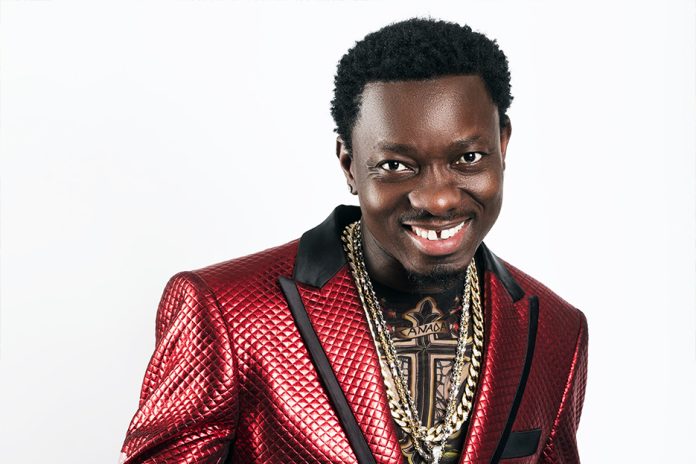
Michael Blackson considers a career in politics 

0
Michael Blackson

Comedian Michael Blackson has announced his intention to consider a career in politics. He stated that he is currently on a journey to learn everything he can to become an effective politician. Blackson emphasised that his decision to enter politics is not for personal gain but to help his community.

In a tweet revealing his decision, he wrote, “Miss the common people. I’m going to learn all I can about politics so I can help my people one day.” The actor has recently been vocal in his criticism of the government regarding a failed investment and is contemplating legal action over claims of fraud.

Recently, Michael Blackson criticised the government for using funds from Eurobond investments to pay off debts, which has left investors like him in a difficult position. He explained that he invested in Eurobonds believing they would support the free school he built, but the government has since destroyed his plans.

“Who’s the Minister of Finance in Ghana? I have issues with this guy. People from the diaspora chose to invest in our continent, and now our money is being used to pay off debt. We’re left with disappointing options: a 37% cut for 5% interest over 11 years, or no cut with just 1.9% interest over 15 years. I’m very disappointed in my people for this,” he stated.

Blackson also spoke about his investments in Ghana, particularly his decision to invest in the country’s Eurobonds. He explained that he hoped the bonds’ returns would help sustain the free school he built in Ghana, which requires $10,000 a month to cover operational costs such as teacher salaries, utilities, and other expenses.

Credit: pulse.gh.com

Sparqlyn aims to unite Ga-Adangbe States through Music

0
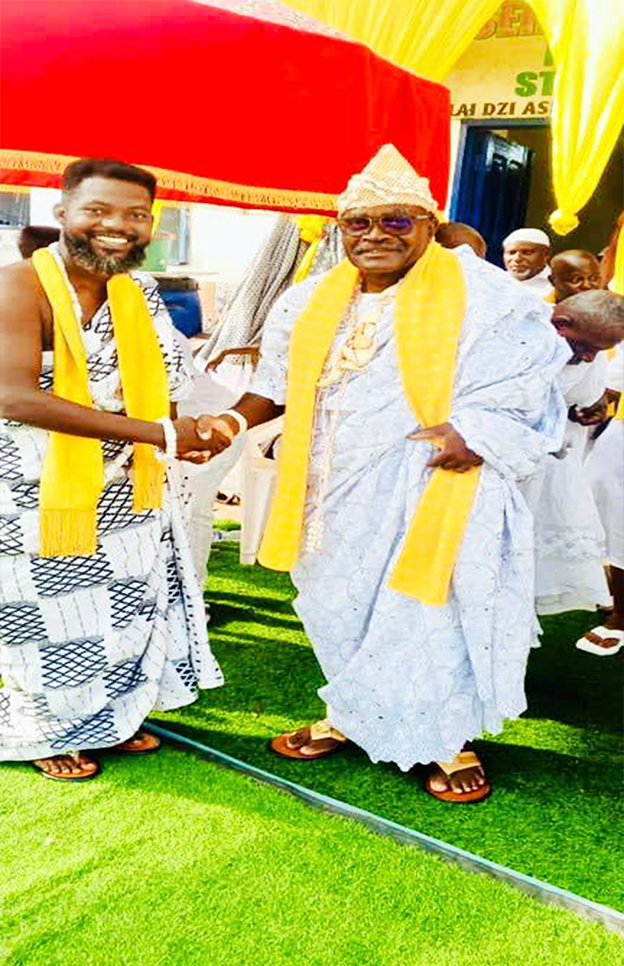
Sparqlyn in a handshake with Paramount Chief of the Asere Traditional Area, HRM Nii Nikoi Olai Amashie III

The Development Chief of Krobo Odomase, Nene Kanneh Larweh I, known in showbiz as Sparqlyn, has paid homage to the Paramount Chief of the Asere Traditional Area, HRM Nii Nikoi Olai Amashie III, during this year’s Homowo Festival.

Explaining the rationale behind his visit to the Paramount Chief of Asere, Sparqlyn stated that; “Even though I am a Krobo from Krobo Odumase, we are working hard to unite all the Ga-Adangbe states so that we will all be under one umbrella as Ga-Adangbe.”

According to Sparqlyn, HRM Nii Nikoi Olai Amashie III, the Paramount Chief, asked him to produce a song that promotes the Ga-Adangbe state and its culture so that it can be used to celebrate their festivals.

Sparqlyn intends to pay an honorary visit to all seven of the Paramount Chiefs of the Ga State during this year’s Homowo celebrations.

Especially during this election year that unity has become very pertinent, Sparqlyn says there is no better time to unite people than now. He is hopeful that his soothing music will be a potent tool to unite the Ga-Adangbe states.

Sparqlyn, who was formerly known as Kele was a member of the defunct hiplife group, Dunsin. Dunsin, as a trio, released their maiden album in 2009, titled, ‘Ɔyɛadeɛyie.’ The album was nominated for Hiplife song of the year at the 2008 edition of Ghana Music Awards.

He went solo in 2018 after working with the group for over a decade. In January 2023, he was enstooled as the Development Chief of Krobo Odumase in the Eastern Region.

Black Sherif adds his voice to negative impact of illegal mining

0
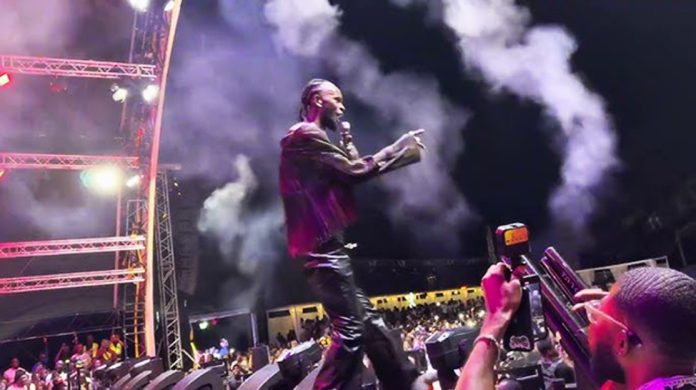
Black Sherif performing at Tidal Rave

Kwaku the traveler hitmaker, Black Sherif has added his voice to the negative impacts illegal mining (galamsey) is having on water bodies and forest reserves in the country.

During his performance at the annual Tidal Rave event over the weekend held at the La Palm Royal Beach Hotel, known officially as Mohammed Ismail Sherif, Black Sherif took some time to show footages of how galamsey is increasingly damaging our water bodies and forest reserves. The images seemed to resonate with the fans present, who were chanting his name, “Blacko, Blacko, Blacko” all along.

The 22-year-old is the latest sensation to voice his displeasure with illegal mining after celebrities like Gyakie and Dr. Likee have openly shown their disapproval of it, with Dr. Likee stating that the populace should anticipate his yet-to-be-aired movie on galamsey.

Despite the earlier downpour yesterday, which forced the event to commence at 4pm, fans were in their numbers to catch a glimpse of mouthwatering performances and enjoy themselves.

The crowd was energised throughout the night, with incredible performances from R2Bees, Edem, Kwesi Arthur, Pappy Kojo, KiDi, and many more. Each artist delivered unforgettable sets, keeping the energy high.

The night reached its peak with the powerful performances of Black Sherif, Stonebwoy, and Sarkodie, leaving the audience breathless.

My story is a typical grass-to-grace –Delay shares difficult past

0
Delay

Entrepreneur and media personality, Deloris Frimpong Manso, popularly known as Delay, has opened up about one of the most challenging periods of her life.

In a video which has surfaces online, Delay recalled a time when she was so financially strained while living in Tema that even finding food was difficult.

According to her, she was often so broke that she would go the entire day without eating, waiting for a friend to return from work with some money.

“The friend would then go and buy ‘check check’ (fried rice), which we shared,” she explained.

The ‘Delay Show’ host has always openly shared her journey from rags to riches. She emphasised the transformative nature of her story, stating, “My story is a typical grass-to-grace, from poverty to financial independence and success. It’s just from zero to hero, from a nobody to somebody.”

Delay revealed that in the early stages of her independent life, she faced significant financial struggles and often relied on the support of friends.

She has earlier shared some thought-provoking life advice on her social media platform, urging individuals to prioritise themselves over others.

Her message was a call for people to be mindful of their self-worth and avoid continually sacrificing their needs for others who may not reciprocate that same energy.

She urged her fans to recognise when their kindness and support are being taken for granted.

GAMA proposes measures to address negative beliefs against menstrual hygiene

0
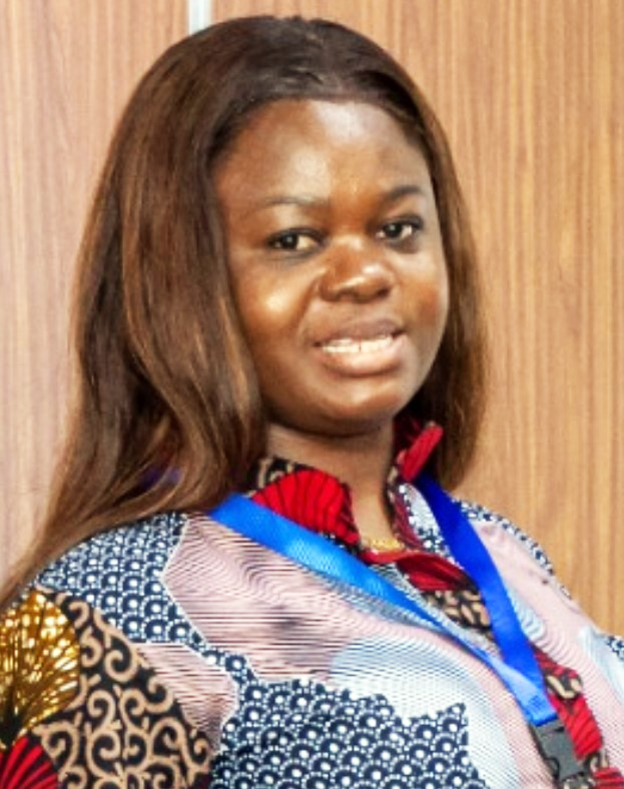
Ms. Charlotte Akwah-Adjei - WASH

Greater Accra Metropolitan Area (GAMA) Sanitation and Water Project has urged stakeholders and policy makers to draw pragmatic measures and interventions towards addressing the negative beliefs in the management of menstrual hygiene among adolescent girls.

Ms. Charlotte Akwah-Adjei, Head of Capacity Building Team, Greater Accra Metropolitan Area/Greater Kumasi Metropolitan Area (GAMA/GKMA) Sanitation and Water Project (SWP), stated that a significant proportion of adolescent girls are hesitant to openly discuss their menstruation concerns with their parents because of the misconception about menstruation.

According to her, it is important that these girls are empowered to overcome stigma, shyness and the belief that menstruation is a private matter that should be kept secret.

Ms. Akwaah-Adjei expressed the view that a more culturally appropriate intervention was needed to address some of the negative beliefs about menstruation.

Sharing her findings of a study on establishing the current knowledge level of in-school adolescent girls on menstrual hygiene management, at the MOLE 35 WASH Conference in Ho, she noted that negative beliefs violated girls/women’s access to certain places.

The topic was: “Unveiling social norms and beliefs influencing menstrual hygiene management by menstruating adolescents in Ghana.”

She disclosed that the GKMA SWP documented responses from over 1,000 in-school adolescent girls from 11 districts in the Ashanti Region in June 2024 as part of the project objectives.

According to her, the study was targeted at establishing the current attitudes and practices of adolescent girls on menstrual hygiene management.

Ms. Akwaah-Adjei, revealed that some respondents were not allowed to cook in their various homes during the time of the month while others were not allowed to get close to prayer altars, with yet another group saying menstruating girls could not be used for rituals, among others.

She said the GKMA SWP has, therefore, developed a guide for schools for girls to know about menstruation and be able to build on their stigma.

She indicated that the study identified these gaps and proposed that education about menstruation really mattered and could change a lot of things positively if taken seriously.

Stop Politicising ‘The Galamsey Menace’ – Gyataba

0
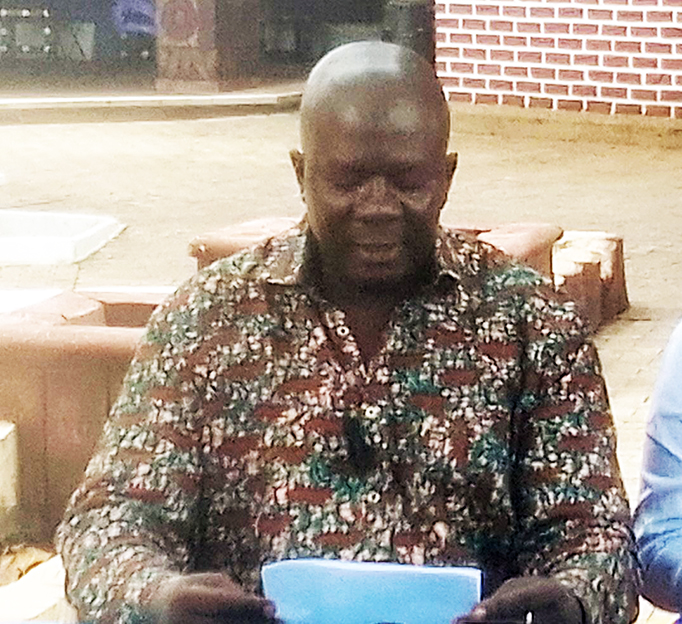
Dr. Nana Agyenim Boateng - Founder, Leader UFP

Dr. Nana Agyenim Boateng, the Founder and Leader of the United Front Party has called for the de-politicisation of the fight against illegal mining, popularly known as “galamsey” in the local parlance.

Dr. Boateng, popularly known as Gyataba, disclosed at a press conference in Kumasi yesterday,

that a holistic and collective approach will be the game changer to tackle the “canker”, rather than resorting to demonstrations that could cause total economic shutdown.

According to Gyataba, this was not the expedient way of fighting the menace, adding that irresponsible mining was not only an environmental issue, but also a matter of injustice and a health risk to present and future generations.

“This is a long-term thing to fight, we cannot just give such a short ultimatum to the government, it is not fair. I think the President should also take advantage of the public outcry as support to take a decisive decision on this. The whole country is united to fight the menace”, Gyataba noted.

Gyataba further advised civil society organisations not to politicise the matter, bearing in mind that the issue at hand goes beyond politics, noting that the menace should be addressed devoid of politics, so we can have positive results.

The UFP founder also called on traditional authorities (Nananom) to help the government in the fight against galamsey, because they are custodians of the land and know areas that are not suitable for mining.

Gyataba suggested that clauses should be included in prospective mining licenses, so that miners would have to call on the chief of the area, before commencement to help the government in the fight against galamsey.

Gyataba also entreated all and sundry to sit and find a better solution to the menace because “it is a national issue”.

From Oswald Pius Freiku, Kumasi

All stakeholders must join galamsey debate –Duker

0
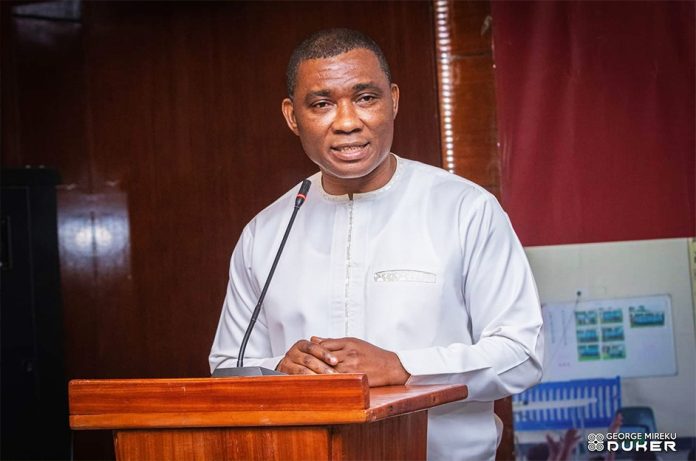
Mr George Mireku Duker

A call to duty has been placed on all licensed small-scale miners across the country to rise up and participate in national conversations about the illegal mining menace.

The call, which was made by the Deputy Minister responsible for Mining, Mr George Mireku Duker, also warned the small-scale miners that their voices are important to help contextualise the illegal mining problem.

Addressing a gathering of small-scale miners at Prestea Huni Valley in the Western Region on Wednesday, October 9, 2024 Mr Duker noted that the miners have maintained a deafening silence on the raging matter of galamsey and that, owing to their silence the discourse is being swayed in a direction that could potentially deprive them of their livelihoods.

The Deputy Minister, who has been a strong advocate for responsible small-scale mining, stated that he and the government need public support from the small-scale miners to help take charge of the conversation and situate it in the right context.

He explained that most people and organisations calling for a total ban on all forms of small-scale mining do not fully appreciate the peculiarities of the trade and that a public show of support to the government and education on how responsible small-scale mining differs from illegal mining will introduce some nuances to the ongoing discourse.

Mr Duker emphasised that government was not against small-scale mining, but rather had a set of lofty and powerful policies that would help shape the sector for the better.

“Organised labour is against you. I have been defending you everywhere, but I can’t do it alone. You also need to rise and support me. You need to help educate Ghanaians on the intricacies of mining so that they don’t confuse your trade for illegal mining.

“We need to let people understand that mining isn’t bad. We all know mining in water bodies is not good, but some people are doing it and they think it is you. If you want to protect your jobs, then you need to help the government get rid of those mining in water bodies,” he said.

The Deputy Minister responsible for Mining noted that the sector provides direct and indirect employment to over 5 million Ghanaians and, therefore, the government was opposed to placing a total ban on the sector.

He urged the small-scale miners to fight against the menace by supporting interventions by the government and reporting galamsey operators to the police.

He believes that the ideal approach to tackling the menace of galamsey is the involvement of communities in mining areas.

Barbara Oteng, the Board Chairman of the Minerals Commission and NPP Parliamentary candidate for Prestea Huni Valley reiterated the commitment of the government to the small-scale mining sector.

She outlined some of the innovations introduced by the government to sanitise the small-scale mining sector, which include the introduction of the Community Mining Scheme, decentralisation of the commission’s services to miners through opening more local offices and facilitating licensing through the introduction of an expedited online regime among others.

The Chairman for the Occasion, who also doubles as the Divisional Chief of Prestea-Himan, supported the minister’s message and added that local communities should benefit from their natural resources. He also emphasised that all small-scale miners should not be painted with the misdeeds of a small recalcitrant part.

The leadership of the Small Scale Miners’ Association also supported the minister’s message and added that they are presently undertaking a vigorous registration of their members and instituting a self-regulating framework like GPRTU. They entreated the support of all miners.

How a Healthy Diet Can Help Your Skin

0
Healthy Diet

Much emphasis is placed on how diet impacts our overall health. But what about our skin? Our skin is the largest organ of the body, and many skin conditions have both internal and external manifestations. Only a few studies have examined how diet can impact certain dermatologic conditions. I have compiled a list of common skin conditions and how diet can help or harm your skin.

Acne

Acne is a chronic condition that can appear on several parts of your body in what’s called the pilosebaceous unit. The size and activity of sebaceous glands or oil-producing glands have been identified as one of the causes of acne. Studies show that high glycemic index-containing diets can worsen acne, including the number of lesions and acne severity.

High glycemic index diets (think sugar, white bread, white rice) increase insulin levels. This stimulates oil production and adrenal androgen synthesis, which play a role in acne. While milk is considered a low-glycemic index food, it is unclear regarding the role milk plays in worsening acne.

Many self-reported studies show people experienced worsening acne with drinking milk. One U.S. study reported women who drank two or more glasses of skim milk per day were 44% more likely to experience acne. All forms of milk were shown to worsen acne. Adopting a low-glycemic index diet was shown to help improve acne severity and lesion count. According to one study, 87% of patients reported an improvement in acne after switching to a low glycemic index diet.

Dairy intake has also been shown to worsen acne. While the results are inconsistent, the general consensus is Western diets that are high in dairy are known to worsen acne.

Atopic Dermatitis 

Atopic dermatitis is a chronic condition that is defined by its chronicity, relapsing symptoms, and strong family history. It appears as itchy, scaly patches that can worsen with seasonal changes and irritating clothing. There is a strong association between atopic dermatitis and food allergies.

It is reported that up to 30% of patients with atopic dermatitis also experience a food allergy. Many people try food-elimination diets to help improve their atopic dermatitis. Eliminating certain foods without proper guidance can lead to malnutrition or other serious health concerns. Before implementing an elimination diet, I recommend you be evaluated by an allergist for a formal diagnosis and to ensure your food restriction will be beneficial.

Maturing Skin

The basis of aging skin is the breakdown of collagen and elastin in your skin. There are recognized environmental causes (UV light, pollution), but dietary practices can also contribute. Eating sugar, fried, or grilled foods can induce advanced glycation end products (AGEs) that result in irreversible damage to collagen fibers.

Below is a list of foods that are known to reduce inflammation, free radical formation, and promote healthy blood sugar levels! Vitamin C is found in a lot of OTC products. Its claim to fame is reducing the free radical formation that develops with sun exposure.

In my opinion, foods rich in kojic acid (miso, soy sauce, rice water, sake) should be eaten in moderation given the potential adverse effects on thyroid function and growth. So best to keep it topical!

Body Odor 

Body odor or bromhidrosis is a condition that can occur for numerous reasons, although diet has been shown to worsen symptoms. Eating foods like onions, curry, or garlic can contribute to body odor. Cruciferous vegetables, like cabbage and broccoli, and other foods like asparagus, curry, or fish can also cause temporary body odor. Alcohol can increase your body temperature, which adds to sweating.

Hidradenitis Suppurativa

This condition causes chronic, relapsing inflammation within the hair follicle. It is the recurring development of boils or pimples in the underarms, under breasts, groin, or buttocks.

People who have HS are more likely to have other conditions, like obesity and metabolic syndrome. Recent studies have shown a strong association with obesity and symptom severity of HS. For some, weight loss of at least 15% can significantly improve HS symptoms. Weight loss can be a tough feat for some people with HS because chronic inflammation has been shown to increase pro-inflammatory markers linked to weight gain.

Psoriasis

Psoriasis is a chronic condition characterized by increased inflammation causing thick white plaques on the skin. Like any other chronic inflammatory condition, it can be difficult to lose weight. Psoriasis increases the risk of obesity. Conversely, obesity promotes pro-inflammatory markers that may worsen psoriasis. Environmental causes, like diet, have been shown to affect psoriasis.

Low-energy diets, with a range of 800-1,000 calories a day, have been helpful in weight loss and reducing the severity of psoriasis.

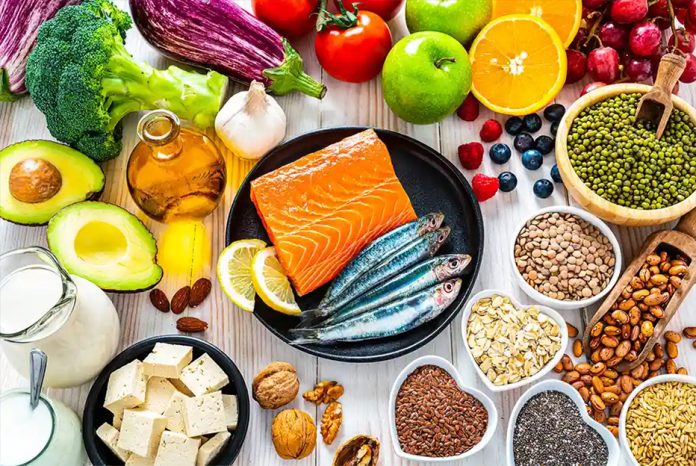
Incorporating unsaturated fatty acids, like omega-3 and oleic acid, is a good idea because they are anti-inflammatory. It is best to avoid omega-6 fatty acids, as these are pro-inflammatory and can worsen psoriasis. Diets high in foods like salmon, seafood, and vegetable oils are a great source of omega-3.

Additionally, low glycemic index food helps to support the healthy effects of omega-3 ingestion.

Psoriasis is associated with several other conditions, including celiac disease. There is a threefold increased risk of developing both conditions. It is reported gluten-free diets help reduce psoriasis severity in patients with the celiac antibody. Diagnosis can be made with the help of a medical professional.

Many of the above options are part of a well-balanced healthy diet. Remember, there is always an adjustment period for any lifestyle change to take effect. Give yourself 3 to 6 months of consistency to see if this is right for you.  Remember, you are what you eat!

Source: webmd.com

Feature: How Africa Is Paying For Pursuit Of The Last Hamas

0
Feature

When the Israeli-Hamas war started one year ago, it didn’t look like it would last long.

Israeli Prime Minister Benjamin Netanyahu’s promise to avenge the deaths of over 364 Israelis killed and dozens taken hostage by Hamas on October 7 at a music concert left little doubt it was going to be a bloody phase. But how long, ugly or bloody, it would take for Netanyahu to kill the last Hamas, which was his minimum condition for peace, was hard to tell.

Unfortunately, with over 42,000 killed in Gaza, including women, children, UN workers and journalists, over 1500 Israelis killed and the fate of 101 hostages unknown, the last Hamas is still at large. The war has spread to Lebanon, and Iran is enmeshed.

War coming?

The regional conflict the world had tried to prevent is upon us, and with less restraint and increasing provocation, talk about another world war that sounded farfetched only months ago now seems probable. 

The war may not yet be on Africa’s doorstep, but the continent has not been an onlooker.

There have been widespread pro-Palestinian protests in South Africa, increasing domestic pressure on President Cyril Ramaphosa’s government. Art was weaponised in Cape Town flats, with some residents deploying murals and graffiti in Palestinian flag colours.

South Africa’s case against Israel at the International Court of Justice (ICJ) has been perhaps one of the most audacious jurisprudential efforts to hold Israel to account. Since South Africa dragged Israel to the ICJ last December and obtained a ruling to stop Israel from potentially genocidal acts, Africa’s involvement in the war by other means has become more salient.

By deciding to drag Israel, South Africa risked bilateral relations of R876 billion in trade. Still, it counted it as a fair price not just to assuage domestic pressure but also as a matter of conviction for ties that run deep and to honour its own historical experience.

Beyond South Africa

Israel has managed to ignore the court and taken advantage of the U.S., blindsided by weak leadership and the November 4 presidential election, to ramp up attacks in the region. With no let-up in the Russia-Ukraine war and the supply chain problems it has created, the escalation in the Israel-Hamas war has forced African countries to brace up.

Egypt has been on edge because of the impact refugee spillover and possible military action could have on its fragile economy, never mind the potential influx of militant Palestinian jihadists. It has resisted suggestions for refugees to camp in Sinai.

In August, Algerian President Abdelmajid Tebboune promised to send troops to Gaza. Yet, the president and Hamas leaders knew that was only a political statement – Cairo would never grant passage that could potentially bring the war home.

In Ghana, the Democratic Republic of Congo (DRC), and Kenya, the sentiment is pro-Israel, particularly in Kenya. Shortly after the outbreak of the war, President William Ruto tweeted that Kenya stood side by side with Israel and condemned the October 7 attack outright.

One year later, Kenya’s position has not changed, which some have argued is partly informed by the robust economic ties with Tel Aviv, especially in agriculture and the security challenge that al-Shabaab poses to Kenya.

The authorities believe whatever weakens Hamas weakens al-Shabaab, a terror group that staged more than 10 attacks last June/July alone in eastern Kenya, killing 30 security officers. In Israel’s pursuit of the last Hamas, Kenya feels obliged to take more than a passing interest because a defeated Hamas means less oxygen for its radical sympathisers elsewhere, including al-Shabaab.

Giant asleep

Nigeria, the continent’s largest economy and its most populous, has offered a muted, somewhat confused response to the Israeli-Hamas war. The official line, worn for use after decades of lip service and repeated at this year’s UNGA, is a two-state solution. That’s also the official position of the African Union (AU). However, the precarious, almost 50-50 Muslim-Christian population leaves the Nigerian government walking on eggshells in Israeli-Palestinian matters.

It is cautious not to offend the predominantly Muslim North and potentially spark deadly pro-Palestinian sectarian protests. It is also careful not to offend Christian sensibilities in the South, especially a growing evangelical population that considers itself a part of New Testament Israel.

Over the years, Nigeria has cooled from a radical supporter of liberation struggles on the continent and elsewhere to a somewhat insular patron. It has been subdued by its internal problems of insecurity and economic hardship.

It’s not certain how the Nigerian government would respond to Israel’s current two-pronged war in pursuit of Hamas and Hezbollah, with Iran in the mix. But an escalation might, among other things, affect oil prices, Nigeria’s mainstay, and complicate the already fraught domestic petrol product market.

Experts have said a repeat of the oil market chaos caused by the Middle East crisis of 1973-74 is unlikely. However, with a far larger population and a barely competitive economy, today’s Nigeria is far from the conditions that made it benefit from the Middle East chaos five decades ago.

More migration headache

Yet, the price Africa is paying is beyond the reading of its vital economic signs. Of the thousands caught up in Lebanon, the new epicentre of the conflict, many are African migrant workers. Following the escalation of the conflict, the Kenyan government has asked approximately 26,000 nationals in Lebanon to get help if they need to evacuate.

The governments of Ethiopia (another African country with a significant migrant population in Lebanon), Uganda, Nigeria and South Africa are watching closely in a phase that may worsen the already complicated global migration and humanitarian crisis.

What started as the hunt for the last Hamas a year ago has grown into the pursuit of the last Hezbollah, and now, it seems, to their last supporters as well. However, as I wrote in a previous article, history teaches that war against an idea is unwinnable. Israel’s existence is proof enough if Netanyahu and the remnant hardliners in his cabinet cared to learn.

Untested leverage

Unlike in the 1970s, when few African countries had diplomatic ties with Israel, the country’s footprint on the continent has grown to the point where 44 of 54 countries have recognised Israel’s statehood.

It’s fair to argue that Netanyahu only listens to Netanyahu. Yet, for whatever it is worth, the continent does not have to wait to pay a much higher price for this war before closing ranks and leveraging its closer ties to pressure Israel to accept a ceasefire. Except, of course, if the closer relationship means nothing.

Azu Ishiekwene

Ishiekwene is Editor-In-Chief of LEADERSHIP and author of the book Writing for Media and Monetising It.

The Ghanaian Chronicle