Home Blog Page 1165

Businessman allegedly swindles businessman off $105,000 

0
Accra Circuit Court

The Circuit Court in Accra, presided over by Judge Samuel Bright Acquah, has granted bail to Hamza Ali, a 47-year-old businessman, in the sum of GH¢2 million.

The bail terms include two sureties, one of which must be justified with landed property.

Ali faces charges of defrauding by false pretence, to which he has pleaded not guilty.

The charges were brought under Section 131(1) of the Criminal Offences Act, 1960 (Act 29).

According to Prosecutor Raymond Akom, the accused allegedly swindled fellow businessman, Gideon Oppong of $105,000 by promising to exchange the amount into its cedi equivalent of GH¢1,627,500.

The incident occurred on May 23, 2024 at the District Business Center of Accra. Ali assured Oppong that the exchange would be handled through a foreign account tied to a Forex Bureau.

Oppong, a resident of Kokomlemle, had contacted Ali after his business partner showed interest in sending him funds.

Ali, who is based in Kasoa, provided a Bank of America account belonging to a company called P.D.R. Nneoma Inc.

Oppong’s partner then transferred the $105,000 into this account. After confirming receipt of the funds, Ali promised to transfer the cedi equivalent to Oppong.

However, after receiving the money, Ali allegedly failed to deliver the promised amount and became unreachable.

Despite several promises to pay, no funds were transferred, prompting Oppong to file a complaint with the police on July 18, 2024. Ali was arrested on July 23, 2024.

During interrogation, he admitted his involvement, but claimed that the bank account belonged to an associate named Emmanuel.

He requested more time to contact his associate, but the investigation remains ongoing. Judge Acquah has scheduled the next hearing for October 14, 2024.

Nigerians groan as electricity bills consume 57% of minimum wage earners’ salaries

0
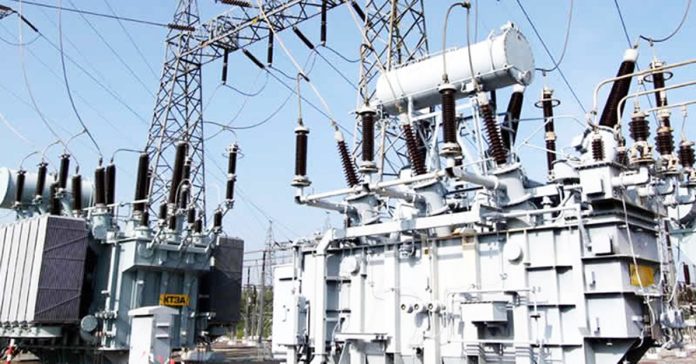
Electricity bills go up

When the Federal Government announced in September that it would start paying the proposed minimum wage of N70, 000, with a promise to pay civil servants the areas from July and August, not many Nigerians were excited about the news.

And the reasons were obvious, one of them being the recent hike in electricity bill.

A recent report quoting the FIJ calculation clearly indicated that average minimum wage earners spend at least 57.3 percent of their salaries on electricity bills if they use only seven appliances for a month.

When the Federal Government announced in September that it would start paying the proposed minimum wage of N70, 000, with a promise to pay civil servants the areas from July and August, not many Nigerians were excited about the news.

And the reasons were obvious, one of them being the recent hike in electricity bill.

A recent report quoting the FIJ calculation clearly indicated that average minimum wage earners spend at least 57.3 percent of their salaries on electricity bills if they use only seven appliances for a month.

The FIJ report noted that while the wage increase was a good development for workers, the cost of living has rendered the wage increase almost insignificant.

The report spotlights the cost of electricity alone and its impact on workers’ wages.

According to a National Income, Salaries and Wages Commission (NISWC) document, civil servants under the Consolidated Public Service Salary Structure would earn N930,000 per annum. This means that a minimum wage earner would go home with a salary of about N77, 500.

The Nigerian Electricity Regulatory Commission (NERC) announced a 300 percent increase in electricity tariff for those in the B and A service category in April.

According to the Vice Chairman of the NERC, Musliu Oseni, the tariff hike meant that customers who formerly paid N66 per kilowatt per hour would now pay N225 for the same unit of electricity.

Credit: dailypost.ng

There’s severe hunger –Group begs Tinubu, wealthy Nigerians to act fast

0

The Atum Humanitarian and Charitable Initiative has pleaded with President Bola Tinubu administration to take proactive action to ameliorate the current hardship in the country.

Honourable Ismaila Yusuf Atus, Executive Chairman of the organization, in a statement on Sunday, noted that the rising cost of fuel has further reduced the purchasing-power of the citizens.

He called for urgent government’s measures to reduce citizens’ suffering, acknowledging that existing initiatives were insufficient.

The organization also urged NGOs, business leaders, and wealthy individuals to unite and support communities in need.

The statement reads: “The hunger is severe, and the rising fuel prices have only added to the hardships. Many people can no longer afford to feed themselves properly.

“I urge those of us with NGOs to unite and support our communities. We also call on the government to take measures to alleviate the suffering in our nation.

“While we acknowledge that the government is doing its best and that many initiatives were in place before this administration took over, we still urge them to work towards reducing the hardships faced by citizens.

“We appeal to other well-off Nigerians to step forward during this critical time; the people need your support now more than ever. It is essential for the wealthy to share their resources and assist those in need.

“Additionally, we call on business leaders and politicians not to hoard their wealth in bank accounts while the populace suffers.

“Given the current challenges in the country, the Atum Humanitarian and Charitable Initiative has decided to assist Nigerians who are struggling with poverty by raising N500 million to help two million people.”

Credit: dailypost.ng

‘Nigeria Was Not Snubbed’, Presidency Clarifies Position On 2024 UN Council Elections

0
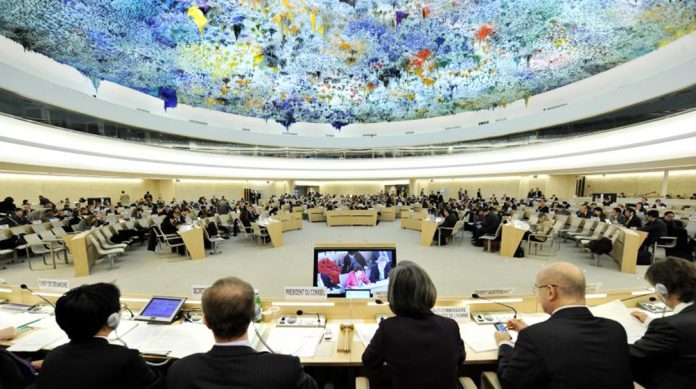
United Nations Human Rights Council

The presidency has clarified that Nigeria was not among those who competed in the 2024 United Nations Human Rights Council elections, which were held on October 9, 2024.

The United Nations Human Rights Council is a United Nations body whose mission is to promote and protect human rights around the world. The Council has 47 members elected for staggered three-year terms on a regional group basis. The headquarters of the Council are at the United Nations Office at Geneva in Switzerland.

According to the press statement signed by the Special Adviser on Information and Strategy, Bayo Onanuga, Nigeria was not snubbed.

The statement states that any votes mistakenly attributed to Nigeria during the recent election were likely cast in error by other nations.

In line with such elections into international bodies, countries vying for positions usually receive regional endorsements, and Nigeria’s focus has been on supporting these endorsed candidates to strengthen collective African representation on the global stage.

The presidency urged media outlets to verify their information before publication, and cautioned against damaging narratives that could undermine the nation’s reputation in international affairs.

Credit: channelstv.com

Engaging Youth for a Sustainable Urban Future: World Habitat Day 2024

0
Darling Maame Efua Cann

This year’s World Habitat Day (WHD), was marked on October 7, 2024, and it brings into focus the theme “Engaging Youth to Create a Better Urban Future.” A call to action, it resonates deeply in a world where rapid urbanization, climate change, and social inequalities intersect. With cities projected to house 70% of the global population by 2050, it is critical to harness the energy, creativity, and innovation of young people to shape sustainable and resilient urban environments.

The annual observance, organized by the United Nations Human Settlement Programme (UN-Habitat), aims to spotlight the transformative potential of youth in addressing urban challenges. In many cities, especially in the global South, over 70% of the population is comprised of young people. Their involvement in decision-making processes regarding urban planning is not only essential but a key ingredient for fostering inclusive, vibrant, and climate-resilient cities.

Youth as Drivers of Change in a Rapidly Urbanizing World

Urbanization, while offering numerous opportunities, has also presented complex challenges, including rising housing costs, inadequate infrastructure, and environmental degradation. This year’s WHD emphasizes the pivotal role young people can play in designing innovative solutions to these challenges. Their voices, often sidelined, need to be central in discussions about sustainable development.

Youth-led climate action has already proven to be a significant force globally, with young activists at the forefront of efforts to reduce carbon emissions, promote green infrastructure, and advance renewable energy. As we move towards a more urbanized world, these efforts must intensify, particularly in developing countries, where cities face the dual pressures of rapid population growth and vulnerability to climate impacts.

In Ghana, for instance, the Smart SDG Cities Programme is a prime example of how integrating youth voices into urban planning is yielding tangible results. By focusing on green infrastructure, the programme is not only enhancing climate resilience but also improving urban mobility and accessibility.

Furthermore, youth empowerment initiatives like the Gulf of Guinea Northern Regions Social Cohesion (SOCO) Project showcase how young people are actively contributing to social cohesion, climate resilience, and community development.

Building Inclusive and Resilient Cities

The theme of WHD 2024 underlines the need to create cities that are inclusive and resilient. This means ensuring that urban planning and policy decisions are made with all stakeholders in mind, particularly the youth, who represent the future of these cities. For too long, urban development has often excluded the most vulnerable populations, leaving them exposed to the adverse effects of climate change, economic instability, and social inequality.

Engaging young people in urban development is not just about inclusion but about creating cities that are equipped to withstand future shocks. By involving youth in the planning process, we are also fostering innovation, promoting sustainable livelihoods, and ensuring that cities become places of opportunity for all.

Looking Towards the Future

World Habitat Day 2024 serves as a reminder that the future of our cities is in the hands of the youth. As we look ahead, it is imperative that global leaders, urban planners, and policymakers continue to prioritize youth engagement in urban development. By doing so, we are not only investing in the future of our cities but also in the future of our planet.

This year’s WHD calls on all of us to support youth-driven initiatives that foster sustainability, inclusivity, and resilience. With the right tools, opportunities, and platforms, young people can and will lead the way toward creating cities that are not only fit for the present but sustainable for generations to come​.

By Darling Maame Efua Cann

The writer is the Deputy Public Relations Officer at the Ministry of Local Government, Decentralisation and Rural Development (MLGDRD) and a Staff of the Information Services Department (ISD)

Editor’s note: Views expressed in this article do not represent that of The Chronicle

Editorial: The Bawku Cocoa Incident: Was The Military Right In Confronting The Police?

0
Editorial

On Friday, October 11, 2024 The Chronicle reported that there were sporadic shooting at Pulmakom in the Upper East Region between two detachments of the police and military. The alleged incident occurred on Wednesday, October 9, 2024.

According to our story, on that fateful day, the police had a tip-off about the movement of a truck, Kia Rhino, with registration number AS 551-21, alleged to be smuggling unspecified quantity of dried cocoa beans into neighbouring Republic of Togo.

The Divisional Police Commander, our story continued, reportedly dispatched men to escort the said truck to the Bawku Police Station for a search to be conducted on it. As the escort of the truck commenced and at a section of the road near Nakom-Corner, Customs Officers from Pulmakom followed and informed the police that they were interested in the content of the arrested truck.

The Police reportedly asked the Customs officials to accompany them for the search. At Pusiga, a military pickup with armed men followed and allegedly blocked the truck, with the excuse that they were taking the truck back to Widana, where it was first arrested, but the police resisted and continued with their journey.

The soldiers reportedly kept obstructing the police until at the Customs Checkpoint at Missiga, where two military vehicles and pickups again blocked the police and started firing sporadically. In the shooting melee, a police armoured vehicle was allegedly immobilised by the military men through bullets they pumped into the tyres.

The situation was later brought under control and the Kia truck was impounded at the Customs Checkpoint for necessary action to be taken.

In a statement later issued by the police, they confirmed the incident, but said the issue had been addressed by their leadership in Accra.

The police statement further stated that they intercepted the smuggled consignment based on intelligence and were in the process of escorting the truck to the Bawku Divisional Police Command, for the consignment to be handed over to COCOBOD and the culprits investigated and prosecuted by the Police, in line with established protocol with Ghana COCOBOD.

First of all, The Chronicle commends the Military hierarchy and the Police Administration for quickly intervening to resolve the issue that had resulted in a conflict between the two sister security agencies. This notwithstanding, we are not happy with the conduct of the military that led to the alleged exchange of gunfire between the two institutions.

Per constitutional arrangement, the police are in charge of the internal security of our beloved country.

However, since by the grace of God, Ghana is not at war with any country, the ‘idled military’ is always asked to help the police maintain internal security.

Such help, we must emphasise, does not mean that the military has taken over the internal security work of the police.

In the case we are reviewing, there was an apparent mistrust between the police and the Customs division of the Ghana Revenue Authority over the arrest of the cargo reportedly carrying the smuggled cocoa.

But instead of the former following the seized cocoa beans to the police station, as requested by the police, they decided to inform the military.

Again, instead of the military also following the police to ensure that the cocoa beans had been sent to the police station at Bawku, they rather decided to stop the police from doing their work, based on an alleged report that the GRA made to them.

As we earlier alluded to, since the internal security of the country is in hands of the police, the best thing the military men should have done was to report the seizure of the cocoa to their military high command in Accra and allow the police to do their work.

The GRA could have similarly reported the issue to their bosses in Accra so that in case the police later start telling different stories, they will be evidence on record.

Unfortunately, none of these steps were taken and instead the military decided to prevent the police from doing their work, to the extent of deflating the tyres of the police vehicle escorting the smuggled cocoa.

We need to call a spade a spade and not a big spoon – this can never happen in any developed country.

In our opinion, it is high time the military high command in Accra rein in their men to avoid future occurrence of this episode.

Since the two institutions are not antagonists, they must work together in the interest of the country and stop ‘the power play’ they are exhibiting. Yes, we admit that we are not ceased with all the facts, but on the face of what has been reported, The Chronicle does not think the military acted honourably in this case.

Nevertheless, we are grateful that both the police and military quickly resolved the issue for the sake of peace.

Ghana’s hope in Aquatics swimming is here

0
Jada displaying her medals

Jada Yankey, a 12-year-old athlete and member of Team Ghana in the ongoing weeklong Africa Aquatics Zone 2 Junior and Senior swimming championships at the University of Ghana Swimming Pool has recorded an impressive performance.

London-based Ghanaian Young Jada Yankey is the youngest competitor in Team Ghana and overall youngest in the competition.

She is representing Ghana among her senior colleagues and competes in both junior and senior categories in the competition which started on October 9, 2024 and ends on Tuesday October 15, 2024.

Jada Yankey – promising star

Jada has already claimed gold, silver, and bronze medals across all events, impressively challenging some of her older competitors having achieved a record 9 medals within the first two days of the competition.

Jada Yankey was the only individual female swimmer to win medals in the junior category on day one, taking gold in the women’s 400m individual medley and bronze in the 200m freestyle.

Her outstanding performances have made her the standout revelation of the championship, drawing admiration and applause from spectators throughout her races.

Observers believe Jada is the epitome of the future of Ghanaian swimming and needs all the encouragement and support because she has the potential to secure an Olympic medal for her country in the coming years.

EWEF celebrates International Girls’ Day

0
A group photograph of participants and students

Erudite Women’s Empowerment Foundation (EWEF), an NGO, last Friday celebrated this year’s International Day of the Girl-Child to again remind the world of the need for Girls and Young Women’s inclusion in leadership and decision making.

Mrs. Constance Ankoma, Executive Director-EWEF explaining the purpose of the celebration

The theme for this year’s celebration was: “Girls’ Vision For The Future” and was organised to empower Senior High School Girls from the Agogo State College and Collins Senior High School at the Assembly Hall of the Agogo State College in the Asante Akim North district of Ashanti region.

Ms. Tanya Morgan Dixon, a Co-Founder and Chief Executive Officer of the largest health movement in America for black women, called the GirlTrek USA, in a keynote address encouraged the girls and young women to begin to think of great things and most importantly talk about those things to trusted friends about what their dreams are for the future.

She stressed that “you got to be crystal clear about it and do not let anybody turn you around about what you want to be”.

Ms. Morgan, who was named among the top 1 percent of the world’s social innovators and is currently a social innovator at Harvard Kennedy School, admonished the girls to think of what they want to do in future to help or serve their society and at the same time become helpful and happy.

Ms. Morgan of GirlTrek USA addressing the girls

She said she was motivated by Dr. Wangari Maathai of Kenya, who was the first African Woman to get a PhD and the first African Woman to win the International Nobel Peace Prize for mobilising the Green Belt Women group to plant 50 million trees in Kenya, at the time the country was on the verge of environmental devastation.

Mrs. Ohenewaa Constance Ankoma, the Executive Director of EWEF, explained that the purpose of organising the International Day of the Girl-Child was to teach them how to lead, plan and to be involved in decision making process, with the expectation that a lot of young women would be taking leadership roles in the nearest future and do well economically for themselves.

She said EWEF’s programmes, which are based on advocating for girls’ leadership under the “She Leads” project, have realised one key issue, which is self-confidence because the young girls and women already have the ability, but lack the confidence to show forth whatever talents they possessed, which is identified as a major challenge.

Mrs. Constance Ankoma said EWEF has partnered with stakeholders to implement informed services that have impacted the lives of over 5,000 girls and young women in the Asante Akim area, focusing on adolescent girls’ sexual and reproductive health particularly menstrual hygiene management, girls and young women’s leadership and inclusion in decision making processes, mentorship and economic empowerment.

From Thomas Agbenyegah Adzey, Agogo

100 Youth undergo Skill Development and Certification Programmes 

0
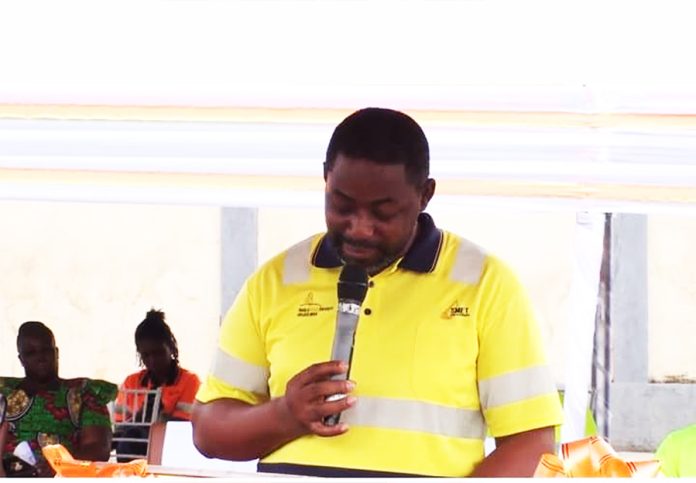
Jephter Kwame Brimpong speaking at the function

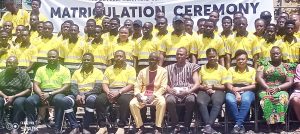
One hundred youth from Obuasi and neighbouring communities have matriculated to undergo Skill Development and Certification Programmes at the Obuasi Enterprise and Skill Development Centre.

Stakeholders and some of the trainees in a group picture

Under the AGA 10-Year Socio Economic Development Plan, in partnership with SMET Mining and Engineering Trading, the artisans are being trained in Welding and Fabrication, Plumbing, Auto Mechanic, Auto Electrical and General Electrical.

Mr Daniel Arthur Bentum, Economic Development Superintendent of AGA encouraged the participants to put themselves wholeheartedly into the training.

He urged them to not only enrich their skills but build networks, forge friendships and create a support system that will help them beyond the programme.

“When we improve the skills of artisans and we ensure they thrive, we will see the revitalisation of the Obuasi economy and a reduction in unemployment rates,” Mr. Arthur Bentum noted.

Mr. Jephter Kwame Brimpong, Operations Manager of SMET Mining and Engineering Training noted that his company’s partnership with AngloGold would enable the trainees to become self-employed after some few months of training.

He charged the trainees to embrace every challenge with an open mind and a positive attitude.

“Engage actively with your instructors and peers, seek guidance when needed and remember that perseverance is key,” Mr. Brimpong advised.

Rev. Ing. Eric Broni, Senior Manager Engineering AGA told the artisans that skilled workers are always in high demand and that employers and service providers pursue skilled people.

“As much as you are acquiring the certificate, try to be skilful enough, have the competitive edge and excel over those you will compete with,” Rev. Ing. Broni emphasised.

From Frederick Danso Abeam, Obuasi

Urgent education reform key to unlocking faster, more inclusive growth in Africa -WB

0
World Bank

Despite signs of a fragile economic recovery, Sub-Saharan Africa, remains stuck in “low gear” with a large youth population at risk of being left behind.

According to the latest edition of Africa Pulse, the World Bank’s twice-yearly regional economic update released on October 14, two factors are critical to jumpstart inclusive growth: stabilising economies and transforming education to equip the region’s growing workforce with stronger foundational skills and market relevant expertise.

The report, which is in its 30th edition and on the theme of Transforming Education for Inclusive Growth, says economic activity in the region is projected to grow by 3% in 2024 from a low of 2.4% in 2023, driven primarily by growth in private consumption and investment.

Inflation is forecasted to ease from 7.1% in 2023 to 4.8% in 2024, helped by tighter monetary and fiscal policies, more stable currencies and fewer supply chain disruptions.

However, this recovery is not enough to lift millions out of poverty. Growth per capita remains sluggish – just 0.5% in 2024, compared to an average of 2.4% between 2000 and 2014. Challenges like conflict, climate change and soaring debt service costs are undermining progress. In 2024, 34% of government revenues across the region will be spent on debt servicing, leaving little room for productive investments.

African governments are making strides to stabilize their finances and close budget gaps,” said Andrew Dabalen, World Bank Chief Economist for the Africa Region.

But high debt burdens are limiting investments in critical areas like education, health and infrastructure, which are essential for long-term, inclusive growth.”

Africa’s working-age population is expanding faster than any other region, driven by progress in child survival over the last two decades. Yet, sub-Saharan Africa spends less on education per capita than any other region.

To achieve universal education by 2030, the authors of Africa’s Pulse estimated that education systems would need to absorb about 170 million more children and adolescents – requiring an estimated 9 million new classrooms and 11 million new teachers.

This is a daunting challenge, but the region has already made significant strides:  270 million children are enrolled in primary and secondary schools today and primary school completion rates have improved substantially since 2000.

“Looking ahead, Africa’s youth will need to be well educated and appropriately skilled to access better jobs and take advantage of new digital and green economy opportunities,” said Dabalen. 

“Evidence-based planning and smart spending will be crucial to expanding access while improving learning and employment outcomes.”

Currently, 7 in 10 children in Sub-Saharan Africa do not have access to pre-primary education, and fewer than 1.5% of youth aged 15 to 24 are enrolled in vocational training, compared to 10% in high-income countries. Closing these gaps is vital for unlocking Sub-Saharan Africa’s economic potential and driving sustainable, inclusive growth.

Supporting entrepreneurship and new startups, allowing small businesses to grow, and attracting larger and established firms is also essential so that skilled graduates find meaningful job opportunities when they try to enter and advance in the workforce.

Source: World Bank

The Ghanaian Chronicle