Home Blog Page 116

Afoko Meets Other NPP Aspirants

0
Paul Afoko interacting with Mr Boakye Agyarko

Former National Chairman of the New Patriotic Party (NPP), Paul Afoko, has met with fellow National Executive aspirants of the party at Jamasi, in the Ashanti Region.

Mr Afoko, who is making a second bid for the National Chairmanship position was in Jamasi to mourn with Kwadwo Okyere Mpiani, a former Chief of Staff to former President John Agyekum Kufuor, following the passing of his mother, Obaapa Elizabeth Owusu Kwaaso.

Among those present were other contenders for the National Chairmanship slot, including former National Organiser of the NPP, John Boadu, Ghanaian Diplomat Edward Akwasi Boateng, former Minister for Chieftaincy and Religious Affairs, Stephen Asamoah Boateng and former Energy Minister, Boakye Agyarko.

The gathering also offered the aspirants the opportunity to interact with former Presidents John Agyekum Kufuor and Nana Addo Dankwa Akufo-Addo.

In a show of unity, Mr Afoko engaged his fellow aspirants and party executives, both past and present, stressing the need for cohesion within the party.

The aspirants were seen exchanging pleasantries in a cordial atmosphere, with observers noting that such interactions signalled a growing sense of unity within the party.

Meanwhile, the aspirants took turns to commiserate with Mr Mpiani and his family. The late Obaapa Elizabeth Owusu Kwaaso was laid to rest at the family house, after a requiem mass at St Michael’s Catholic Church, Jamasi.

She passed away at the age of 103 years and gave birth to Mr Mpiani at the age of 18.


For more news, join The Chronicle Newspaper channel on WhatsApp: https://whatsapp.com/channel/0029VbBSs55E50UqNPvSOm2z

Heath Goldfields Has Brought Renewed Hope To Prestea-Bogoso -Group

0
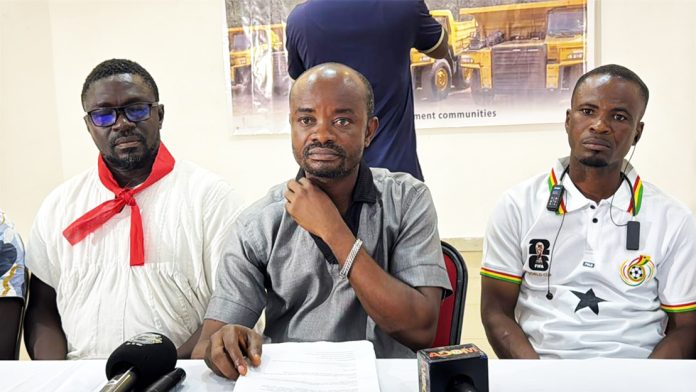
Members of the Association for responsible mining and development seated at the press conference

Hope has been rekindled in the Prestea-Bogoso enclave following the rapid revival of mining operations by Heath Goldfields, with residents and stakeholders calling on government to safeguard the company’s growing investment.

At a press conference held yesterday, Monday, the Association for Responsible Mining and Development in Prestea-Bogoso endorsed the indigenous mining firm, describing its intervention as a turning point for a community that had endured nearly two years of economic inactivity and uncertainty.

According to the spokesperson and elected Assembly Member for Bepo Thomas Enyam, the once-dormant Prestea-Bogoso mine has been brought back to life within just three months of Heath Goldfields’ takeover—an achievement they say defies expectations in the mining industry.

“Ordinarily, a mine that had been closed for almost two years would require another two years to resume operations, but Heath Goldfields has demonstrated otherwise,” the group noted.

Flanked by other Executives, the Association credited the company’s swift operationalisation of the mine to decisive government leadership, particularly the support of the President and the Ministry of Lands and Natural Resources in granting the necessary permits.

They said the revival has already had a significant socio-economic impact, including the creation of over 1,400 direct and indirect jobs, while engaging more than 15 local contracting firms.

The renewed activity has also boosted demand for housing, food and other essential services within the community.

In a major relief to former workers, the group disclosed that Heath Goldfields has settled outstanding salaries, bonuses and provident fund contributions owed by the previous operator for 2024 and 2025.

The total payment, estimated at GH¢139 million has restored dignity and hope to thousands of affected workers and their families.

The Association further commended the company for settling debts owed to key institutions such as VRA, GRIDCo and the municipal assembly, as well as making part payments to local suppliers and contractors.

“These interventions have significantly contributed to the resumption of active mining operations in the third quarter of 2025,” the statement said.

The group also highlighted technical strides made by the company, including the reduction of dangerously high underground water levels and the rehabilitation of the processing plant, which has since resumed operations after power restoration.

They noted that the company’s commitment to local content is evident in its decision to entrust mining activities and service provision largely to Ghanaian-owned businesses, particularly those within the host communities.

Beyond mining, Heath Goldfields was praised for initiating community support programmes in education, health, sanitation and infrastructure, with plans underway to roll out legacy projects across the area.

However, the Association expressed concern over what it described as “unwarranted interference and negative commentaries” by certain groups allegedly backed by foreign interests, seeking to undermine the company’s operations.

They called for a full-scale investigation into the funding sources of such groups, warning that any disruption could derail the progress made and plunge the community back into hardship.

“We do not need a new investor. The journey so far has been promising, and our natural resources must be managed by Ghanaians for the benefit of Ghanaians,” the group stressed.

The Association, therefore, urged government to provide firm protection for Heath Gold Fields’ investment, emphasising that supporting indigenous companies is central to Ghana’s local content agenda in the mining sector.

Among its recommendations, the group called for swift measures to prevent unlawful interference, sustained government backing for the company, and broader stakeholder engagement to ensure long-term stability.

They also proposed collaboration with small-scale miners under regulated frameworks to expand employment opportunities within the concession.

Reaffirming their confidence in the government’s commitment to localising the mining industry, the Association maintained that Heath Goldfields has come to stay and must be given the necessary support to fully restore the fortunes of Prestea-Bogoso.


For more news, join The Chronicle Newspaper channel on WhatsApp: https://whatsapp.com/channel/0029VbBSs55E50UqNPvSOm2z



GFA PULLS THE TRIGGER ON OTTO ADDO — GHANA WAKES UP TO SHOCK DISMISSAL

0
Coach Otto Addo

Ghanaians rose from their beds on Tuesday morning to stunning news. The Ghana Football Association had, in the dead of night, ended Otto Addo’s tenure as head coach of the Black Stars — effective immediately.

No press conference. No farewell. Just a cold, clinical statement posted on the GFA website as the country slept.

The brevity of the announcement said everything. The Association thanked Addo for his “contribution” and wished him well, before adding it would communicate the team’s “new technical direction in due course.”

Twelve words to end a chapter. Ghana deserved a fuller explanation — and they will be demanding one.

The Last Straw

But while the announcement came at dawn, the journey to this moment had been building painfully in the days prior. Just hours before the GFA moved, the Black Stars had suffered a 2-1 defeat to Germany in a friendly at the MHP Arena in Stuttgart — the second humiliation in four days. Prior to that, Ghana had been thrashed 5-1 by Austria in Vienna on Friday, March 27. 

Two games. Six goals conceded. One scored. The numbers were ghastly, and the GFA had seen enough.

The Rot Had Set In Long Before

Yet to frame this purely around two friendlies would be to miss the bigger picture. Addo’s time in charge had been a slow accumulation of disappointment.

Despite having the firepower of Premier League stars Antoine Semenyo and Mohammed Kudus, Addo could not guide Ghana to the 2025 Africa Cup of Nations  — a qualification failure that shook the nation to its core. Across 22 matches at the helm, he managed just 8 wins against 9 losses. 

The friendly record was equally grim — only two wins in their last 11 games.  This was not a team building momentum ahead of a World Cup. This was a team going backwards.

He Saw it Coming -And Pushed Back

To his credit, Addo did not go quietly in his final days. After the Austria hammering, with fans howling for his removal, he stood firm.

He brushed aside the calls for his sacking, saying the defeats were an attempt by people to “bring you down,” and urged supporters to wait and see what Ghana would produce against Germany. 

They waited. Germany won 2-1. The GFA had made up their minds before sunrise on Wednesday.

A Nation in Shock — And in Trouble

Let us not sugarcoat the situation. Ghana is in crisis. The GFA has parted ways with their head coach just three months before the 2026 FIFA World Cup  — and Ghanaians have woken up to that reality on a Wednesday morning with more questions than answers.

The Black Stars face Croatia, England and Panama in Group L  at the tournament. That is a group that will punish any team that arrives disorganised, demoralised or poorly prepared. Right now, Ghana looks like all three.

The GFA Must Move Fast

The statement promised a new technical direction “in due course.” In due course is not good enough. The nation that woke up to this bombshell this morning deserves urgency, transparency, and decisive action — not carefully worded press releases in the middle of the night.

Whoever the GFA appoints next inherits a wounded squad, a restless public, and a World Cup looming on the horizon. The clock started ticking the moment that statement went live.Ghana, the alarm has gone off. It is time to wake up — fully.

Tomato Ban Exposes Ghana’s Shame –Nana Dwomoh Sarpong

0
Nana Dwomoh Sarpong

A recent ban on fresh tomato exports by neighbouring Burkina Faso has sparked a fierce call to action from environmental sustainability advocate, Nana Dwomoh Sarpong, who says the development lays bare Ghana’s agricultural vulnerability and what he describes as a “national shame” of dependency.

Nana Sarpong, President of Friends of Rivers and Water Bodies, is urging the government to immediately prioritise the construction of small-scale irrigation dams, especially in the northern regions, as a critical step toward protecting the country from recurring food supply disruptions.

Speaking in an interview, he proposed the adoption of sand bank dams tailored for drip irrigation, a technology he noted was originally pioneered in Ghana during General Ignatius Kutu Acheampong’s ‘Operation Feed Yourself’ era.

According to him, Burkina Faso later adopted the same model and has since leveraged it to achieve significant agricultural gains. “We cannot depend on imports to feed our people,” Nana Sarpong stated emphatically.

Wake-up call 

He argued that the sudden halt in tomato supplies from the neighbouring country should serve as a wake-up call for Ghana to pursue self-sufficiency.

Replicating the small‑dam model, he said it would provide a reliable water source for all year‑round farming in the north and help curb the seasonal volatility that currently hampers production.

Imported seeds under fire

Beyond irrigation, Nana Sarpong launched a sharp critique at the country’s growing reliance on imported seeds.

He described the trend as a threat to long‑term agricultural independence, warning that it contradicts the industrialisation vision of the First Republic.

“It would be disastrous for the country to accelerate toward becoming a net‑importing country for seeds,” he cautioned, noting that the ballooning import bill for agricultural inputs undermines efforts to build a resilient local food system.

Revitalise research institutions

To reverse what he termed an unsustainable dependency, Nana Sarpong called for a revitalisation of the nation’s research institutions.

He insisted that scientists must be empowered to develop high‑yield, resilient, and locally adapted seed varieties rather than relying on foreign alternatives.

“Let’s use our research institutions to develop the best seeds, not foreign imported seeds that add to our over‑importing, which is unsustainable,” he urged.

Extractive industries & water security

In a broader critique of national resource management, the environmental advocate also raised concerns about the trade‑offs between extractive industries and water security.

He cautioned against policies that prioritise mining over sustainable agriculture, pointing to the irony of destroying vital water bodies for gold extraction.


For more news, join The Chronicle Newspaper channel on WhatsApp: https://whatsapp.com/channel/0029VbBSs55E50UqNPvSOm2z


Twenty-four suspects arrested in Bono during security agencies operation

0
Arrest

A joint dawn operation by Ghana’s security agencies has led to the arrest of 24 suspects in the Bono Region, a police brief said on Monday.
The operation, carried out on March 21, 2026 at about 03:20 hours, led to the retrieval of cache of weapons and other items, including 790 rounds of AAA and BB cartridges, five pump-action guns, one Baikal gun, two locally manufactured guns and one AK-47
ammunition.

Other items retrieved were 21 machetes, six swords, four bayonets, assorted mobile phones, motorbikes, body armours, military apparel and talismans.
The police brief said two out of the 24 suspects – Sie Emmanuel and Mensah Kofi Emmanuel were arrested for breaching curfew regulations.

The 22 suspects included – Losina Ibrahim, 21, Siaka Sirachi, 20, Nketia Samuel, 58, Wuli Kwabena Mensah, 54, Daniel Damoah, 16, Sie Mayr Alphonses, 17, Musah Shakure, 13, Akwasi Bio, 16, Mensah Kofi Emmanuel, 18, Sie Kwadwo Bright 20, Yunus Mohammed, 25, Mohammed Watara, 54 and Abu Karim, 15.

The rest are Sereboma Latif, 13, Sampson Kraa Yaw, 44, Issifu Karim, 22, Amadu Mahama Subo, 25, Okra Marcus Akwasi, 17, Sie Emmanuel, 28, Amid Issah, 56, Abu Amadu, 56, Takyi Poku, 78, Baba Yeboah Adams, 44, Sah Kwaku Ankamah, 33.
Thirteen of the suspects appeared before the Circuit Court in Sunyani on March 24, 2026 presided over by Akua Adomah Addae.

The court granted them bail in the sum of GHS20,000 with two sureties each.
The accused persons were ordered to stay away from Sampa until further notice, while the court warned that any violation would result in the revocation of their bail.
They were further directed to report daily to the Investigator at the Regional Police Command, Sunyani, between 08:00 and 10:00 hours.

The case has been adjourned to April 7, 2026 for the pleas of the accused persons to be taken.
The brief said the rest of the suspects were in police custody, assisting with investigations.
The joint operation involved police and military personnel drawn from the Regional Police Command and the 3rd Battalion of Infantry among others.

By Joyce Danso

GNA


Tarkwa Court Remands Two Students Over Supermarket Break-In and Theft

0
A court gavel

The Circuit Court in Tarkwa has remanded two young men, including a student of Takoradi Technical University, into custody for allegedly stealing cash and goods from a local supermarket.

The accused, Kingsford Quarshie, also known as “Cash Money,” 21, a miner, and Joshua Hammond, alias “Gucci,” 20, a student, appeared before the court presided over by Her Honour Bernice Mensimah Ackoh. They have been ordered to reappear on April 14, 2026, as investigations continue.

Presenting the case, Assistant Superintendent of Police (ASP) Samuel Ahianor told the court that the accused persons are facing a charge of stealing, contrary to Section 124(1) of the Criminal Offences Act, 1960 (Act 29).

According to the prosecution, the incident occurred in the early hours of March 22, 2026, at about 2:22 a.m. at Axe Trading and Service, a supermarket located within the Market Circle area of Tarkwa in the Western Region.

The court heard that the accused allegedly broke into the shop and made away with a TM laptop valued at GH¢3,000, cash amounting to GH¢50,000, and several provisions, including rice, milk, sugar, Cerelac, Nido, Milo, biscuits, and other items whose total value is yet to be fully determined.

Brief facts presented to the court indicate that the complainant, Evans Antwi, a 33-year-old businessman and resident of Tarkwa, discovered the theft at about 6:30 a.m. when he opened his shop and found that the burglar-proof window had been damaged and the premises ransacked.

Further inspection revealed that several items were missing, including the laptop, cash, and assorted goods such as boxes of powdered milk, Cerelac, Yumvita, condensed milk, and Milo.

Prosecution stated that CCTV cameras installed in and around the shop captured the activities of the accused persons during the operation. Subsequent police investigations led to the retrieval of some stolen items, including a bag of rice and sachets of Nido and Cerelac, from the room of the second accused, Joshua Hammond.

During interrogation, both accused persons reportedly confessed to the offence in their cautioned statements, admitting that they carried out the operation together with a third suspect identified only as Collins, who is currently at large.

Police say efforts are underway to apprehend the third suspect, while investigations continue to recover the remaining stolen items, including rice and biscuits whose value has not yet been determined.

The accused persons have been remanded into custody pending further investigations and are expected to reappear before the court on April 14, 2026.


For more news, join The Chronicle Newspaper channel on WhatsApp: https://whatsapp.com/channel/0029VbBSs55E50UqNPvSOm2z
Improving The Referral System For Children In Ghana: A Collective Responsibility

0
Dr. Richard Bright Danyoh

A 3-month-old infant died from excessive bleeding following circumcision performed at home. Despite attempts at pre-referral treatment, transport difficulties, delays, and communication failures proved fatal. This tragedy — perhaps repeated in many forms across Ghana — highlights critical gaps in our paediatric referral system that demand immediate and sustained action.

A referral system is a mechanism that enables a patient’s health needs to be comprehensively managed using resources — human and otherwise — beyond those available at the immediate point of care. Ghana’s hierarchical health system allows care to be sought serially or haphazardly. Referrals of children are particularly complex, involving not just medical considerations but caregiver acceptance based on perceived necessity, facility experiences, costs, and anticipated outcomes.

The referral system involves four primary actors: referring facilities, receiving facilities, transportation services, and system managers. Each bears specific responsibilities in ensuring optimal outcomes for children.

The referring facility — the initial point of care — must provide clear communication about the rationale for referral to caregivers, and comprehensive documentation of all pre-referral interventions. Ghana’s improving telecommunications infrastructure enables real-time consultations that can provide effective treatment closer to home while maintaining family support systems.

For quality improvement, systematic dissemination of referral feedback to care teams, regular audits, and direct contact between lower-tier providers and specialist paediatric units are essential. This approach allows many cases to be managed locally under expert guidance, reducing unnecessary referrals while building local capacity. Facilities must also prepare for follow-up care of discharged patients to ensure continuity.

The receiving facility bears ultimate responsibility for providing high-level care to sick children. Its team should be readily accessible via social media platforms, telephone, and email to offer timely referral advice. WhatsApp, for example, can facilitate real-time consultation and pre-referral treatment guidance — a practice that exists in some health systems but can be significantly improved with the specific needs of child health in mind.

Oversight arrangements, where complex cases are managed remotely, boost the morale of referring facilities and improve overall care quality. On discharge, receiving facilities should provide detailed care plans and a reliable contact for further follow-up. Planned specialist outreach programmes and training in cost-effective, life-saving modules — such as Emergency Triage and Assessment (ETAT) and the Integrated Management of Neonatal and Childhood Illnesses (IMNCI) — would enhance the skills, confidence, and capacity of lower-level health workers to deliver better pre-referral care.

Ambulances must be staffed by trained emergency medical teams equipped with oxygen sources, airway protection devices, defibrillators, and emergency medications. Rapid response times are critical, yet cost barriers routinely force families to seek inadequate alternative transport. A free ambulance service for all children — particularly those under five years — would significantly reduce life-threatening delays.

As an immediate step, the free maternal health policy under the National Health Insurance Scheme should be extended to cover emergency transport for pregnant women and sick children below three months of age. This single measure could directly reduce maternal, neonatal, and infant mortality.

Government health agencies, religious organisations, and managers of public and private health facilities also play a vital role. They must address staff welfare — including remuneration — as well as limited and frequently broken-down equipment. Effective customer experience, complaints resolution, and standard care practices must be demanded and enforced.

System managers must demonstrate leadership through sound budgeting, closing gaps in equipment and human resources, and resolving barriers to point-of-care services for sick children. Hospital managements that attract and retain highly skilled team members inspire confidence and foster learning across the entire workforce.

These solutions represent achievable improvements in the implementation and coordination of paediatric referrals. The question is not whether we can afford to make them — the question is whether we can afford not to. Every child, irrespective of where they are born or live, depends on our collective response to this crisis.

By Dr. Richard Bright Danyoh

The writer is a Paediatrician


Editor’s note: Views expressed in this article do not represent that of The Chronicle


For more news, join The Chronicle Newspaper channel on WhatsApp: https://whatsapp.com/channel/0029VbBSs55E50UqNPvSOm2z

Editorial: New Town Building Collapse; Those Responsible Must Be Punished!

0
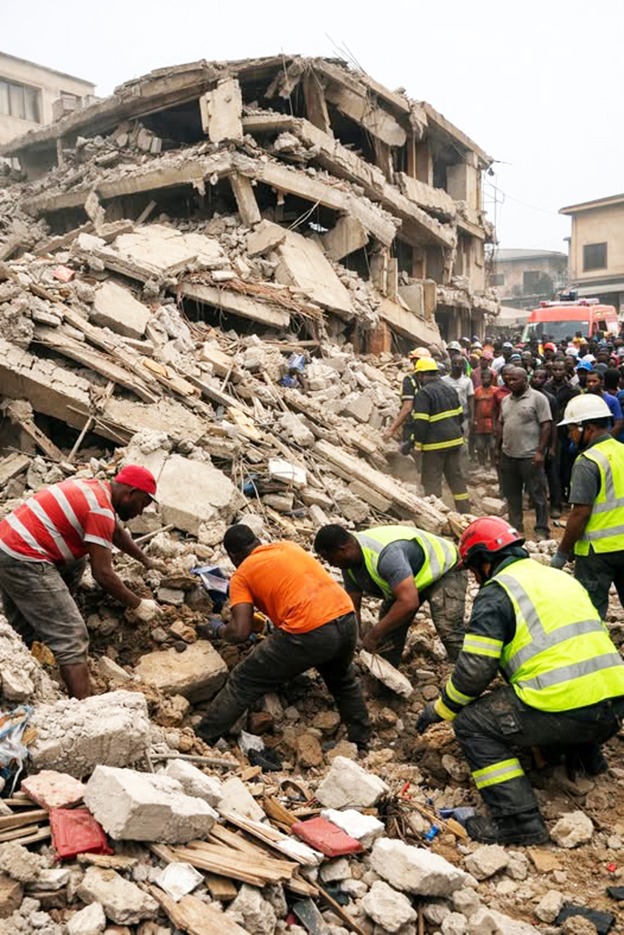
Volunteers helping to rescue worshippers who got trapped

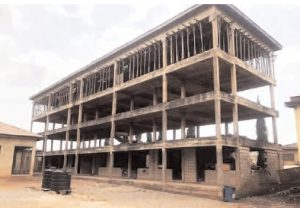
Three lives have been lost following the collapse of a structure at Ayawaso North District, in what is increasingly being described as a preventable tragedy. The incident occurred on Sunday, March 29, 2026 when an old school building near the Experimental Junior High School at New Town, in Accra, reportedly converted into a makeshift place of worship, caved in, trapping several occupants.

A total of 23 persons – 15 females and eight males, including three minors were caught in the rubble. Personnel from the Ghana National Fire Service responded swiftly, rescuing 20 victims who were subsequently taken to various health facilities for treatment. Sadly, three people, two females and one male lost their lives.

This is the building that collapsed at Accra New Town

Reacting to the incident, a National Executive Committee member of the National Democratic Congress, Wonder Kutor Victor, demanded accountability from authorities at the Ayawaso North Municipal Assembly. He questioned whether due process was followed in approving the structure and called for a full investigation into the circumstances surrounding the collapse.

Mr Kutor stressed that building permits are not issued by individuals but by the assembly and insisted that those responsible, whether for negligence or illegal approvals, must be identified and held accountable to prevent future occurrences.

The Chronicle commiserates deeply with the families who have lost their loved ones in the  building collapse. No words can adequately ease the pain of such a sudden and avoidable loss. To those nursing injuries and trauma from this incident, we extend our heartfelt sympathies. But beyond the grief, there must also be anger, righteous anger because this tragedy should never have happened.

Let us be clear: this was not an act of God. It was a failure – human, institutional and systemic.

The position taken by Wonder Kutor Victor is one we fully endorse. His questions are the very questions every Ghanaian should be asking. Who approved this building? Which Engineer certified it as safe? Which authority looked the other way while an old structure was converted into a place of public gathering? These questions demand urgent and honest answers.

We have normalised negligence in this country. Buildings go up without proper supervision. Old and weakened structures are repurposed without structural integrity checks. Assemblies either lack the capacity or the will to enforce regulations. And when disaster strikes, we are fed the same tired lines “investigations are underway.”

The Ayawaso North Municipal Assembly cannot escape scrutiny in this matter. Neither can the officials responsible for inspections, permits, and enforcement. If approvals were granted, then those who appended their signatures must be held liable. If no approvals were granted, then it is an even greater indictment of a system that allows illegal structures to operate in plain sight.

This is not merely about one collapsed building. It is about the countless others standing today as ticking time bombs across the country. From churches, schools to residential buildings, many structures exist in clear violation of safety standards. Yet, enforcement remains weak, compromised or non-existent.

Leadership must answer. From assembly men and women to the District Chief Executive, responsibility must be clearly established and consequences enforced. Anything short of this will only embolden further recklessness.

The Chronicle insists that this tragedy be treated as a watershed moment. Not another file to be opened and quietly closed but a turning point that forces real reform in how we build, approve, and monitor structures in this country.

If we fail to act decisively now, then we must be prepared to write this same editorial again after the next avoidable disaster claims more innocent lives.


For more news, join The Chronicle Newspaper channel on WhatsApp: https://whatsapp.com/channel/0029VbBSs55E50UqNPvSOm2z


Participants Urge Expansion of WAJSIC Safety Training

0

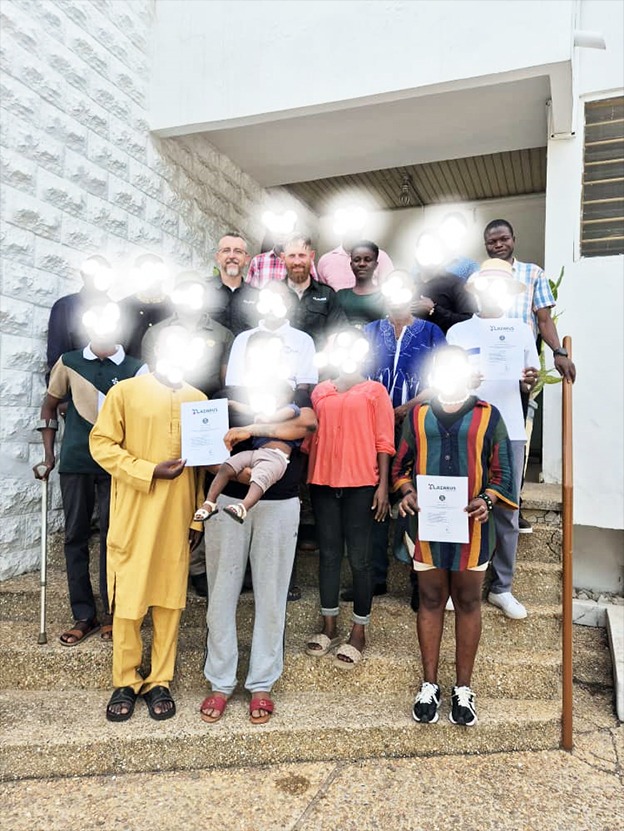
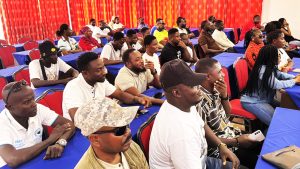
Participants at a five-day safety and resilience training programme organised by the Whistleblowers Activist and Journalist Safety International Centre(WAJSIC), with support from the Open Society Foundation and the Netherlands Embassy in Ghana, have called for its extension to benefit more people.

The training, held from Tuesday to Saturday and facilitated by Lazarus Training UK in collaboration with WAJSIC, focused on field integrity, first aid support and personal resilience.

It brought together both French and English-speaking participants, including journalists, activists and human rights defenders.

The programme featured intensive practical sessions, with participants engaged in hands-on activities such as airway management, self-defence techniques and surveillance detection. The curriculum covered pre-deployment planning and risk assessment, personal security and travel safety, casualty assessment, communication security, conflict management in crowd situations, and emergency response to injuries, including bleeding and ballistic wounds.

Many participants expressed satisfaction with the practical nature of the training, noting that the skills acquired would be crucial in handling high-risk assignments. Some indicated that they wished they had received such training earlier in their careers.

Facilitators underscored the importance of equipping media practitioners and civil society actors with essential safety skills, stressing that such knowledge could help them protect themselves and respond effectively in dangerous situations.

At the end of the programme, participants unanimously appealed to WAJSIC and its partners to sustain and expand the initiative to reach a wider audience, citing its potential to enhance safety and preparedness among professionals operating in challenging environments.


For more news, join The Chronicle Newspaper channel on WhatsApp: https://whatsapp.com/channel/0029VbBSs55E50UqNPvSOm2z

Galamsey Poisons Ghana’s Food Chain -Study Reveals   

0
A site in Ghana where illegal mining activities are in full swing

A new scientific study by Mensah et al. (2025), as reported by the Pan-African platform, Africa Is a Country, has exposed alarming levels of heavy metal contamination in food crops grown on illegal mining sites in Ghana, raising serious concerns about food safety and public health.

The study, conducted at Ajamesu in the Ashanti Region, found that cucumbers cultivated on a galamsey site abandoned for six years contained dangerous concentrations of mercury, cadmium, arsenic, copper and iron.

According to the researchers, regular consumption of such contaminated produce poses significant health risks including cancer, neurological disorders and developmental complications in both adults and children.

The findings point to a deeper systemic threat within Ghana’s food production chain.

Across the country, hundreds of abandoned illegal mining sites now occupy lands that once served as fertile agricultural zones.

Communities such as Nyaboo, Agogo, Odumase, Goaso and Tepa, traditionally known as food baskets are increasingly affected.

These areas produce staple vegetables including tomatoes, onions, peppers and garden eggs, which are transported to major markets in Kumasi and Accra before reaching households nationwide.

Experts warn that contamination at the source could, therefore, expose millions of Ghanaians to toxic food.

Scientists explain that crops grown on polluted soils absorb heavy metals directly, while the use of contaminated water for irrigation further spreads toxins into otherwise unaffected areas. Without proper soil remediation, these lands remain unsafe for agricultural use.

At the centre of the crisis is the method used in illegal gold mining.

In many galamsey communities, miners process gold using mercury and other hazardous substances, drawing water directly from nearby rivers.

The resulting waste, laden with toxic metals, is discharged into the environment either seeping into the soil or flowing into major water bodies.

Separate reports cited by Africa Is a Country, including findings by journalist Anthony Labruto, indicate that as of September 2024, nearly 60 percent of Ghana’s water bodies had been polluted due to galamsey activities.

Major rivers such as the Birim, Tano, Densu, Subin and Pra have all been affected, threatening water supply for thousands of communities.

Unlike regulated large-scale mining companies that treat their waste, illegal miners operate without safeguards, causing long-term environmental damage to land, water and biodiversity.

Public health experts warn that the threat may extend beyond immediate mining zones.

Toxic particles released into the environment can return to the ground through rainfall, effectively spreading contamination across wider areas. Given Ghana’s dependence on rain-fed agriculture, this raises the risk of nationwide food contamination.

The long-term consequences are profound. Continuous exposure to heavy metals has been linked to genetic and epigenetic changes, increasing the likelihood of birth defects, neurological disorders and chronic diseases in future generations.

Environmental analysts say the situation is evolving into a national food security crisis.

Ghana’s food systems are already under pressure from climate change, urbanisation and land degradation.

Illegal mining is now compounding these challenges by destroying arable land and contaminating both crops and aquatic food sources.

Despite mounting evidence and repeated anti-galamsey protests in recent years, critics argue that the response from state institutions has been inadequate.

Key agencies, including the Ghana Water Company, Forestry Commission and Environmental Protection Agency, have yet to classify the situation as a national emergency.

Policy concerns have also been raised over Legislative Instrument (L.I.) 2462, which permits mining in forest reserves under certain conditions, including presidential approval in ecologically sensitive areas.

On the ground, the impact is already being felt.

Environmental experts report that farmlands in parts of Bono, Ashanti, and the Western Region have been lost to mining activities. In some cases, farmers have been forced off their lands; in others, economic hardship has driven them to sell.

This has disrupted the cultivation of staple crops such as cassava, cocoyam, and beans, affecting food availability and prices. Farmers also report declining yields, even in areas not directly mined, due to soil degradation and polluted irrigation sources.

Fishing communities are equally affected. Fishermen in areas such as Shama in the Western Region report dwindling catches and declining fish diversity, largely attributed to water pollution.

Experts warn that the cumulative effect of these trends could undermine Ghana’s entire food system if urgent action is not taken.

What is emerging is a dangerous chain of contamination—linking polluted water to degraded soils, unsafe food, and long-term health risks.

Galamsey, once seen primarily as an environmental issue, is now a growing public health and food security crisis—one that demands urgent, science-based intervention.


For more news, join The Chronicle Newspaper channel on WhatsApp: https://whatsapp.com/channel/0029VbBSs55E50UqNPvSOm2z

The Ghanaian Chronicle