Home Blog Page 1150

Court sacks Kano electoral commission chairman, members, stops LG polls

0
Court sacks electoral commission chairman

A Federal High Court sitting in Kano has disqualified the chairman and members of the Kano State Independent Electoral Commission, KANSIEC, from conducting the scheduled local government elections in the state.

The court ruled that the KANSIEC chairman and other members of the Commission are card carrying members of the ruling New Nigeria Peoples Party, NNPP, and also are not civil servants above grade level 14.

This is coming barely four days to the Kano LG elections, scheduled for Saturday October 26, 2024.

The court presided by Justice S.A Amobede made the declaration while delivering judgement in a suit filed by Aminu Aliyu Tiga, an All Progressives Congress, APC, member against KANSIEC, the state Attorney General and Commissioner for Justice, Barrister Haruna Isa Dederi, and 14 others.

The judge further ruled that “Kabir Zakirai, the Secretary of the Commission, not being an officer in the Kano State Civil Service not below the rank of Director prior to his appointment as Secretary of the Commission, is not qualified to be appointed to the position pursuant to Section 14 of the Kano State Independent Electoral Commission Law 2001”.

The judge added that “the 1st Defendant (KANSIEC) whose composition of members was made in contravention of constitutional provisions of Section 197 (1)(b) and Section 200 (1) (a) of the 1999 Constitution of the Federal Republic of Nigeria (as amended) and Section 4 of the Kano State Independent Electoral Commission Law 2001, cannot validly and competently conduct Local Government Election 2024 in respect of 44 Local Governments in Kano State until and unless qualified persons are duly and legally appointed as chairman and members of the commission in line with relevant extent law.”

Justice Amobede further ruled that whatever the Commission “did or has done or is doing in preparation of 2024 Local Government Election in Kano State such as issuance of election guidelines, circulars, screening of candidates, sale of nomination and expression interest forms whichever and howsoever are null and void and of no effect whatsoever”.

Credit: dailypost.ng

Senate to investigate NDLEA’s drug trafficking allegations against Ashiru

0
Nigerian Senate

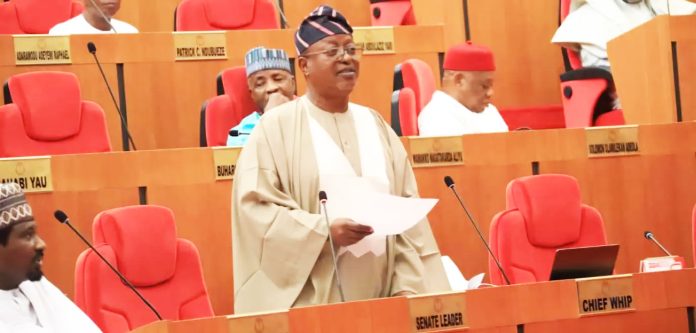
The Nigerian Senate has set up an Ad-hoc Committee to investigate allegations of drug trafficking against Senator Oyelola Yisa Ashiru representing Kwara South Senatorial District.

The setting up of the investigative committee came after Ashiru raised Order 42 of Senate Rules, which bothers on personal explanation, noting that the National Drug Law Enforcement Agency, NDLEA, accused him of involvement in drug trafficking, which led to the arrest of some of his aides.

Ashiru said the allegation against him by NDLEA was baseless and unfounded, stressing that the agency was angry because he contributed to a proposed bill on the establishment of a drug-related agency on Tuesday, 15th October, 2024.

He urged the Senate to take action on the matter, saying that the allegation was an infringement on his person and his privilege as a sitting senator.

He explained: “Mr Senate President, I come under Order 42 – personal explanation. My personal explanation is NDLEA’s malicious reaction to my debate on a bill seeking to establish an institute on drug awareness and rehabilitation.

“I expressed my concern on this bill for so many reasons. For the reason that there are a lot of information from my constituency on the negative effect of drug consumption and trafficking to the extent that one of my constituents has ascertained that in the last two years, he can count up to 50 people who have lost their sanity due to consumption of drugs.

“Equally, they are visible examples of drug barons who are making money through distribution of drugs in my constituency and other constituencies too.

“Mr President, I come under Order 42 to clear insinuation published especially by Daily Trust that Senator Ashiru is involved in distribution of drugs. In my life, I am 68 years now, I assert that I cannot even identify cannabis or any drug. Beyond taking water, I don’t do drugs, I don’t drink caffeine, I don’t even take carbonated drinks.”

Credit: dailypost.ng

Roadside Beggars given ultimatum to vacate the streets of Abuja

0
FCT Minister, Nyesom Wike

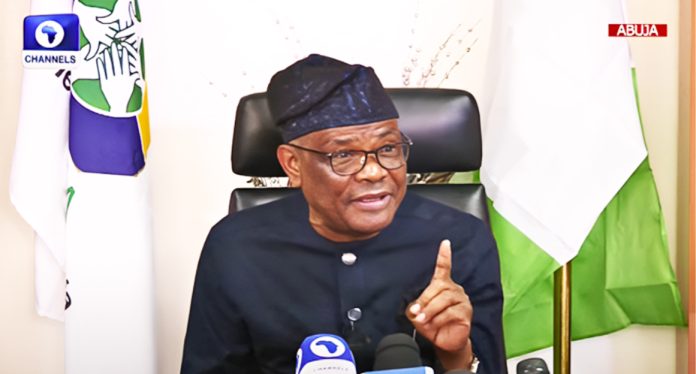
The Federal Capital Territory Administration has issued a warning to roadside beggars to desist from the act or risk being arrested by enforcement agents.

The minister disclosed at Katampe during the flag-off ceremony of the construction of the access road to the newly flag-off judges’ quarters.


He lamented that the number of persons who stay on the road is alarming which poses a threat to security in the metropolis.

He then issued an October 27, 2024 ultimatum to the concerned parties to vacate the streets.

Wike had on Monday, recalled how he revoked the certificate of occupancy (C of O) of some plots of land allocated to German construction giant, Julius Berger, in the Katampe District of Abuja.

The minister spoke at the official Flag-Off Ceremony of the Design and Construction of 40 Judges’ Quarters at the nation’s capital.

The event was attended by the Chief Justice of Nigeria (CJN), Justice Kudirat Kekere-Ekun; and the President of the Court of Appeal of Nigeria, Justice Monica Dongban-Mensem; among other dignitaries.

Wike said 70% of funds for the project had been released after its approval by the Federal Executive Council last month. He said out of the 40 units to be constructed, 20 will be allocated to the FCT High Court, 10 to the Federal High Court, and 10 to the Court of Appeal.

Credit: channelstv.com

Koku Anyidoho kicks against ban on small scale mining

0

Following a tour of some small-scale mining companies in the Tarkwa-Nsuaem Municipality in the Western Region, Mr Samuel Koku Sitsofe Anyidoho, the Chief Executive Officer of the Atta-Mills Institute, has urged Civil Society Organisations (CSOs) and all persons calling for a total ban on small-scale mining to reconsider their campaign and rather focus on complementing the government’s efforts in fighting illegal mining (galamsey).

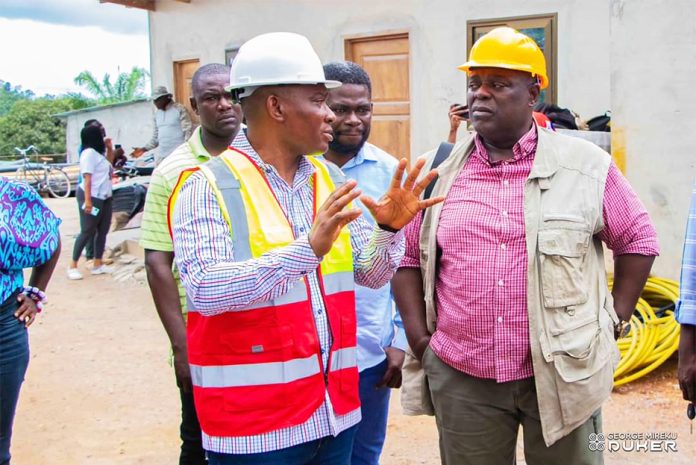
On Saturday, October 19, 2024 Mr. Anyidoho joined a delegation led by the Deputy Minister for Lands and Natural Resources, responsible for Mines, George Mireku Duker, to visit some licensed small-scale mining companies in the Tarkwa Nsuaem Municipality of the Western Region.

The team visited the Tarkwa Community Mining Scheme, Mohammed Brothers Ltd, Johnson Mining Services Ltd, and Dakete Mining Company Ltd, all in the Tarkwa-Nsuaem Municipality.

During the tour, the companies took the delegation through a safety induction, mining procedures through the shaft-rail-locomotive ore/logistics hauling system, mineral processing, and tailings management.

Addressing the media at the end of the tour, Mr. Koku Anyidoho noted that contrary to the public narrative, most small-scale mining companies are engaged in responsible and sustainable mining.

Mr Anyidoho believes that the organisations and persons clamouring for a total ban on small-scale mining do not fully appreciate the issues at hand, as his experience has made him realise that the galamsey menace is not being perpetrated by all small-scale mining companies.

He urged members of the ‘ban small-scale mining’ brigade not to generalise the issues, as the situation on the ground does not support their claims, and promised to be an advocate for responsible small-scale miners.

“Galamsey has become a very big issue, so it’s a crisis. Unfortunately, the discourse is that all small-scale licenses must be taken away. We have quacks and bad people in every profession, but it will be unfair to join the call without coming here firsthand”, he said.

“The protection of the river bodies is critical, but all we see are the destroyed water bodies and not the companies who are engaged in responsible small-scale mining. The discourse is that everybody with a small-scale mining license must have it revoked, but I believe we should separate the chaff from what is good so that we can have people advocating for you,” he added.

George Mireku Duker, in a brief address to the press, explained that his consistent defense and advocacy for responsible small-scale mining was in tandem with his role as a Member of Parliament who has sworn fealty to the law.

According to him, as long as the country’s laws make provision for Ghanaians to engage in small-scale mining, he will advance their cause and fight for them.

Beyond the law, Duker’s commitment to the small-scale mining industry is due to his absolute belief that it is the only means through which Ghanaians can grow to become owners of large-scale mining companies.

The Deputy Minister also condemned galamsey, reiterating the point that the government will continue to fight against the menace.

“We can only use ownership from small-scale mining to middle-tier and then to the conglomerate. As Ghanaians, while we have enacted laws to regulate small-scale mining, I must be the one championing it.

“Once we’ve agreed as MPs to enact laws for small-scale mining, I will continue to protect that law. It is the reason I keep on championing small-scale mining. I’m happy to see Ghanaians like you managing a facility like this because it means the benefits will remain in the country. Employees are all Ghanaians.”

Professor Boateng calls for immediate reform in board compensation

0
Prof Douglas Boateng, Board chairman - Mineral Income Investment Fund

The Board chairman of the Minerals Income Investment Fund (MIIF), Professor Douglas Boateng, has called for immediate reforms in board compensation in state-owned-enterprises (SOEs).

“The time for change is now. Governments must reassess how SOE boards are compensated, not just for fairness, but to ensure that our state-owned enterprises are led by the best talent equipped to navigate today’s complex global challenges,” Professor Boateng suggested at the recent Boardroom Summit, which hosted over 1000 top CEOs, policymakers and executives.

He said that immediate reform is critical because the current state of board compensation is unsustainable.

Professor Douglas Boateng, highlighting the dangers of inadequate boardroom compensation on the sidelines of the summit, said it threatens the future of these vital institutions.

“We can no longer pretend everything is fine,” he stated.“How can we expect board members, overseeing organisations with assets exceeding $400 million, to fully commit to their duties when they are paid less than $380 per meeting or $1,520 per annum? Some receive a paltry $114 per quarter or $500 annually. This level of compensation is far too low for the responsibilities involved.”

Professor Boateng emphasised that board members face increasingly serious risks in today’s corporate landscape.

“In these days, not only can one’s hard-earned reputation be destroyed, but you can go to jail if things go seriously wrong. Board members must take their roles seriously and for that, they must be properly compensated,” he suggested.

He also stressed the need for board members to add value through a deep understanding of the companies and industries they oversee.

“Protecting shareholder interests and driving value requires directors to constantly seek information, ask tough questions and stay informed. This demands time, effort and fair compensation,” he said.

While recognising the honour of public service, Professor Boateng insisted that fairness in remuneration is essential.

“Serving as a non-executive director in SOEs is a national duty, but the serious responsibilities involved require fair compensation. This call is not for higher pay for current directors and chairpersons, but to ensure that future leaders are properly incentivised to meet modern board room governance demands.

“Outdated practices must change. State-owned enterprises are critical to national development and meeting global objectives like the UN SDGs and Africa’s Agenda 2063.

“Board compensation must reflect the importance of these roles, not just to attract talent but to safeguard the integrity and effectiveness of these institutions,” he added.

Professor Boateng called for a shift from politically motivated appointments toward merit-based leadership.

“SOE board roles require specialized expertise, strategic thinking, and accountability. Compensation should reflect the demands of the role. If we fail to act, we risk jeopardising the future of these institutions,” he warned.

Editorial: Violence Against The Press Must Stop Now!

0
Editorial

The Chronicle on Wednesday, October 17, 2024 carried a story about supporters of Elisha Salifu Amoako, Founder and General Overseer of Alive Chapel International, attacking journalists at the Accra Circuit Court.

The altercation occurred as journalists attempted to report on a court hearing involving Elisha Salifu Amoako, who, along with two others, had been granted bail in connection with a fatal car crash involving his underage son.

Following the hearing, tensions erupted when Elisha Salifu Amoako’s supporters attempted to prevent journalists, who had been accredited by the Judicial Service, from covering the case.

The supporters clashed with members of the press, forcefully seizing mobile phone from GHOne legal correspondent, Murtala Inusah, who was capturing video footage. Inusah sustained injuries whilst the buttons on his shirt were destroyed.

Our reporter, Bernice Bessey, was also attacked while attempting to document the scene. They also verbally assaulted Peace FM and UTV correspondent, Philipa Ayilimah Atanga, who is an expectant mother.

In a subsequent development, four Multimedia Group reporters have been attacked by armed men at Asumenya, near Manso Nkran, in the Ashanti Region.

The assault occurred on Sunday, October 20, 2024 while the team was investigating the resurgence of illegal mining activities, popularly known as galamsey, in the newly restored Asumenya Forest Reserve and the pollution of streams feeding into the Ankobra River.

According to the statement issued by the Multimedia Group, more than ten heavily armed men wielding pump-action guns ambushed the crew during their assignment.The attackers abducted the journalists to a remote location, subjected them to physical abuse and later abandoned them at the scene.

The Multimedia Group has reported the incident to the police and expressed its appreciation for the swift response from the Inspector General of Police (IGP), in initiating efforts to apprehend the attackers.

First of all, we highly condemn attacks on journalists doing their work. These acts of violence are a blatant assault on press freedom, an essential pillar of democracy. As the Fourth Estate of the realm, journalists play a vital role in bringing attention to critical issues that affect our society, and attacks on them undermine the right of citizens to stay informed.

The Ghana Police Service has made commendable strides in swiftly responding to the attacks, and we urge them to fast-track investigations in these cases. It is crucial that the perpetrators of these violent attacks are brought to justice promptly to send a strong message that assaulting journalists will not be tolerated.

The media’s role becomes even more critical as we approach the 2024 elections, a time when accurate and timely reporting can significantly impact the democratic process. We, therefore, call on the public to refrain from attacking journalists in any form as they perform their duties.

Journalists must be allowed to operate freely and without fear of violence or harassment. Any attempt to silence the press is an affront to the freedoms we hold dear as a nation.

The Chronicle also appreciates the establishment of a network of lawyers, by the Media Foundation for West Africa (MFWA), to offer timely and effective legal assistance to journalists who fall victim to such violent attacks.

The initiative by MFWA is in response to the persistent trend of harassment against journalists and it is a step in the right direction to offer some protection to those who risk their lives and livelihoods to report the truth.Media houses, civil society organizations, and government institutions must continue to work together to ensure that Ghana remains a beacon of press freedom in the region.

As a country, we must recognise that safeguarding press freedom is a collective responsibility. Let us remember that violence against the press is violence against democracy itself. We must all do our part to protect the media from intimidation and allow journalists to perform their critical role in building an informed and empowered society.

Former COCOBOD officer denies claims that farmer drank lithovit fertiliser 

0
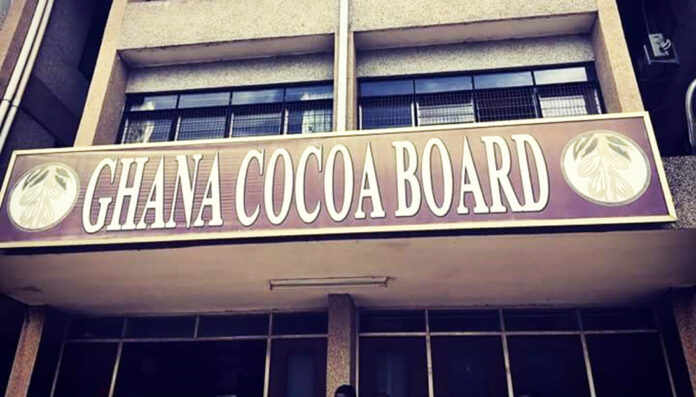
COCOBOD

A retired Kade District Extension Coordinator of the Ghana Cocoa Board (COCOBOD), Francis Cyril Attu Asiedu, has debunked claims by the prosecution that Lithovit fertilizer was ineffective and likened to water.

The claims, specifically made by Dr Yaw Adu-Ampomah, the third Prosecution Witness (PW3), suggested that farmers allegedly consumed Lithovit, considering it ineffective.

Testifying as the eighth Defense Witness (DW8) for Seidu Agongo, owner of Agricult Ghana Limited and the supplier of Lithovit fertilizer, Mr. Asiedu vehemently refuted these allegations.

He stated that during his tenure, Lithovit was a popular and effective fertilizer among farmers, significantly increasing cocoa yields without any adverse reports.

Mr. Asiedu recalled during education sessions with cocoa farmers, the Extension officers emphasised the effects of chemicals on human life, citing examples such as the Akomadan tomato farmers, who used to test chemicals with their fingers. Over time, this practice led to health issues, including impotence among some men.

DW8 further explained that Lithovit was well-received by farmers across the Kade district during the 2014/15 and 2015/16 cocoa seasons.

Demonstrations were conducted on his personal five-acre cocoa farm in Akyem Pramkese, which was used as a model to show the correct application and benefits of the fertilizer.

When asked about reports from the field, Mr. Asiedu maintained that there were no complaints regarding Lithovit’s effectiveness.

“He stated that farmers not only used Lithovit, but requested more due to its positive impact on their yield, adding “we received no adverse reports from the field.”

Mr. Asiedu’s testimony comes as the court hears 27 charges against former COCOBOD Chief Executive,  Dr. Stephen Kwabena Opuni (A1) and Seidu Agongo (A2), including defrauding by false pretenses and causing financial loss to the state. The trial, presided over by Justice Aboagye Tandoh, has been adjourned to October 24, 2024.

Saglemi trial: Collins Dauda’s Lawyer grills Witness

0
Saglemi Housing project

In the ongoing Saglemi Housing project trial, the cross-examination of Eric Amankwah Junior, a Schedule Officer from the Ministry of Finance, continued under the rigorous questioning of Thaddeus Sory, Counsel for the first accused, Collins Dauda.

The cross-examination took place before Justice Ernest Owusu-Dapaa, a Court of Appeal judge, with additional responsibility for the High Court.

The session focused on the intricacies of financial withdrawals and payments related to the Saglemi housing project, which has been marred by allegations of financial mismanagement.

At the heart of the trial are claims of misappropriation, with Collins Dauda, the former Minister of Works and Housing, facing multiple charges, including willfully causing financial loss to the state.

Counsel for the Accused, Mr. Thaddeus Sory, extensively questioned Amankwah on whether payments related to the project were processed in compliance with the Escrow Management Agreement (EMA).

One significant point of contention was whether the payment of US$10,773,849.16 and other sums was done with proper authorisation, as stipulated in Schedule 2 of the EMA.

Mr. Sory highlighted alleged discrepancies between the documents provided in evidence, specifically Exhibit K, which contains the EMA and other key documents, including letters of payment requests that did not explicitly bear the phrase “Notice of Withdrawal” as required.

Mr. Amankwah maintained that while some of the documents lacked the explicit wording, they complied with the substantive requirements of the EMA, including the authorisation of the Ministry of Finance to process payments.

The questioning also touched on specific sums cited in the charge sheet, including payments to contractors and consultants for the project.

Despite Mr. Sory’s persistent claims that the first accused was not an authorised signatory on some key documents and that payments were made without following the correct procedures, PW2 remained firm in his responses, stating that all payments he processed conformed to the terms of the EMA.

During the session, Justice Owusu-Dapaa allowed Counsel for the first accused additional time to complete his cross-examination, noting that while the case completion plan had been generously adjusted to accommodate prior delays, the defense would be granted one final opportunity to conclude.

The judge reminded the court that once Sory’s cross-examination concluded, Counsel for the second accused would begin his questioning immediately.

The trial, which has attracted considerable public attention, revolves around the Saglemi Affordable Housing Project, a government initiative intended to address housing shortages.

However, the project has faced numerous challenges, including allegations of inflated costs and failure to complete the promised number of housing units.

The charges against Collins Dauda and other accused individuals, including officials from the Ministry of Works and Housing and the Ministry of Finance, stem from these alleged irregularities.

Over 150 Cyclists “Join Ride with Team Europe” to Promote Sustainability in Accra

0
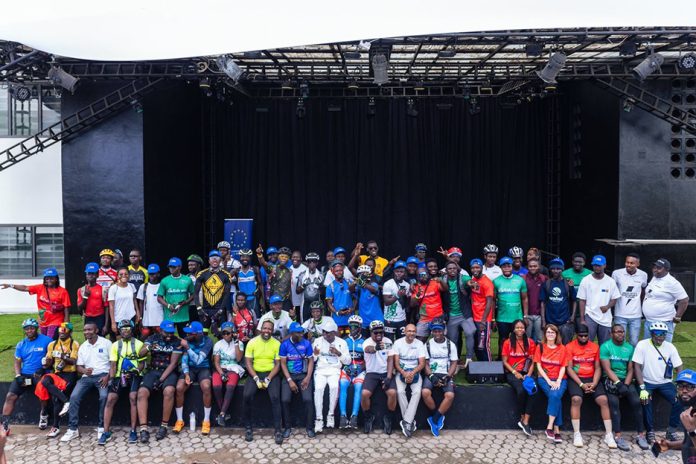
Participants and dignitaries at the Ride with Team Europe Cycling and Sustainability Event in a group picture

The European Union Delegation to Ghana, in collaboration with the Embassy of the Netherlands and the French Embassy in Ghana has organised the first ever “Ride with Team Europe” cycling and sustainability event for 158 registered cyclists.

The event, which took place over the weekend, began at the Accra Sports Stadium and covered a 12.6 kilometer route, through some of Accra’s notable areas.

The Cyclists navigated through the Ministries, Ridge and made a stop at the Netherlands Embassy for a refreshing water break.

Cyclists of all ages participated in the ride, which was lauded for not only promoting fitness, but also encouraging participants to consider the environmental benefits of cycling as an alternative to carbon-intensive modes of transport.

The ride then proceeded through the Mahama Roundabout, onto the 37 Road and finally ended at Alliance Française, where the event concluded with side activities such as a sustainable fashion show, art exhibition and a picnic featuring a sustainable food market.

The event also included side activities which included a sustainable fashion show and art exhibition, as well as a picnic and sustainable food market.

The event is aimed at promoting sustainable transportation and lifestyle choices, foster community engagement and showcase European values.

Speaking at the event, a representative from the European Union Delegation, H.E Irchad Razaaly highlighted the importance of such activities in promoting green solutions and inspiring both locals and diplomats to adopt sustainable practices.

“This ride goes beyond cycling; it’s about engaging with the community to create awareness about the critical need for sustainable transportation and eco-friendly choices,” they noted.

He called for a greater focus on building cycling-friendly cities in Ghana, emphasising the importance of sustainability and shared mobility.

The Ambassador also highlighted how cycling is not just about health, but also about designing cities that promote sustainability for current and future generations.

He added that creating cycling-friendly cities is essential not only for reducing environmental pollution but also for promoting equitable access to mobility and road safety.

The Ambassador further explained that this transformation would require strong policies, engagement, and stamina to achieve long-term goals.

The French Ambassador to Ghana, H.E Jules Armand Aniambossou, reiterated France’s strong commitment to sustainability, emphasising the need for collaboration and practical action at both the global and local levels.

Speaking at a cycling event, the Ambassador stressed that while summits and meetings with leaders are important, true progress relies on involving real people in efforts to protect the environment.

“We can organise meetings with presidents and ministers to talk about sustainability, but at the end of the day, to really be able to change things, we need to involve people like you,” the Ambassador stated.

Highlighting France’s role in global sustainability efforts, the Ambassador referenced the upcoming COP29 summit in Baku, where France and the European Union will present their strategies for reducing greenhouse gases and fossil fuel consumption.

The Ambassador also discussed France’s leadership in the financing of sustainable development through the Paris Pact for People and Planet (4P), a framework that seeks to accelerate development while protecting the environment.

He noted that France remains committed to finding innovative solutions to help developing countries continue growing while addressing environmental concerns.

The Netherlands Ambassador to Ghana, H.E Jeroen Verheul, praised the benefits of cycling, calling for greater promotion of the practice in Ghana, while addressing safety and status concerns that deter its widespread adoption.

The Ambassador highlighted cycling’s convenience, health benefits, and environmental advantages, noting that in the Netherlands, a country of 18 million people, there are 24 million bicycles, demonstrating a strong cycling culture.

He outlined five key criteria that influence people’s mobility choices, summarizing them with the acronym “CHESS”—Convenience, Health, Environment, Safety and Status.

While cycling is common in the Netherlands, he pointed out that Ghana lacks this culture due to safety concerns and societal perceptions.

The Ambassador emphasised that the government needs to address the safety of cyclists, especially in cities like Accra and Kumasi, where cycling is dangerous due to the lack of respect from drivers and the absence of protective infrastructure.

He noted that cycling should be promoted as a healthy and environmentally friendly option, but policy reforms must ensure the safety of cyclists on the roads.

NPP Wants Ejura NDC Chatterbox Punished … for assaulting NPP communication officer during live radio programme

0
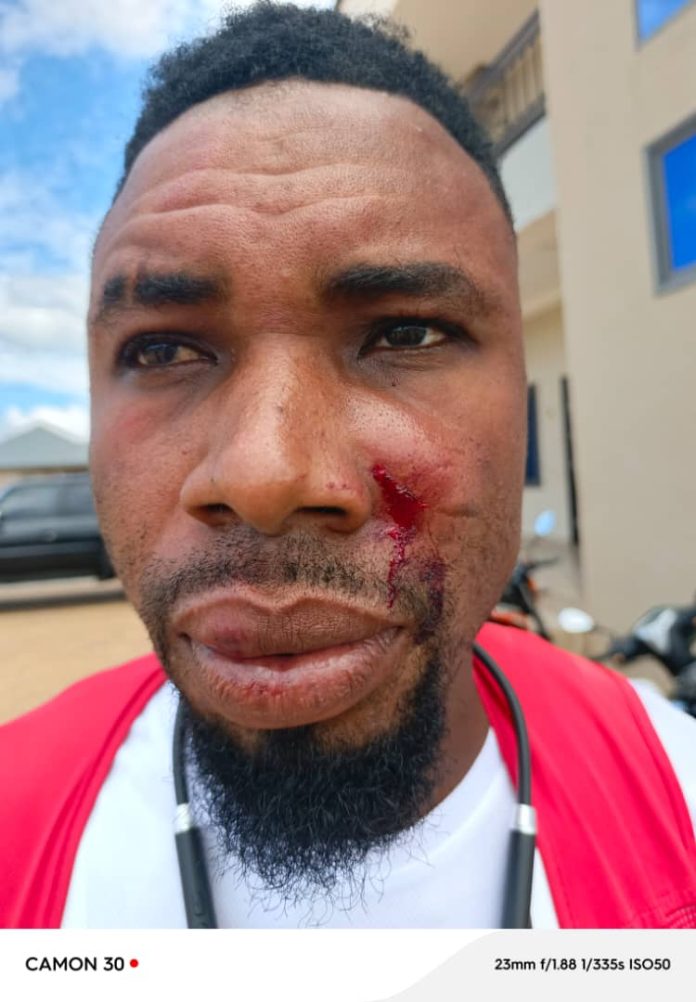
Hudu spots bruises on the face
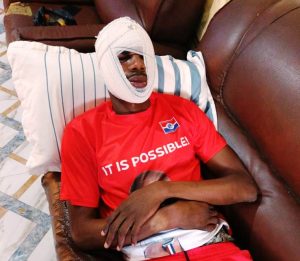
Hudu in bandage after the brawl

The New Patriotic Party (NPP) has condemned the assault of an NPP Youth Organiser by the Communication Officer of the National Democratic Congress (NDC) without provocation, during a radio discussion at Ejura.

Last Friday, Abdul Rahman Hudu, the Ejura/Sekyedumase Constituency NPP Organiser was physically assaulted by the NDC Communication Officer, Osman, during a discussion on Naagyei FM, a local radio station.

Abdul Rahman Hudu’s crime was touting the achievements of the Akufo-Addo/Bawumia administration and wondered why the constituents kept voting for the NDC for the past 32 years, without any corresponding benefits in projects and development.

Mr. Yaw Adomako Baafi, a former NPP Communications Director and a Member of the Bawumia campaign team has condemned the development, because the discussion did not call for the attack.

He said the assault was due to frustration and fear of imminent defeat which await the NDC, having realised that Dr. Bawumia was a symbol of a true and tested leader bound to take over the Presidency to protect the legacy of Nana Akufo-Addo.

He accused the NDC leadership of instigating violence, aggression and war, noting that the NDC was noted for its penchant and notoriety for aggression, violence and arrogance.

He has, therefore, called on the National Peace Council, the Clergy, Chief Imam, Traditional authorities and the Media to condemn such reckless acts and brutish way of dealing with political issues. He further suggested that the law takes its course in this matter to ensure justice.

Osman (back to camera) in a scuffle with Hudu

According to him, he is privy to documented plans by the NDC to cause mayhem and violence in NPP strongholds ahead of the December elections.

The former Communications Director said the NPP was noted for peace and democracy, and that the peace prevailing in the country must not be compromised on the altar of aggression and violence.

He said the NPP had accommodated such acts of lawlessness for long, but cautioned that there was a limit to human endurance.

The former NPP Communications Director also commended the security agencies for their vigilance and keeping those who are poised to destabilise the country at bay.

Mr. Adomako Baafi said the NDC cannot match the NPP in terms of performance in the area of governance, economy, education, security, agriculture and health, and that come December, Dr. Bawumia’s sterling qualities and Nana Akufo-Addo’s performance would lead the party to retain power.

Abdul Hudu making his submissions at the radio station

Mr. Raphael Patrick Sarfo, the Ashanti Regional Youth Organiser of the New Patriotic Party (NPP), on his part called on the Ashanti Regional Police Command to launch a thorough investigation into the incident, ensuring that justice is served to the victim.

Mr. Sarfo said the party would have reciprocated the action, but they believe in the rule of law and hence their trust in the police to bring about justice.

Meanwhile, Hudu has formally lodged a complaint with the Ejura police, while Osman has been granted bail, pending further investigations.

The Ghanaian Chronicle