Home Blog Page 111

Iran prepares for war as Hormuz tensions with US escalate

0
Strait of Hormuz

Iranian media say a United States warship trying to transit the Strait of Hormuz has been hit with two missiles after ignoring warnings.

The unnamed warship had to withdraw from near the Iranian port of Jask on Monday and “flee”, according to the Fars News Agency, which is affiliated with the Islamic Revolutionary Guard Corps (IRGC).

The US military, in a social media statement, denied that one of its vessels had been struck.

The report by Fars came hours after the head of Iran’s joint military command warned US forces they would be attacked if they entered the Strait of Hormuz.

Major General Ali Abdollahi said in a statement that armed forces under his command will “maintain and manage security of the Strait of Hormuz with all strength” in response to US President Donald Trump’s announcement on Sunday that the US would “guide” vessels stranded by the US-Israeli war on Iran through the key waterway.

The latest tensions come as Iranian authorities mobilise supporters to prepare for a potentially lengthy conflict as they continue to exchange proposals with the US amid efforts to end the war that began on February 28 through negotiations.

The Iranian Ministry of Foreign Affairs on Monday confirmed that Tehran was reviewing the latest text from Washington relayed through Pakistan but urged a more “realistic” approach from Trump.

Authorities in Tehran will speak about “nothing except for the full end to the war at this stage”, ministry spokesman Esmaeil Baghaei told reporters.

Nearly one month after a ceasefire delivered a suspension in large-scale fighting, Iranian authorities are trying to reconstitute their missile and drone capabilities in case the war restarts, including by digging up bombed entrances to underground bases housing munitions and equipment.

Credit: aljazeera.com

Ukrainian drone hits upmarket Moscow high-rise ahead of Victory Day celebrations

0
Ukrainian drone hits Moscow

A Ukrainian drone hit an upmarket residential high-rise in Moscow in the early hours of Monday, resulting in no casualties but causing visible damage to the façade of the building.

It was the third night in a row that the Russian capital came under attack from drones, days before Russia holds a scaled-back 9 May parade to mark the Soviet Union’s victory over Nazi Germany.

An unverified video circulating on social media showed firemen entering a heavily damaged flat covered in dust and rubble and with blown-out windows, while another showed drone debris strewn across the street below.

Two other drones were intercepted, Mayor Sergei Sobyanin said. Vnukovo and Domodedovo international airports suspended operations overnight.

A total of 117 were intercepted over several Russian regions between Sunday and Monday, the Russian defence ministry said. Sixty alone were aimed at the region of St Petersburg in what the regional governor Aleksandr Drodzhenko said had been a “massive” attack.

The residential building that was hit is located in an upscale neighbourhood in south-west Moscow, less than 10km (six miles) from the Kremlin and Red Square, where Saturday’s parade will be held.

Ukrainian drones have attacked Moscow several times since Russia launched its invasion of Ukraine in February 2022.

Drone alerts regularly shut down airports on the outskirts of the capital and disrupt aerial traffic, but much of the capital is protected by the Pantsir-S surface-to-air missile system and successful strikes so close to the centre are relatively rare.

Betraying a sense of nervousness ahead of the 9 May celebrations, the Kremlin last week announced that due to a “terrorist threat” from Ukraine it would scale back the yearly grand military parade on Red Square. For the first time since 2008, no armoured vehicles or missile systems will feature.

Credit: bbc.com

Kenya’s leader backtracks after comments mocking Nigerian English

0
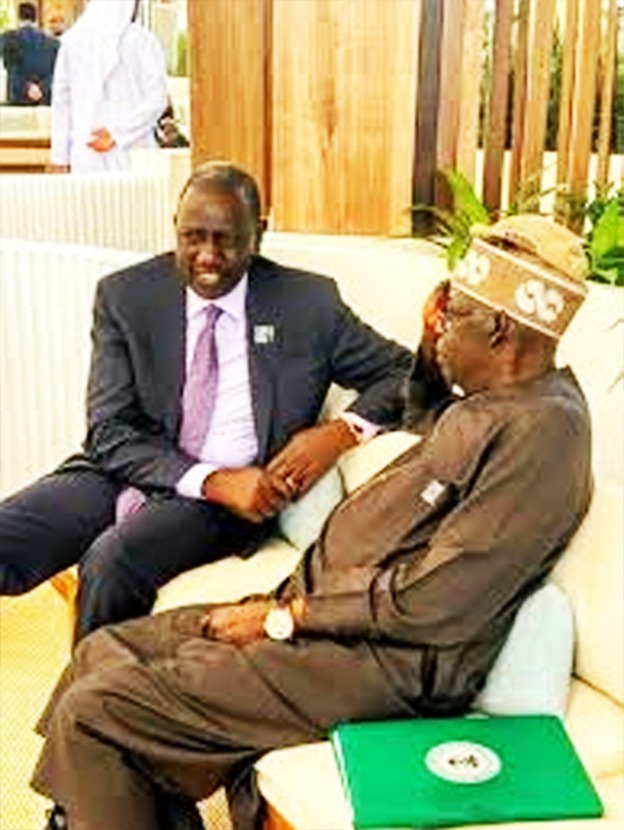
Kenya President William Ruto and President Tinubu

Kenya’s President William Ruto has been forced to respond to the backlash over his recent remarks suggesting Nigerian-accented English was incomprehensible.

His clarification came at a mining conference in the Kenyan capital, Nairobi, attended by Nigeria’s Minerals Minister Henry Dele Alake, who told the gathering: “President Ruto, the people of Nigeria have mandated me to inform and assure you that Nigerians speak good English.”

To much laughter, Ruto took to the stage to explain his comments to Kenyans living in Italy last week were intended to be private and had been “taken out of context”.

“The fact is that I was talking about how we in Africa speak very good English, all of us,” he said.

“In fact, in some countries like Nigeria, if you do not speak excellent English like the one we speak in Kenya, you may need a translator to understand the excellent English of Nigeria. So that was the comparison. But somebody misrepresented the facts.”

President Ruto reminded the audience at the mining development conference that Nigerians were his in-laws – one of his daughters, June, is married to a Nigerian.

“I want to send my regards to my brothers and sisters in Nigeria… my in-laws.”

He told Alake to pass on his greetings his Nigerian counterpart Bola Tinubu: “Tell President Tinubu that I said, ‘Hi’. And tell him I said that in good English… so that there will be no consequences.”

Following an explanation about how he felt he had been mispresented, the president ended by saying: “It is as well that we can have this conversation – my in-laws I hope there will be no consequences for whatever was done,” he said.

The good-natured banter was in sharp contrast to barrage of criticism President Ruto has faced online.

Last week, he had boasted about how Kenya’s education system was producing some of the best human capital in the world, with strong English proficiency.

“We speak some of the best English in the world, that is true. If you listen to a Nigerian speaking, you don’t know what they are saying. You need a translator even when they are speaking English.”

The condemnation that followed was widespread – fuelling an online cyber rivalry between the two nations.

Kenya and Nigeria are both former British colonies and share English as an official language but have distinct spoken varieties with different phonetic structures.

Credit: bbc.com

New alliances shakes up Nigerian political landscape

0
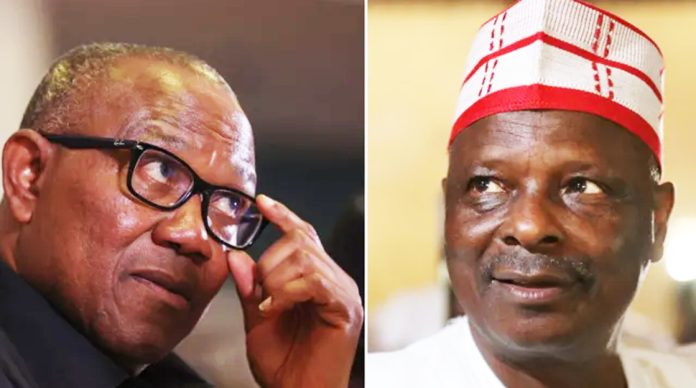
Peter Obi and Rabiu Kwankwaso

Two of Nigeria’s most prominent opposition figures have announced they have switched parties in a dramatic political realignment ahead of next year’s presidential election.

Peter Obi and Rabiu Kwankwaso, who finished third and fourth respectively in the 2023 presidential race, have both joined the Nigeria Democratic Congress (NDC), raising the prospect of a joint ticket to challenge President Bola Tinubu.

They were previously in the African Democratic Congress (ADC), along with former Vice-President Atiku Abubakar, who came second in the last election.

While this could be seen as a fragmentation of the opposition, supporters of Obi and Kwankwaso say it will give their alliance greater focus.

Both men are former governors and command significant grassroots followings.

Obi is hugely popular among young voters across the south, while Kwankwaso wields considerable influence in the north.

The move comes just nine months after Obi, Kwankwaso and Abubakar joined the ADC but that alliance quickly became mired in legal battles over party leadership – something Obi blamed on the government.

“The same Nigerian state and its agents that created unnecessary crises and hostility within the Labour Party that forced me to leave now appear to be finding their way into the ADC,” Obi said on Sunday.

He was the Labour Party candidate in the 2023 election.

Allies of President Tinubu have denied that they have been trying to sabotage opposition parties.

Obi, 64, and Kwankwaso, 69, were formally received at the NDC’s national headquarters in Abuja by the party’s national leader, Senator Seriake Dickson, on Sunday.

Speaking afterwards, both men called for national unity, greater opportunities for young people, and an end to the infighting that has plagued Nigeria’s opposition.

However, their decision risks upsetting allies within the coalition built around the ADC, which had been positioning itself as the main vehicle for opposition unity.

Some figures within the bloc have privately expressed a sense of betrayal, raising fresh doubts about whether Nigeria’s fragmented opposition can sustain a coordinated challenge against President Tinubu, 74.

In a statement, the Nigerian presidency played down the significance of the defections, suggesting they reflected “the normal fluidity of democratic politics” rather than any fundamental shift.

A presidential spokesperson said the government remained focused on governance.

“Political alliances will come and go,” the spokesperson said. “But our priority is delivering economic reforms, improving security and ensuring stability for all Nigerians.”

Credit: bbc.com

Nigeria plans to repatriate nationals willing to leave South Africa after attacks

0
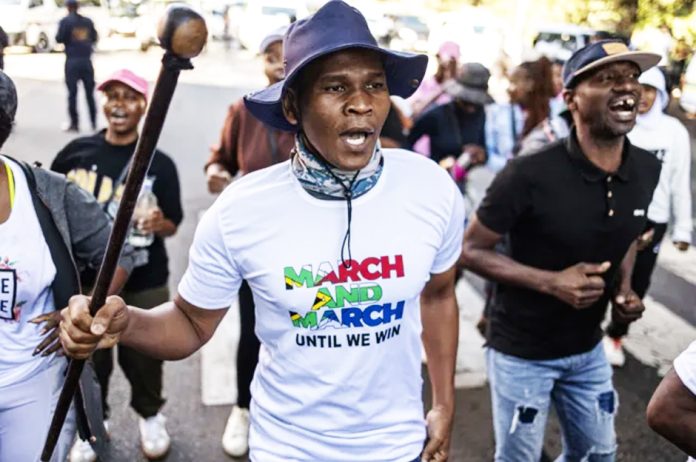
A March and demonstration in Johannesburg

Nigeria is planning to repatriate its nationals in South Africa willing to return home voluntarily, amid growing fears that recent attacks on foreigners there could escalate.

Foreign Minister Bianca Odumegwu-Ojukwu said 130 applicants had already registered for the exercise, adding that the number was expected to rise.

She expressed President Bola Tinubu’s concern about the attacks in the southern African nation, and condemned the violence against foreign nationals and demonstrations characterised by “xenophobic rhetoric, hate speeches and incendiary anti-migrant statements”.

Nigeria has summoned South Africa’s acting High Commissioner over the issue.

Nigeria will formally convey its “profound concern” at a meeting later on Monday over the incidents in South Africa, saying they could affect existing relations between the countries, according to a foreign ministry statement.

The meeting will focus on recent marches held by anti-immigrant groups and “documented instances of mistreatment of Nigerian citizens and attacks on their businesses”, it said.

On Sunday, Nigeria’s foreign minister said: “Nigerian lives and businesses in South Africa must not continue to be put at risk, and we remain committed to working to explore with South Africa ways to put an end to this.”

She cited the killing of two Nigerians in separate incidents involving local security personnel, insisting that her government was demanding justice.

She said the Nigerian president’s priority was for the safety of citizens and “consequently, arrangements are currently under way to collate details of Nigerians in South Africa for voluntary repatriation flights for those seeking assistance to return home”.

As Africa’s most industrialised country, people from elsewhere in the continent have long travelled to South Africa to seek work.

South African President Cyril Ramaphosa has condemned the attacks but also cautioned foreigners to respect local laws.

Credit: bbc.com

Falling Resource Revenues, Aid Cuts Tighten Noose on Developing Economies – IMF Warns

0
IMF

Developing countries, including Ghana, are facing mounting fiscal strain as revenues from natural resources decline and foreign aid from advanced economies continues to shrink, the International Monetary Fund has revealed.

In its latest update of the World Revenue Longitudinal Database, the IMF paints a sobering picture of weakening public finances across low-income and emerging market economies. According to the Fund, income from extractive industries—such as oil, gas and mining—together with foreign aid grants for general government spending, has dropped by a combined 3.8 percentage points of Gross Domestic Product (GDP) since 2000.

This sharp decline, the report notes, has not been fully offset by improvements in tax collection. While tax revenues have increased over the same period, the gains—amounting to 2.6 percentage points of GDP—have only managed to cover about two-thirds of the losses, leaving a persistent financing gap.

The IMF identifies falling proceeds from natural resource extraction as the single largest contributor to the revenue slump. These proceeds, often referred to as non-tax revenues, include royalties, profit-sharing arrangements and dividends from state-owned enterprises operating in sectors such as mining and petroleum—industries that remain central to the economies of countries like Ghana.

Foreign aid, particularly grants that governments rely on for general budgetary support, has also declined significantly, compounding the fiscal pressures. The dual shock—shrinking extractive revenues and reduced donor inflows—has left many developing economies struggling to maintain public spending and meet development targets.

The implications are far-reaching. With limited fiscal space, governments face difficult trade-offs between financing infrastructure, social services and debt obligations. For resource-dependent economies, volatility in global commodity prices further exacerbates uncertainty in revenue flows.

To bridge the gap, the IMF emphasises the urgent need for stronger domestic revenue mobilisation, particularly through more efficient and broad-based tax systems. Without this shift, the Fund warns, affected countries may find it increasingly difficult to achieve sustainable economic development.

“Closing the gap often requires collecting more tax revenue,” the IMF notes, stressing that long-term fiscal stability depends on a country’s ability to generate reliable income internally rather than relying on unpredictable external sources.

However, boosting tax revenue is not merely a matter of raising rates. The IMF underscores the importance of sustained investment in tax policy reforms and administrative capacity. This includes modernising tax systems, improving compliance, reducing leakages, and strengthening institutions responsible for revenue collection.

The Fund indicates that it is supporting member countries through targeted capacity development programmes. These interventions—delivered in collaboration with donor nations and international partners—focus on technical assistance and training aimed at enhancing tax administration and policy design.

Such efforts are intended to reduce dependence on volatile revenue streams like extractive industries and foreign aid, while building more resilient fiscal systems. According to the IMF, stronger domestic revenue frameworks not only improve national economic stability but also contribute to broader global growth.

Underlying these policy recommendations is the need for accurate and comprehensive data. The IMF’s World Revenue Longitudinal Database, which tracks revenue trends across 195 economies over several decades, provides policymakers with detailed insights into how governments generate income. The database is widely used by researchers and development practitioners to benchmark performance and identify priority areas for reform.

For countries like Ghana, where natural resource revenues and external support have historically played a significant role in public financing, the IMF’s findings reinforce a critical policy challenge: how to transition towards a more self-reliant and устойчивый revenue model in an increasingly uncertain global environment.

While the path forward may require difficult reforms, the IMF maintains that strengthening domestic revenue systems remains the most viable route to fiscal resilience and long-term economic sustainability.


For more news, join The Chronicle Newspaper channel on WhatsApp: https://whatsapp.com/channel/0029VbBSs55E50UqNPvSOm2z

Police Land Guards Abduct Detective … COP Teye-Cudjoe Opens Investigation Into Bizarre Incident At Shai Hills

0
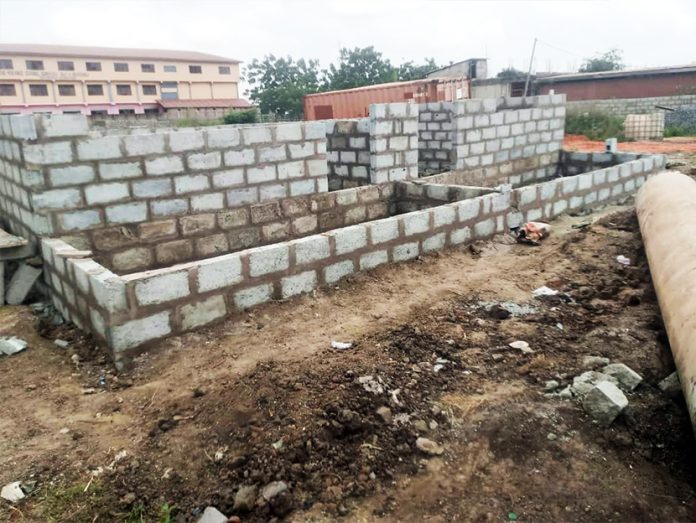
The site

The Director General of Police Operations, Commissioner of Police  (COP) Emmanuel Teye-Cudjoe, is investigating circumstances that led to a near confrontation between two Police teams at Shai Hills, in the Shai Osudoku District of the Greater Accra Region.

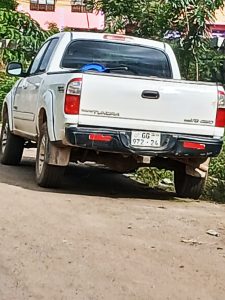
The car used in the
illegal operation

The incident occurred on Saturday when a team of officers from Tema, whose official duty point to provide land security at the request of a developer, was besieged by a squad, which emerged from the Police Headquarters Operations Unit.

Tension rose as the two groups faced off at the site, but the situation was de-escalated by the Tema Regional Police Operations Commander, Deputy Superintendent of Police (DSP), Mr Jean Kpelli, before violence broke out.

Verified information from the Police Headquarters indicates that the movement of the operations squad was not officially sanctioned.It was reportedly an arbitrary decision taken by an individual within the unit.

COP Teye-Cudjoe has opened the probe to establish how the unsanctioned team was mobilised, who authorised the movement and what led to the standoff with the Tema officers who were on lawful duty.

The car used in the
illegal operation

Reports put together by The Chronicle reveal that a real estate developer, Mr Rush Asare, has secured a piece of land in front of the VIK-FRANZ SCHOOL COMPLEX at Shai Hills on the Tema-Akosombo highway.

But when he commenced construction of fence wall and a gate, he was harassed by landguards. He subsequently proceeded to the Tema Regional Police Command to lodge a complaint and applied for security, which was provided.

The regional operations unit in Tema, which was handling the assignment tactically positioned their men, not on the ground, but outside, in wait for the supposed landguards.

That on Friday May 1, 2026 workers of Mr Rush Asare went to place a gate to the fenced parcel of land.

In the early hours of Saturday May 2, 2026 a group of armed men in mufti, drove two unmarked white pickups, with registration numbers GG 972-24 and GS 241-24 to the site and took occupancy of the place.

Prior to the arrival of the illegal operation team, about thirty (30) hefty men assembled in front of the gate, as though waiting for directives to act.

When the police illegal team wielding sophisticated weapons took positions to wardoff any potential threat, the hefty men pulled down the walls, gate and gained access to the entire perimeter.

Information got to Asare regarding the takeover of his property by the unknown group and subsequently alerted the Tema Police of the latest development.

Asare also proceeded to the nearby Afienya Police Station to report for action.An investigator, Sergeant David Afeke was assigned to the case and so he accompanied the Tema Police who happened to be around, to the site/scene to ascertain happenings on the ground.

On their arrival in police uniforms and a marked vehicle, the situation became so tensed and as the detective who was in mufti entered the yard to conduct his own preliminary enquiries, he was accosted by the unknown armed men, right in the presence of the equally armed police personnel from the port city.

Report has it that, even though the investigator allegedly introduced himself as a police investigator officer and went ahead to show his identity card, he was still bundled into one of the two ‘standby’ pickups, specifically GG 972-24 and whisked away to an unknown destination.

Sensing danger and to avoid confrontation and the consequential bloodbath, the Regional Operations Commander, DSP, Mr Kpelli, tactically withdrew his men to a safer ground pending further instructions.

On the way in the illegal headquarters operations vehicle, on which edges were displayed with bold inscription ‘police’ bulletproof vests, Sgt Afeke was said to have reached out to the Afienya District Police Commander and reported how he was ‘abducted’.

The Commander in turn decided to speak with the leadership in the pickup and after a banter on the line, they returned the captured investigator to the site/scene.

By this time when The Chronicle sneaked to the area unnoticed, the fully armed men in mufti remained alert as workers, masons and labourers actively took part in the construction of block works inside the now open yard.

The Chronicle contacted one Mr Tawiah alleged to have organized the headquarters operations team to the ground, but he denied responsibility.

According to him, the said piece of land belongs to him, but found it strange that each time he went there to work, persons he described as ‘landguards’ came to harass him.

He told The Chronicle how he was once placed behind the counter at the Emefs Police Station, Afienya, only to be saved by an acquaintance senior police officer at the Police Headquarters in Accra.

The said acquaintance, senior police officer and another, whose names cropped up at the site/scene, all at the headquarters when reached by The Chronicle, both denied any knowledge of the presence of the mufti wearing, heavily armed men who forcibly occupied the parcel of land last Saturday.

The Director General of Police Operations, COP Teye-Cudjoe when reached expressed disappointment in what happened and that he had personally decided to probe and appropriate sanctions applied where necessary.


More anon


For more news, join The Chronicle Newspaper channel on WhatsApp: https://whatsapp.com/channel/0029VbBSs55E50UqNPvSOm2z

Bad Policy Decisions Partly Contributed To GH¢44bn BoG Loss -Minority

0
Kojo Oppong-Nkrumah (2nd right) addressing the press

A detailed review of the Bank of Ghana’s (BoG) 2025 audited financial statements suggests that recent policy decisions taken by the central bank significantly worsened its financial position, partly contributing to an estimated underlying loss of about GH¢44 billion, according to an analysis presented by the Minority Caucus in Parliament.

Addressing a news conference in Accra on Sunday, May 3, 2026, the Minority said although the BoG officially reported a headline loss of GH¢15.6 billion for the 2025 financial year, the Minority argues that this figure understates the true economic cost of policy choices made during the period.When additional losses recorded in Other Comprehensive Income (OCI) and one-off gains from the sale of gold reserves are taken into account, the total loss rises sharply.

The BoG’s published accounts show a net operating loss of GH¢15.63 billion for 2025. However, the same statements also disclose an additional GH¢19.3 billion loss recorded under Other Comprehensive Income (OCI), mainly from foreign exchange, gold and securities revaluation effects.

Adding these two components produces a total comprehensive loss of roughly GH¢35 billion.
The Minority’s analysis goes further by adjusting for a reported GH¢9.6 billion gain from the sale of gold assets during the year. That gain, they argue, was a one-off transaction rather than recurring operational income.
“When it is excluded to assess the Bank’s underlying performance, the effective economic loss rises to approximately GH¢44 billion.

“This is not a dispute about arithmetic”, the Ranking Member on the Economy and Development Committee, Kojo Oppong Nkrumah who read the statement said.
He added “It is about whether one-off asset sales and accounting treatments should be used to downplay the true cost of decisions taken in 2025.”

Central to the Minority’s argument is the claim that a series of policy reversals sharply increased the Bank’s operating costs, particularly the cost of liquidity management. In 2025, the BoG spent GH¢16.7 billion on Open Market Operations (OMO) to sterilise excess liquidity, more than double the amount paid in cash interest the previous year.

According to the Minority, earlier low-cost tools for managing liquidity, including a dynamic Cash Reserve Ratio framework and cedi equivalent reserve requirements for foreign-currency deposits were prematurely abandoned.

In their place, the Bank relied heavily on interest-bearing bills, significantly increasing the interest burden on the central bank.
Audit notes show that outstanding sterilisation bills rose from about GH¢32.7 billion at the end of 2024 to GH¢93.6 billion by the end of 2025, while interest paid on these instruments jumped to about GH¢14.6 billion within a single year.

“These were not unavoidable costs of stabilisation alone,” the Oppong. Nkrumah argued, stressing further that “they were amplified by deliberate policy reversals that replaced low-cost instruments with the most expensive ones available.”

The sale of up to half of the Bank’s gold reserves also features prominently in the analysis. While the BoG recorded net gains from the transaction in 2025, the Minority contends that the sale was driven by the need to cushion losses rather than by long-term reserve management considerations.

They further argue that changes to the gold purchasing structure, including routing purchases through GoldBod, resulted in losses being borne by the BoG while profits accrued elsewhere in the public sector.

The accounting framework used in preparing the 2025 accounts has also drawn attention. The external auditor, KPMG, noted that the statements were prepared using the Bank’s own accounting policies rather than full International Financial Reporting Standards (IFRS).
Under the Bank of Ghana Act, certain valuation gains and losses are excluded from the determination of annual profit or loss and instead recorded in equity.

While this treatment is permitted by law, the Minority maintains that it obscures the scale of the Bank’s underlying economic losses and delays corrective action.
Beyond the total loss figure, the analysis raises concerns about what it describes as “policy insolvency”.The BoG reported a policy solvency surplus of GH¢5.5 billion for 2025, but the Minority disputes this on the grounds that the calculation includes the one-off gold-sale gain.

Excluding that gain, they argue, shows that operational income was insufficient to cover the cost of monetary policy operations, implying a policy deficit of around GH¢4 billion for the year.
The Minority acknowledged that disinflation, exchange rate adjustments, and legacy effects from earlier economic interventions also played a role.

However, it insists that decisions taken in 2025 materially amplified those losses.In their words, “Policy decisions did not create every shock facing the Bank, but they significantly worsened the financial outcome.”
The BoG and the Majority Caucus have defended the 2025 results as the necessary cost of stabilising the economy after years of macroeconomic stress.

However, the Minority says such argument is defenceless.

By Stephen Larbi


For more news, join The Chronicle Newspaper channel on WhatsApp: https://whatsapp.com/channel/0029VbBSs55E50UqNPvSOm2z


Pentecost Elder busted in NAIMOS operations at mining sites at Morso

0
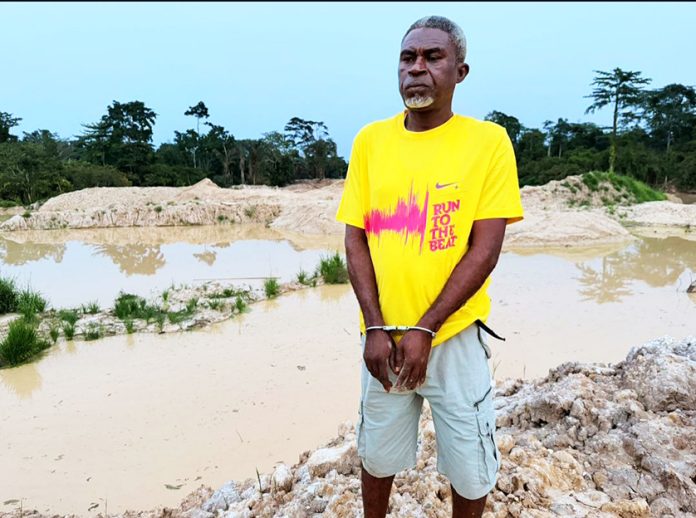
Elder David Peter Bobie, handcuffed

Unannounced operations of the National Anti-Illegal Mining Operations Secretariat (NAIMOS) last Thursday, along the Kume River, across Kyekyebiase and Bimma and Morso, in the Asante Akyem South district have led to the arrest of Elder David Peter Bobie of the Konongo branch of the Church of Pentecost.

Chanfans and other items being burnt

Elder Bobie claims he is a foreman of an illegal small scale mining site operating at Akyem Morso, near Juaso in the Asante Akim South District of the Ashanti Region. He was apprehended when he came to nose around and confirms the presence of NAIMOS in the area on the instructions of his boss, one Mr Appiah.

Elder David Bobie Peter led the NAIMOS Task force to his mining site at Morso, where the full scale of the destruction under his foremanship became pronounced, as the environment had massively been degraded with the Kume River heavily polluted.

He is helping the Konongo District police in their investigations and prosecution.

During the operation, NAIMOS Task force came across dozens of youth engaged in illegal mining at Kyekyebiase, built upon seeing the task force fled in all directions, abandoning their mining equipment to escape lawful arrest.

The task force members were was left with no other option than to dismantle eight Chanfang machines and four (4) wooden gold washing platforms, several pipe hoses and set them ablaze, with 12 water pumping machines seized as exhibits.

Task Force members dismantling a pumping machine

In a further swoop in the surrounding bushes, a Sany Excavator was traced to a cocoa farm to evade detection.

The NAIMOS team, however, detached oil pump and other vital components of the excavator to render the machine completely useless.

NAIMOS has cautioned all persons engaged in galamsey against the reckless illegal mining activities assuring that it remains resolute in its mandate to bring offenders to book irrespective of their social standing, religious office or political affiliation.

The Secretariat further called on all local administrative authorities, traditional rulers, intelligence agencies and security services across the affected districts to intensify their monitoring and enforcement commitments to forestall further degradation of the environment within their respective jurisdictions.

Meanwhile, residents of the Morso enclave have praised NAIMOS for swift response to their call to intervene in the wanton destruction of the environment and pollution of the river and water bodies in the area.

BoG’s GH¢15.6bn Loss Has Stabilised Inflation, Cedi

0
Dr Johnson Pandit Asiama Governor of BoG

The Bank of Ghana (BoG) recorded a net loss of GH¢15.6 billion in 2025, with the central bank stating that the outcome reflects the cost of measures taken to reduce inflation, stabilise the cedi and strengthen the financial system.

According to the Bank’s 2025 financial results, the loss represents a deeper position compared to the GH¢9.4 billion loss recorded in 2024. The Bank attributed the development to what it described as “traceable policy costs” associated with restoring macroeconomic stability after a period of elevated inflation and currency pressures.

The results show that while the Bank’s income grew significantly during the year, the cost of implementing monetary and financial sector policies outweighed those gains, leading to the overall loss position.

BoG reported that total income increased by 137 per cent to GH¢22.3 billion in 2025, with all major income lines recording growth. Despite this improvement, the Bank indicated that the financial outcome was primarily driven by three key cost components—open market operations, the domestic gold purchase programme, and foreign exchange revaluation effects.

Open market operations (OMO), which involve absorbing excess liquidity from the banking system to control inflation, accounted for GH¢16.7 billion in interest costs in 2025. The Bank explained that excess liquidity had built up in the financial system between 2022 and 2024, largely due to high levels of government spending.

To address this, the central bank issued instruments to mop up the excess funds. However, it noted that the process became costly in a high interest rate environment. The Bank also highlighted a “negative carry” effect, where it paid relatively high interest on OMO instruments while earning lower returns on certain restructured assets, contributing to the overall loss.

In addition to liquidity management costs, the Bank reported a net cost of GH¢9.1 billion from its Domestic Gold Purchase Programme (DGPP). The programme, which has been a key component of efforts to build external reserves, involved purchasing gold domestically and holding it as part of the country’s reserve assets.

The Bank indicated that the programme carries structural costs, including pricing differences between market and official rates, transaction-related expenses, and refining and processing losses. It added that the scale of the programme increased significantly in 2025, contributing to the higher cost profile.

Data from the results show that gold purchases rose to 111 tonnes in 2025, compared to lower volumes in previous years. The Bank stated that despite the associated costs, the programme contributed to strengthening Ghana’s external reserves position.

Foreign exchange revaluation effects formed the third major cost component, with a total impact of GH¢29.1 billion recorded through profit and loss and other comprehensive income accounts.

The Bank explained that this was largely driven by the appreciation of the cedi during the year. According to the results, the cedi gained 40.7 per cent against the US dollar in 2025.

While a stronger currency is generally seen as positive for the broader economy, the Bank noted that it reduces the cedi value of foreign-currency-denominated assets held on its balance sheet. As a result, the revaluation led to accounting losses.

The Bank emphasised that these revaluation effects are “paper entries” and do not involve actual cash outflows or a reduction in foreign reserves. It added that similar gains had been recorded in 2024 when the cedi depreciated, increasing the cedi value of foreign assets.

In 2024, the Bank reported combined gains of GH¢12.7 billion from foreign exchange revaluation effects, which supported its financial position at the time. The 2025 outcome, the Bank said, represents a reversal of those earlier gains due to the change in exchange rate movements.

Beyond the net loss, the Bank also reported a net other comprehensive income (OCI) charge of GH¢19.32 billion for 2025, compared to a gain of GH¢12.9 billion in 2024. The reversal was attributed primarily to the appreciation of the cedi.

Cumulative negative equity often described as the central bank’s capital position—widened to GH¢96.3 billion in 2025, up from GH¢61.3 billion the previous year.

Despite this, the Bank maintained that it remains fully operational and capable of carrying out its mandate. It noted that central banks are not profit-maximising institutions and often incur financial costs in the process of achieving policy objectives such as price stability and financial system resilience.

The Bank further indicated that similar trends have been observed in other jurisdictions, where central banks that tightened monetary policy to combat inflation recorded losses or faced financial pressures.

According to the results, the financial outcome reflects the broader context of policy actions taken during the year, which led to significant improvements in key macroeconomic indicators.

Inflation declined sharply over the period, falling from 23.8 per cent in December 2024 to 5.4 per cent by December 2025. The Bank noted that inflation fell consistently throughout the year, marking one of the most sustained disinflation trends in recent years.

The cedi also recorded strong performance, appreciating from around GH¢14.70 to the US dollar to approximately GH¢10.45 by the end of 2025. The Bank stated that the currency’s performance contributed to improved market confidence and reduced imported inflation.

In addition, Ghana’s gross international reserves increased from about US$9.1 billion to US$13.8 billion, representing approximately 5.7 months of import cover. The Bank described this as a record level, supported in part by the gold accumulation programme.

The policy rate was reduced during the year, declining from 28 per cent to 18 per cent, with further adjustments indicated into 2026. Lending rates in the banking sector also declined, reflecting improved monetary conditions.

Public debt levels, measured as a share of gross domestic product, also showed improvement, falling from 61.8 per cent to 45.3 per cent. The Bank noted that the stronger cedi contributed to this outcome by reducing the domestic currency value of external debt.

The Bank said the overall financial results should be viewed within the context of these outcomes, noting that efforts to stabilise the economy often involve trade-offs that are reflected in financial statements.


For more news, join The Chronicle Newspaper channel on WhatsApp: https://whatsapp.com/channel/0029VbBSs55E50UqNPvSOm2z
 

The Ghanaian Chronicle