Home Blog Page 1099

I hid my wealth to test Keche’s love -Joana Gyan

0
Keche and wife Joana Gyan

Parliamentary candidate for Amenfi Central and wife of Ghanaian musician Keche Andrew, Joana Gyan Cudjoe, has revealed how she won her husband’s genuine attention. In a discussion with MzGee aired on 13 November 2024, the politician revealed that she disguised herself as a poor woman to test if Keche was truly interested in her or merely after her money.

Joana explained her desire to confirm Keche’s authentic affection.

“I didn’t know much about his personal life, and based on what I was hearing at the time, I wanted to be sure he was serious and loved me for who I am. That’s why I often used taxis or trotro to visit him. When I arrived, I would call him to come pick me up and even ask him to pay for the fare.

“At one point, he got frustrated because sometimes I didn’t inform him about the public transport I was using, and all I would do is ask for money for the fare. He would complain about why I didn’t tell him beforehand, but through it all, he showed me that he really loved me,” she added.

When Keche Andrew was asked how he eventually discovered his wife’s true identity, he said, “Keche Joshua knew my real identity all along, but he didn’t tell me. One day, I was invited to her office, and when I got there, I told the receptionist I was looking for Joana Gyan. After sitting in the waiting area, I was taken aback when I finally saw her. I was in shock for an hour or two.”

Reflecting on their marriage, Andrew discussed the importance of communication and trust in their relationship, despite facing multiple challenges and external pressures:

“There was a time when I was receiving calls from girls and other people threatening me, even spreading rumours about me to Joana. Sometimes, I would take her phone and chat with them directly. Even some of my fellow musicians and media personalities were involved,” he recalled.

He continued, “I remember one night I had an open conversation with her, telling her all my secrets, everything I’d done, and what I planned to do. After that, I told her to choose: stay with me or leave. But all she did was cry, and the next morning, she gave me a chance. And here we are.”

Credit: pulse.com.gh

Stonebwoy reveals how he handles social media attacks

0
Stonebwoy

Reggae/Dancehall artiste Livingstone Etse Satekla, better known as Stonebwoy, has opened up about handling online attacks, stating that “only successful people get attacked.”

The celebrated Afro-Dancehall superstar acknowledged the criticisms directed towards him, particularly by ‘Ayoo’ hitmaker Shatta Wale. Shatta Wale has consistently targeted Stonebwoy, often calling him names.

The two artists have yet to reconcile and do not share a harmonious relationship.

Speaking on Onua Showtime with Nana Ama McBrown, Stonebwoy explained that he has learned to ignore the attacks and focus on his career.

“What I do when I’m attacked as a musician is that I ignore the attacks and focus on the prize. I pray for divine discernment to know when to talk and when not to talk. What I know is that it is only a ripe fruit that will be plucked,” he said on Sunday, 3 November 2024.

In a related development, Celebrated musician Stonebwoy has shared that many Ghanaians often mistake him for a foreigner, particularly a Jamaican, due to his dancehall style and international collaborations.

In a recent fashion interview that’s gaining attention on social media, the BHIM Nation president, when asked about a common misconception surrounding him, remarked, “They think I’m from Jamaica in Ghana. Most of my people think that I’m foreign.”

Credit: pulse.com.gh

Georgian president calls for new elections to resolve political crisis

0
Georgian President Salome Zurabishvili

Georgian President Salome Zurabishvili has called for new parliamentary elections in order to resolve a political crisis that followed last month’s vote, which the opposition said was rigged in favour of the ruling party.

“We are now facing a crisis,” Zurabishvili said Monday at a press conference, where she called for “new elections so that Georgia could have a legitimate parliament, a legitimate government”.

“Our friends are here to join us in seeking out ways to help Georgia emerge from this crisis,” Zurabishvili said, referring to a group of MPs from eight European countries, including from France and Germany, who visited Georgia on Monday.

The pro-Western opposition has refused to recognise the results of the 26 October election, which the ruling Georgian Dream party said it had won by 54 percent.

Zurabishvili said the election was “controlled and manipulated by one party” and has accused Russia of interference.

The opposition has refused to enter the newly-elected parliament, which it deems “illegitimate.”

A group of Georgia’s leading election monitors said earlier that they had uncovered evidence large-scale electoral fraud that swayed results in favour of Georgian Dream.

Tens of thousands of people have taken to the streets in Tbilisi to protest the alleged fraud.

The European Union and the United States have called for a probe into what they called electoral “irregularities”.

Ahead of the election, Brussels had warned the vote would determine Georgia’s chances of joining the bloc.

Credit: rfi

World’s largest coral found in the Pacific

0
Local people had no idea the coral was there

The largest coral ever recorded has been found by scientists in the southwest Pacific Ocean.

The mega coral – which is a collection of many connected, tiny creatures that together form one organism rather than a reef – could be more than 300 years old.

It is bigger than a blue whale, the team say.

It was found by a videographer working on a National Geographic ship visiting remote parts of the Pacific to see how it has been affected by climate change.

“I went diving in a place where the map said there was a shipwreck and then I saw something,” said Manu San Felix.

He called over his diving buddy, who is also his son Inigo, and they dived further down to inspect it.

Seeing the coral, which is in the Solomon Islands, was like seeing a “cathedral underwater”, he said.

“It’s very emotional. I felt this huge respect for something that’s stayed in one place and survived for hundreds of years,” he said.

“I thought, ‘Wow, this was here when Napoleon was alive’,” he added.

Scientists on the expedition measured the coral using a type of tape measure under water. It is 34m wide, 32m long and 5.5m high.

Globally coral is facing severe pressures as oceans warm with climate change.

Corals are made of hundreds of thousands of living organisms called polyps, each with its own body and mouth, which grow together as a colony.  Some corals grow hard, outer skeletons and when many of these fuse together they form a coral reef.

Some of these reefs can extend for huge distances, forming vast structures where fish and other species live.

Credit: bbc.com

New Zealand’s parliament brought to temporary halt by MPs, amid anger over controversial bill 

0
NZ parliament

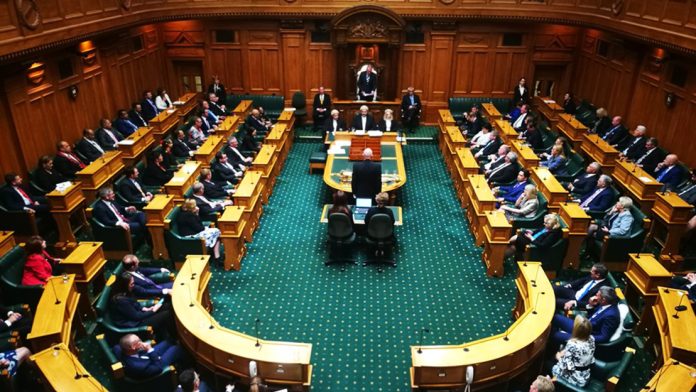
New Zealand’s parliament was brought to a temporary halt by MPs performing a haka, amid anger over a controversial bill seeking to reinterpret the country’s founding treaty with Māori people.

Opposition party MP Hana-Rawhiti Maipi-Clarke began the traditional ceremonial group dance after being asked whether her party supported the bill, which faced its first vote on Thursday.

At the same time, a hīkoi – or peaceful protest march – organised by a Māori rights group is continuing to make its way towards the capital, Wellington.

Thousands have already joined the 10-day march against the bill, which reached Auckland on Wednesday, having begun at the top of New Zealand on Monday.

The country is often considered a leader in indigenous rights, but opponents of the bill fear those same rights are being put at risk by this bill.

Act, the political party that introduced the bill, argues there is a need to legally define the principles of the 1840 Treaty of Waitangi, which has been fundamental to race relations in New Zealand.

The core values of the treaty have, over time, been woven into New Zealand’s laws in an effort to redress the wrong done to Māori during colonisation.

But Act – a minor party in the ruling centre-right coalition – say this has resulted in the country being divided by race, and the bill will allow the treaty to be interpreted more fairly through parliament, rather than the courts. The party’s leader, David Seymour, has dismissed opponents as wanting to “stir up” fear and division.

Critics, however, say the legislation will divide the country and lead to the unravelling of much-needed support for many Māori.

Credit: bbc.com

US uncovers China linked cyber-espionage campaign

0
US accuse China

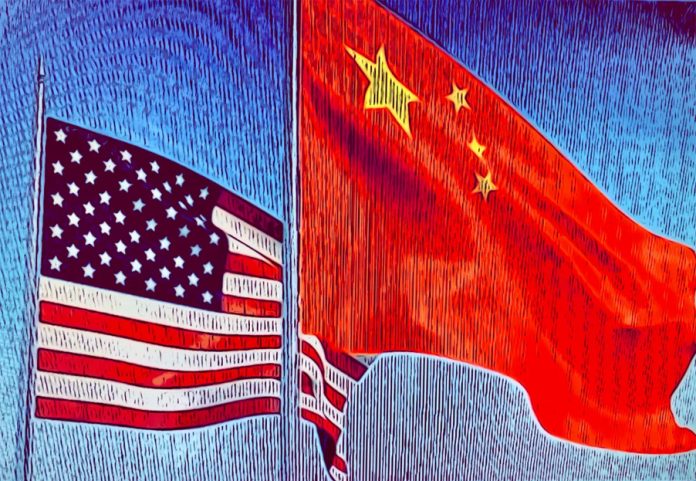
US authorities say they have uncovered “a broad and significant” cyberespionage campaign carried out by China-linked hackers aiming to steal information from Americans working in government and politics.

The FBI and the Cybersecurity and Infrastructure Security Agency (CISA) said in a joint statement on Wednesday that actors affiliated with Beijing had “compromised networks at multiple telecommunications companies”.

The hack enabled the “theft of customer call records data” and compromised the “private communications of a limited number of individuals”, the agencies said.

The FBI and CISA did not specify which individuals had been targeted but said they were “primarily involved in government or political activity”.

The hackers also accessed “information that was subject to US law enforcement requests pursuant to court orders”, the agencies said, suggesting they sought to compromise programmes subject to the Foreign Intelligence Surveillance Act (FISA), which grants spy agencies broad powers to surveil the communications of individuals suspected of being foreign agents.

The FBI and CISA said they expected their “understanding of these compromises to grow as the investigation continues”.

The announcement follows a series of high-profile hacking incidents that Washington has described as part of a broader strategy by Beijing to steal technological and government data, as well as target critical infrastructure in the US.

In September, the FBI said it had uncovered a far-reaching Chinese hacking campaign named Flax Typhoon.

The campaign involved the installation of malicious software on more than 200,000 consumer devices – including cameras, video recorders, and routers used in homes and offices – which were then used to form a network of infected computers capable of facilitating cybercrime, according to US authorities.

Credit: aljazeera.com

5 Healthy Food Myths Debunked

0

With all the different diets and trends from the weight loss industry, nutrition can feel confusing. How do you know if a nutrient or food group is bad for you? Many popular ideas about healthy eating are food myths.

Myth 1: Carbs Are Bad

Carbs are actually a necessary energy source. Carbohydrates break down into sugar, or glucose, that your body uses as energy. It’s true that not all carbs are the same, but focus less on whether you eat high or low amounts and focus more on the types of carbs you are eating.

There are two types of carbohydrates to consider: simple and complex.

Simple carbohydrates have one or two sugars and a simple chemical structure. These are the syrups and table sugars that are found in cookies, cereals, yogurts, sodas, and candies. Refined grains like white rice and flour also contain simple carbs. Your body quickly breaks down simple carbs, which causes a rise in your blood sugar.

Complex carbs have three or more sugars in a complex structure. Your body takes longer to digest these, so they cause a slower, more gradual rise in your blood sugar. Fruits, vegetables, beans, legumes, and whole grains are all complex carbs that have essential vitamins and minerals.  ‌

Complex carbs also contain fiber, which moves through your body undigested. This helps keep hunger and blood sugar levels in check.

Instead of cutting out carbs, it’s better to replace refined grains with whole grains and eat food with healthy carbs such as beans, legumes, fruits, and vegetables. Eat fewer candies, chocolates, sugary drinks, cakes, and cookies.

Myth 2: Fat Is Bad

For many years, food marketers and professionals have said that fat is bad. The truth is that you need fat to survive.

Fat has essential nutrients and energy. It is important for making hormones, for immune function, and for absorbing nutrients. You need fat in order to absorb vitamins D, A, E, and K.‌

Like carbohydrates, there are different kinds of fats: unsaturated fats, saturated fats, and trans fat. Unsaturated fats are liquid at room temperature and are helpful as they lower inflammation and improve cholesterol levels.‌

Saturated fats are solid at room temperature. For a long time, saturated fat was said to be bad for your heart and cholesterol, but the evidence is mixed. Saturated fat might raise cholesterol or it might have no impact on cholesterol, but professionals still recommend eating lower amounts.

The takeaway is that cutting back on saturated fats like sugar and refined carbs can be good for your health if you replace them with healthy unsaturated fats. Foods such as nuts, seeds, avocados, olives, and fish are rich in unsaturated fats.

Myth 3: Dairy Is Unhealthy

Dairy products are an excellent source of protein, vitamins, and minerals, including calcium. Lots of milk products have added vitamin D that can help build strong bones, especially when it’s combined with natural calcium content. ‌

Lots of yogurts, flavored milk, ice cream, and other milk products do have added sugar, which isn’t a healthy choice. Unsweetened milk and yogurt are a great way to get enough dairy in your diet every day.

Myth 4: Juice Is Healthy

The health food industry says that drinking juice is healthier than eating fruits or vegetables, but this is not true. Juice has lots of sugar and some juice products contain as much sugar as a can of soda. When you drink juice made from fruit instead of eating the fruit itself, you get a lot more calories and it doesn’t fill you. Eating a piece of fruit gives you fiber that helps you feel full and provides essential vitamins.‌

What’s more, the health food industry often sells juice as a “cleanse” or “detox.” Your body already has detoxification systems that work very well, including your kidneys and liver. There is no evidence that you need to cleanse or that juices benefit your natural detoxification systems.

Myth 5: Gluten-Free Is Healthier

Gluten-free diets are not healthier if you don’t have gluten intolerance or celiac disease. Celiac disease is an autoimmune disease where eating gluten damages your intestines, leads to problems with nutrient absorption, and causes long-term health complications. People with celiac disease must eat a gluten-free diet. ‌

Gluten is a protein in wheat and other grains. If you are eating a gluten-free diet but don’t have gluten intolerance, you might be missing out on vitamins, minerals, and other nutrients in grains that are good for your health.

Bottom Line: Get Rid of Common Food Myths

Before you follow the latest diet trends, believe common food myths, or cut out whole groups of foods, it’s a good idea to talk to a dietitian or your doctor about what’s right for you.

Credit: webmd.com

Facing Worry

0
Dr. Joyce Rosalind Aryee, Executive Director, Salt and Light Ministries

“Therefore, do not worry about tomorrow, for tomorrow will worry about itself. Each day has enough trouble of its own.” – Matthew 6:34 (NIV)

Introduction

When life turns upside down or the weight of our battles wears us down, worry often feels like a natural reaction. We find ourselves stuck in anxious thoughts, wondering if things will ever get better. Dr. David Jeremiah, in his book Keep the Faith, speaks right to this feeling, offering a reminder that Jesus has already given us an answer to worry—a message that challenges our fears and grounds us in God’s faithful love.

This week, we’re sharing insights from Dr. Jeremiah’s reflections on one of Jesus’ most comforting teachings from the Sermon on the Mount. In this message, Jesus shows us why worry is inconsistent, irrational, ineffective, and even illogical. Through these words, He calls us to let go of anxious thoughts and place our confidence in a loving God who provides and sustains us.

As we explore these truths, let’s allow them to ease our hearts, reminding us that God’s love and faithfulness remain steady, even in our toughest times. Enjoy this excerpt and find encouragement in the peace God promises us.

  • Worry Is Inconsistent

Therefore, I say to you, do not worry about your life, what you will eat or what you will drink; nor about your body, what you will put on. Is not life more than food and the body more than clothing? — Matthew 6:25

Worry is simply inconsistent. Jesus is asking, “Who gave you the body you live inside? Who established its requirements — for food, for clothing, for shelter? Do you think He has gone anywhere? Don’t you think that same Provider will see to your needs?”

In essence, this is an argument from the greater to the lesser. Consider the God who created us a little lower than the angels, ordaining and establishing the miracle of human life in all the beautiful complexity of the human organism. Then He fashioned with His powerful hands the heat of the sun, the revolving world, and the four seasons.

He took an awful lot of trouble, didn’t He? Why, then, would He be careless about these little things — a crust of bread, a patch of clothing, a dry haven from the storm? A God so tall could never overlook something so small, according to Jesus. “Is not life more…?” Those are His words.

If you buy into a Creator God, you must buy into a Sustainer God — or you’re simply inconsistent.


  • The evidence of His loving and timely care is all around us. Use your mind and you’ll find comfort for your soul.


  • Worry Is Irrational

Look at the birds of the air, for they neither sow nor reap nor gather into barns; yet your heavenly Father feeds them. Are you not of more value than they? — Matthew 6:26

Jesus’ first argument is irrefutable. He who gave us life can surely sustain that life. But Jesus has anticipated the follow-up question: God can provide, but will He provide?

Jesus attacks this second question from the opposite direction. Now He moves from the lesser to the greater — in this case, from birds to human beings. He says, “Look into the trees and you’ll see the little sparrows. A plain copper coin will buy you two of them. Few things are sold so cheaply. Does your Father value you less than a copper coin? His hand is behind every bird that falls to the ground; if He’s got the whole world in His hands, doesn’t that include you?” (Matthew 10:29, paraphrase).

Sometimes we make fascinating discoveries when we bring two separate Scripture passages together. Consider this matter of the value of sparrows. Take a side trip over to Luke 12:6, and you’ll find another market value: five sparrows for two copper coins. Put Matthew and Luke together and it’s two for a penny and “buy four / get one free.”

A copper coin was worth one-sixteenth of a denarius; a denarius was one day’s wages. So, what Jesus is saying is this: “A copper coin gets you two sparrows; two coins get you five. Not even the free sparrow, who has no market value, can fall to the ground without your Father knowing about it. He follows every movement, whether it’s bird or beggar or baron.”

As a matter of fact, says Jesus, if He knows every sparrow that falls to the ground, He knows when one of your hairs does likewise. Somewhere He has a database that tracks the very hairs on your head.

  • And if He is so meticulous with the smallest, most incidental inventory items, won’t He also tend to your deeper concerns?

Once again, Jesus gives us an argument we can’t refute, this time from the lesser to the greater. We must conclude that worry is inconsistent and irrational. But there’s another problem with it.

Worry divides the mind and multiplies misery. It subtracts from our happiness. But it never adds.

To be continued!

Stay Blessed!

Please continue to join us on Asempa 94.7 FM – Sundays 5.30 am., Sunny 88.7 FM – Tuesdays 5:30 am; and YFM 107.9 – Sundays 6.30am; for our Radio Bible Study as well as Sunny FM 88.7 FM every Sunday at 3:30 pm. for Hymns and their Stories.

Feature: And They Call Themselves Honourables?

0
Africanus Owusu Ansah (Hot Issues)

These, them: the words of the late Opanin Kwame Kwakye who was our Bretuo family head of Fomasua when scorning the belligerent attitude of the family members at a gruelling family meeting. Our father, Papa Kwadwo of Ko-ko-bra was the only one who could use sobering words to his hot-tempered pugnacious moves.

Opanin Kwakye had had a tutoring from Opanin Ampofo, a stylish Fomasua-born cocoa-buying clerk of Bekwai who could hire a whole railway Coach from Bekwai with besotted friends to Kumasi: and Opanin Kwakye would observe the “people with diabolical ideas”.

Then, the death of our good friend, Michael (Mike) Addo. We could not go to his Anwomaso mansion to prepare our own fufu; and do a commiseration of our cousins there, over the death of one of us, Nana Osei Boa, Anwomaso-hene. A visit to our Tema home when we were the “oga” in Customs. To sign a paper covering the importation of drugs after a drinking bout.

OA: Where are your documents Societe Generale de Surveillance (SGS)?

MA: Because of the rush. I couldn’t collect it before coming (opens the booth of his car-money)

MA: All this is for you.

OA: What happens when we get caught?

MA: I have connections to get you out. OA: Then get us out now by not ‘forcing’ us to sign the documents. (Lights off) Here was Mike Addo as a Chairman at a book launch whose life-savings had been consumed in the financial sector clean- up. Only GH¢3,000! We had met in court at Kumasi, and his mission? Sued by a bank for failing to refund a loan! And Mike Addo, with his huge business outlet, intimated (quietly): “I nearly committed…” No, no, no!

The Vandal City had a pantry-boy (man) who would complain: “You shmall boys”, but would go on errands-the “Shmall boys” had grown into big men (no women in the Hall), and while J.J. Rawlings was mocking his own (NDC) of harbouring “babies with sharp teeth”, we thought we on the other side had men with grey (white) hair like K.T. Hammond.

And we thought white hair evokes wisdom, forbearance, experience, tolerance. So, we could say with Julius Caesar: “Let me have men about me that are fat; Sleek-headed men, and such as sleep o’ nights; Yond Cassius has a lean and hungry look; He thinks too much: such men are dangerous”.

Those of us who do not want to be given the tag ‘wise’ men would blacken our hair with “wheat formula nourishing oil L’ocoitene colorant”, and give the chance to young men and women of 25-45 years (like Francisca Oteng, Lawyer Kwabena Boateng) in Parliament – our time having been “wasted” by J. J. Rawlings’s 20-year rule.

But you could see that K.T. Hammond had not burnt the macho in him: he would rush on a lady MP, and spew out invectives: “It’s nonsense, we’ll cite the Speaker for contempt…for refusing Court Order, …” The Good Book: 1st Peter 5:8-9: “Be sober-minded; be watchful… and the lady would touch K.T. Hammond’s white hair to “boss” him.

So, Parliament is 137-137, call it a ‘’hung Parliament’’ God/Allah willed it so, to teach Ghana a lesson on “sobriety”. Oh, there is the “prodigal” son from Fomena who wants to do business with NPP but the power play leads one to ask: who thinks of “Ghana first”?

The NDC people would desecrate a Parliament – a rowdy football pitch or a parade ground and march past with someone taking a salute! No confrontation, Afenyo-Markin (small boy) will lead his NPP group to boycott Parliament accusing the NDC of making it impossible for the government to pursue free SHS! Free SHS is the answer to everything.

Cecilia Dapaah’s $1 million? Free SHS; what about the Agyapadie Book? – Free SHS; The allegations of a cousin of the President that the “family members” even feel shy to carry the name of Ofori Atta? -Free SHS; Napo’s loose talk, including “your Kwame Nkrumah”, “every Muslim who votes for NDC is haram”? Free SHS … (Russian- Ukraine War no longer takes centre-stage).

A.B. Crentsil sang “Adam” and “Opanin Toto” (translated as old fuddy-duddy) and instead of demonstrating a win-win effort, foul-mouthed Miracles Aboagye will match NDC’s loud-mouthed Sammy Gyamfi loose cannon at News file and proclaim; “Speaker Bagbin will go down in history as the worst Speaker”. Professor Agyemang Duah was lucky there were no fisticuffs, but would chew on Joe Osei Owusu (Joe Wise) words; “We are demonstrating the worst part of us, and this does not reflect the values that have carried Parliament all these years”.

Martin Kpebu would opine that the NPP MPs should have entered the House and drawn the Speaker’s attention to the ‘’seating’’ … Allow the Speaker to rule … But some people think the Speaker’s address citing the Executive as “colluding” with the Judiciary to suppress Parliament was a blow hit below the belt.

And you say the President has gone to inaugurate a statue for himself at Takoradi while the roads leading to round-about remain untarred … King Louis XIV of France made the apocryphal statement before “le parlement” in 1655, “L’etatc’estmoi” (literally’ the state, it is me’’ or simply “I am the state”) so, like an “absolute monarch”, he refuses to sign the LGBTQ Bill, maintains a coterie of family and friends around him…and Maame Tiwaa feigns  Ofori Atta shock at seeing a bust of herself on the premises of EOCO, a  public servant!

And what at all did McDan do to deserve a bashing from Gabby Otchere Darko? The ‘’Prime Minister’’ would throw bombs into the brother’s (Akufo-Addo) administration. If some of us were “around” the President, we would not have allowed him to ask chiefs to stand up for him at public occasions; we would have urged him to “listen” to other people, including his “opponents” and those who talk about voluntarily contributing to the funding of the free SHS; we would have urged him to sack Ofori Atta, the Finance Minister when the 98 NPP MP’s asked for his head for supervising the exchange rate of GH¢15,16,17 to the dollar; not sink in to the public purse to finance the National Cathedral, no galamsey.

We are writing Ghana’s history, not “Chasing the Elephant into the Bush”. For 46 months, the seating arrangement has prevailed. Do we disturb it with only one month to go? Where did “principle” go to? The Speaker (Bagbin) wanted the rule of law to reign hence his resort to the Supreme Court.

As a lawyer, he would (might, should) accept the verdict of the Supreme Court; go for a review if he so thinks. Not enthused about the body language of the present Chief Justice, Gertrude Torkonoo? Ghana is practicing Constitutional government… And does Articles 97 (1) (g) and (h) need interpretation?

Spare the Council of the State, Peace Council and all Constitutional set ups for peace – they work “in camera” But As for the MPs, these them.

Feature: Is AI Coming for the Journalist?

0
A robot with computer

One year ago, on November 15, 2023, the Nigerian Guild of Editors (NGE) invited me to speak on “Nigerian Media, Sustainability and Existential Threats by Big Tech.” Being asked again this year is a privilege, but I won’t be surprised if this is my last invitation.

Perhaps I won’t need to come as a presenter next time. A learning machine, Anaba possibly, might be here to do the job. This may sound incredible, but increasingly, with improvements in infotech and biotech, it seems that what AI cannot do does not exist.

In its most basic definition, generative artificial intelligence (AI) refers to computer systems capable of performing complex tasks that, historically, only humans could perform. Journalists, for example, used to think of themselves as the masters of storytelling in a hurry and God’s gift to the world as gatekeepers. We’re humbler now.

Luddites’ nightmare

The widespread use of AI is causing anxiety among journalists and other professionals, especially the Luddites. Recently, I wanted to redecorate my apartment. I asked a furniture company in Abuja to recommend an interior decorator. The two recommended insisted on a pre-inspection deposit of 100k, which I wasn’t prepared to pay.

I went to ChatGPT and imputed a description of my apartment with measurements, asking for a photo design.I got it in minutes, complete with a floor plan and car park design. ChatGPT even asked if I needed optional designs! Midjourney or AR would give far more incredibly splendid options!

According to Digital News Project 2024, “Journalism, Media, and Technology Trends and Predictions 2024” by Nic Newman, apart from rising costs and declining revenues, 300 digital leaders from more than 50 countries/territories also expressed significant concerns about using AI for backend news automation and experimental internet interfaces, including AR and VR glasses, lapel pins, and other wearable devices.

What’s AI up to?

Let us look briefly at two recent examples of the use of AI in storytelling, one in North America and the other in Europe, that have resonated in many parts of the world.

In Mexico, Grupo Formula, the country’s leading broadcasting group with 2.3m YouTube subscribers, created three avatars—NAT, SOFI, and MAX—three robotic journalists who generate content in entertainment, sports, and politics for the company’s social media handles.

The group’s director of technology and AI infrastructure told the Reuters Institute for the Study of Journalism, “The news stories that NAT, SOFI and others present are small stories and very focused towards young people who don’t connect well with the old-style newscast. We are looking to connect with these young people using technology.” Grupo Formula’s subsidiary, TV OAI, is the first news channel in Latin America powered 100 percent by AI.

More recently, a Polish radio station, Radio Krakow, announced the relaunch of OFF Radio, the first experiment in Poland where AI-driven characters take on the role of traditional journalists.

In response to concerns about the increasing role of automation in the physical and cognitive spheres, Yuval Harari said in his book21 Lessons for the 21st Century, “It would be madness to block automation… to protect human jobs. After all, what we ultimately ought to protect is humans – not jobs.” I agree.

What opportunities exist?

What opportunities does AI present, and how might journalists use them for storytelling? a). Streamlined content production: AI tools can significantly streamline content production, allowing journalists to focus on the creative aspects rather than time-consuming tasks and drudgery.

For example, algorithms can assist in generating ideas or first drafts; b). Personalisation of content: Algorithms can analyse user preferences and behaviours to create bespoke narratives with individual audiences; c). Enhanced engagement: AI can create immersive and interactive storytelling experiences.

For example, games and multimedia stories that adapt based on user decisions can attract individuals who may not typically engage with traditional forms of storytelling; c). Creation of new opportunities: The fusion of AI and human effort can create new possibilities previously challenging to imagine.

One good example is the collaborative effort involving 400 journalists from 80 countries sifting through 11 million documents and 2.6 terabytes of data during the Panama Papers investigation; d). Generative AI can repurpose chaos: In an article entitled “AI news that’s fit to print,” Zach Seward wrote, “Faced with the chaotic, messy reality of everyday life, LLMs (Large Language Models), are useful tools for summarising text, fetching information, understanding data, and creating structure…but always with human oversight.” This article also shares some of AI’s best and worst use cases.

Challenges of AI use

Ethical concerns in AI story telling include the potential for generative models to create misleading information, such as fake stories or images that blur the line between reality and fabrication. The Cambridge Analytica case and COVID-19 are good examples. Concerns about legal liability and privacy protection have also been expressed.

Other concerns include quality, coherence and creativity, originality, fairness and bias, and adaptability to genre and audience.

Limits and success stories:

AI is a work in progress. Again, from Seward’s article, we could use lessons from some excellent and ugly examples of its application even in countries where automated storytelling appears to be well-established already. First, the nasty experiences:

CNET and the tech error soup: Last January, CNET, a tech website, published financial advisory stories on short-term saving instruments, how to manage and close bank accounts, andother topics.Although the byline said the stories were written by the platform’s “Money Staff,” they were not. Language machines wrote them, but the massive errors (described as moments of hallucinations) exposed the site! Actual staff members saved the day by cleaning up the copies.

Sports Illustrated’s Street Spin: The Street, a publication from the stable of Sports Illustrated, published a raft of bot-generated stories and made matters worse by curating and attaching fake author identities to the stories. The spin didn’t end well.

Good news

But there have been good experiences, as well:

Modelling for pattern or image recognition machines has proved valuable when analysing large data caches. Media houses such as Buzzfeed News and The Wall Street Journal have used AI to establish significant trends in otherwise desperate and solitary occurrences or patterns.

Examples range from the Mauritius Leaks, which involved 200k highly technical documents, to the story on the miles of dangerous lead cables around New Jersey streets that posed severe public health risks to residents. Zach Seward also documents a few other examples in his piece entitled “AI news that’s fit to print.”

Where is the Nigerian storyteller?

Professor Farooq Kperogi and I collaborated on an academic paper for the Journal of Applied Journalism and Media Studies entitled “Light in a Digital Blackhole: Exploration of Emergent Artificial Intelligence Journalism in Nigeria.”

The study found that social media and the rise of citizen journalists have changed the landscape and accelerated the mainstream adoption of automated journalism.

More media houses use tools, including social media integration software like Echobox, Hootsuite, Revive, and Dlvrit, to drive audience and revenue goals. The election watchdog Yiaga Africa collaborates with some TV stations to collate and analyse election results using AI tools. Automated fact-checking systems, drones, and language management tools are also being deployed.

While costs and infrastructure remain significant barriers to adoption, attitudinal differences between younger journalists and the older, more established ones were also noticed, with newsrooms embracing more diversity in age cohorts and educational backgrounds.

Job losses? What jobs?

Our study did not justify the fear of imminent job losses among Nigerian journalists. However, the impact of the disruption on readership/audiences and revenues due to economic reasons and changing demographics is undeniable.

It would be good if anxiety about job losses led to greater introspection, retooling, and adoption of technologies and practices that improve journalism, especially the core business of storytelling.

If the destination is uncertain, the least we can hope for is that we are in good company, human or otherwise. And it won’t matter if the chatbot delivers this lecture next year!

By Azu Ishiekwene

Ishiekwene is the Editor-In-Chief of LEADERSHIP and the author of Writing for Media and Monetising It. This modified version of AI-Generated Storytelling: Opportunities and Challenges was based onmy presentation at the 20th Annual Conference of the NGE on November 8.


The Ghanaian Chronicle