Home Blog Page 1094

Police Promise Tough Security … For December Polls

0
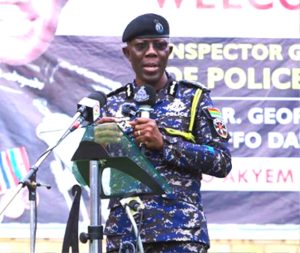
The chiefs welcoming Dr. Dampare and his team to the official commissioning ceremony

The Inspector-General of Police (IGP), Dr George Akuffo Dampare, has assured the public that the Police Administration is ready to police and ensure peaceful elections next month.

According to him, the National Elections Security Task Force, which he chairs, has put comprehensive security arrangements in place to ensure that the elections are conducted in the most peaceful atmosphere, devoid of violence.

Dr George Akuffo Dampare speaking at the ceremony

Speaking at the commissioning of the state-of-the-art police stations at Akyem Muoso, Akyem Abekoase and Akyem Moseaso, all in the Eastern Region over the weekend, Dr Akuffo Dampare said these security arrangements have been designed not only to secure the Election Day, but also to safeguard all post-election activities, including the inauguration of the next government.

IGP Dampare again assured that public that the Ghana Police Service, which he is the head, and other security agencies remain neutral and committed to serving Ghana and Ghanaians without bias toward any political party or candidate.

He promised Ghanaians that his outfit would exhibit professionalism, fairness and strict enforcement of the law throughout the electoral process.

The police boss further encouraged the public to exercise their voting rights without fear, emphasising that the security arrangements put in place would guarantee a peaceful environment for the elections.

He urged Ghanaians not to allow themselves to be used by any group or individual for selfish purposes that could disrupt the peace of the country, warning that anyone who violates the law will face the full force of justice.

He expressed his profound gratitude to the chiefs and people from the communities, where the police stations have been constructed for their continuous invaluable support to the Police.

He lauded their decision to release lands for the construction of the Police stations, describing it as a demonstration of their trust in the current Police Administration’s mission to make the Ghana Police Service the best institution in the country and a reference point for others across Africa and beyond.

Kufuor Urges Ghanaians To Vote For Bawumia

0
Former President John Agyekum Kufuor

Former President John Agyekum Kufuor says Vice President Mahamudu Bawumia has the technical expertise and proven track record to lead the country.

To him, the New Patriotic Party (NPP) presidential candidate has the capacity to address pressing challenges facing the country and must, therefore, be voted for by Ghanaians in next month’s presidential election.

Speaking in an interview, which was aired on most of the television stations yesterday, the former President celebrated Dr. Bawumia’s transformative vision and policies, which he believed had the potential to propel Ghana into a new era of development and progress.

The former president highlighted Dr. Bawumia’s track record in government, particularly his pioneering work in digitalization, which has revolutionized key sectors of the economy.

The former President also referenced Dr. Bawumia’s recent promise to train one million youth in digital skills, which according to him, was a forward-thinking solution to unemployment and a critical step towards equipping Ghana’s young population for the demands of a digital economy.


“This is the kind of leadership Ghana needs. Empowering the youth with digital skills will not only create jobs, but also position Ghana as a leader in technology across Africa.”

The former President also praised Dr Bawumia’s railway development agenda, describing it as a game-changer for Ghana’s infrastructure.

He noted that a robust railway system such as the envisioned one from Tema through Boankra to the North to open up the country by utilising the iron deposits, which is an excellent idea and the right direction for Ghana.

Such initiatives, Kufuor indicated, would reduce the cost of transportation, facilitate trade, and accelerate industrialisation.

In addition to his technical know-how, Kufuor lauded Dr. Bawumia’s unifying leadership style and his ability to connect with Ghanaians across various demographics.

“I have observed his good conduct and unifying spirit. Dr. Bawumia is not only a leader of ideas, but one who fosters inclusivity and national cohesion,” he added.

Kufuor has thus expressed confidence in Dr. Bawumia’s ability to steer Ghana towards economic transformation.

His endorsement is likely to garner increased support among the rank and file of the New Patriotic Party, as well as other prospective voters who may be undecided.

Critically, Kufuor confirms the unique attributes and vision of Dr. Bawumia as the quintessential qualities the next leader of Ghana needs.

His hopes are that the populace would not slip into apathy over challenges experienced, but would rather objectively weigh the needs of the coming years against the experience and astuteness of Dr. Bawumia.

Akufo-Addo To Hand Over 80 Educational Projects On Thursday

0
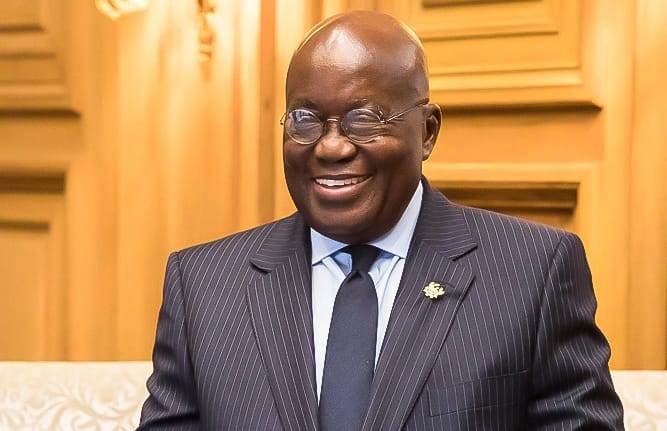
President Akufo-Addo

President Akufo-Addo is expected to commission over 80 educational projects across all 16 regions of the country on Thursday, this week. The initiative seeks to enhance access to quality education by providing modern facilities tailored to meet the diverse needs of Ghanaian students.

Dr. Yaw Osei Adutwum, Education Minister

A statement issued in Accra over the weekend by the Ministry of Education said the commissioning will be a nationwide event involving simultaneous ceremonies at district and regional levels.

Vice President Dr Mahamudu Bawumia and Education Minister, Dr Yaw Osei Adutwum, will join the President in officiating the events, which will be broadcast live on major television networks and social media platforms, to ensure nationwide participation.

The projects span a range of educational needs, from basic schools to Senior High Schools and Technical institutions. They include STEM-focused schools, E-blocks and Kindergarten facilities aimed at supporting early childhood education.

Notable among the projects is the Kpasenkpe Model STEM SHS in the West Mamprusi District, the Accra STEM Academy in La-Nkwantanang-Madina and the Awaso Model STEM SHS in Bibiani-Anhwiaso-Bekwai.

Basic education facilities such as a 12-unit classroom block at Salem D/A Basic in Atwima Mponua and two-unit kindergarten blocks in communities like Fremasi DA Primary in Assin South are also part of the initiative.

“These projects reflect the government’s commitment to improving the quality of education and ensuring that every Ghanaian child has access to a conducive learning environment,” the Ministry’s statement said.

The Ashanti Region stands out with several projects, including the Bosomtwe Model STEM JHS, which boasts a four-storey, 11-unit classroom block and the Wesley Girls Demonstration School in Kumasi Metro, which will gain a six-unit classroom block with ancillary facilities.

In the Northern Region, the Sagnarigu Tamale Business School will unveil an 18-unit classroom block to meet increasing demand.

Other regions, such as Volta, will benefit from upgraded facilities like the six-unit classroom block at Kodzobi Ando Basic School in Adaklu, complete with modern sanitation facilities.

The initiative also includes Technical and Vocational Education (TVET) with projects like the Anyinam TVET-Applied Technical and Fashion school and the Akomadan TVET-Applied Technical School, aimed at equipping students with practical skills for the job market.

This, the Ministry of Education invites the general public to witness the milestone event, either in person at the commissioning sites or through live broadcasts. “We encourage all Ghanaians to join this celebration of progress in education,” the statement added.

Razak Kojo Opoku Posts 24 Questions For JDM To Answer

0
Razak Kojo


  1. What would be the total cost for the implementation of the 24-hour economy and what would be the significant effects of the 24-hour economic policy at the macroeconomic level and microeconomic level?


  1. How would the 24-hour economy help Ghana to reduce the exchange rate from $1 to 2GHC or $1 to 1GHC?


  1. How would the 24-hour economy reduce Ghana’s debt from 767 billion Cedis to the debt level of 120 billion Cedis within 2025 to 2029?


  1. What would be the legal framework supporting the 24-hour economic policy and what salary adjustments would the government introduced for the Public Sector Employees working under the 24-hour economy?


  1. How would the villages, towns and communities without electricity benefit from the 24-hour economy?


  1. How would the farmers and their workers benefit from the 24 hour economy?


  1. How would Ghanaians benefit from the Ministries, Departments and Agencies of government that closes from work at exactly 5pm?


  1. How would the limited number of Police and Security agencies sustain the 24-hour economy, especially in the criminal zones, villages, towns and communities without electricity?


  1. If there is a comeback of DUMSOR, how would the 24-hour economy be implemented across the Country?


  1. How would the aged, people with disabilities, babies, children and the vulnerable in society benefit directly from the 24-hour economy as Citizens of Ghana?


  1. What would be the correlation between the 24-hour economy and digitalization?


  1. How would the 24-hour economy be successful without One District One Factory Programme of Akufo-Addo’s government?


  1. How would the 24-hour economy be successful without Bawumia’s digital economic Policy initiatives?


  1. What would be the significant contribution of the 24-hour economy to Ghana’s Gross Domestic Product(GDP) within 4years?


  1. What would be the significant contribution of the 24-hour economy to the reduction of Bank interest rates on loans?


  1. What would be the significant contribution of the 24-hour economy to the reduction of the Inflation rates?


  1. What would be the significant contribution of the 24-hour economy to the attainment of the Sustainable Development Goals within 4years?


  1. How would the Judiciary, lawyers, and the various Courts across the Country benefit from the 24-hour economy?


  1. How would the market women, traders and the general private sector business community benefit DIRECTLY from the 24-hour economy?


  1. Can the 24-hour economy address all the socioeconomic problems of Ghana? and how feasible would that be practically?


  1. How would the 24-hour economy benefit Public & Private Universities and other tertiary institutions in the Country?, and what would be the impact on students, especially pregnant and nursing mothers?


  1. How would the 24-hour economy protect the environment and natural resources of the State?


  1. Practically, how would the 24-hour economy helps to reduce government’s borrowing from both the domestic and international markets?


  1. How would the 24-hour economy address the structural problems of Ghana’s economy?, and help Ghana to pay all its internal and external debts?


Respectfully, I hope John Mahama and the NDC members would be able to sincerely provide answers supported by Data Projections and best practices around the world to the 24 questions on their proposed 24-hour economy within 24 hours.

Ghana Gas saves over US$ 250 million through Indigenisation and Development

0
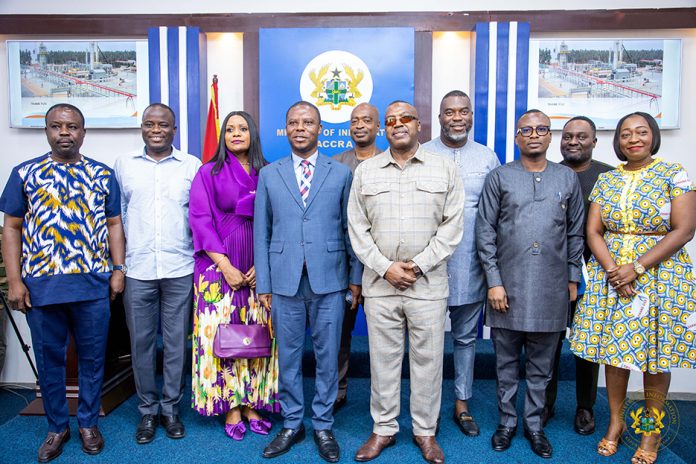
Dignitaries present at the press briefing in a group photo

The Ghana National Gas Limited Company (Ghana Gas) has saved US$ 250 million through its transition from Sinopec to Ghanaian engineers.

The substantial cost saving and job creation is as a result of the company’s indigenization efforts and operational efficiency.

The Chief Executive Officer (CEO), Dr. Ben K.D. Asante, made the remarks at the Minister’s Press Briefing in Accra today.

He stated that since 2017, the company has demonstrated its commitment to fostering local expertise and advancing national development.

“In April 2017, Ghana Gas fully indigenized the operations and maintenance of its Gas Processing Plant (GPP) and associated pipelines and this initiative has also led to the creation of about 1000 jobs, including both permanent and contract positions”, Dr Ben Asante explained.

He mentioned that the company’s success also extends to maintenance and certification milestones.

“Post-indigenization, we have completed three major shutdowns and maintenance projects and achieved ISO 45001:2018 certification for Occupational Health and Safety Management Systems”, the CEO added.

He hinted that Ghana Gas is also advancing towards ISO 14001 certification for environmental management system.

Dr. Ben Asante noted that Ghana Gas Limited Company’s supply network has been pivotal for industrial growth and power generation with industrial clients such as Wangkang Ceramic, Sentuo Refinery, and Twyford/Keda Ceramic.

“We enable the supply of gas for industrial heating and power, benefiting both Eastern and Western industrial enclaves,”he stated.

The CEO mentioned that the construction of the Anokyi Mainline Compressor Station has increased compression capacity and ensured efficient gas transmission from Atuabo to Kumasi and beyond.

“This project enhances operational flexibility and ensures a steady power supply to Ghanaian households and industries,”he added.

He highlighted the contributionof the 10-kilometer gas pipeline project from Takoradi Distribution Station to the Karpowership at Sekondi Naval Basecontributes significantly to Ghana’s electricity supply, meeting 20% of the nation’s energy requirements.

“This infrastructure supports 26% of Ghana’s electricity needs, reducing fuel costs significantly,” the CEO of Ghana Gas highlighted.

Feature: Revitalizing HIV/AIDS Awareness: The Power of “If It’s Not On, It’s Not In!”

0
The writer, Wisdom Koudjo Klu

The previously widespread slogan “If it’s not on, it’s not in!” was a significant reminder in the battle against HIV/AIDS. It highlighted the critical role of safe sex practices, especially condom usage, in preventing the transmission of HIV and other STIs. This clear message fostered a culture of prevention and advocated for personal accountability.

However, as antiretroviral drugs (ARVs) emerged, enabling individuals to manage HIV and live longer, healthier lives, the focus on preventive measures has decreased. While ARVs have transformed the approach to HIV/AIDS, they cannot replace the necessity of prevention and education. It is essential for today’s youth to revive this message to counteract complacency, raise awareness of the ongoing dangers, and help decrease new infections.

Current Risky Behaviours

The increased availability of antiretroviral medications (ARVs) has led to several misunderstandings that promote risky behaviours, ultimately facilitating the spread of HIV. A significant concern is that some young individuals are less inclined to use condoms, believing that HIV is now “less serious” due to treatment advances. This false belief can result in unprotected sexual encounters, leading to higher transmission rates.

Furthermore, many young people engage in multiple sexual relationships without recognizing the associated risks. Some mistakenly depend solely on ARVs as a means of protection, not appreciating that these medications only lower the viral load for those already infected with HIV; they do not prevent the virus from being transmitted.

Additionally, substance use, particularly alcohol, can lead to risky sexual decisions by diminishing inhibitions. Together, these behaviours, combined with a drop in preventive messaging, create an environment conducive to the spread of HIV, especially among youth who may not have accurate knowledge about the virus.

Misconceptions

A prevalent misconception is that HIV is no longer a major threat because of ARVs, with many individuals mistakenly believing that these medications can cure HIV rather than just controlling it. This misunderstanding can foster carelessness and risky practices, as people may feel prevention is unnecessary.

There is also a false belief that ARVs provide immunity to HIV, which is incorrect. ARVs do not prevent initial infections and are intended for those already living with HIV to reduce their viral load. Furthermore, access to these treatments is not uniform; they can be costly and challenging to use consistently over the long term. Relying only on ARVs also neglects the risk of developing drug-resistant strains of HIV, reinforcing the need for ongoing prevention efforts.

These misunderstandings highlight the urgent need for renewed education about the realities of HIV and the functioning of ARVs. Failing to clarify these issues could jeopardize the progress made in HIV prevention.

Ways to Resonate the Message

Reintroducing the slogan “If it’s not on, it’s not in!” along with strengthening preventive messaging can help remind young people about the significance of practicing safe sex.

  • Educational Initiatives in Schools and Communities:Schools and community centres should host workshops and seminars that emphasize HIV prevention and safe sex practices. These sessions should highlight the importance of using condoms as well as the limitations of antiretroviral therapy (ARVs) to provide young people with a clear understanding of HIV risks.
  • Social Media Engagement with Influencers:Given that many young people are active on social media, platforms like Instagram, TikTok, and YouTube can serve as excellent venues for disseminating HIV awareness messages. Collaborations between influencers and health organizations can help present safe sex messages in an appealing and relatable manner, utilizing creative content to engage audiences.
  • Role of Healthcare Providers:Healthcare professionals can significantly contribute by providing educational resources, offering free or affordable condoms, and delivering counselling that reinforces prevention messaging. Using posters, brochures, and direct communication during medical appointments can integrate the slogan “If it’s not on, it’s not in!” into routine healthcare visits.
  • Youth-Led Initiatives and Peer Education:Organizations led by young individuals can encourage open conversations among peers and spearhead awareness campaigns specifically designed for younger audiences. Events, campaigns, and peer-education programs can make HIV/AIDS education more accessible and relatable, reducing stigma and promoting preventive actions.

The Role of the Ghana Health Service

The Ghana Health Service (GHS) plays a vital role in revitalizing the HIV/AIDS prevention message and combating complacency. Although antiretroviral therapy (ARVs) provides hope, the GHS must maintain a focus on prevention alongside treatment to protect public health:

  • Initiate National Awareness Campaigns: The GHS can launch campaigns targeting all demographics, particularly the youth, focusing on safe sex practices, HIV realities, and the importance of condom use. These campaigns should be disseminated through television, radio, social media, and educational institutions.
  • Enhance Preventive Messaging in Health Facilities: All GHS-affiliated health facilities should actively promote HIV prevention in tandem with treatment. Clinics and hospitals ought to distribute condoms and provide educational materials, like pamphlets and posters, to inform patients about safe sex and the limitations of ARVs.
  • Utilize Community Health Workers: Community health workers are essential for reaching both rural and urban populations, offering localized education on HIV/AIDS and dispelling myths about ARVs. This hands-on approach ensures that those without regular access to health information are reached.
  • Collaborate with Influencers and Community Leaders: Partnering with influencers, celebrities, and community leaders who connect with young audiences can effectively convey the importance of continued prevention efforts. These individuals can help normalize safe sex practices and remind others that HIV remains a significant threat.

Reflection

While ARVs have transformed the lives of many people living with HIV, prevention remains the most powerful tool against the spread of the virus. Misunderstandings about ARVs, complacency, and a lack of preventive messaging have led to risky behaviours, especially among younger generations. To address these issues, we must reinvigorate the message “If it’s not on, it’s not in!” and work to educate youth on the realities of HIV and the critical role of prevention.

Through educational campaigns, social media outreach, healthcare provider support, youth advocacy, myth-busting initiatives, and targeted efforts by the Ghana Health Service, we can re-establish the importance of safe sex practices. HIV remains a real threat, and prevention is essential to reducing its impact.

It is our collective responsibility to make informed choices, spread awareness, and protect our communities from HIV. By reinforcing the message of prevention, we have the power to protect current and future generations. Remember “If It’s Not On It’s Not In…..!!!”

By Wisdom KoudjoKlu,

(wisdomklu@gmail.com)

Vacant seat saga: Atubuga punches holes in Supreme Court ruling

0
Supreme Court

Justice William Atuguba, a former Supreme Court Justice of Ghana, shared his candid views on a recent ruling involving parliamentary jurisdiction and constitutional interpretation, which has sparked considerable debate in Ghana.

The case centered on the procedural propriety of bringing a matter directly to the Supreme Court instead of initially filing it at the High Court, per constitutional guidelines.

Justice Atuguba’s remarks on national television on last Saturday addressed a contentious Supreme Court decision involving Article 97(1)(g)(h) of the Constitution, which concerns the conditions under which a parliamentary seat may be declared vacant.

The Law Lords ruled 5-2 in favour of the plaintiff, MP Alexander Afenyo Markin, who argued that his questioning of constitutional interpretation warranted direct Supreme Court review.

However, Justice Amadu Tanko, dissenting, argued that the case should have begun at the High Court, which could then refer the matter of interpretation to the Supreme Court, if needed.

Justice Atuguba was of the view that previous legal precedents affirm the High Court’s role as the initial forum in election disputes; underscoring that only in exceptional cases should the Supreme Court intervene directly.

Citing cases from Ghana’s judicial history, such as Yeboah v. J.H. Mensah, Justice Atuguba argued that longstanding practice and judicial decisions support the High Court’s jurisdiction over parliamentary disputes.

Furthermore, Justice Atuguba expressed his concerns over what he termed “superficial reasoning” used by the majority justices to justify their stance on jurisdiction.

He emphasised that the interpretation issue did not alter the foundational principle that election disputes typically begin at the High Court level.

The former Supreme Court Justice warned that failing to respect judicial protocols and the constitution’s procedural dictates could lead to a politicised and fragmented judiciary, undermining the country’s legal framework.

In his critique, Justice Atuguba also decried what he sees as an increasing trend of political influence in judicial rulings, which he believes threatens Ghana’s constitutional stability.

“Unless this trend is arrested, constitutionalism will be undermined and we risk seeing political motivations drive decisions that should be grounded in law,” he noted, supporting similar concerns previously voiced by legal analyst Martin Amidu.

Justice Atuguba’s reflections have resonated widely, adding another layer to the complex discussions surrounding judicial independence, procedural integrity and political interference in Ghana’s judiciary.

His perspective challenges both the legal and political communities to re-evaluate the role of the judiciary in safeguarding constitutional order.

200 Zongo youth equipped with employable skills in fashion design 

0
Sarki Alhaji Abdullai Ali Barry - Asanteman Zongo Nkosuohene

About 200 youth from the Zongo communities within the Kumasi Metropolis have graduated in fashion design.The programme was initiated by Sarki Alhaji Abdullai Ali Barry, the Asanteman Zongo Nkosuohene.

The initiative seeks to reduce mass unskilled unemployed youth within the Zongo enclave and to create economic independence and empowerment through skills acquisition.

Alhaji Barry provided GH¢10,000 to support the programme.

The Zongo Nkosuohene poses with the graduates

At a mass graduation ceremony held at the forecourt of the Central Mosque in Kumasi, under the auspices of the National Association of Muslim Garment Designers, the graduates were presented with certificates of participation.

Sarki Ali Barry congratulated the graduates and urged them to transform their livelihoods with the newly-acquired skills.

He hoped his offer would enable them to procure some few necessary tools to equip them in their business to fend for themselves and their families.

“Many young people are losing out on jobs due to lack of relevant skills and as Zongo Nkosuohene in the Ashanti Region, my aim is to reduce the high rate of unemployment among the youth through such initiatives”, he stated.

He expressed confidence in the potential of the graduates and urged them to showcase their dedication and commitment to the profession, as a way of contributing to the economic development of Zongo communities and the country.

Sarki Barry called on idle youth to seize the opportunity to train in other skills to eke out a decent living.

He also admonished Ghanaians to patronise local clothing in order to reduce the importation of foreign ones.

The graduation ceremony was graced by dignitaries from the Muslim community, traditional leaders, the Member of Parliament for Asawase, Mohammed Muntaka Mubarak, who donated GH¢5,000.

Other attendees were Alhaji Akeem Saliwa, a representative of NPP Parliamentary Candidate for Asawase Constituency and Manaf Ibrahim who also donated GH¢4,000.

From Oswald Pius Freiku, Kumasi 

AGA Obuasi Mine Trains Basic School Students in Guidance and Coaching

0
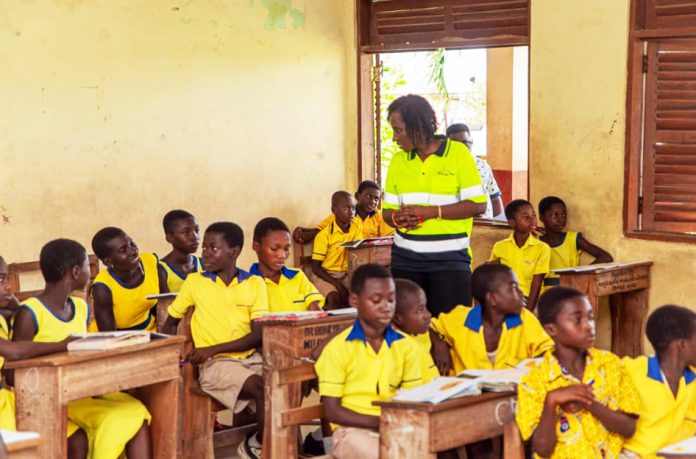
Ms Esther Agyeiwaah Akoto interacting with the students at the ongoing training session

AngloGold Ashanti Obuasi Mine, under its Educational Improvement Programme of their 10-year Socio-Economic Development Plan (SEDP) has rolled out a comprehensive Academic Guidance and Personal Development Programme in selected Basic Schools in Obuasi.

AGA Obuasi staff with teachers and the beneficiary students in a group picture

Esther Agyeiwaa Akoto, Social Development Officer of AngloGold Ashanti Obuasi Mine, explained that in October, this year, the maiden edition of the Programme was held at Sanso M/A JHS, where students were taken through various modules and ways to make the right academic and career choices with the targeted students from primary six (6) to JHS 3.

She indicated that determining the right or appropriate course to study after Junior High School has been a daunting task for most Junior high school students and their parents or guardians.

According to her, often most students at the basic education level do not have the right guidance to enable them make informed decisions about courses that align with their strengths and interests, leading to appropriate career choices.

She said in line with the successes of the maiden edition, AngloGold Ashanti decided to roll out the programme in other public schools in both the Obuasi East and Obuasi Municipalities.

Speaking at a session held for students of JimisoKakraba M/A, Primary School and Junior High School (JHS), she explained that the career guidance and personal development programme seeks to address numerous challenges that impede the academic performances and personal growth of the students.

The Social Development Officer reiterated that the programme is aimed at helping students to develop effective study skills, time management and organisational strategies.

She revealed that the Mine’s Employee Volunteer Programme (EVP) also encourages staff members to engage and support the host communities and also take the students through various academic guidance and coaching strategies.

According to her, the programme also involves staff members in strengthening ties with the communities, while empowering the students to take charge of their educational journeys and personal growth.

Ms. Akoto expressed the view that the initiative would help improve academic performance and retention rates of students and also enhance their personal skills that contribute to overall well-being and success.

Mr Joseph Nunoo, a Circuit Supervisor at the Obuasi East Municipal Education Directorate touted the relevance of guiding students at the pre- Senior High School level to make good career choices.

According to him, there are abundant opportunities out there in the world and that it is important for students to get the right coaching to enable them to navigate that path seamlessly, where career guidance and counselling are essential for the children at that level.

He commended AngloGold Ashanti for coming out with the programme, which he said, would serve as a beacon of light to shape the lives of the students to make good decisions about their career path.

The beneficiary students expressed their excitement about the programme, as it has broadened their horizon on how to manage their time and make good decisions.

The career guidance and counselling programme is one of several interventions implemented by AngloGold Ashanti Obuasi mine to improve quality education in Obuasi and ensure easy accessibility of Education in the digital generation.

Expect Better Service, Aiyedatiwa Promises Ondo Residents After Victory

0
Governor Lucky Aiyedatiwa

Governor Lucky Aiyedatiwa says his victory in the just-ended governorship poll is a call to deliver more for the people of Ondo State. Aiyedatiwa won the Ondo governor election which was concluded on Sunday, beating the Peoples Democratic Party (PDP)’s Ajayi Agboola in the largely peaceful exercise.

Speaking to reporters after he was declared as the winner of the poll, the Ondo governor promised better days for residents of the South-West state.

According to him, having visited every part of the state during campaigns, he is more in tune with the needs of the people.

“The people should expect better service. And that’s what they’ve been looking forward to because I campaigned across the entire local government,” he said.

“The only candidate that went through the entire local government, not just the capital city of the local government, all communities. In almost all the communities we visited, we saw the roads and the way they look like, the environment they are living in, we heard their voices, we read their messages and we listened and responded to questions and their yearnings and aspirations.

“So, they have that belief that their hope is in me. They believe that whatever we say is what we will do. We will not tell them what we cannot do. We will do all that we have promised within the limited resources available to us.”

Credit: channelstv.com

The Ghanaian Chronicle