Home Blog Page 102

Fintech Leaders Push for Stronger Collaboration to Drive Africa’s Digital Finance Growth

0

Fintech leaders at the 3i Africa Summit have called for deeper collaboration, talent development and regulatory alignment to position Africa as a global hub for digital finance innovation.

Speaking at a joint media briefing, Chief Executive Officer of JUMO Ghana, Philip Owusu-Gyamfi, Senior Partner at GFTN, Matteo Rizzi, and Group Chief Executive Officer of JUMO, Paul Whelpton, said Africa had moved beyond simply adopting financial technology and was now producing innovations with global relevance.

According to the speakers, the rapid growth of mobile money, digital lending and fintech services across the continent has demonstrated Africa’s ability to develop solutions capable of transforming lives and economies.

“Africa has been a champion for innovation in financial services in the past 10 years. What we need now is acceleration,” Paul Whelpton stated.

The executives stressed that sustaining the next phase of growth would require deliberate investment in African talent, stronger cooperation between regulators and industry players, and harmonised digital finance systems across borders.

They noted that digital finance has already expanded access to credit and payment services for millions of Africans who were previously excluded from the traditional banking sector.

“We are transitioning from mobile money systems into true digital finance, and that presents enormous opportunities for African markets,” Philip Owusu-Gyamfi said.

The speakers also highlighted that several African innovations, particularly mobile money systems pioneered in East Africa, have become global models replicated in markets across Asia, including Bangladesh.

“We need to start telling our own innovation stories because Africa has genuinely pioneered solutions that the rest of the world is now learning from,” Owusu-Gyamfi added.

The media briefing further focused on the need for regulatory cooperation to accelerate cross-border digital trade and financial inclusion across the continent.

The executives pointed to ongoing efforts aimed at simplifying licensing processes and improving interoperability among African financial systems, arguing that connected digital platforms could significantly reduce barriers to doing business across Africa.

“The benefit of digital finance is that it is cross-border and transferable. Once systems are connected, transactions and customer verification become much easier,” Matteo Rizzi explained.

They observed that the increasing participation of African central banks and regulators at the summit reflected growing recognition of fintech’s role in driving economic development.

The speakers also called for greater investment in skills development, particularly in artificial intelligence, software engineering and entrepreneurship, to help Africa produce the next generation of global technology leaders.

“The speed at which we organise capacity building is the same speed at which Africa can become the next global business hub,” Rizzi stated.

They further noted that collaboration among fintech firms, telecom operators, banks and policymakers was helping to reduce the cost of digital infrastructure and accelerate innovation across the sector.

The 3i Africa Summit brought together fintech companies, regulators, investors and development institutions to discuss the future of digital finance and inclusive economic growth across Africa.


For more news, join The Chronicle Newspaper channel on WhatsApp: https://whatsapp.com/channel/0029VbBSs55E50UqNPvSOm2z

MoMo CEO calls for consumer protection as digital lending expands

0

The Chief Executive Officer of MobileMoney Fintech Ltd, Shaibu Haruna, has called for stronger consumer protection measures to match the rapid expansion of digital lending and mobile financial services across Africa.

Speaking at the 3i Africa Summit, Haruna said the growth of high-speed digital credit markets presents both significant opportunities and emerging risks, warning that financial inclusion without adequate safeguards could expose consumers to harmful debt cycles.

Delivering a keynote address on “Strengthening Consumer Protection in High-Velocity Credit & Banking Markets,” he noted that digital lending has revolutionised access to finance by allowing millions of previously underserved individuals and small businesses to secure credit within seconds.

According to him, the rise of digital finance has accelerated financial inclusion across the continent, but has also introduced challenges such as over-indebtedness, lack of transparency in loan conditions, and potential bias in data-driven credit scoring systems.

“Digital lending has been a game changer. Millions of people who were previously excluded now have access to credit at unprecedented speed,” he said.

He, however, cautioned that the same systems designed to expand access to finance could become harmful if consumer protection is neglected.

“Without protection, there is no inclusion—and inclusion without protection becomes a trap,” he warned.

Haruna identified transparency, fair pricing, and efficient complaint resolution systems as essential to building trust in digital financial services. He stressed that customers must be provided with clear and simple information on interest rates, penalties, and repayment terms.

The MoMo boss also expressed concern over the increasing use of data-driven credit scoring models, warning that algorithmic bias could unintentionally discriminate against some groups of people.

“As we process large data sets, we must be mindful of biases that may exclude customers based on income levels, location, or behavioural patterns,” he stated.

He further called for stronger collaboration among regulators, fintech companies, and consumers to ensure the responsible growth of the sector.

“Consumer protection is not just a regulator’s responsibility—it is a shared duty across the entire ecosystem,” he said.

Haruna urged regulators to adopt smarter and more adaptive supervisory frameworks instead of relying solely on stricter regulations. He proposed measures including risk-based lending rules, real-time data sharing, and outcome-based supervision to improve oversight in the sector.

At the industry level, he encouraged fintech firms to embrace responsible lending practices, including the introduction of cooling-off periods between loans and the simplification of terms and conditions for customers.


For more news, join The Chronicle Newspaper channel on WhatsApp: https://whatsapp.com/channel/0029VbBSs55E50UqNPvSOm2z

NPP Chair Race: Paul Afoko Buckles Down! … Meets Bawumia, Kufuor Et Al

0
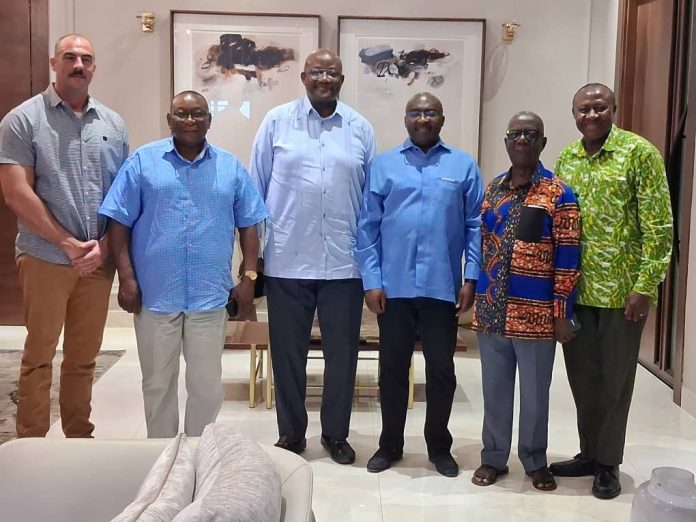
Awentami Paul Afoko with Dr Bawumia

New Patriotic Party (NPP) National Chairman hopeful, Awentami Paul Afoko, has stepped up his campaign with a renewed round of high-level consultations, involving some of the party’s most influential figures, as he pushes a unity-driven agenda, ahead of the 2028 elections.

The latest engagements have seen Mr Afoko meet former Vice President and the current flagbearer, Dr Mahamudu Bawumia; former President Nana Addo Dankwa Akufo-Addo; former President John Agyekum Kufuor; and former Assin Central MP, Kennedy Ohene Agyapong.

The meetings are part of a broader stakeholder outreach ahead of the party’s upcoming National Delegates Conference, aimed at consolidating support and drawing on the experience of past and present leaders following the NPP’s 2024 electoral defeat.

Awentami Paul Afoko

Before the January 31, 2026 presidential primary, Mr Afoko had already engaged all five aspirants, including Dr Bryan Acheampong, Ing. Kwabena Agyei Agyepong, and Dr Yaw Osei Adutwum, in what his team described as efforts to promote party cohesion.

Sources close to him say the current round of consultations is focused on building consensus on the party’s future direction.“You cannot rebuild a house by ignoring the architects,” a member of his team noted.

Insiders describe the meetings with Dr Bawumia and former President Akufo-Addo as particularly significant given their influence, while the engagement with former President Kufuor highlights a call for unity anchored on institutional memory.

Though details remain private, Mr Afoko is said to have urged party members to avoid blame games and embrace collective responsibility. He is also reported to have reiterated his call for competence over ethnicity in choosing the next National Chairman.

Mr Afoko, who served as NPP National Chairman from 2014 to 2015, is campaigning on a “3R Agenda” Reunite, Rebuild, Recapture, which he says will return the party to power in 2028.

The consultations follow earlier meetings with the Ashanti Regional Council of Elders and regional executives in Kumasi, as part of a nationwide effort to engage party stakeholders and mend internal divisions.

Roads Minister Mad Over Slow Pace Of Work On Techiman-Wenchi Road

0
Mr Kwame Agbodza inspecting roads under the Big Push project

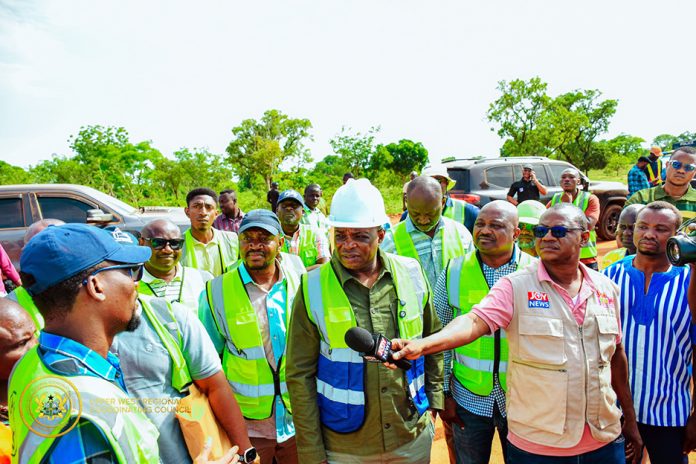
The Minister of Roads and Highways, Mr Kwame Governs Agbodza, has expressed disappointment over the slow pace of construction work on the Techiman-Wenchi Road project under the government’s ‘Big Push’ road infrastructure programme.

During an inspection visit to the project site, Mr Agbodza noted that the government had already paid GHC66 million to the contractors, stating that they had no excuse to delay execution of the project and demanding explanations for the poor progress.

Kwame Agbodza, Minister for Roads and Highways

The sector minister threatened to terminate and re-award the contract if the contractors failed to provide tangible reasons for the delay, expressing concern that work on the stretch was awarded in December 2025, yet there had been no meaningful improvement on site.

He explained that the government had invested heavily in the ‘Big Push’ programme to ensure timely completion of road projects, stressing that the Techiman-Wenchi road was a key priority aimed at opening up the area and stimulating socio-economic development.

Mr Agbodza added that the programme was designed to facilitate the movement of goods and services across the country, and urged contractors to speed up work while cautioning against shoddy and sub-standard construction.

Mr Francis Owusu Antwi, the Bono East Regional Minister, who accompanied the sector minister, pledged to intensify monitoring and supervision to ensure contractors deliver quality work and complete projects within schedule under the ‘Big Push’ programme in the region.

From Jerry Azanduna, Techiman

GNA 

Feature: A People Who Do Not Cherish Animal Life, Will Fail Human Life

0
Barima Sarpong

I am in deepest agreement with Dr. Martin Luther King Jnr when he said, “we are called to speak for the weak, for the voiceless, for the victims of our nation.” And I recognize the enormous wisdom worded by Mahatma Gandhi that, “the greatness of a nation can be judged by how it treats its animals.” So do I stand with Albert Schweitzer as he warned that, “until we extend our circle of compassion to all living things, we will not find peace.”

Ghana prides itself in hospitality, community, and Ubuntu — the idea that I am because we are. But “we” cannot stop at human beings. The way we treat animals is a big issue that must be on the table, and now. It is a mirror. And right now, the mirror shows a dangerous gap in our laws, our environmental considerations, and our conscience. If we do not cherish animal life, the cost will land squarely on human life: our health, our economy, our children’s future.

We have learnt to live harmoniously as Christians, Muslims, and Traditionalists. But we are yet to learn to live harmoniously with animals who breathe as we do. Ghana is a nation of ‘nkabom’ (togetherness), so we claim. We say ‘onipa nua ne onipa’ (signifying brotherhood). But our circle of “nua” cannot end at the human gate.

The dog on the street, the chicken in the market, the tilapia in the pond: their lives are stitched into ours. If we do not cherish animal life, the tear in that fabric will rip straight through human life — in our hospitals, our homes, our workplaces, and our schools.

I am not surprised, but I am disturbed that in almost all our national discourse about the ever dangerous galamsey menace, we are quick to mention how humans will lack drinking water in the near future, which is right. However, we fail to ask ourselves the sort of water being drunk by the very animals living in the areas where galamsey has devastated our water bodies. We are not concerned about that, but that is even more urgent.

In tems of legal regimes, the western world protects, whiles Ghana suggests. In the UK, the Animal Welfare Act 2006 creates a “duty of care.” You don’t have to beat a dog to be guilty. Failing to provide food, water, or vet care is a crime punishable by 5 years jail and unlimited fines. Germany writes animal protection into Article 20a of its Constitution. Switzerland banned boiling lobsters alive. The US has the FBI tracking animal cruelty as a “crime against society” because data shows animal abusers graduate to human victims.

However, in Ghana, our main law is the Animals Act, 1961 (Act 43) which is 63 years old. Section 2 punishes cruelty with a maximum fine of GH₵200 or 3 months jail. In 2026, GH₵200 won’t buy a bag of dog food. The Criminal Offences Act, 1960 Section 303 covers “ill-treatment of animals” but police rarely prosecute. We have no Animal Police, no duty-of-care doctrine, no ban on chaining dogs 24/7. The simple message is that, in the West, animal life has legal value, but in Ghana, the story is not entirely same.

With regard to enforcement, the RSPCA inspectors in the UK, ASPCA officers in New York, and Tierrechts police in Germany have power of arrest. Animal courts exist. The media shames offenders. In 2023 for instance, a UK man got 3 years for kicking a cat. The cat lived. The Ghanaian version of enforcement is rather interesting. Who do you call if your neighbour is starving his dog? Police will laugh. EPA won’t come. Vet Officers have no enforcement wing.

The GALAMSEY menace in Ghana gives a verdict that contempt for animal life scales up to ecological collapse. The Forestry Commission’s 2022–2024 monitoring reports and its State of Ghana’s Forests Report lay it bare on Forest Reserve Invasion, Wildlife Displacement & Death, Endangered Primates, Forest Elephants, Pangolins & Duikers, Aquatic life, and Birds & Insects.

As of 2024, the Forestry Commission reports 44 of Ghana’s 288 forest reserves have been invaded by illegal mining. That is 6,246 hectares of destroyed forest cover — the equivalent of 8,700 football fields.

The White-naped Mangabey and Roloway Monkey, both IUCN Red-listed, have lost over 60% of their habitat in the Western Region due to galamsey in Subri River, Tano, and Oda Forest Reserves.

The Commission recorded a 70% drop in elephant signs in Bia Conservation Area between 2018–2023. Noise, pit digging, and mercury poisoning of streams drove herds into Côte d’Ivoire, where human-wildlife conflict increased.

Bushmeat hunting spikes around galamsey camps. The Commission’s 2023 survey in Ashanti Region found pangolin captures up 300% near mining sites, pushing the species closer to local extinction.

EPA/Forestry Commission joint tests on the Ankobra and Pra show mercury levels 40x WHO limits. Result: mass fish kills. Crocodiles, otters, and kingfishers that depend on those rivers are starving or bio-accumulating poison. The Commission calls it “aquatic desertification.”

Galamsey clears canopy cover. The Commission documented the disappearance of hornbills, turacos, and bee colonies from 12 reserves. No pollinators = no forest regeneration.

The Commission concluded that, “Illegal mining has become the single greatest driver of biodiversity loss in Ghana’s high forest zone.” We poison the rivers that otters drink, then act surprised when children in Shama drink poison. The biology is the same. The contempt is the same.

On the Roads in the Western World, drivers brake for ducks. “Deer crossing” signs matter. Hitting a dog and driving off is hit-and-run. However, in Ghana, we run over goats, dogs, and humans, and blame the “stray.” Trotro drivers who swerve to kill a dog won’t swerve to save a child. Same mindset: “Life is cheap.” No wonder we record over 2,000 human road deaths yearly.

In Public Service, a mayor in the west resigns if a city shelter kills healthy dogs. Animal welfare is an election issue. Ghana is different; MMDCEs watch 44 forest reserves fall to galamsey. If we don’t care that mercury kills elephants and mangabeys, why would we care it causes birth defects in children at Tarkwa? The same contempt for animal life scales up to contempt for human life.

In the Western World,  “Cage-free eggs” and “cruelty-free cosmetics” are billion-dollar markets. Companies get boycotted for animal testing. But in Ghana, we sell live chickens tied by legs on taxi roofs for hours. We cram pigs into markets with no water in the name of business. That same logic puts nurses and teachers in months of honest service without pay, crams patients into hospitals with no beds. If suffering is normal for goats, it becomes normal for humans soon.

In the Courts of Law, Western Judges grant restraining orders to protect pets in domestic violence cases. Animal sentience is a legal doctrine. Our courts in Ghana take 8 years to hear a murder case. If Act 43 values a dog’s life at GH₵200, what value does the system place on a poor man’s life? Delay is the judicial version of chaining. Of course, justice deferred is life denied.

Whiles BBC undercover films shut down puppy farms, CNN covers beached whales and outrage is swift, the Ghanaian media will not make the Forestry Commission’s wildlife body count hit the 7pm news. Galamsey videos go viral for 48hrs, then we move on. A media that can’t sustain anger for poisoned monkeys won’t sustain anger for poisoned citizens.

And sad enough, our children are watching us, probably learning from our deeds. We must urgently treat animals right in the eyes of the young ones. A child who sees adults stone dogs learns that the weak have no rights. He grows up to be the policeman who slaps suspects, the nurse who insults patients, the politician without conscience, and the judge who is partisan. A society that teaches kids to kick strays is running a free school for future tyrants and generational threat.

The West understood this. That’s why kindergartens have “class pets” and animal cruelty is flagged in schools. Ghana teaches “survival of the fittest” and wonders why all are cruel.


THE WAY FORWARD: CHERISH ANIMALS TO SAVE HUMANS

Animal Protection Unit:
Under Ghana Police Service, like MTTD. Train them. Fund them.

Enforce Forestry & Wildlife Laws:
Implement the Forestry Commission’s recommendation to create “No-Mining Red Zones” in all reserves hosting endangered species. Prosecute Wildlife Conservation breach with severe punishment.

Constitutional Amendment:
Copy Germany. Add “The State shall protect animals as fellow creatures” to Article 36. Values matter.

Education:
GES curriculum must make space for “Empathy for all life” from Class 1. You can’t teach human rights if you mock animal rights.

The Forestry Commission just told us 44 forests are dying, elephants are fleeing, mangabeys are vanishing, and rivers are aquatic deserts. That is the canary gasping. Look at how we treat animals: chained, starved, run over, poisoned by galamsey, ignored by law. Then look at how we treat ourselves: pensioners picketing, patients sleeping on floors, citizens shot at protests, villages drinking brown water. It’s the same disease. Contempt for life.

The West is not perfect. But it learned: a nation that builds shelters for dogs builds shelters for the homeless. A nation that jails a man for kicking a cat won’t tolerate a minister who kicks the constitution.

A people who don’t cherish animal life will fail human life. Ghana’s choice is simple: Start valuing the mangabey, or keep burying the children. The canary is already dead.

‘Ma wie’

The name remains Barima Sarpong
(Product of Dawu L/A, Afigya Sekyere – Jamasi)


For more news, join The Chronicle Newspaper channel on WhatsApp: https://whatsapp.com/channel/0029VbBSs55E50UqNPvSOm2z

Inflation Rises Marginally To 3.4% In April

0
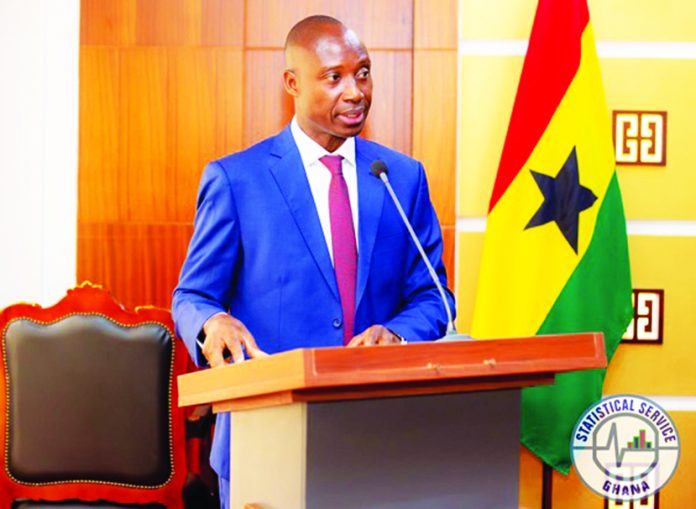
Government Statistician-Alhassan-Iddrisu-PhD

Ghana’s inflation rate edged up to 3.4 percent in April 2026, marking the first increase since December 2024, as rising costs in services and utilities began to exert fresh pressure on the cost of living.

Presenting the latest Consumer Price Index (CPI) data, Government Statistician, Dr Alhassan Iddrisu, said although inflation remains relatively low, early signs of upward momentum are emerging.

“In simple terms, prices are 3.4 percent higher than they were a year ago,” he explained, adding that month-on-month inflation stood at 1 percent, indicating a gradual increase in prices between March and April 2026.

The CPI rose to 267.3 in April 2026 from 258.6 in April 2025. Despite the slight uptick, Dr Iddrisu noted that inflation had dropped sharply by 17.8 percentage points compared to the same period last year, pointing to an overall environment of relative price stability.

“This is the first increase since December 2024. So while inflation is rising slightly, it is still at a relatively low level compared to recent history,” he said.

Food prices ease, but pressure builds elsewhere

A breakdown of the data shows that food inflation declined marginally to 2.2 percent in April from 2.3 percent in March, offering some relief to households. However, month-on-month figures indicate a 0.8 percent rise in food prices, suggesting renewed short-term pressures.

Dr Iddrisu highlighted that while some staple items have become cheaper over the past year, others remain expensive.

Prices of vegetables and plantains dropped significantly, while cereals also recorded declines, easing pressure on household budgets. However, ready-made food and fish continued to record high inflation rates of 10.1 percent and 11 percent respectively.

“This means that while overall food inflation is falling, key everyday items are not necessarily getting cheaper,” he noted. Non-food inflation, on the other hand, increased to 4.2 percent from 3.9 percent, driven largely by rising costs in services.

Services inflation surges

One of the most notable trends in the April data is the sharp increase in services inflation, which rose to 9.6 percent from 7.2 percent in March. According to the Government Statistician, this reflects increasing costs in areas such as transport, education, restaurants, and accommodation.

“This tells us that services are becoming more expensive and are now a major driver of inflation,” he said. In contrast, goods inflation slowed to 1.1 percent, down from 1.7 percent the previous month, providing some relief to consumers since goods account for nearly 75 percent of the consumption basket.

Housing and utilities remain top drivers

From a sectoral perspective, housing, water, electricity, gas and other fuels remained the largest contributor to inflation, accounting for 37 percent of the total.

The category recorded a year-on-year inflation rate of 12.4 percent, with prices continuing to rise on a monthly basis. Food and non-alcoholic beverages followed, contributing 28 percent, while education services accounted for 15 percent of total inflation. Restaurants and accommodation services also recorded increased pressure, with inflation rising to 7.5 percent.

Regional disparities persist

The data also revealed significant regional differences in inflation, underscoring how price changes vary across the country. The North East Region recorded the highest inflation at 9.5 percent, followed by Ashanti (5.6%), Volta (4.7%), Eastern (4.5%) and Greater Accra (4.4%).

Dr Iddrisu noted that these five regions alone accounted for about 95 percent of total inflation in April, indicating that price pressures are highly concentrated rather than widespread.

Greater Accra contributed 37.3 percent to overall inflation, while Ashanti accounted for 35.4 percent, meaning the two regions together drove over 70 percent of the national figure.

“This tells us that where you live strongly influences how you experience inflation,” he explained. He added that the concentration of inflation in a few regions has important policy implications, suggesting that targeted interventions could be more effective in controlling prices.

The report further showed that inflation for locally produced items declined slightly to 4.7 percent, while imported inflation rose to 0.5 percent from negative 0.6 percent in March. This suggests improving local supply conditions alongside a gradual increase in imported prices.

Outlook

Dr Iddrisu said the current data points to a stable inflation environment with emerging risks. “Inflation remains low overall, but we are beginning to see a slight upward movement,” he said, warning that short-term price pressures could build if supply conditions change.

He emphasised that inflation affects every aspect of daily life, from food and transport to rent and business decisions, making it critical for policymakers and households alike to monitor trends closely. “Our goal is to explain what is happening to prices, why it is happening, and what it means for everyone,” he added.

Minister calls for immediate rehabilitation of Tamale-Bolgatanga Highway

0
Mr Akamugri Donatus Atanga, Upper East Regional Minister

Mr Akamugri Donatus Atanga, the Upper East Regional Minister, has appealed to the government to take urgent steps to rehabilitate the deteriorating Tamale-Bolgatanga Highway.

The Minister made the appeal in Bolgatanga when he received 550 laptops from the Ghana Investment Fund for Electronic Communications (GIFEC) to support the implementation of the government’s One Million Coders Programme in the Upper East Region.

The Minister described the current state of the 163-kilometre road as a major threat to commuters and said it had significantly increased travel time and risks between the two regional capitals.

The Minister said the once relatively convenient journey from Bolgatanga to Tamale had become increasingly difficult due to the numerous potholes on the stretch, many of which had expanded into deep gullies.

“The potholes are such that they are now becoming gullies. We used to take about two and a half hours to travel to Tamale, but now it takes normal vehicles close to four hours because of the bad nature of the road,” Mr Atanga lamented.

Additionally, the bad nature of the road had led to several accidents, leading to loss of lives and properties, injuries to people and damages to vehicles.

He noted that the bad state of the road was particularly worrying because of its impact on healthcare delivery in the region, explaining that critically ill patients referred to the Tamale Teaching Hospital were often exposed to additional risks and delays during transit.

“When patients are being transported to the Tamale hospital, they are endangered because of how rough the road is. It causes more harm to the sick,” he said.

Mr Atanga said he would use every available opportunity to draw the attention of the Ministry of Roads and Highways to the plight of the people of the Upper East Region.

He disclosed that he was scheduled to meet the sector minister and would present the concerns of residents regarding the urgent need for rehabilitation works on the route.

The Minister also touched on the Bolgatanga-Bawku-Pulmakom road project, indicating that efforts were underway to ensure the contractor returned to site to continue work.

He assured residents that the government remained committed to addressing infrastructure challenges in the region and called for patience and support.

“The government is a doer. What remains now is to complete and fill in the gaps. We, together with the Municipal and District Chief Executives, will continue to channel the concerns of the people to the leadership for the needed action,” he said.

From Anthony Adongo Apubeo, Bolgatanga

GNA 

‘Patronise local chicken to sustain Nkoko Nketenkete’

0
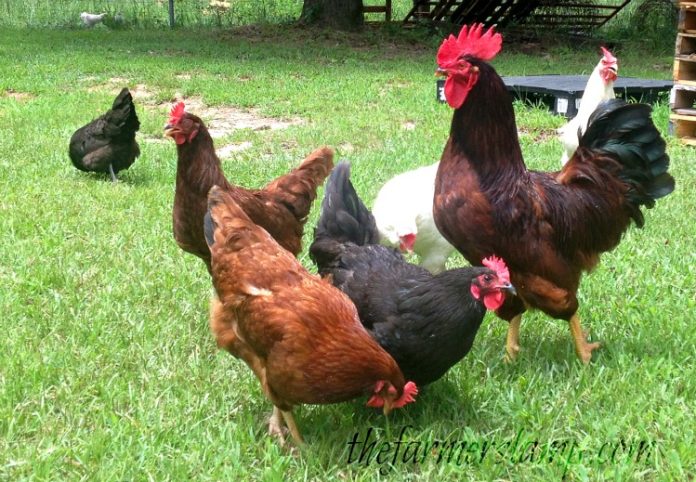
Local chicken

Ghanaians have been urged to prioritise the consumption of locally produced chicken to boost domestic poultry production and sustain the Government’s flagship “Nkoko Nketenkete” initiative under the Feed Ghana Programme.

Mr. Bright Demordzi, National Coordinator of the Feed Ghana Programme, said increased patronage of locally produced poultry would create jobs, improve livelihoods and drive economic growth.

Speaking to the Ghana News Agency (GNA) in Kumasi, he noted that poultry raised by local farmers was generally fresh and healthier, as it was not stored for long periods like some imported products.

Mr. Demordzi recalled that the “Nkoko Nketenkete” programme was launched in Kumasi by President John Dramani Mahama to revitalise the poultry industry and reduce Ghana’s dependence on imports.

He described the initiative as a strategic intervention aimed at creating employment, boosting household incomes, particularly in rural communities, and strengthening the poultry value chain. “The success of the programme depends largely on the willingness of Ghanaians to patronise locally produced chicken,” he said.

Mr. Demordzi cautioned that some imported poultry products might be unwholesome due to prolonged storage before shipment, and urged consumers to support local farmers by choosing fresh Ghanaian chicken.

He said Ghana spent millions of dollars annually on poultry imports, describing the trend as unsustainable. Under the initiative, about 60,000 households nationwide have benefited from the distribution of approximately three million birds, alongside feed support and technical training to enhance productivity.

Mr. Demordzi said the programme would strengthen the entire poultry value chain, from production to processing and marketing, and attract investment into the sector. He called on traditional authorities to support the initiative to ensure its success.

Mr. Ernest Mensah, a beneficiary at Sewuah near Kumasi, commended the Government for the intervention and urged fellow beneficiaries to take full advantage of the opportunity to improve their livelihoods.

Some stakeholders also stressed the need for improved marketing systems, cold storage facilities and competitive pricing to make locally produced poultry more attractive.

They called for a collective national effort to support the initiative, noting that increased patronage of local chicken would help reduce import bills, strengthen the economy and enhance food security.

GNA

BoG backs cross-border fintech expansion to deepen African markets 

0
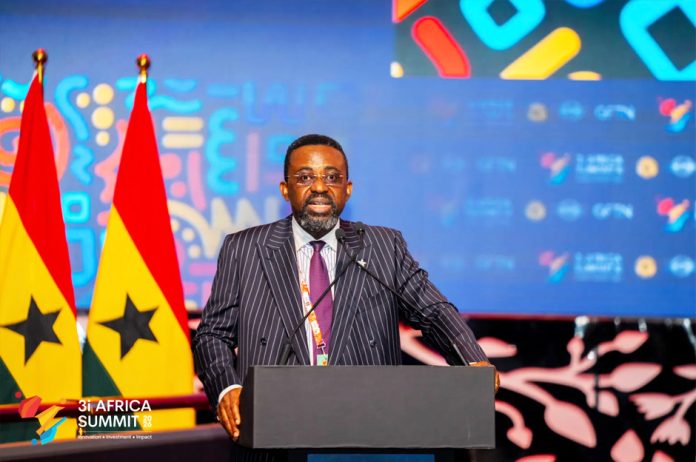
Dr Johnson Asiama addressing the summit in Accra yesterday

The Bank of Ghana has reaffirmed its commitment to supporting cross-border fintech expansion to deepen Africa’s financial markets and advance regional economic integration.

The central bank said the approach would help improve financial connectivity, reduce transaction costs, and expand access to services across African economies.

Dr Johnson Pandit Asiama, Governor of the Bank of Ghana, said this during remarks at the 3i Africa Summit 2026 in Accra, which brought together policymakers, central bank governors, investors and fintech innovators to discuss Africa’s digital finance agenda.

He said Ghana was positioning itself to facilitate seamless cross-border financial transactions, describing financial technology as a key driver of innovation, inclusion and competitiveness.

“The next phase of digital finance must go beyond domestic gains and focus on enabling cross-border services that connect markets, support trade and create value at scale,” he said.

Dr Asiama said the Bank of Ghana was implementing measures to promote innovation while maintaining financial stability and trust.

These include initiatives to support cross-border fintech activity, advance open banking, develop digital credit guidelines, and strengthen oversight of emerging technologies, including virtual assets.

Dr Asiama said cross-border fintech expansion could address structural constraints such as fragmented financial systems, high transaction costs, and limited access to financial services, while enhancing trade and improving access to capital for businesses, particularly Micro, Small and Medium Enterprises (MSMEs).

“Africa’s financial ecosystem must not only grow, it must mature. Firms with strong potential must have access to the partnerships, capital and infrastructure required to scale sustainably across borders,” he said.

The Governor called for closer collaboration among regulators, financial institutions and technology firms to support coordinated cross-border integration.

He highlighted the need to improve data quality, strengthen digital identity systems, and reinforce Know-Your-Customer (KYC) frameworks to mitigate risks.

Weak authentication systems, he cautioned, could increase fraud risks, affect credit quality, and undermine confidence in digital finance platforms.

Dr Asiama also underscored the importance of clear regulatory processes, timely decision-making, and transparency to support fintech growth across jurisdictions.

He noted that although Africa had expanded financial access significantly through mobile money and branchless banking, the next phase should prioritise value creation and efficiency.

Dr Asiama said cross-border fintech solutions would be critical in unlocking opportunities in digital trade, supply chain finance, and embedded financial services.

“The question before us is whether Africa will simply adopt the next phase of finance, or help to shape it,” he said.

GNA

Olibest, TotalEnergies Foundation Launch  VIA Safe Mobility Programme For Youth

0
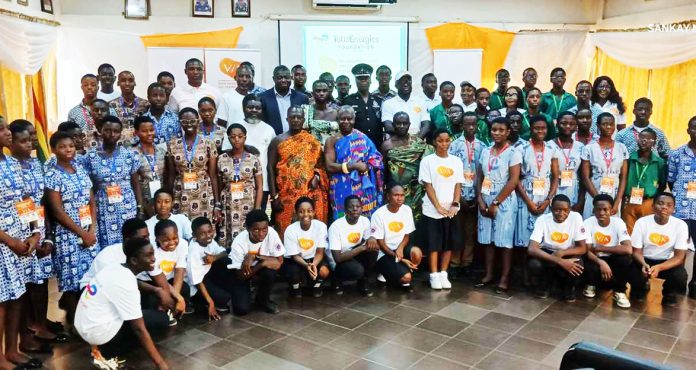
Stakeholders with the student ambassadors in a group picture after the launch

The Olibest Road Safety Organisation, with support from the TotalEnergies Foundation, has launched the VIA Safe Mobility for All Young People programme in Kumasi to promote road safety and protect lives of children.

The initiative aims to share the responsibility of road safety among families, communities, and the nation. Organisers stressed that road safety goes beyond enforcing traffic laws and requires collective action, education, and behavioural change.

The programme also seeks to train students as VIA ambassadors to identify road safety risks around their schools and create awareness campaigns in their communities.

The Ashanti Regional Commander of the Motor Traffic and Transport Department (MTTD), Superintendent Kwame Boadi speaking at the launch,  said effective road safety depends on stronger strategies, education, and collaboration among stakeholders, including the Ghana Police Service, Ambulance Service, and Ghana National Fire Service noting that “Together we can reduce road accidents and make our roads safer.”

Nana Osei Fosu Twum, Kwasohene, who delivered the keynote address as Guest of Honour, described the programme as a bold step towards safer roads and the protection of lives, particularly young people.

He noted that behavioural change was key to building a culture of discipline and responsibility on the roads and commended the organisers for promoting safety. Nana Twum urged Children to make themselves agents of change in their schools and communities stressing that Road safety was a shared responsibility, not a one-time event, but a sustained culture where safety was non-negotiable.

Mr. Ernest Butias, a representative of the Managing Director of TotalEnergies Marketing Ghana PLC, said safety must directly touch the lives of young people. He encouraged parents, teachers, and all stakeholders to support the initiative, reminding the children that they are not too young to bring change.

Mr. Butias reaffirmed the company’s commitment to safety beyond its operations. He said the VIA programme, developed by the TotalEnergies Foundation in partnership with the Michelin Corporate Foundation in 2019, had reached more than one million young people in 45 countries and over 2,000 schools worldwide.

He indicated that the programme would be implemented in Ghana in collaboration with educational authorities, schools, local communities, and the OliBest Road Safety Organisation.

Mr. Dennis Yerebu, on behalf of Olibest Roads Safety Organisation, explained that the programme was designed to ensure the younger generation grew up with a strong safety consciousness to prevent cutting lives short.

Ashanti Regional Director of the National Road Safety Authority, Mr. Akwasi Boateng, added that fatalities in the Ashanti Region remained high because of increasing traffic and population growth and called on all stakeholders to help reduce road crashes.


For more news, join The Chronicle Newspaper channel on WhatsApp: https://whatsapp.com/channel/0029VbBSs55E50UqNPvSOm2z
The Ghanaian Chronicle