Home Blog Page 1016

Breaking: Ato Forson nominated for Finance; Abu Jinapor Energy

0
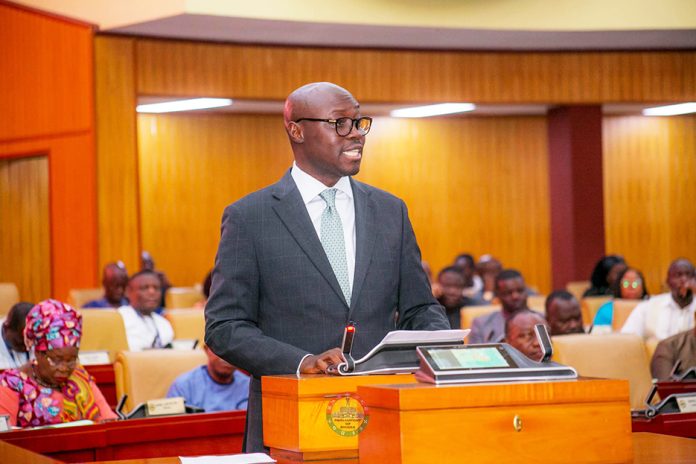
Dr Cassiel Ato Forson, Minority Leader

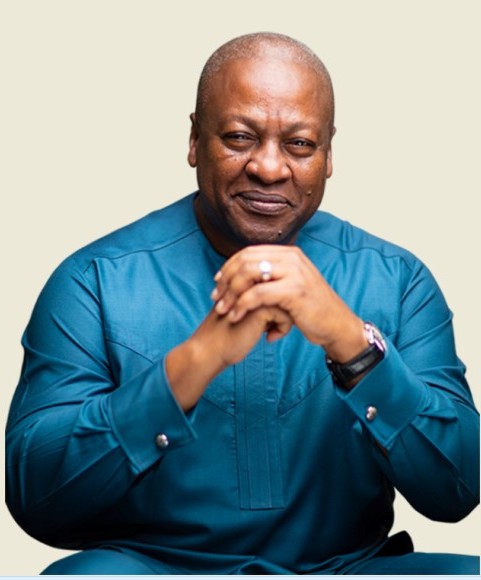
The President, John Dramani Mahama has made his first ministerial nominations.

A letter sent to the Speaker of Parliament today, informed the House of the nomination of the Majority Leader, Dr. Cassiel Ato Forson as the minister for finance designate.

Also, John Abdulai Jinapor has been nominated for the position of minister for energy.

The third nomination is Dominic Ayine for the position of Attorney General and Minister for Justice.

The Speaker of Parliament, Alban Sumana Kingsford Bagbin read the communication from the President to him on the floor on Thursday, January 9, 2025.

The House, which constituted its appointment committee only yesterday is expected to immediately vet these nominees and approve or reject their nominations.


GNASSM Ready To Help JM Fight Galamsey

0
Gordwin Armah, Geneneral secretary of GNASSM

The Ghana National Association of Small Scale Miners (GNASSM) has penned a heartfelt congratulatory letter to President John Dramani Mahama, acknowledging the trust the people of Ghana had bestowed upon his leadership and ready to help him fight against illegal mining.

“The overwhelming support and endorsement from the people of Ghana is a testament to the trust they have placed in your leadership and vision for the nation’s future. We commend your commitment to advancing the growth and development of the country”, the association noted.

In a statement signed and released on Wednesday, January 8, 2025, by the General Secretary of GNASSM, the small scale miners emphasised their commitment to collaborating with President Mahama’s administration to promote environmental stewardship, particularly, protecting water bodies and forest reserves.

GNASSM acknowledged the critical role small-scale miners play in Ghana’s mining sector, assuring that they remain steadfast in our mission to combat illegal mining, popularly known as galamsey.

The association highlighted the barriers they have surmounted in collaboration with successive governments and noted that a lot more needed to be done in the fight against illegal mining and environmental degradation.

They, in particular, called for collaboration in the areas of enforcing the mining laws, especially those on environmental degradation and water pollution; engineering, designing of equipment, site planning and layout and the use of mining engineers.

They also want mining communities, Civil Society Organisations, mining associations and the media to be empowered or build on their capacities to deal with illegal mining menace at the local level.

Additionally, they want a strong partnership with the government to improve on attitudinal change of people towards the environment.

“As we move forward, we are committed to deepening this collaboration to ensure that Ghana’s mining industry thrives in an environmentally responsible manner, benefitting both the nation’s economy and its future generations”, the statement in part read.

By Stephen Odoi-Larbi

Mahama’s Investiture: Zoomlion Lauded For Cleaning Accra

0
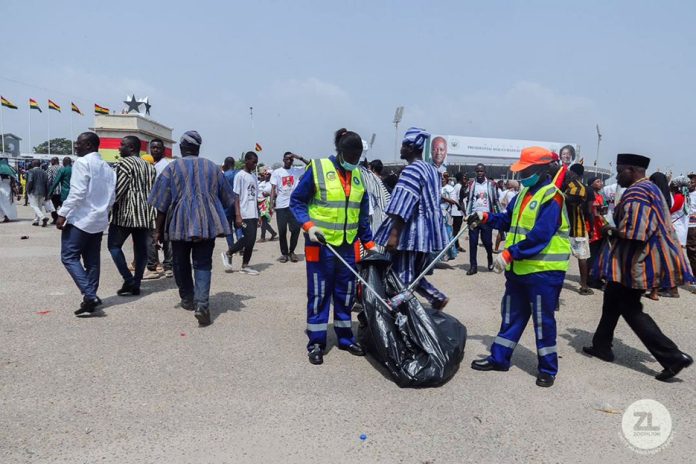
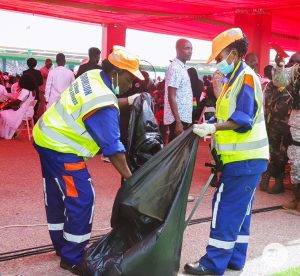
Zoomlion workers busily working

Zoomlion Ghana Limited has earned praises for its exceptional efforts in beautifying the Black Star Square and parts of Accra for the inauguration of the Government of President John Dramani Mahama.

The event marked the beginning of President’s Mahama’s new term in office, following his swearing-in on Tuesday, January 7, 2025.

The company’s clean-up and beautification work has been lauded as “ par excellence” by many who attended the event, including party faithfuls and citizens who attended the event.

To prepare the Black Star Square for the ceremony, Zoomlion deployed over 500 personnel to undertake a comprehensive clean-up and beautification exercise across major streets of Accra.

Workers of Zoomlion transformed the Black Star Square into a stunning oasis, boasting beautifully landscaped artificial turf that perfectly complemented the majestic architecture of the Ghanaian Parliament. The breath-taking result was truly a sight to behold!

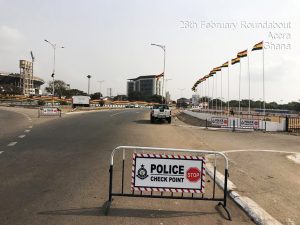
The workers also cleaned Accra’s ceremonial streets, decorated traffic lights and trees with national colours, weeded road medians, swept streets, desilted drains and painted the curbs.

The clean-up and beautification exercise ensured that the Black Star Square and ceremonial streets of Accra were spotless and radiant for the historic inauguration ceremony. Additionally, the company painted pavements and pedestrian walkways.

One of the streets cleaned

Zoomlion’s consistent contributions to Ghana’s cleanliness and environmental sustainability demonstrate its dedication to the country’s well-being.

President Mahama’s return to power is highly anticipated with many Ghanaians hopeful that he will bring about positive change and development.

After winning the 2024 presidential election with over 57% of the votes, President Mahama is expected to focus on addressing the country’s economic challenges, including unemployment and inflation during his second term.

Mahama Sacks All MMDCEs

0
President John Mahama

Effective yesterday, January 8, 2025 all Metropolitan, Municipal and District Chief Executives (MMDCEs) have had their appointments revoked.

In the interim, Coordinating Directors of the various MMDAs have, therefore, been asked to assume responsibility and act in that capacity in their respective districts, until substantive appointments are made.

A letter signed by Dr Callistus Mahama, the Executive Secretary of the President, said the directive is in accordance with the powers vested in the President, John Dramani Mahama, under the provisions of the Local Government Act 936 of 2016.

Dated January 8, 2025 the letter with reference No. OPS/127/25/18 said further that all Government appointees (assembly members appointed under the relevant provisions of the Act) at the various MMDAs are also to comply with the directive

Meanwhile, John Bediako reports from Tema that at the time the news about the sacking of the MMDCEs was filtering in the system, National Democratic Congress (NDC) Women and Youth Organisers in Tema stormed a number of state enterprises in the Port City and demanded their pound of flesh.

From the three Constituencies, Tema East, Central and West, the over one hundred red beret wearing group chanted the popular NDC revolutionary song, “cadres may come, cadres may go, but the revolution has come to stay…”.

The targeted companies were Ghana Ports and Harbours Authority (GPHA), Tema Oil Refinery (TOR), Tema Development Corporation (TDC), COCOBOD and VALCO.

At the Ports Authority, it took the intervention of former Director of Port, Tema, Mr Jacob Adorkor, to prevail on the activists to abandon their posture.

The leadership of the group was emphatic that they were there for employment.

To them, eight years ago, some of them, though successfully completed their respective probation sessions and were fully engaged, the New Patriotic Party (NPP) government decided to sack them without cause.

The group blamed the outgone government for the woes of a vital installation such as TOR and, therefore, demanded the immediate removal from office of the management, including the TDC.

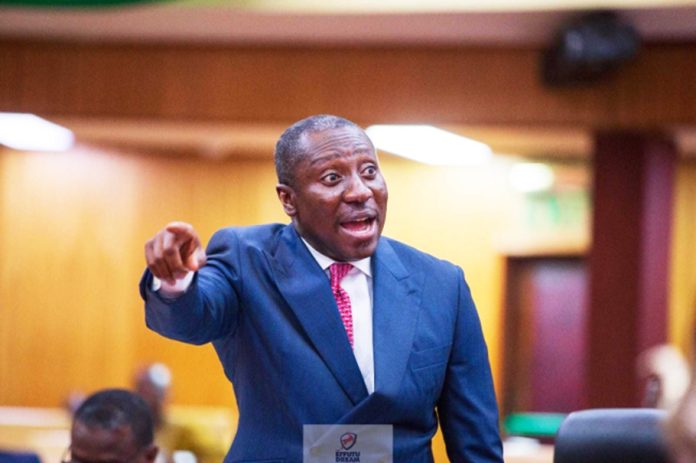
Afenyo Markin Rejects Micro-Minority Tag

0
Minority Leader, Osahene Alexander Afenyo-Markin

The Minority Leader, Osahene Alexander Afenyo-Markin, yelled at the Speaker, Alban Sumana Kingsford Bagbin in parliament yesterday, for describing his side as a “micro-minority.”

During proceedings of the 9th Parliament on Wednesday, January 8, 2025 the Effutu Member of Parliament (MP), Afenyo-Markin, strongly objected to the minority being described as ‘micro’ and issued a caveat that not even the Speaker nor members of the majority should ever refer to his side as a micro-minority.

According to him, the New Patriotic Party (NPP) MPs in the 9th Parliament are the Minority Caucus, and urged that they be referred to as that and nothing more.

“Mr. Speaker, we protest the description [micro minority] given to us by Mr. Speaker. We find this unacceptable,” the Minority Leader said.

Though such description had been used on the floor severally by the NDC MPs before the 8th Parliament was dissolved after the December 7 polls, it being used by Speaker Bagbin appeared to be the last straw to break the camel’s back.

The House was correcting votes and proceedings for Tuesday, January 7, 2025 when a member on the side of the minority was heckled by the majority.

The Speaker, who noticed that the heckling had gone beyond normal levels, announced to members that the duties of the Speaker included protecting “the micro-minority.”

He said, “Let it be known by all of you that it is part of the duty of the Speaker to protect the micro-minority.”

PROTEST

The description did not augur well with the NPP MPs, who all stood on their feet to register their displeasure, which caught the attention of the Speaker.

In furtherance, the Minority Leader was given the floor by the Speaker to articulate his views.

He said, “Mr. Speaker, with respect, I shall, in response to what you just said about your duty to protect the micro-minority. Mr. Speaker, the rules of the House provide for the minority and the majority. Mr. Speaker, we do not have any micro-minority; the minority caucus hereby protests.

He continued that, “Mr. Speaker, we protest the description given to us by Mr. Speaker. Mr. Speaker, we find this unacceptable. We don’t accept the description micro-minority”; we are a minority, simplicita, I so submit.”

BAGBIN AGREES

The Speaker, in response to the protest of the minority, “totally” agreed to the position of the minority caucus.

Though some members of the majority wanted to comment on the issue, Speaker Bagbin declined the request, saying “This is not subject to debate.”

He continued that, “the minority leader on behalf of the minority caucus has objected to my describing their caucus as a micro-minority caucus and that this is a term that is unknown to the rules of the House; he is totally right.

“The objection is to the fact that it should not be formally recognised by the records of parliament. I agree with you.”

He recalled that in a previous parliament, the majority was referred to as populous majority and there was no problem because that was “edifying.”

However, micro-minority is “not edifying,” and thus assured the minority that it would not be used going forward.

The term micro-minority was coined by the NDC MPs to reflect the size of their opponents in the House, as the NPP MPs are not up to 100 members in the House.

FIRST COMMITTEE

Meanwhile, at the time of filing this report in the evening of yesterday, the 9th Parliament had composed its first committee, which began work right after the House adopted the proposed names.

It was the Select Committee consisting of about 17 members of Parliament; 12 and five from the majority and minority, respectively. The ratio reflects the number of seats both sides occupy in the House.

The Select Committee is to put together members for the other committees of Parliament, after which the 9th Parliament would fully sail.

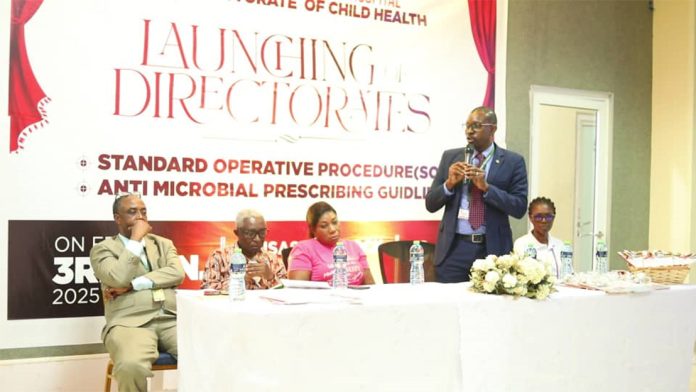
Standard operating procedure, antimicrobial prescribing guidelines launched at KATH

0
Dr. Yaw Opare Larbi, (standing) speaking at the event

The Directorate of Child Health at the Komfo Anokye Teaching Hospital (KATH) has officially launched a new Child Health Standard Operating Procedure (SOP) and Antimicrobial Prescribing Guidelines to enhance paediatric care and combat antimicrobial resistance.

The launch of the SOP and Antimicrobial Prescribing Guidelines is expected to have a profound impact on child health care in the region and beyond.

By standardising practices and promoting responsible antibiotic use, the directorate aims to improve health outcomes for children who are the most vulnerable members of the community.

The initiative is designed to streamline clinical practices and ensure that children receive optimal treatment while minimising the risks associated with inappropriate antibiotic use.

The SOP aims to provide a framework for healthcare providers to follow, ensuring consistency in the treatment of paediatric patients.

SOPs also help maintain high-quality care across different healthcare professionals and departments and help reduce the risk of errors in treatment and medication administration by providing step-by-step instructions.

With regards to antimicrobial prescribing, SOPs provide specific guidelines to ensure appropriate use of antibiotics, helping to combat antimicrobial resistance.

Antimicrobial prescribing guidelines are structured recommendations designed to optimise the use of antimicrobial agents in clinical practice.

These guidelines aim to ensure effective treatment while minimising the risks associated with antimicrobial resistance and adverse effects. It provides evidence-based recommendations that ensure patients receive the most effective antimicrobial therapy for their infections, to enhance patient safety by minimising the risk of adverse drug reactions and drug interactions.

The Head of the Child Health Directorate, Prof. Sampson Antwi, referred to the rising concerns about antimicrobial resistance, and how SOPs play a crucial role in enhancing the overall quality of healthcare services, particularly in specialised areas like paediatric health care.

He stated there would be a mechanism to ensure the strict adherence to the new standard operative procedures and antimicrobial prescribing guidelines.

“The Directorate will provide training sessions for healthcare staff to familiarise themselves with the new protocols and ensure effective implementation in clinical settings,” he stated.

The Director of Pharmacy of KATH, Pharm. Kwaku Sarfo, stated that the initiative will need a bit of time to effectively work since it is new in the system and, therefore, must follow strict due processes.

He commended the directorate for its timely initiative as it will have a positive impact on the hospital.

“This initiative represents a significant step forward in our commitment to providing safe and effective healthcare for children. By adhering to these guidelines, we can improve patient outcomes and contribute to global efforts against antimicrobial resistance,” he said.

Dr. Justice Sylverken, the Lead Clinician of the Child Health Directorate noted that, “The new SOP will not only enhance the quality of care, but also empower our healthcare professionals with the knowledge and tools necessary to make informed clinical decisions.”

The official launch, attended by healthcare professionals, stakeholders, and representatives of the hospital’s management members, was presided over by the acting Medical Director of the hospital, Dr. Yaw Opare Larbi, who also deputised for the CEO, Prof. Otchere Addai-Mensah.

He applauded the management of the directorate for its proactive decision to develop the SOP and the Antimicrobial guidelines.

He encouraged healthcare providers to justify the use of antimicrobial for each patient, ensuring that they are necessary and appropriate.

The Art of Finding Work column

0

According To Job Seekers, There Is ASurge In “Isms.” Is It True? Five hundred applicants (conservative estimate), one hire:

  • 500:1 ratio
  • 2% chance of getting hired

Regardless of your education, skills, experience, and whom you know, job searching today is akin to betting against the house. The 499 who didn’t get hired will likely say:

  • “I’m over 45, so it must be ageism.”
  • “I’m green, so it must be racism.”
  • “I identify as [whatever], so it must be [whatever].”
  • “I don’t fall into a DEI category, so it must be reverse racism.”

Rare is the job seeker who’ll say, “I could have done a better job applying/interviewing.” In most cases, job seekers reach for the “I’m a victim!” card (read: excuse) as the reason they weren’t selected for an interview or hired.  With all the rejection going around these days, self-professed career coaches who never provide empirical data and offer only selective anecdotes (details are never given) exploit the vulnerability of job seekers by telling them what they want to hear—it’s not their fault, employers are bad people looking for unicorns and rockstars—as a ploy to sell their “service.” Actions and inactions have consequences, especially when job hunting. Based on my observations and conversations, people rarely consider the consequences of their actions or inactions and rather blame circumstances—everyone but themselvesfor why they’re not achieving success. What you eat today will affect you tomorrow. Not returning a phone call immediately could mean a lost opportunity. Nowadays, the sense of entitlement among job seekers is so prevalent that it’s fueling an often expressed and seen anger: “I’m not getting what I deserve!” “I’m not getting what I want!” Anger frequently results in false pride and an overinflated belief in your worth—the job market determines your worth, not your opinion of yourself—which is extremely difficult to overcome. We are all born into this world to make our own way; nothing is promised, including health, safety, food, shelter, happiness, love, or a job. Then there’s social media, which does one thing exceptionally well—actually, “too well;” it amplifies voices, opinions, and narratives. The result? A toxic echo chamber that can make it seem like everyone is a victim of something—ageism, sexism, racism, etc. While many ‘isms’ are undeniably true, you’ve no influence in changing them. Dwelling on isms distracts you from finding a job. As a job seeker, you’re in the finding a job business, not the changing how employers hire advocacy business. Since your mindset directly influences your attitude and behaviour, having an “I’m a victim!” mindset is unproductive and damaging to your job search efforts. Blaming external factors, which you most likely can’t quantify, for your job search frustrations will not bring you closer to finding a job. Job seekers who play the victim card become passive observers of the job market instead of taking action to change their job search strategy. A victim mentality or a sense of entitlement turns employers off and will be evident when interviewing. An experienced recruiter or hiring manager can spot entitlement or a f*ck you attitude right away. Employers prefer proactive, resourceful candidates who take responsibility for their actions. Rather than focusing on the alleged amount of isms out there, here are three pieces of advice:

  1. Let go of any sense of entitlement you may have.

  If you do nothing more than lose any sense of entitlement you may have, you’ll be further ahead than most job seekers. Employers—the world—don’t owe you anything! Network relentlessly—reach out to contacts, attend events, and engage on LinkedIn. Embrace rejection as a learning tool; analyze what went wrong and adjust your job search strategy. Cultivate resilience; setbacks are part of achieving a goal journey. Finally, focus on what you can contribute to employers rather than what you want an employer to give you.  

  1. Take full responsibility for your actions and inactions.

  Acknowledging that your actions and inaction are the ultimate contributing factor to your job search success is crucial. Instead of blaming external factors, control what you can influence.  

  • Are you applying to the right jobs and companies? (My advice to all job seekers: Don’t look for a job; look for your tribe! Seek employers who’ll welcome you.)
  • Does your resume and LinkedIn profile showcase the tangible results you’ve achieved for your employers, backed by numbers or simply your opinions?
  • Are you actively seeking out opportunities and networking?

  “Actions have consequences… first rule of life. And the second rule is this – you are the only one responsible for your own actions.” – Holly Lisle, American writer.

  1. See yourself as a solutions provider.

Focus on articulating how you can solve problems for an employer. By envisioning yourself as a solutions provider—”How can I help this employer?”—you cultivate a proactive approach to your job search. When job hunting, your greatest asset is your mindset. Yes, ongoing systemic isms issues exist and affect your job search. However, allowing isms, which I repeat, you can’t do anything about to influence your job search is pointless. Don’t let those with an entitlement mentality convince you there are a host of “isms” preventing you from getting a job and divert your energy and focus from getting a job. By Nick Kossovan Nick Kossovan, a well-seasoned corporate veteran, offers “unsweetened” job search advice. Send Nick your job search questions to artoffindingwork@gmail.com.

Editorial: Captain Ibrahim Traore’s Diplomatic Faux Pas Must Be Condemned

0
Editorial

John Dramani Mahama and Professor Naana Jane Opoku-Agyemang were officially sworn in as Ghana’s President and Vice President respectively at a vibrant ceremony held on Tuesday, January 7, 2025 at the Black Star Square in Accra.

The event, a significant moment in Ghana’s democratic journey, attracted dignitaries from across the globe, including sitting and former presidents, political leaders, religious leaders, traditional leaders and the general public.

Among the distinguished guests was Burkina Faso’s Head of State, Captain Ibrahim Traore, whose presence symbolised solidarity and the strengthening of regional ties.

However, one striking element during the event drew public attention, when Captain Ibrahim Traorewent to congratulate the newly inducted president carrying his sidearm which wasvisibly fixed on him. This has sparked a broader discussion on diplomatic and security protocols.

First of all, The Chronicle strongly condemns the breach of protocol by Captain Ibrahim Traoré and his security guards. This act not only violated established diplomatic norms but also highlighted glaring lapses in security protocols on the part of those in charge of providing safety on the day.

While regional solidarity and mutual respect among African leaders are crucial, such a breach of protocol undermines the sanctity of diplomatic engagements and raises critical concerns about the security of similar high-profile events in the future.

The conduct of visiting dignitaries during state functions is governed by well-established diplomatic norms designed to promote trust, mutual respect and peaceful collaboration. Central to these is the Vienna Convention on Diplomatic Relations (1961), which provides a framework for interactions between states.

It emphasizes respect for the sovereignty of host nations and dictates that visiting leaders entrust their safety to the host country’s security apparatus. This practice is both practical and symbolic, demonstrating trust in the host nation’s capacity to protect its guests.

Captain Traoré’s decision to visibly carry a sidearm during a formal diplomatic event not only flouted these unwritten rules but also sent an unsettling message.

Globally, visiting heads of state adhere to strict disarmament protocols during diplomatic visits. Even in countries with heightened security concerns, these protocols are observed to preserve decorum and mutual respect. For instance, during visits to the United States, no foreign leader is permitted to carry arms; their security is solely entrusted to the U.S. Secret Service.

Closer to home, Nigeria has hosted numerous African leaders during state visits and regional summits, including Captain Traoré’, without any incidents of armed dignitaries. This act is accepted nowhere and Ghana should not be an exception.

Though Burkina Faso is a frontline state in the fight against terrorism in West Africa and is grappling with insurgencies that have left parts of its territory ungovernable. This has resulted in Captain Traoré’s leadership style deeply rooted in his military background, and his visible armament may reflect a calculated statement of resilience amid these challenges.

However, it is not an excuse for him to visit the country armed. Diplomatic settings like Ghana’s inauguration are not the place for such displays. They demand a careful balance between personal security concerns and adherence to international norms.

Emmanuel Bensah, a policy analyst with ECOWAS and the African Union rightly described the incident as a “security risk” during an interview with an Accra based television station. Allowing any foreign leader to approach the President while visibly armed reflects a failure in the pre-event security sweep and raises concerns about the adequacy of the measures in place.

While Ghana prides itself on its reputation for peace and stability in the region, this incident exposes vulnerabilities that could have been exploited in less benign circumstances.

Ghana’s role as a beacon of democracy and stability in West Africa places a significant responsibility on its shoulders. Incidents like this undermine the country’s reputation and set a dangerous precedent for future diplomatic engagements.

What if other leaders decide to emulate President Traoré’s actions? Would Ghana’s security apparatus be prepared to manage such deviations from protocol without compromising the safety and dignity of its own leaders?

We must act swiftly and decisively to prevent such occurrences in the future, ensuring that its reputation as a bastion of stability and diplomacy remains intact.

We must take immediate steps to review and tighten its security protocols for state events. Stricter measures, including comprehensive disarmament checks for all dignitaries, must be non-negotiable moving forward.

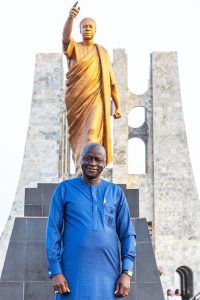
World Bank Vice President Visits Upgraded Kwame Nkrumah Memorial Park

0
World Bank Regional Vice President,Mr. Ousmane Diagana leading the delegation in the tour (middle in blue)

The World Bank Vice President for Western and Central Africa, Ousmane Diagana, has visited the newly re-developed Kwame Nkrumah Memorial and Mausoleum Park (KNMMP) in Accra. The $4.8 million renovation was funded by the World Bank, under the Ghana Tourism Development Project, which was aimed at enhancing tourism in selected destinations across the country.

The refurbishment began in May 2022 and was completed in 12 months, leading to the park’s reopening on July 4, 2023.

World Bank Regional Vice President,Mr. Ousmane Diagana

Key upgrades included the construction of a Presidential Library, Freedom Hall, an amphitheatre, an audio-visual tunnel, a new water fountain and a modernised reception area with a digital payment system.

Speaking during his visit, Mr. Diagana stated “Dr. Nkrumah’s vision and ideology will continue to inspire future generations of Africans. I am delighted that the World Bank was part of expanding and enhancing this museum, a unique site for learning about this great leader’s life and achievements.”

Since its reopening, the park has recorded over 208,000 visitors in its first year, a significant increase from the pre-renovation annual average of 98,000.

Revenue generated during this period totaled GHS 4.98 million ($340,000), contributing to the Ministry of Tourism’s $3.4 billion revenue target.

The park, one of Ghana’s top 10 tourist attractions, now serves as a venue for cultural events, educational tours, and national celebrations. Its striking design features an inverted sword, symbolizing peace in Akan culture, and is adorned with Italian marble.

The black star atop the structure represents unity, while surrounding water features signify life and continuity. A skylight illuminating Dr. Nkrumah’s grave marker creates a serene and reverential ambiance, reflecting his vision for peace and progress.

Spanning five acres in area, the Kwame Nkrumah Memorial Park commemorates Ghana’s first president, Dr. Kwame Nkrumah, a key figure in the country’s independence and the Pan-African movement.

Located on the grounds where Dr. Nkrumah declared Ghana’s independence on March 6, 1957, the park houses his final resting place alongside that of his wife, Fathia Nkrumah. Dr. Nkrumah, who led Ghana from independence in 1957 until his overthrow in 1966, spent his later years in Guinea before passing away on April 27, 1972, in Bucharest, Romania.

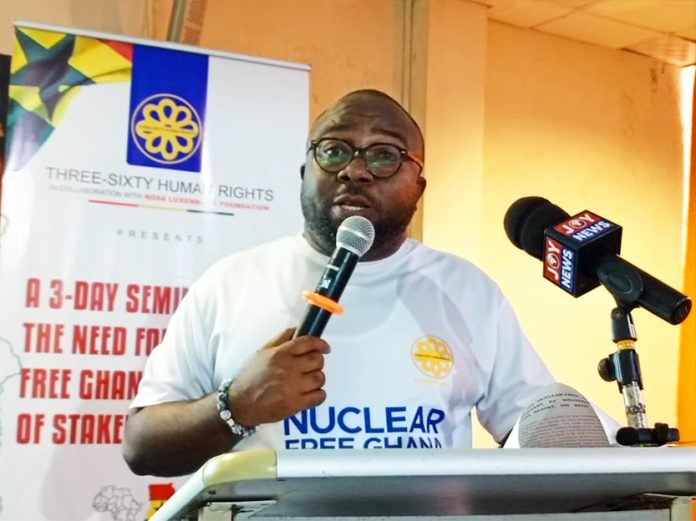
Human Rights 360 kicks against nuclear energy in Ghana

0
Solomon Appiah delivering the keynote address

A Non-Governmental Organisation, Human Rights 360, has vehemently kicked against Ghana’s determination to switching to nuclear energy as an alternative to the country’s perennial power crisis.

The NGO, as part of its advocacy against ongoing negotiations and implementation of the various phases of the agreement signed by past and successive governments, has called on Ghanaians to resolutely mount pressure on the government to abandon the idea.

This came to light during a stakeholders’ forum organised by Human Right 360 at Elmina to sensitise the people about the dangers involved in the use of nuclear to generate electricity.

In her welcome address, the Executive Director of Three-Sixty Human Rights, Alberta Kpeleku, noted that throughout various discussions about possible Nuclear Power in Ghana, very little has been said about its deadly side effects.

Other participants seated

This, she said, informed the decision of 360 to educate the masses to become abreast of the real dangers associated with the nuclear power generation and the need to have “Nuclear Free Ghana”.

She further called on government to consider the vulnerabilities of the populace in case of any disaster associated with nuclear plants and rather prioritise other forms of renewable energy such as solar which she said was comparatively cheaper.

Keynote address

Delivering a keynote address, under the theme: “Nuclear-Free Ghana, The Role of Stakeholders”, a legal practitioner, Lawyer Solomon Appiah, stated that the impact of energy crises on the economy could not be underestimated.

According to Lawyer Appiah, the overreliance on the Akosombo Hydro Dam as the country’s primary energy source was mainly responsible for the recurrent power crises that kept bedevilling the country.

In view of this, he said, there has been a long standing consideration of nuclear energy as the long term solution to the country’s energy crises, which would ensure efficient and stable power supply in the future.

However, he queried the country’s preparedness to handle nuclear waste and how best the waste would be disposed safely to avert any concomitant effects on human lives and the environment in general.

“It is true that nuclear waste, particularly in the form of radioactive waste, presents a lot of health risks among infants, children and the elderly.

“Are we ready as a country to go nuclear when we cannot solve our basic economic and health needs,” he asked.

In his estimation, though nuclear energy, undeniably played a significant role in the global energy landscape, Ghana must carefully assess the risks and benefits of adopting atomic energy as an alternative source to hydroelectric power.

Other Speakers’ concerns

A specialist Physician and the Head of Dialysis Unit of the Cape Coast Teaching Hospital, Dr Evans Maccready, who was a speaker for the event, noted that Ghana’s health care delivery system lacked capacity to handle nuclear plant explosions accidents.

According to Dr Maccready, government must take into consideration the fact that the current system has not been adequately equipped to respond swiftly and effectively to treat large number of casualties in case of any associated disaster.

Dr Maccready, therefore, appealed to the government to hasten slowly on its quest to introduce nuclear energy because apart from the fact that the country did not have adequate response capabilities, waste generated from nuclear plants could also pose a major challenge to the country.

On his part, a senior lecturer at the Institute of Education, University of Cape Coast, Professor Christopher Beccles stated that Ghana must rather shift attention to sustainable alternatives of energy instead of nuclear.

He explained that it was high time Ghana “concentrated on improving what we have and put in much effort to use renewable energy and move away from nuclear” citing the Fukushima explosion as an example to illustrate his point.

Stakeholders’ reaction

Having become abreast of the dangers and other risk factors, the various stakeholders such as chiefs, queen mothers, educationists and other opinion leaders who attended the event expressed deep concerns about nuclear energy.

Expressing their frustrations about the fact that they had very little to no idea at all about the government’s decision to introduce nuclear energy, which would require a nuclear reactor, the stakeholders agreed that government must abandon the move.

The Ghanaian Chronicle