Home Blog Page 1011

Ukraine capture two injured North Korean soldiers in Russia

0
Volodymyr Zelenskyy, President of Ukraine

Two wounded North Korean soldiers have been captured as prisoners of war by Ukrainian troops in Russia’s Kursk Oblast, President Volodymyr Zelensky said on Saturday. The two men are receiving “necessary medical assistance” and are in the custody of the Security Service of Ukraine (SBU) in Kyiv, according to Zelensky.

The president said he was “grateful” to Ukrainian paratroopers and soldiers from the Special Operation Forces for capturing the North Koreans.

He added that “this was not an easy task”, claiming that Russian and North Korean soldiers usually execute wounded North Koreans “to erase any evidence of North Korea’s involvement in the war against Ukraine”.

The Ukrainian intelligence service said in a statement that the prisoners were captured on 9 January and immediately after were “provided with all the necessary medical care as stipulated by the Geneva Convention” and taken to Kyiv.

“They are being held in appropriate conditions that meet the requirements of international law,” the intelligence service’s statement read.

The intelligence service said the prisoners do not speak Ukrainian, English or Russian, “so communication with them is carried out through interpreters of Korean, in cooperation with South Korean NIS (National Intelligence Service)”.

In a statement posted on Telegram and X, Zelensky said the soldiers were “talking to SBU investigators” and he had instructed the Security Service of Ukraine to grant journalists access to them.

“The world needs to know the truth about what is happening,” he added.

Credit: bbc.com

Israel steps up Gaza attacks amid renewed ceasefire push

0
Palestinians gather to receive aid food

At least eight people have been killed in an Israeli attack on a school sheltering displaced Palestinians in northern Gaza, as Israel sent several senior officials for talks on a potential ceasefire.

An Israeli attack on Saturday hit the Zainab al-Wazir school in northern Gaza’s Jabalia al-Balad area, killing eight civilians, including two women and two children, according to the Palestinian civil emergency service.

“The Israelis have targeted us without any prior warning,” a mother told Al Jazeera, as she searched through the debris. “They attacked us with a missile. I don’t know where our children are. I don’t know anything about them, whether they’re wounded or killed.”

Al Jazeera’s Moath al-Kahlout described the scenes at al-Ahli Hospital in Gaza City, where dozens of the wounded were taken, as “bloody” and “dire”, noting the dearth of medical supplies under Israel’s ongoing siege of northern Gaza, which has been in place for more than 80 days.

Later on Saturday, the official Palestinian news agency Wafa reported strikes on various locations across Gaza, including an attack on a house in the Daraj neighbourhood in Gaza City, which killed four Palestinians and wounded several others.

Israeli fighter jets also bombed a tent sheltering displaced families in Deir el-Balah, located in the centre of the enclave, killing three people, Wafa reported.

Credit: aljazeera.com

Know The Different Types of Headaches

0
Headache

There’s no one-size-fits-all way to know why you have a headache at a certain spot on your head. Different people may experience headaches differently, including where they strike and how intense the pain is. Pain on the top of your head could mean several things, and you’ll want to watch for other symptoms that may suggest what’s going on and the reason for it.

Tension Headaches

If your headache feels like it’s at the top of your head, it may be a tension headache. Sometimes, tension headaches are called “hatband” headaches because they can cause pain in your forehead, temples, and the back of your head, similar to the sensation of wearing a tight hat. And the pain may feel like pressure.

Tension headaches are the most common type of headache. It’s not always clear what causes them, but it may be that tension builds in your muscles when you hunch over your computer for hours or pin your phone to your ear with your shoulder. Stress or anxiety may also cause tension to build in the muscles in your neck, face, jaw, and scalp.

A hot shower, warming pad, and over-the-counter (OTC) meds can help. Regular exercise along with meditation and other relaxation practices might stop tension headaches before they start.

Migraine

A throbbing pain starts small and builds, sometimes to very high intensity. It’s usually on one side of the head, but it may also include some or all of the top of your head. Everyday movements such as household chores and walking can make it worse.

During a migraine, you may be more sensitive to light, noise, and smells, and you could get nauseous enough to vomit. Another common sign is an “aura” that looks like flashing lights or waves that you see just before or during a migraine.

It’s often hard to tell what causes a migraine, but doctors do know of some triggers — hormone changes, stress, anxiety, sleep problems, strong odors, tobacco, and missed meals. Trigger foods include coffee, wine, chocolate, aged cheeses, pickled goods, and processed meats. Talk to your doctor about lifestyle changes that can help lessen or prevent migraine.

When you have a migraine, resting in a quiet, dark room can help bring relief. It also might be good to drink some caffeine and get plenty of fluids, especially if you’re vomiting. Your doctor might suggest or prescribe medication that will work best for you.

Cluster Headaches

The “cluster” refers to the way these types of headaches repeat, almost daily, sometimes for weeks at a time.

These headaches tend to be very painful, on one side of the head behind the eye, and happen at the same time of the day. Though the pain doesn’t usually start on the top of the head, it could radiate there as the headache gets worse.

You may have a migraine-like aura and nausea just before each one. Pain usually peaks 5-10 minutes after it starts and can last up to three hours. Your nose and eyes may get red and swollen on the headache side, and you may be anxious and sensitive to light, sounds, or smells.

Their cause usually isn’t clear, but sleep problems, alcohol, and smoking set off these headaches in some people. You may also be more likely to have cluster headaches if you’ve had a head injury before. Talk to your doctor about treatment.

Hypnic Headaches

Sometimes, this type of headache is called the “alarm clock” headache, because it happens while you’re sleeping and wakes you up, usually at the same time each night.

The pain from a hypnic headache may feel dull, but it can range from mild to severe. And you can usually feel it on both sides of your head. A hypnic headache can last 15 minutes to four hours.

Hypnic headaches are rare, and they usually affect people between 40-80 years old. If you think you have hypnic headaches, you should see a doctor to make sure the headaches aren’t caused by another medical issue.

Treatment for hypnic headaches may include taking caffeine at bedtime, melatonin, or flunarizine.

Brain Freeze

When you eat or drink something cold, such as ice cream or a frozen drink, you might get a brain freeze, also called an ice cream headache or a cold stimulus headache. It can be an intense pain at the front of your head, but it usually goes away quickly — within a few seconds to two minutes.

Sometimes, you can get a brain freeze from breathing in freezing air, too. A brain freeze happens when blood vessels around your palate react to the cold by tightening up and then expanding quickly, which causes pain. Although the blood vessels are around your palate, you feel the pain higher up in your head.

Usually, a brain freeze doesn’t last long. But if you find yourself with a headache from brain freeze, it might help to drink a liquid that’s warm or at room temperature, or to press your tongue against the roof of your mouth. To prevent a brain freeze, you can try to eat or drink very cold food and drink slowly so that the cold in your mouth or throat isn’t so sudden.

Credit: webmd.com

Feature: Protecting Local Businesses – A Pillar For Economic Growth

0
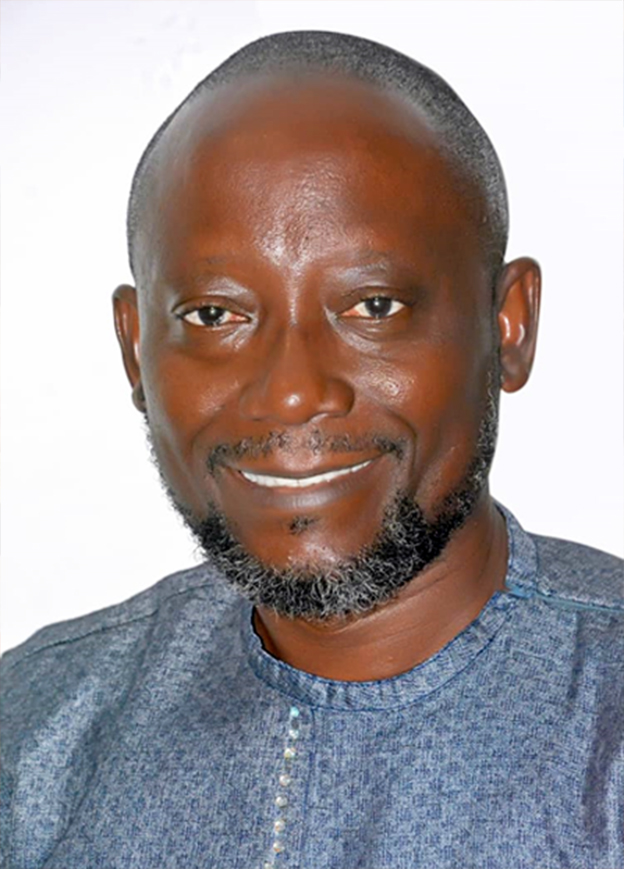
Dr. Paul Herzuah

In recent years, Ghana has seen a troubling trend that puts the future of its economy at risk—an inclination within civil society and even among some citizens to prioritize foreign businesses over local enterprises. While foreign investment brings undeniable benefits, it should not eclipse the importance of nurturing and supporting Ghana’s local businesses, which are vital for long-term sustainable growth.

As a business leader committed to Ghana’s future, I urge us to reevaluate how we treat our local entrepreneurs compared to their foreign counterparts. The success of our economy depends on our ability to foster an environment where local businesses can thrive.

The challenges of an uneven playing field

Foreign businesses frequently receive preferential treatment that local entrepreneurs do not, such as tax incentives, streamlined regulatory processes, and easier access to capital. Conversely, Ghanaian businesses face significant challenges, from bureaucratic red tape to high interest rates and limited financing options. This discrepancy creates an unleveled playing field that stifles local growth and advantages foreign businesses, which ultimately hampers Ghana’s economic development.

Local businesses are embedded in Ghana’s economy, supporting critical supply chains, creating jobs, and investing in their communities. When economic hardship strikes, local businesses are the ones who remain steadfast, often at significant personal and financial risk. We saw this resilience during the COVID-19 pandemic, which brought economic activity to a standstill.

While many multinationals scaled back operations or withdrew from the market, Ghanaian companies shouldered the responsibility of maintaining critical services and filling gaps left by foreign withdrawals. This experience is a powerful reminder of why supporting local businesses is essential to creating a resilient and self-sustaining economy.

Case study: the enduring impact of Ghanaian enterprises

A prominent example of local resilience is the Jospong Group of Companies. Originally focused on waste management, Jospong has diversified its operations to include sectors like manufacturing, real estate, and financial services, supporting thousands of jobs and creating value across multiple industries. This ability to expand beyond its initial focus is a testament to the entrepreneurial spirit driving local growth. Such businesses are not only generating profits within their sectors but also reinvesting those profits into the broader economy, leading to greater job creation, new skills development, and long-term economic benefits for the nation.

Similarly, companies like McDan Group, Despite Group, and FirstSky Group have grown into multi-sector conglomerates, creating thousands of jobs and supporting countless livelihoods. Their success illustrates the powerful role that local businesses play in diversifying and strengthening the Ghanaian economy.

These businesses have gone beyond their initial industries, branching out to cover new areas and fill existing gaps, creating more opportunities for Ghanaians and bolstering economic resilience.

The question we must ask ourselves is this: How many foreign businesses or business leaders have succeeded and then branched out into other sectors of our economy? The examples are few and far between. Foreign businesses often concentrate on single sectors and are more likely to exit during economic downturns, taking their investments and jobs with them.

Local businesses, however, continue to be present and active even in challenging times. This difference underscores why fostering local business growth is essential to creating an economy that is stable, resilient, and less vulnerable to global shifts.

The role of civil society and public perception

Civil society organizations (CSOs) and the general public play a crucial role in shaping perceptions and attitudes toward local businesses. However, instead of rallying behind these homegrown enterprises, there is often an environment of skepticism. Local businesses face harsher scrutiny, skepticism, and criticism compared to foreign firms, perpetuating the misconception that “foreign is better.”

This negative perception hinders local enterprises that are critical to our national economy, creating an environment that undermines their growth and discourages public trust.

This trend stems partly from a historical bias toward foreign investment. For decades, attracting foreign companies was seen as a primary marker of economic progress. While foreign businesses undoubtedly bring capital, skills, and technology, it is time to reassess this outlook and prioritize local business growth as a more sustainable approach to long-term development. Foreign investments may offer short-term boosts, but local businesses contribute to sustained economic resilience and social stability.

An example of civil society advocacy: The Ghana National Chamber of Commerce and Industry

One CSO actively supporting local business interests is the Ghana National Chamber of Commerce and Industry (GNCCI). The GNCCI advocates for fair policies, reduced regulatory burdens, and financial support tailored to Ghanaian entrepreneurs.

Its initiatives aim to create an enabling environment where local businesses are protected and empowered to grow, especially in sectors where they directly compete with foreign players. By fostering public awareness of the importance of supporting local enterprises and lobbying for policy reforms, the GNCCI is reshaping perceptions and encouraging a more supportive attitude toward Ghanaian businesses.

The GNCCI also works to bridge the gap between the public and local businesses through programs that promote collaboration, skills development, and entrepreneurship. These initiatives help equip local entrepreneurs with the tools they need to succeed and navigate challenges unique to Ghana. Through such efforts, the GNCCI is contributing to a shift in public perception, reinforcing the idea that Ghanaian businesses are worthy of trust, support, and investment.

Challenges faced by local entrepreneurs

Local businesses in Ghana face significant obstacles that foreign companies often avoid, particularly in the areas of financing, infrastructure, and regulatory complexity. Access to affordable capital is a major hurdle for Ghanaian entrepreneurs. While foreign companies can often secure funding from international sources, local businesses are constrained by domestic financing options, where high interest rates and limited access to credit make growth difficult. This disparity prevents many local businesses from scaling their operations and competing effectively with well-capitalized foreign enterprises.

Infrastructure gaps also hinder local growth. While some progress has been made, many parts of Ghana still lack reliable electricity, efficient transportation networks, and widespread technological access. Foreign companies, with their substantial resources and global networks, are often better equipped to navigate these obstacles. In contrast, smaller local businesses struggle with the high costs and inefficiencies that these infrastructural limitations impose, which can make it challenging for them to operate at full capacity.

Finally, local entrepreneurs must contend with a regulatory environment that is often bureaucratic and slow-moving. Navigating complex processes to register businesses, acquire permits, and access government services consumes valuable time and resources, slowing down growth and putting Ghanaian companies at a disadvantage. While some foreign companies receive expedited treatment or even exemptions from certain requirements, local businesses are left to deal with these obstacles on their own.

Why we must support local businesses

The success of local businesses is critical to Ghana’s long-term economic sustainability. When a Ghanaian business succeeds, it does not just create wealth for its owners—it creates jobs, strengthens supply chains, and contributes to community development. Local businesses reinvest their profits into the local economy, helping to build schools, hospitals, and other essential infrastructure. They are deeply embedded in the fabric of our society, and their success is our success.

Supporting local businesses is not just about creating an environment that allows them to survive; it is about creating one that allows them to thrive. This means revisiting policies that favor foreign businesses at the expense of local ones. It means ensuring that Ghanaian entrepreneurs have access to the same level of financial support, regulatory ease, and public trust that foreign businesses enjoy. And it means changing the narrative that local businesses are somehow less capable or less trustworthy than their foreign counterparts.

We must also recognize the immense potential for local businesses to lead the charge in innovation. Ghanaian entrepreneurs are already finding ways to solve local problems with local solutions, whether through technology, agriculture, or service delivery. By supporting these innovators, we can create a more resilient, self-sufficient economy that does not rely on foreign investment as its primary growth driver.

A call to action

As Ghanaians, we must take a hard look at how we treat our local businesses. We must ask ourselves why we are more willing to trust foreign businesses with our future than we are to trust our own. We must recognize that the long-term stability of our economy depends on the success of local entrepreneurs, who will be here to weather the storms long after foreign businesses have moved on.

The government, civil society, and the general public all have a role to play in supporting local businesses. We must advocate for policies that level the playing field, provide easier access to capital, and reduce the bureaucratic obstacles that local entrepreneurs face. We must shift public perception to celebrate the achievements of local businesses and view their success as a national asset. And most importantly, we must trust in the capabilities of our own people to drive the future of our economy.

Local businesses are not just important; they are essential to the growth and prosperity of Ghana. When local businesses succeed, they create opportunities for all of us. They are the ones who will be here for the long haul, investing in our communities and building the future we all want to see. Let us give them the support they need to thrive because when they do, Ghana will thrive too.

In the words of Mahatma Gandhi, “The greatness of a nation and its moral progress can be judged by the way it treats its weakest members.” Let us stand by our entrepreneurs, recognizing their potential to shape our future and drive our nation forward.

By Dr. Paul Herzuah

>>>the writer is a media & political communication analyst. He is currently a lecturer at the University of Media, Arts & Communication


Harry Kane scores as Bayern restore four-point lead

0
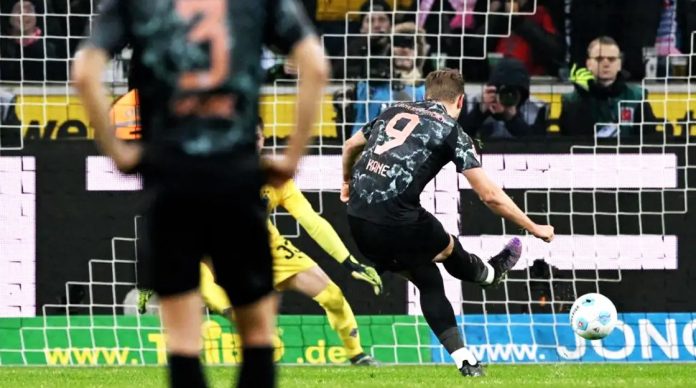
Harry Kane scores from the spot

Harry Kane scored the only goal as Bayern Munich restored their four-point lead at the top of the German Bundesliga with a 1-0 win at Borussia Monchengladbach.

The England captain converted from the penalty spot on 68 minutes after Lukas Ullrich had pushed Michael Olise in the box.

It was the 31-year-old’s 15th Bundesliga goal of the season and moved him ahead of Eintracht Frankfurt’s Omar Marmoush to the top of the division’s scoring charts.

Defending champions Bayer Leverkusen had cut Bayern’s advantage to a point with a 3-2 win at Borussia Dortmund on Friday.

Vincent Kompany’s side enjoyed 78% possession in the first half but could not find a way past a stubborn home defence.

Leon Goretzka volleyed just wide when well placed in the area, while Thomas Muller’s first-time effort from close range drew a superb reaction save from Moritz Nicolas.

Gladbach were brighter after the break and should have opened the scoring when Tim Kleindienst met Rocco Reitz’s cross, but somehow headed over from five yards out.

The decisive moment arrived when Olise chested down Kingsley Coman’s left-wing cross at the far post and went down under a challenge from Ullrich.

The referee pointed to the spot and Kane sent Nicolas the wrong way for his sixth successful penalty from six attempts for Bayern this season.

Credit: bbc.com

Juventus, Torino share spoils in Turin derby

0
Juventus draw with Torina

Nikola Vlasic’s brilliant equaliser earned a point for Torino in the Turin derby against undefeated Juventus.

Former West Ham striker Vlasic drew the hosts level on the brink of half-time with a tremendous strike in off the post from the edge of the penalty area, leaving Juventus goalkeeper Michele di Gregorio no chance.

Kenan Yildiz opened the scoring in the eighth minute at the Olympic Grande Torino Stadium after he danced beyond two players before driving past Vanja Milinkovic-Savic to give the Old Lady the lead.

Torino’s Karol Linetty missed a huge opportunity to equalise six minutes later but he could only hammer his effort from close range over the top.

Tempers flared 10 minutes into the second half when Torino manager Paolo Vanoli and Juventus boss Thiago Motta were shown red cards.

Facundo Gonzalez came close to reinstating Juventus’ lead late in the second half but Milinkovic-Savic produced a fine reaction save to keep the scores level.

Juventus remain unbeaten in Serie A but sit fifth in the table after drawing for the sixth time in seven games, and 12th time this league campaign.

Credit: bbc.com

Liverpool enjoy safe passage into FA Cup 4th round

0
Liverpool players jubilate

Liverpool enjoyed a safe passage into the FA Cup fourth round with victory over Accrington Stanley at Anfield.

The Premier League leaders, who suffered only their second defeat of the season in Wednesday’s Carabao Cup semi-final first-leg at Tottenham, broke the League Two side’s stubborn first-half resistance when Diogo Jota converted Darwin Nunez’s square ball just before the half-hour mark.

Trent Alexander-Arnold doubled Liverpool’s lead in spectacular fashion on the stroke of half-time, sending a fierce shot into the top corner from the edge of the penalty area to give the hosts breathing space at the interval.

The second half was far from a damage limitation exercise for Accrington, who struck the crossbar through boyhood Liverpool fan Josh Woods, before former Manchester United defender Donald Love sent a free header over the bar from close range.

But Jayden Danns, who had replaced 16-year-old debutant Rio Ngumoha only minutes earlier, made it 3-0 on the rebound after Federico Chiesa’s shot was blocked by visiting goalkeeper Billy Crellin.

Half-time substitute Chiesa was a lively presence off the bench and the Italian completed the scoring with a low, long-range drive – his first for the Anfield club following his August arrival from Juventus – moments after hitting the post

Credit: bbc.com

Tottenham scramble past non-League Tamworth after extra time

0
Tottenham beat Tamworth

Tottenham turned beating National League Tamworth into a monumental task and came close to abject humiliation before reaching the FA Cup fourth round after extra time.

Ange Postecoglou’s side were mind-numbingly poor in normal time at the Lamb Ground, then required a scrambled own goal from Tamworth’s Nathan Tshikuna to break the deadlock after 101 minutes.

Substitute Dejan Kulusevski added a superb strike, and then Brennan Johnson curled in a third after Postecoglou was forced to introduce his biggest attacking weaponry to break down Tamworth.

The home side, 96 places below Spurs in the fifth tier of football’s pyramid, performed magnificently and could not have been begrudged one of the FA Cup’s biggest shocks had they clinched victory in normal time.

Spurs, however, lived right on the edge, with Tamworth arguably looking more likely to score in the final moments before extra time, especially when Antonin Kinsky saved crucially from Jordan Cullinane Liburd with seconds left.

Credit: bbc.com

Nania eliminate Accra Lions on penalties to reach FA Cup round of 16

0
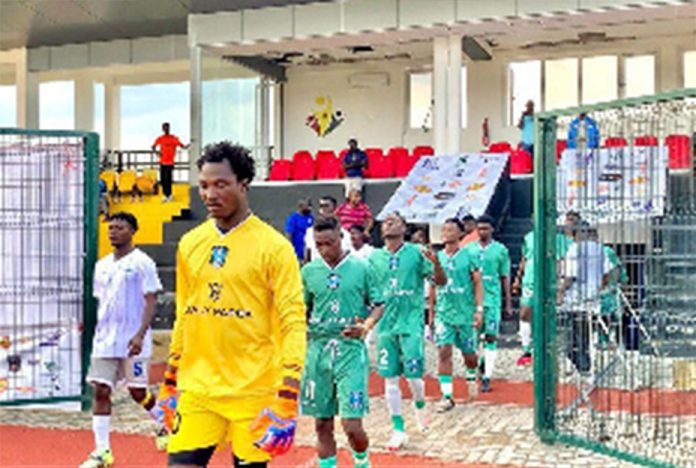
FC Nania players

FC Nania have booked their spot in the round of 16 of the MTN FA Cup after defeating Accra Lions 5-3 on penalties.

The match ended 0-0 after regular time, forcing the teams to settle the tie via spot kicks.

Nania FC’s victory over Accra Lions marks their second consecutive season of eliminating a Premier League side in the FA Cup. Last season, they notably knocked out Hearts of Oak and Great Olympics, showcasing their ability to compete against top-tier teams.

The match was a tightly contested affair, with both teams creating scoring opportunities but failing to find the back of the net. The 0-0 stalemate after 90 minutes meant that the winner would be decided by penalties.

FC Nania held their nerve in the shootout, converting five of their spot kicks to Accra Lions’ three. The win sees Nania FC advance to the round of 16, where they will face a new challenge in their bid to lift the FA Cup trophy.

With this win, FC Nania continue their impressive run in the competition and will look to build on this momentum as they advance to the next round.

Credit: ghanaweb.com

NIB boss refutes claims of returning acquired state land; threatens to sue Kpebu

0
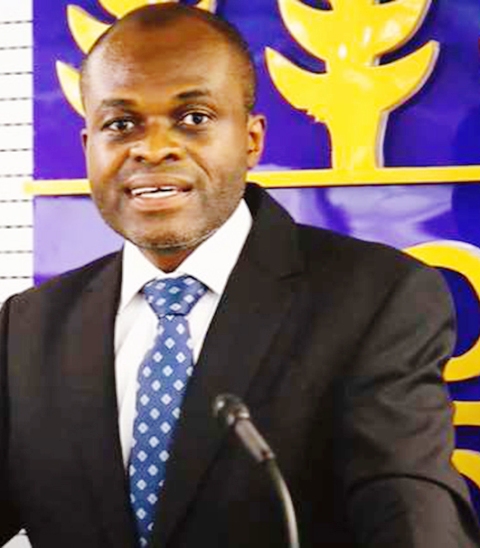
Mr Martin Kpebu
Nana Attobrah Quaicoe, the Director-General, has dismissed claims by Martin Kpebu, a private legal practitioner and member of Operations Recover All Loots (ORAL), that he has returned illegally acquired state land, describing the assertion as a blatant falsehood that deserves to be treated with the contempt it warrants.
Mr. Quaicoe has, therefore, urged the public to disregard these false statements, which he says are calculated to damage his hard-earned reputation. He has also called on Mr. Kpebu to retract the baseless and defamatory claims.
The NIB boss has threatened to take legal action to protect his name and rights if Mr. Kpabu fails to retract and apologize. He emphasized that he has never contacted or engaged with any member of the ORAL committee, contrary to the claims being made to mislead the public.
He specifically clarified that he has not contacted Hon. Samuel Okudzeto Ablakwa regarding any government land, refuting the claims made by Mr. Martin Kpebu, a member of the committee.
Mr. Quaicoe, through his lawyers, Saviour Quarcoo Kudze of Kudze, Kudze@Law, issued an undated press statement titled, “RE: NATIONAL INTELLIGENCE BUREAU (NIB) DIRECTOR-GENERAL DENIES ALLEGATION OF CONTACTING OPERATION RECOVER ALL LOOT (ORAL) COMMITTEE.”
According to Mr. Kudze, the defamatory statement, which has no iota of truth, was made on Keypoints, a Saturday morning television show aired on TV3, and was subsequently republished by multiple media outlets.
“Our client has neither contacted nor engaged any member of the ORAL committee, particularly Hon. Samuel Okudzeto Ablakwa in relation to any government land, contrary to the claims by Mr Martin Kpebu, himself a member of the  team,” the statement reads.
The statement further stated that “We urge the public to disregard these false statements calculated to injured our client’s reputation and call on the private legal practitioner, Martin Kpebu, to retract the utterly false and defamatory statements published about our client, failing which our client may resort to necessary legal action to vindicate his name and rights.
Meanwhile, Mr. Kpebu acknowledged that his claims were based on secondhand information provided by Samuel Okudzeto Ablakwa, the Member of Parliament for North Tongu and Chairman of the ORAL Committee.
 Ablakwa, from the opposition, has been actively exposing and advocating for the recovery of looted state assets.
The private legal practitioner clarified that his comments on the show represent his personal opinions and not the collective stance of the four-member committee, which includes Nathan Kofi Boakye and Raymond Archer.
His remarks were in response to a question from the host, Alfred Ocansey, about whether the committee had been approached by individuals voluntarily returning looted state lands. He confirmed this was the case but emphasized that the ORAL team is still in the preliminary stage of its work.
He noted that their current mandate does not include the recovery of looted state properties. However, the NIB boss had reportedly called Mr. Ablakwa, expressing his willingness to relinquish his interest in a piece of land he acquired at Agric Extension land , Accra.
“He [Quaicoe], because of the advocacy Hon. Okudzeto is doing on the matter, called Okudzeto and said, ‘I’m returning my land… leave me out of this. I’m not interested.’ That is what Hon. Okudzeto said. Attobrah has also stated he is no longer interested in the land,” Mr. Kpebu explained emphatically.
Mr. Kpebu added that the team is currently focused on establishing the facts in the preliminary phase. The second phase, which will involve the actual recovery of looted properties, is yet to commence.
The Ghanaian Chronicle