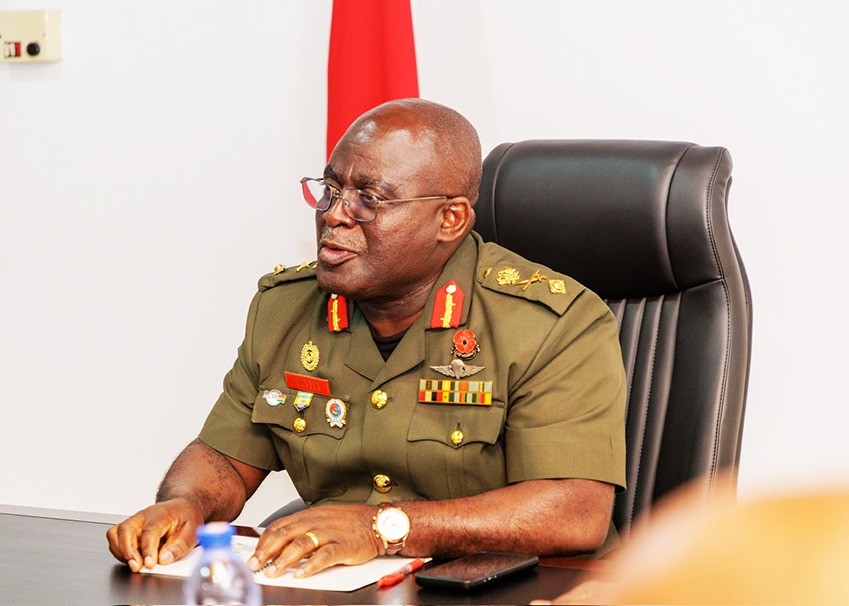
A suspected drug trafficker has acquired a scanner to test whether the security equipment can detect narcotics, Brigadier General Maxwell Obuaba Mantey, Director-General of the Narcotics Control Commission (NACOC), has disclosed.
He said the development illustrated the increasingly sophisticated methods employed by drug traffickers to exploit weaknesses in Ghana’s security systems and evade detection.
Brigadier General Mantey made the revelation when he appeared before Parliament’s Public Accounts Committee, alongside the Minister for the Interior, Mohammed Muntaka Mubarak, to discuss security operations and challenges confronting enforcement agencies.
He warned that traffickers were continually adapting their methods, while officers responsible for combating the illicit trade faced constraints arising from inadequate operational infrastructure.
“The traffickers are motivated because they see weaknesses in our system. But we are demotivated because we don’t have the requisite infrastructure to fight them,” he told the committee.
He explained that the substantial financial returns from drug trafficking provided a strong incentive for those involved to devise new ways of circumventing security measures.
GROWING ENFORCEMENT CHALLENGE
The revelation comes amid continued narcotics enforcement operations in Ghana, including significant seizures and arrests.
According to a tracking report by JoyNews Research, Ghana recorded 28 drug busts, including 11 cocaine cases, during a period beginning in March, 2025 and extending to September 22, 2026.
The other cases involved substances including cannabis, heroin and methamphetamine.
In May 2026 NACOC also intercepted tonnes of suspected cannabis during an operation at a facility in Gbi-Wegbe.
On June 24, 2026 the commission publicly destroyed illicit drugs valued at approximately GH¢37 million following court approval.
The enforcement activity follows a year in which NACOC reportedly recorded 165 drug trafficking cases, resulting in 217 arrests in 2025.
Brigadier General Mantey said traffickers were experimenting with ways to defeat existing detection measures, including mixing drugs with substances intended to interfere with the work of detection dogs.
He stressed that enforcement agencies needed to remain ahead of traffickers, whose methods could change rapidly.
SECURITY VULNERABILITIES
The NACOC chief also highlighted vulnerabilities in airport security procedures, referring to an incident involving a security supervisor who allegedly bypassed established checks.
According to the account discussed by the Interior Minister, the supervisor reportedly entered with a bag and later went to a washroom, where a bag exchange involving a traveller allegedly took place before the traveller proceeded towards a flight.
Brigadier General Mantey said such situations illustrated the difficulties enforcement officers could face when security procedures involved personnel senior to them.
He also pointed to the financial resources available to traffickers and the pressure this placed on officers working to prevent the movement of illicit drugs.
INTERNATIONAL SUPPORT
Despite the challenges, the NACOC chief said the commission was cooperating with international partners, including French, European and American counterparts, to exchange intelligence and strengthen enforcement.
He disclosed that international partners had provided equipment valued at US$46,000 for the commission’s forensic laboratory, with a commitment to offer further assistance.
He said specialised units also worked with partner intelligence agencies under existing cooperation agreements.
Responding to concerns about NACOC’s involvement in a cybercrime-related operation, Brigadier General Mantey said the commission had worked with the relevant cyber authority and the Criminal Investigations Department of the Ghana Police Service.
He maintained that the operation was conducted under the applicable cooperation arrangements and laws, adding that suspects were handed over to the CID for further action when NACOC’s role ended.
PREVENTION AND REHABILITATION
Brigadier General Mantey said NACOC’s mandate extended beyond enforcement to include public education and rehabilitation.
He disclosed that the commission was working with about 30 faith-based and non-faith-based non-governmental organisations to support people undergoing rehabilitation for drug-related problems.
The commission was also conducting drug education programmes in schools. He said NACOC was focusing increasingly on individuals who facilitate drug trafficking rather than concentrating exclusively on people who use illicit substances, some of whom require treatment and rehabilitation.
The NACOC chief maintained that addressing trafficking required effective enforcement, adequate infrastructure, intelligence-sharing and cooperation among the various agencies involved.
For more news, join The Chronicle Newspaper channel on WhatsApp: https://whatsapp.com/channel/0029VbBSs55E50UqNPvSOm2z