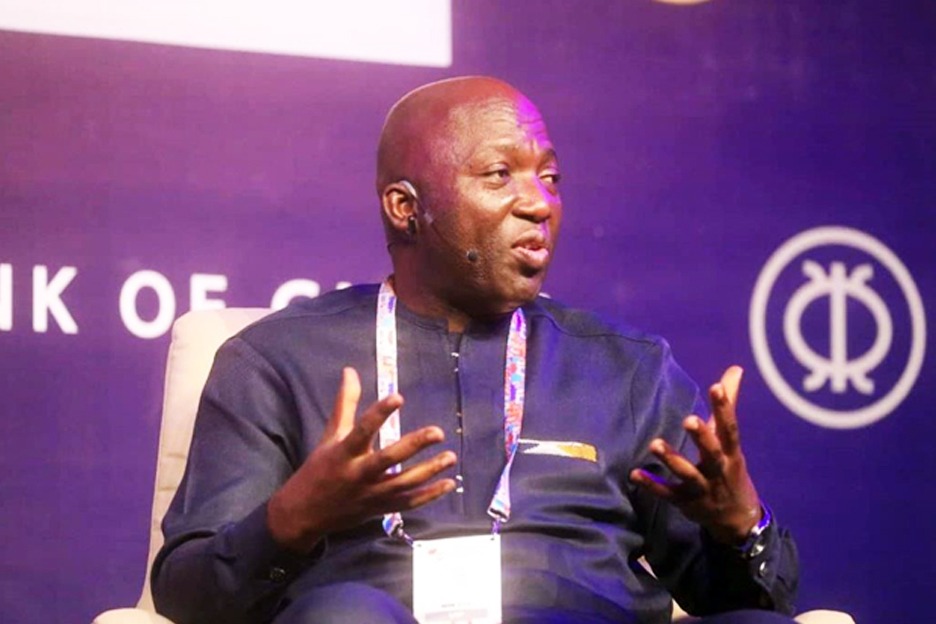
MobileMoney Fintech Limited (MMFL), the operator of MTN MoMo in Ghana, is seeking to reposition small-scale businesses as merchants and growth partners rather than treating them merely as customers, as it looks to deepen financial inclusion and unlock opportunities in the digital economy.
Chief Executive Officer of MMFL, Shaibu Haruna, said the company was committed to developing financial solutions tailored to the needs of micro-enterprises, many of which remain underserved despite the growth of mobile money services.
“The micro-enterprise businesses in Ghana remain similarly excluded,” Haruna said during a masterclass for business journalists in Accra last week Friday, October 9, 2026. He said the company wanted to move beyond providing conventional consumer services to understanding the needs of small businesses and supporting their growth.
“We want to profile such a person as a small merchant, because we want to take them on a growth journey,” he said. Haruna explained that treating small-business owners only as consumers of financial services often failed to address the realities of their operations, particularly the difficulty many face in separating personal finances from business transactions.
He described the separation of personal and business finances as an important step towards improving financial management and helping micro-enterprises grow.
Sharing an example of a small businesswoman whose business income was also used to meet personal expenses, including medical bills, Haruna illustrated how financial pressures can affect the survival of micro-enterprises.
He said the woman had explained that she used money from her business to pay hospital bills after being ill for three days, but intended to return to the business once she recovered. “I went there and this woman was being able to smile,” he said, recounting a subsequent visit to the trader.
Haruna said such experiences reinforced the need for financial service providers to understand the circumstances of small-business owners and design services around their needs.
“For us, we want to encourage them,” he said, adding that MMFL was committed to working with partners to support micro-enterprises and help them build sustainable businesses.
He said the company saw significant potential in small traders and informal operators, whose growth could contribute to employment and Ghana’s wider economic development.
MMFL steps up fraud prevention
Alongside its focus on small businesses, Haruna highlighted the growing challenge of digital fraud and the need to strengthen customer protection. He disclosed that MMFL blocks more than 400,000 targeted fraudulent SMS messages, while exploring artificial intelligence (AI) tools to improve its ability to identify suspicious messages and prevent them from reaching customers.
“Today, we block over 400,000 SMSs that are fully targeted to certain customers,” he said. Haruna explained that existing detection systems rely partly on predefined rules, which fraudsters can evade by altering the spelling of words associated with mobile money services.
He said the company was looking at tools that could automatically detect such variations and respond more effectively to emerging threats. “The tool, based on the rules that we have defined, will be able to block those SMSs,” he said, describing the current approach before explaining the need for more adaptive technology.
According to Haruna, fraudulent schemes often begin with text messages and progress to phone calls and social media, making customer awareness a critical part of the fight against fraud.
He said financial institutions had a responsibility to invest in technology and strengthen internal processes, but customers also needed to exercise caution when dealing with suspicious messages and investment offers.
Haruna urged the public to be wary of Ponzi schemes and promises of unrealistic returns, stressing that protecting customers required cooperation between service providers and users.
Bank of Ghana urges journalists to verify Fintech information
The masterclass also focused on the media’s responsibility to report accurately on financial technology, particularly as digital financial services become increasingly important to consumers and businesses.
Anita Ayivi, Head of the Licensing and Authorization Office at the Bank of Ghana’s Fintech and Innovation Department, urged journalists to verify the licensing status of digital financial service providers before publishing reports about them. She stressed the need to distinguish between fraud, cybersecurity incidents and ordinary service disruptions, cautioning against drawing conclusions without sufficient evidence.
Ayivi encouraged journalists to consult the Bank of Ghana’s official licensing information and seek clarification from relevant institutions before publishing reports. She also cautioned against promoting unlicensed digital lenders without verifying their regulatory status.
Fintech opportunities beyond mobile money transfers
Chief Executive Officer of the Digital Chamber of Ghana, Sylvia Ankomah, for her part highlighted the need for the Fintech ecosystem to become more inclusive and expand opportunities beyond conventional mobile money transactions.
She pointed to the potential of digital financial services in areas such as savings, insurance, pensions and services for small businesses.
Ankomah said the industry needed to ensure that people did not merely register for digital services, but actively used them in ways that improved their financial lives.
The discussions also addressed complaints about mobile money agents charging customers fees for cash-in transactions. Haruna clarified that such charges were not permitted, explaining that agents receive commissions for cash-in transactions.
By Jesse Otoo
For more news, join The Chronicle Newspaper channel on WhatsApp: https://whatsapp.com/channel/0029VbBSs55E50UqNPvSOm2z