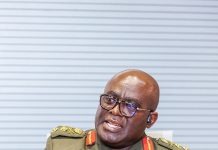
The Minority in Parliament has thrown its weight behind the government’s proposal to provide emergency assistance to victims of the recent floods, but insists that the proposed GH¢300 million relief package must be subjected to strict parliamentary scrutiny to ensure transparency and accountability.
Addressing a news conference in Accra, the Minority Leader and Member of Parliament for Effutu, Alexander Kwamena Afenyo-Markin, said the Caucus would support efforts aimed at alleviating the suffering of thousands of affected residents, provided every cedi allocated under the intervention is properly accounted for.
According to him, while emergency relief is necessary, it cannot replace the long-term flood control measures successive governments have promised, but failed to implement.
He observed that the latest floods, which left several communities submerged, displaced families and destroyed homes, businesses and public infrastructure, once again highlighted the country’s recurring challenges of poor drainage systems, weak urban planning and delayed flood mitigation projects.
Mr Afenyo-Markin maintained that government must move beyond expressions of sympathy whenever disasters strike and demonstrate commitment to preventing similar incidents in the future.
“Compassion for the victims of this crisis and accountability for the government that failed to prevent it are not mutually exclusive. Both are necessary and the Minority insists on both,” he stated.
The Minority Leader said Parliament should not approve the emergency expenditure without adequate safeguards and, therefore, urged government to submit a detailed breakdown of how the GH¢300 million contingency allocation would be utilised.
He explained that the report should identify all beneficiary communities, outline the specific relief and reconstruction activities to be undertaken and disclose the contractors responsible for executing the various projects, together with evidence that all procurement processes comply with the country’s public financial management and procurement laws.
The Caucus further proposed that the relief package be presented in two separate components to enhance oversight.
According to the Minority, government should provide distinct accounts for the GH¢150 million earmarked for humanitarian support to affected families and another GH¢150 million designated for drainage improvement and other flood mitigation works, backed by implementation schedules and expenditure reports.
Mr Afenyo-Markin said the Minority’s position is informed by previous emergency interventions for which comprehensive expenditure reports were never made public, leaving lingering questions over the utilisation of state funds.
He noted that although governments often establish special intervention programmes following national disasters, many of them fail to provide satisfactory accounts of how the allocated resources were spent.
The Minority stressed that Parliament has a constitutional obligation to ensure prudent management of public funds, particularly during emergencies when large expenditures are approved under expedited procedures.
It maintained that while it would not obstruct genuine efforts to provide relief to flood victims, it would insist on rigorous oversight to guarantee that the funds reach the intended beneficiaries and that all flood mitigation projects are fully implemented.
The Caucus also urged government to prioritise sustained investment in resilient drainage infrastructure, improved urban planning and comprehensive flood prevention measures to minimise the impact of future disasters across the country.
For more news, join The Chronicle Newspaper channel on WhatsApp: https://whatsapp.com/channel/0029VbBSs55E50UqNPvSOm2z