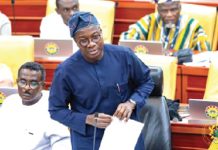
The Minister of Education, Haruna Iddrisu, yesterday laid before Parliament the University of Engineering and Agricultural Sciences Bill, 2025, seeking approval to establish a new public university aimed at expanding access to specialised higher education.
Moving the motion for the second reading, the Minister explained that the proposed institution would be developed from the existing Bunsu University Project, which is being financed with a $90 million facility from the Korean Exim Bank.
He indicated that the university is expected to begin admissions by October this year, with an initial intake of about 800 students to be shared between the Schools of Engineering and Agricultural Sciences.
According to the Minister, the project forms part of a broader policy direction to strengthen technical and agriculture-focused education across the country.
He noted that the university would operate additional campuses at Acherensua in the Ahafo Region and Ohawu in the Volta Region.
While the Ohawu campus will focus on agriculture and innovation, Acherensua will specialise in applied Sciences and Technology.
Haruna Iddrisu further explained that government’s approach prioritises the provision of basic infrastructure before the establishment of new universities.
Both proposed campuses, he said, will begin as satellite facilities and later be upgraded into fully fledged institutions.
He added that the long-term vision is to ensure that each region has at least one public university, supported where necessary by a technical university.
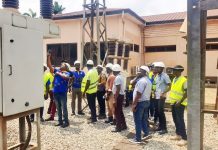
The Minister disclosed that infrastructure at the Bunsu site is largely completed, including lecture halls, laboratories, an innovation centre, a library, an auditorium, staff accommodation and other essential facilities.
He stressed that although the university was ready to commence operations; parliamentary approval was required to provide the legal framework for its establishment.
He also assured the House that the bill had undergone thorough consideration at the committee level, with input from both Majority and Minority members.
Beyond the proposed university, government is pursuing additional higher education projects, including plans to establish a campus of the University of Health and Allied Sciences at Keta, focusing on biomedical engineering and pharmacology.
He also hinted at further expansion of the Kwame Nkrumah University of Science and Technology, particularly at Obuasi and Mampong, with emphasis on agricultural education.
He, therefore, urged Members of Parliament to support the passage of the bill to expand access to quality tertiary education.
Government also acknowledged the continued support of the Korean government in funding key education infrastructure projects.
Chairperson of the Parliamentary Select Committee on Education, Nortsu-Kotoe Kwasi Peter, briefed the House on the committee’s report.
He noted that the committee met on Tuesday, March 10, 2026 to deliberate on the referral and commended the Minister and his deputies for their engagement.
He indicated that the committee had proposed about fifteen amendments for consideration. According to him, the bill provides a clear and well-structured institutional framework, promotes academic freedom and inclusivity and enhances transparency and international accountability.
Contributing to the debate, Member of Parliament for Kwadaso, Kingsley Nyarko, recalled that the previous government had initiated plans in 2024 to establish new universities, including the proposed institution.
He expressed support for the bill, noting that expanding tertiary institutions would help Ghana achieve its target of a 40 per cent gross tertiary enrolment ratio by 2030, as outlined in the Education Sector Plan (2018–2030).
Deputy Minority Chief Whip, Jerry Ahmed, also supported the motion, describing the bill as a continuation of earlier efforts to expand access to higher education.
“Mr. Speaker, I rise to support this motion and commend the Minister for revisiting an initiative that was first introduced by the previous administration. This demonstrates continuity in policy and a shared commitment to national development,” he said.
He noted that although the bill had faced opposition when it was initially introduced, it had now been refined and re-presented for consideration, reflecting its importance to the country’s educational agenda.
Jerry Ahmed emphasised the growing demand for university education, particularly following the implementation of the Free Senior High School policy, which has significantly increased the number of qualified applicants seeking admission into tertiary institutions.
He highlighted the relevance of the proposed university’s focus on engineering and agricultural sciences, stressing the need to modernise agriculture through technology.
“In today’s world, agriculture must go beyond traditional methods. We must integrate innovation, mechanization and emerging technologies such as artificial intelligence to improve productivity and sustainability,” he stated.
Drawing on his observations from international engagements, he underscored the importance of equipping students and farmers with modern skills to enhance agricultural output and ensure long-term sector growth.
The Deputy Minority Chief Whip further noted that investing in agricultural education would not only improve farming practices but also strengthen key sectors such as cocoa production, making them more efficient and globally competitive.
By Jesse Otoo
For more news, join The Chronicle Newspaper channel on WhatsApp: https://whatsapp.com/channel/0029VbBSs55E50UqNPvSOm2z