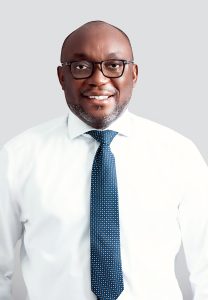
The Member of Parliament for Abuakwa South, Dr Kingsley Agyemang, has advocated for dedicated funds to help manage floods in Africa.
He called on African governments to establish what he termed legally protected disaster risk management funds to help countries prepare for and respond to devastating floods.
In an interview with the British Broadcasting Corporation’s Focus on Africa, he proposed an integrated funding model that would draw resources from government budgets, mineral revenues, corporate taxes, levies and development partners.
He said such an arrangement would enable countries to build financial reserves and invest in prevention, preparedness and resilience.
He noted that while many countries on the continent often have early warning systems, governments lack the financial resources and coordination required to act on warnings before disaster strikes.
“Most often on the continent, there are effective early warning systems for many of these flood disasters. But the truth of the matter is that governments are unable to respond effectively to those early warning signs because of the financing regime,” he said.
URGENT
He said regular contributions to a national disaster risk management fund could provide resources for drainage projects, flood-control infrastructure, emergency response and other preventive interventions.
He urged African leaders to act urgently, warning that floods are becoming a persistent threat to lives, infrastructure and economic activity.
“African leaders will have to be up and doing because flood disasters have come to stay,” he said.
“We cannot neglect the safety of our people. We have to stop the reactionary attitude towards disasters.”
LEGISLATION
The Abuakwa South constituency lawmaker, who is an insurance and risk management expert, with more than 20 years’ experience, recommended that the funds be established by legislation and ring-fenced to prevent governments from diverting them to other priorities.
“The basic responsibility of every government is to protect life and property,” he said, stressing that disaster preparedness should be regarded as a core responsibility of the government.
Dr Agyemang maintained that legislation would be critical to ensuring the sustainability of such funds, stressing that “if it is not backed by legislation, member states or governments can take the funds and use them for any other thing.”
He said his reviews had not identified an African country operating a working fund for managing disaster risks of the kind he is proposing, backed by legislation.
FLOOD
His proposal follows severe flooding in parts of West Africa, including Ghana and Côte d’Ivoire.
In Ghana, at least 12 people were confirmed dead, while thousands of households were affected by torrential rains.
The growing threat is also being linked to climate change. The Intergovernmental Panel on Climate Change (IPCC) has warned that climate change could increase the frequency and severity of flooding in parts of Africa.
Dr Agyemang, therefore, believes governments must adopt a more proactive approach rather than continue relying on emergency donations after disasters occur.
“Why should African governments always be waiting for donations to support victims anytime disaster strikes on the continent?” he asked. “That is reactionary.”
He said funding, however, is only one part of the problem, adding that weak institutional coordination, political interference in urban planning and low insurance penetration also undermine flood resilience across the continent.
EXAMPLE
Dr Agyemang cited flood risk-pooling mechanisms in the United Kingdom and the United States as examples African countries could study, arguing that proven systems for managing disaster risk could help the continent spread and manage the financial consequences of floods.
“These are tried and tested disaster risk management systems that have survived over the decades that Africa is refusing to learn from,” he said.
The MP, who also lectures at GIMPA and KNUST, said flood prevention should be treated as an economic investment rather than merely a contingency measure.
He also warned that flooding has significant public health consequences, including increased risks of malaria, cholera, typhoid and diarrhoeal diseases.
Dr Agyemang said Africa already possesses much of the knowledge and tools required to build stronger resilience, but governments must adopt sustainable financing mechanisms and change their approach to disaster management.
“Disaster has come to live with us, and we have to find a sustainable way of managing it,” he said.
For more news, join The Chronicle Newspaper channel on WhatsApp: https://whatsapp.com/channel/0029VbBSs55E50UqNPvSOm2z