For generations, the sea has been both a friend and foe to the people of Axim. At dawn, it offers sustenance. Fishermen push their canoes into the Atlantic, trusting the waters to provide for their families.
By nightfall, however, the same sea can turn hostile crashing against the shore with a force that eats away at land, threatens homes and leaves families awake in fear.
For many residents, especially those living closest to the coastline, the anxiety has become a way of life.
“When the rains come and the tide rises, you don’t sleep peacefully,” a resident near the shoreline recounts adding “you just pray the water does not enter your room.”
For years, tidal waves and persistent erosion have crept steadily inland, weakening structures and swallowing sections of the coast.
Flooding caused by poor drainage has compounded the problem, turning heavy rains into a recurring nightmare for households and shop owners. But today, there is a visible shift in both the landscape and the mood of the community.
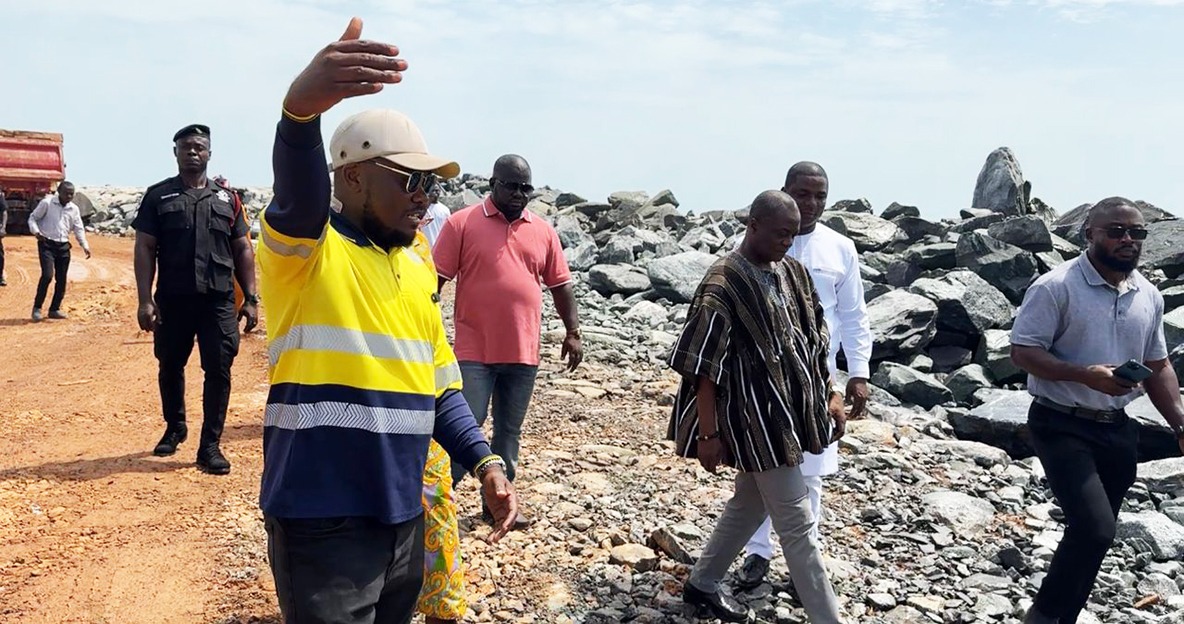
The Axim breakwater and sea defence project, now 45 per cent complete, is gradually reshaping the coastline and restoring hope and confidence among residents.
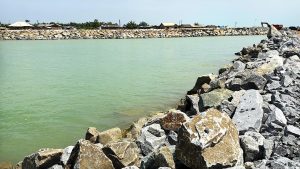
Heavy equipment moves steadily along the beachfront. What was once a vulnerable stretch of land is beginning to look fortified.
The project’s second phase includes the construction of a 550-metre breakwater and reinforced sea defence structures designed to shield the town from further coastal erosion.
It will also provide a secure landing base for fishing activities, a development that fisherfolks say could significantly improve their work.
For the fishing community, safety at landing has long been a challenge. Rough waves often make it difficult to dock canoes, damaging equipment and increasing the risk of accidents.
“With the breakwater, landing will be safer. It means less damage to our nets and boats. It means we can work with more confidence,” one fisherman told The Chronicle.
Beyond protecting the shoreline, the project directly tackles another longstanding issue – chronic flooding. Eleven culverts are being constructed to improve drainage and channel storm water away from homes and streets.
For residents who have repeatedly watched rainwater invade their living rooms and shops, this intervention offers relief.
“When it rains heavily, some of us move our things onto tables. Sometimes the water carries goods away. If the drainage improves, that alone will change our lives,” a local trader said.
Work on the project initially began in 2024, but was temporarily halted due to technical and financial challenges.
The pause raised concerns within the community, with many fearing yet another uncompleted coastal intervention. However, construction resumed earlier this year with renewed momentum.
Project Engineer for Makam Plant Hire (MPH), Benjamin Ammissah, told this reporter that steady progress has been made and assures residents that the project will be completed within the eighteen-month timeline.
According to him, the engineering design is focused not only on immediate protection, but also long-term sustainability.
The breakwater will reduce the intensity of wave action along the shore, while the improved drainage system will minimize flooding during heavy rainfall.
The economic impact is already being felt
The construction phase has created employment opportunities for local workers, providing income for families and stimulating small businesses in the area. Food vendors, transport operators and petty traders are seeing increased activity as workers patronize local services.
Western Regional Minister, Joseph Nelson, during a recent inspection of the site, expressed satisfaction with the progress made so far.
He reaffirmed government’s commitment to ensuring the completion of the project, stressing its importance in safeguarding livelihoods and protecting the environment.
For the indigenes of Axim, however, the significance of the project goes beyond infrastructure.
It represents security, the assurance that homes built over decades will not be claimed by the sea.
It represents stability, the confidence that businesses can operate without the constant threat of flooding.
For more news, join The Chronicle Newspaper channel on WhatsApp: https://whatsapp.com/channel/0029VbBSs55E50UqNPvSOm2z