Our economic growth projections may appear encouraging on paper, but beneath the celebrated GDP figures lies a more fundamental question: Is the country building a productive and sustainable economy, or merely experiencing temporary economic recovery?
Economic growth should not be measured solely by percentages announced by government or international financial institutions. The real test of economic progress is whether the country is expanding its productive capacity, creating sustainable employment, strengthening domestic industries and improving the living standards of its citizens.
Unfortunately, our economic fundamentals continue to expose structural weaknesses that should concern policymakers, investors and the general public.
The Declining Agricultural Foundation
One of our greatest economic concerns is the declining performance of the cocoa sector and the broader threat to agricultural productivity. For decades, cocoa has been a major source of foreign exchange, rural employment and national revenue. Yet declining production, ageing farms, inadequate investment and environmental degradation have weakened the sector.
More worrying is the destructive impact of unsustainable mining activities, particularly illegal mining, on agricultural lands, forests and water bodies. There is something fundamentally contradictory about pursuing mineral wealth while destroying the agricultural resources upon which millions of livelihoods depend.
We cannot claim to be building a sustainable economy while allowing the destruction of fertile agricultural land and water resources. The economic consequences of environmental degradation will extend far beyond the immediate mining revenues.
The question is whether the country is exchanging long-term economic security for short-term mineral gains.
The Failure of Industrial Policy
Another major weakness is our inability to implement a consistent and effective industrialisation policy. For years, successive governments have announced ambitious industrialisation programmes, yet the country continues to depend heavily on imported finished products.
This dependence is not merely a trade issue; it is a structural economic weakness.
An economy that imports much of what it consumes inevitably creates pressure on its foreign exchange reserves. It also exports employment opportunities, industrial expertise and potential business growth to other economies.
Why should we continue importing products that could be manufactured locally? Why should a country endowed with agricultural resources, minerals and a growing population struggle to develop competitive domestic industries?
Industrialisation must move beyond political slogans. It requires reliable electricity, affordable credit, modern infrastructure, technology transfer, skilled labour and a predictable business environment.
Without these fundamentals, our ambition to become an industrialised economy will remain largely rhetorical.
Debt Accumulation and the Burden of Government Expenditure
Our debt burden presents another serious obstacle to sustainable development. Years of excessive borrowing, weak fiscal discipline and expenditure commitments have significantly reduced the government’s financial flexibility.
Borrowing is not inherently bad. Indeed, responsible borrowing can accelerate economic development when invested in productive infrastructure, manufacturing, agriculture and other sectors that generate economic returns.
The problem arises when borrowing finances recurrent expenditure without creating sufficient productive capacity to support future repayment.
Equally important is the growing pressure of public sector compensation and government administrative expenditure.
The public sector plays an indispensable role in national development. However, the country must confront difficult questions about efficiency, productivity, duplication of responsibilities and the sustainability of its wage bill.
A government that spends an increasingly large proportion of its revenue on recurrent obligations will have limited resources available for capital investment.
We need a public sector that delivers greater productivity and value for money, not simply an expanding expenditure commitment.
Import Dependency and the Vulnerability of the Cedi
The country’s dependence on imports also raises fundamental questions about the long-term stability of the cedi.
We import a wide range of goods, including food products, pharmaceuticals, machinery, industrial inputs and finished consumer products.
These imports create substantial demand for foreign currency, particularly US dollars.
Although strong gold exports and favourable commodity prices can temporarily support foreign exchange inflows, relying on a narrow range of export commodities is not a sustainable long-term strategy.
What happens when international gold prices decline? What happens when cocoa production falls further? What happens when the country faces another external financing shock?
The answer is that an economy with limited manufacturing capacity and excessive import dependence becomes vulnerable to external developments beyond its control.
We must, therefore, strengthen domestic production, diversify exports and develop industries capable of earning foreign exchange.
Where Exactly Will the Growth Come From?
This is perhaps the most important question confronting our economic policymakers. The government may announce projected growth rates of 5%, 6% or even higher. However, the public deserves to know the productive sectors that will sustain such growth.
Will it come from agriculture, when cocoa production faces significant challenges and agricultural lands are being destroyed?
Will it come from manufacturing, when domestic industries continue to struggle against imported products, high production costs and limited access to affordable financing?
Will it come from mining, when the economy remains exposed to commodity price fluctuations and environmental destruction?
Will it come from government expenditure and domestic consumption, when debt servicing and recurrent expenditure continue to place pressure on public finances?
Or will the growth come primarily from services and commodity exports without a corresponding expansion in the country’s productive industrial base?
These are not merely political questions. They are fundamental economic questions that require credible answers.
Ghana Needs Transformation, Not Just Economic Recovery
The distinction between economic recovery and structural transformation must become central to our national economic debate. Recovery may bring temporary improvements in inflation, exchange rate stability and investor confidence. These developments are welcome, but they do not automatically translate into a fundamentally stronger economy.
Structural transformation requires a deliberate shift towards productive agriculture, competitive manufacturing, technology, value addition, export diversification and efficient public institutions.
We must stop exporting raw materials while importing finished products at considerably higher costs. We must create an economy in which our agricultural produce is processed locally, our minerals generate industrial value and our businesses compete in international markets.
The country also needs a more disciplined approach to public borrowing, government expenditure and the management of national resources.
Above all, economic policy must move beyond political cycles. Industrialisation and economic transformation require consistency, accountability and long-term commitment.
Conclusion: The Real Measure of Economic Progress
Our economic future should not be judged by GDP growth figures alone. The real indicators of success should include the number of sustainable jobs created, the growth of domestic manufacturing, improvements in agricultural productivity, the diversification of exports, the reduction of import dependence and the responsible management of public debt.
A country cannot sustainably grow by destroying its agricultural foundation, accumulating debt, depending excessively on imported goods and failing to develop its domestic productive capacity.
The fundamental issue is not whether we can achieve a particular GDP growth rate in a given year. It is whether that growth creates the foundation for lasting prosperity.
We must move beyond celebrating economic growth percentages and begin confronting the difficult structural questions that determine the country’s economic future.
After all, what is the value of impressive GDP growth figures if the productive foundation of the economy remains weak?
That is the question policymakers must answer, and it is a question the Ghanaian public deserves to ask.
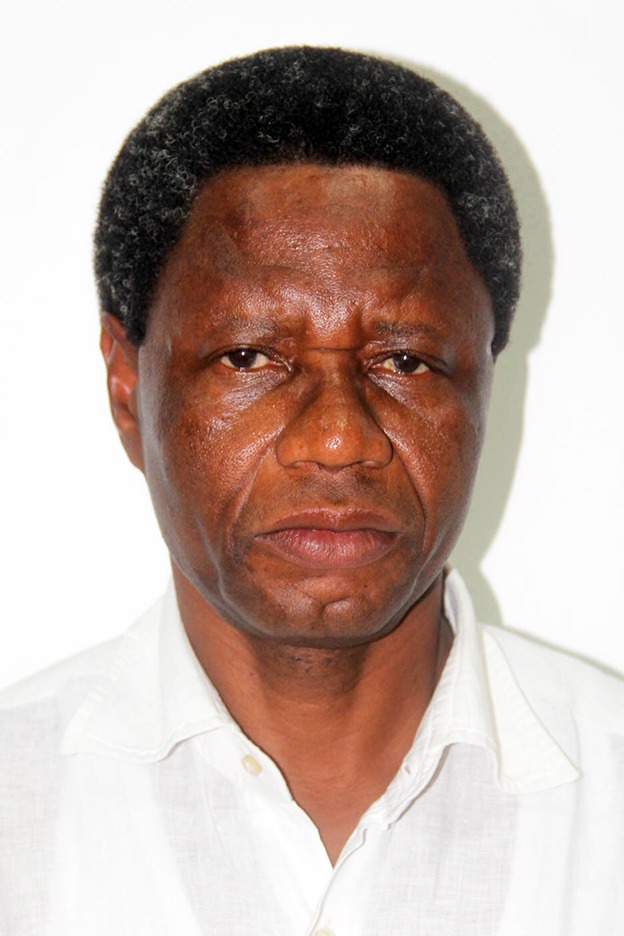
By Dr. Edward Kwadwo Yeboah
For more news, join The Chronicle Newspaper channel on WhatsApp: https://whatsapp.com/channel/0029VbBSs55E50UqNPvSOm2z