Thomas Partey is the captain of Ghana’s national football team. He plays his club football in Europe at the highest level. In June 2026, his country qualified for the World Cup, and he prepared to lead the Black Stars in their opening match against Panama in Toronto. He never made it onto the pitch. Canada denied him a visa.
Ghana won the match anyway, 1-0. But the question his absence raised did not go away. It grew louder with every week of the tournament. If the captain of a qualified team cannot enter the country hosting his own World Cup match, then who does this tournament actually belong to?
This piece argues that the 2026 World Cup has given Africa the clearest evidence in a generation of something many Africans have long sensed: that the structures governing world football treat African teams, fans, and officials as guests in a game they helped build. The evidence is not rumour or bitterness. It is documented, specific, and worth setting out calmly.
Two thousand years ago, the Roman poet Juvenal described how emperors kept their citizens quiet: give them bread and circuses. Feed people enough and entertain them enough, and they will not ask hard questions about who holds power. The Colosseum, seating up to 80,000 people, was built for exactly this purpose.
The idea never died. Today the world’s biggest circus is the FIFA World Cup, broadcast to an estimated five billion people. And like Rome’s arena, it is worth asking not just what happens on the pitch, but who controls the arena itself, and who is merely allowed inside. For Africa at the 2026 tournament, the answer has been uncomfortable.
What Happened to Africa at This World Cup?
Start with access. The 2026 World Cup is hosted mainly in the United States, under an administration whose travel restrictions cover 39 countries, described by CNN as mostly non-White, African, or Muslim-majority. The consequences for the tournament were direct.
Fans from five African nations were initially told to pay deposits of up to $15,000 each to obtain visas to attend matches. The requirement was suspended for ticketed fans only after international pressure. Omar Artan, a FIFA-accredited referee from Somalia, was denied entry to the United States and could not officiate at the tournament he was appointed to. An Iraqi team photographer with a valid visa and FIFA accreditation was detained for seven hours at a Chicago airport. And Partey, as noted, missed his country’s opening match.
Then consider what happened on the pitch. In Ghana’s match against England, defender Ezri Konsa appeared to catch Ghanaian midfielder Prince Kwabena Adu inside the penalty area. Replays showed clear contact. The referee waved play on. VAR, the video review system introduced to correct exactly this kind of error, did not intervene. Ghana’s coach, Carlos Queiroz, a man with decades of experience at the highest level, said afterwards: “VAR went for a coffee.
I’m not sure VAR is still working in the World Cup.” Ghana held England to a goalless draw regardless. But the pattern extended beyond one match. Lionel Messi escaped punishment for a studs-up challenge on Algeria’s captain; the Algerian federation’s formal complaint to FIFA received no public response.
A marginal offside decision erased Iran’s stoppage-time winner against Egypt. In one match, the VAR offside graphic simply failed to appear on screen, leaving viewers with no visual evidence of a decision made in their name.
This is a Vision Altering Reality (VAR), and not a Virtual Assistant Referee (VAR).
Today’s Colosseum seats 80,000 in New York, 90,000 in London, 100,000 in Ahmedabad. Its gladiators wear football boots and earn more in a week than most of their audiences earn in a decade.
Its emperor is not a Caesar but a Swiss-based body called FIFA, presided over by Gianni Infantino, who in December 2025 presented a “FIFA Peace Prize” to Donald Trump, the president whose government was simultaneously imposing a travel ban on 39 countries, described by CNN as “mostly non-White, African or Muslim-majority,” preventing their citizens from attending the World Cup hosted on American soil.
The 2026 FIFA World Cup is not just a football tournament. It is the most visible, most documented, and most instructive example in recent history of how sport functions as a system of power, and how that system has been deployed, consciously and structurally, to manage what populations feel, what they discuss, and what they are permitted to question.
The VAR was sold to the world as fairness made visible. In practice, it moved human judgment into a room where nobody can watch it work.
None of these incidents, taken alone, proves bias. That is precisely the problem. Each one can be explained away individually. It is the pattern, who benefits from the marginal calls, whose complaints go unanswered, whose officials are turned away at the border, that tells the story. And the pattern consistently tracks the difference between football’s powerful nations and its peripheral ones.
The Structure Beneath the Incidents
These incidents sit on top of a structural imbalance that predates this tournament. Africa’s football confederation, CAF, has 54 member associations, more than Europe’s UEFA. Africa has the world’s youngest and fastest-growing population, and some of its most passionate football audiences.
Yet Africa holds nine 9 of the 48 places at this expanded World Cup, proportionally fewer than Europe. African associations receive a smaller share of FIFA’s prize money. Referee appointments at World Cups have historically favoured European and South American officials. Broadcast schedules are built around European viewing hours.
The pattern will be familiar to anyone who studies Africa’s place in the global economy. The continent exports raw cocoa and imports chocolate. It exports crude oil and imports refined fuel. In football, it exports extraordinary talent, to European clubs, European leagues, European academies, and imports the decisions, the schedules, and the governance made elsewhere. The raw material flows out. The control stays where it has always been.
FIFA’s own history explains why reform has been slow. In 2015, a United States Department of Justice indictment revealed that FIFA officials had exchanged more than $150 million in bribes over 24 years, covering broadcasting rights, sponsorships, and World Cup hosting decisions. The president who oversaw much of that era, Sepp Blatter, was banned from football. His successor, Gianni Infantino, has expanded FIFA’s revenues and its tournaments.
In December 2025, weeks before this World Cup began, Infantino presented a newly invented “FIFA Peace Prize” to Donald Trump, the leader of the host nation whose visa rules were about to keep African fans, and officials, from the tournament. An institution that depends on access to political power will always be tempted to serve political power. FIFA is not unusual in this. But it should not be allowed to describe itself as neutral while doing it.
What Africa Can Actually Do
It is easy to end an argument like this with anger. It is more useful to end it with proposals. Three are within reach.
First, CAF should negotiate as a bloc. Fifty-four associations bargaining separately for FIFA’s favour will always be weaker than one confederation bargaining collectively, over World Cup places, prize money distribution, and referee representation. Africa has already accepted this logic in trade, through the African Continental Free Trade Area. The same logic applies to football governance.
Second, demand that VAR decision logs be published. Every review initiated, every review declined, and the reasoning behind each, released publicly after every World Cup match. This is a modest ask. If the technology is applied fairly, the logs will show it. If FIFA refuses to publish them, that refusal will tell us something too.
Third, make host agreements protect access. Future World Cup hosting contracts should include enforceable guarantees that qualified teams, accredited officials, and ticketed fans from all participating nations can enter the host country. A tournament that calls itself a World Cup should not be partially closed to the world.
Ghana’s Black Stars have given their country a proud tournament so far, a win over Panama without their captain, and a goalless draw against England achieved with 22 percent of the ball and a goalkeeper in inspired form. Nothing in this piece takes away from that. The players did their job. The question is whether the institutions around them are doing theirs. Rome’s arena fell when people stopped accepting spectacle as a substitute for fairness. Football’s arena does not need to fall. It needs to be opened up, its decisions made visible, its places fairly shared, its doors open to everyone whose talent and support built the game’s value in the first place.
Africa does not need to stop loving football. It needs to stop watching the game with one eye closed.
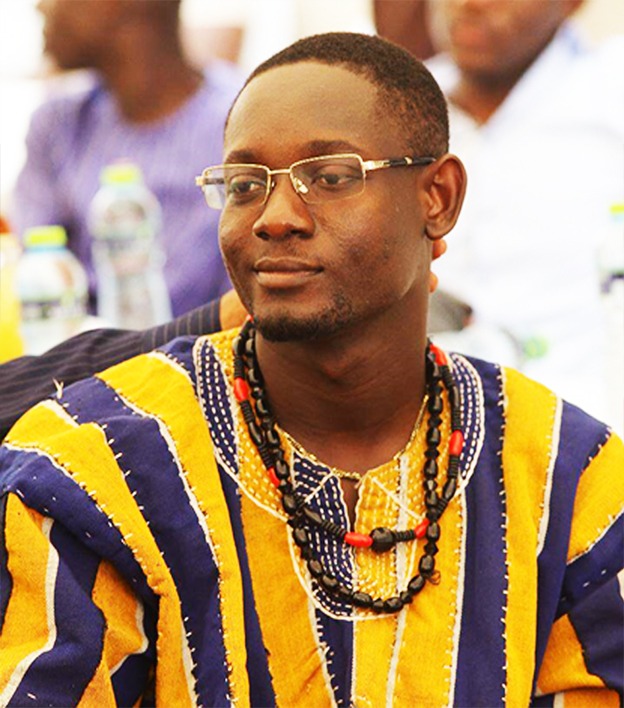
By Obed Kog
The writer is a Graduate Student in International Relations and Diplomacy, GIMPA | Public Policy Analyst
Ghanaian researcher focused on international relations, diplomacy, trade, and development policy.
For more news, join The Chronicle Newspaper channel on WhatsApp: https://whatsapp.com/channel/0029VbBSs55E50UqNPvSOm2z