When COVID-19 arrived in Ghana in early 2020, it came wrapped in fear and uncertainty. Streets emptied. Schools shut their doors. Hospitals became places people avoided unless absolutely necessary. Every cough raised suspicion, every fever felt dangerous. Families stayed indoors, waiting for normal life to return.
But for Charity Juliet Asamani and her family, COVID did not simply bring lockdowns and masks. It arrived bearing a cruel, almost ironic burden, one that would reshape their lives long after the pandemic faded from public consciousness.
Charity Juliet Asamani is the mother of Freda (not her real name), her nine-year-old daughter, a once extremely active child now living with Myasthenia Gravis, a rare autoimmune neuromuscular disease.
Freda was just three years old when the first signs appeared, during the height of the COVID lockdown, marking the beginning of a six-year journey through misdiagnosis, uncertainty and a health system unprepared for the rare.
When the Eye Would Not Open
It began quietly.
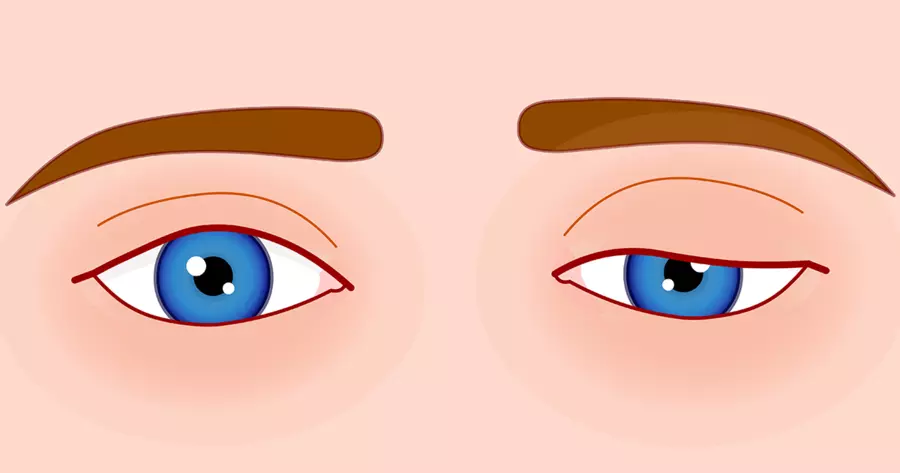
Freda had gone out to ride her bicycle. When she returned, Juliet noticed what looked like a small pimple near her left eye. By evening, the eyelid appeared damaged, and the lower lashes were missing. By the next day, the eye would not open at all.
Alarmed, Juliet rushed her daughter to a clinic. The response was unexpected.
“They asked me why I was only coming now,” she recalls. “I said the thing just happened. I don’t even know what is wrong.”
What followed was a maze of tests and referrals eye examinations, scans, and MRIs most of which came back normal. Yet Freda’s eye remained shut. More confusing still was the pattern Juliet began to notice: every morning, Freda’s eye would open normally. As the day progressed, it slowly drooped shut again.
That daily cycle, strength at rest, weakness with activity would later become the key to unlocking the diagnosis.
After several referrals, Freda was sent to see a Neurologist. There, a simple test changed everything. An ice pack was placed over her eye. When it was removed, the eyelid lifted.
The diagnosis was Myasthenia Gravis.
A Rare Name, an Uncertain Path
Before the diagnosis, some doctors suggested surgery to correct Freda’s drooping eyelid. Others hinted that her eye might eventually need to be removed. Juliet refused.
“I didn’t even sit down,” she says. “I left and went to another facility.”
Initially, the weakness appeared limited to one eye. Plans were even made for minor surgery. Then, two weeks later, the other eye began to droop.
Over time, the weakness spread from the eyes to the neck, and then to the limbs. Today, Freda struggles especially with her lower body. Walking for long distances exhausts her. The child Juliet describes as “very, very, very active” now lives within the limits set by fatigue.
Medication helps but only to a point.
“They told me it’s not something that can be cured. She will be on medication for life,” Juliet says.
The dosage has increased steadily since 2019. Yet the weakness continues to descend.
From the COVID lockdown to today, Juliet’s life has been defined by hospital visits: teaching hospital corridors, eye clinics, paediatric neurology units follow-ups, referrals and second opinions.
“Sometimes we were admitted and not even given medication,” she says. “They don’t really know which medicines to give her and which to avoid.”
Even with a diagnosis, uncertainty remains.
Freda takes medication four times a day, supplemented with other drugs and multivitamins. One bottle costs thousands of cedis and does not last long. Juliet must wake her at night, administer the first dose before school, send medication along, and give the final dose when Freda returns home.
“She’s getting weaker and weaker each day,” she admits. “I think it’s the medicine, but what choice do we have?”
Freda’s schooling has also been disrupted. Some days, she cannot attend at all. On others, she goes but struggles through exhaustion invisible to most.
Juliet has explored treatment options abroad, contacting doctors online and searching for help beyond Ghana’s borders. The responses often require tests, funds, or connections she does not have.
A System Unprepared for the Rare
Freda’s story reflects a broader national gap in the care of rare conditions.
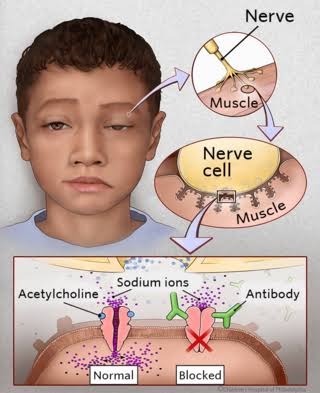
Myasthenia Gravis (MG) is a rare autoimmune neuromuscular disorder in which the immune system disrupts communication between nerves and muscles, leading to fluctuating muscle weakness.
Globally, an estimated one million people live with the condition, though experts say the true number is likely higher particularly in low- and middle-income countries where diagnosis is often delayed or missed.
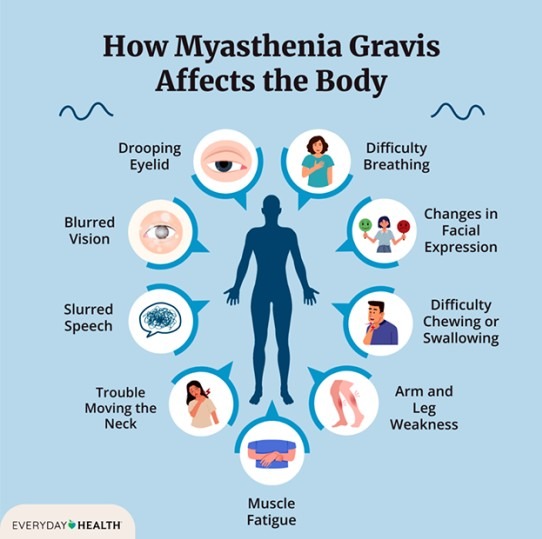
Common symptoms include drooping eyelids, blurred or double vision, difficulty chewing or swallowing, slurred speech, neck weakness, and fatigue that worsens with activity and improves with rest. In children, these signs are often mistaken for eye problems, infections, or developmental issues, delaying proper diagnosis.
This pattern explains why Freda’s eyelid would open in the morning and gradually droop as the day progressed. While MG is considered manageable with early diagnosis and consistent treatment, it is rarely suspected in children in Ghana, where specialized testing and long-term care options remain limited.
Ghana has no national rare disease policy, no centralized data system, limited genetic testing capacity, and few specialists trained to recognize rare conditions early especially in children. As a result, patients drift from facility to facility, accumulating misdiagnoses, financial strain, and emotional exhaustion.
Early diagnosis, critical for preventing complications and reducing long-term costs, is often delayed by years, leaving families to navigate a health system that was never designed with rarity in mind.
What Health Care Providers Say
Samuel Agyei Waife, a clinical psychologist and rare disease advocate, first met Freda and her family through a mental health referral not as part of her medical care. The family had been advised to seek psychological support as the emotional strain of prolonged uncertainty and repeated hospital visits became overwhelming.
Freda has Myasthenia Gravis (MG), a rare neuromuscular condition with only a few documented cases in Ghana. Diagnosing the condition, Mr Waife explained, is especially difficult.
“Unlike some rare diseases where you can run a genetic test and get a clear answer, this one is different. It requires largely clinical assessment and specialized biomarker tests, and most of these tests are very expensive,” he said.
For Freda’s family, this meant moving from one hospital to another, consulting different specialists and undergoing multiple tests without clear answers.
“They have seen different hospitals, different teams, and done many tests. They have a whole file of investigations, yet care is still not coordinated,” he said.
The uncertainty has affected Freda’s daily life.
“She is easily fatigued and weak, and the family is always afraid she might fall or hurt herself,” Mr Waife said, noting that her condition limits her ability to participate in normal social activities.
Care coordination, he added, has largely fallen on Freda’s mother, who is also grieving the recent loss of her husband. “The mother has to do everything navigate the system, talk to doctors, and manage the condition on her own,” he said.
According to Mr Waife, Freda’s experience reflects a wider systemic failure.
“Without a national rare disease policy, families like Freda’s are left on their own. We are not training experts, investing in diagnostics, or creating clear care pathways,” he said.
He argued that Ghana must prioritize awareness, early diagnosis, regional centres of care, and sustained research investment to prevent families from carrying such an overwhelming burden alone.
What Experts Say
Dr Nicholas Ekow Thomford, Senior Lecturer at the University of Cape Coast and Head and Principal Investigator of the Pharmacogenomics and Genomic Medicine Group and Laboratory, says Ghana’s rare disease burden is far heavier than official attention suggests.
“There are a lot of rare diseases in Ghana, but there is very limited rare disease research in the country,” Dr Thomford explains. “Generally, anything rare is overlooked. And in a country with limited resources, there is added incentives to focus on diseases policymakers believe affect large numbers of people.”
Most rare diseases, he notes, occur in roughly one out of every 2,000 people. On paper, that low prevalence often pushes them out of policy conversations. In reality, when taken together, rare diseases affect thousands of families many of whom like Freda’s, spend years searching for answers.
Dr Thomford describes Ghana’s lack of a national rare disease policy as a critical failure point.
“The absence of a policy confirms the level of importance placed on rare diseases,” he says. “It makes research almost non-existent and more expensive, local diagnosis complicated or unavailable, and significantly lowers the odds for patient survival and good outcomes.”
For families, this policy vacuum translates into long diagnostic odysseys multiple referrals, inconclusive tests, and clinicians forced to rely on guesswork rather than clear diagnostic pathways. Freda’s early experience, where surgery was proposed before the underlying neurological cause was understood, reflects this systemic gap.
At the research and diagnostic level, Dr Thomford points to major deficiencies that fuel delayed or incorrect diagnoses, especially in children. These include limited capacity for functional genetic variant identification and poor access to orphan drugs medicines developed specifically for rare conditions.
“Most rare diseases have a genetic basis,” he explains. “Because they are rare, they require advanced methods to identify the causative functional genes. These methods demand funding, expertise, and sophisticated equipment which are limited in Ghana.”
Genetic testing and proper data collection, he adds, could dramatically shorten the diagnostic journey for patients like Freda.
“Phenotypic and genotype data help in the easy identification and management of rare disease symptoms that clinicians have already encountered,” he says. “But the biggest barriers remain funding, access to advanced equipment, and trained personnel.”
Despite these constraints, Dr Thomford believes progress is possible if rare diseases are deliberately brought into national health planning.
“If we engage researchers and clinicians to develop practical policies, we can improve clinical care and long-term outcomes for rare disease patients,” he says.
For Juliet, such changes feel distant but deeply necessary. Each hospital visit, each new prescription, and each school day Freda struggles through underscores the cost of delay not just in cedis, but in childhoods reshaped by fatigue and uncertainty.
Until rare diseases are recognized, studied, and planned for, many children will continue to be diagnosed in the dark, their lives shaped not only by biology, but by the absence of policy, preparedness, and timely care.