Students who are unable to secure admission into tertiary institutions because they obtained a D7 in just one core subject in the West African Senior School Certificate Examination (WASSCE) are set to benefit from a new Bridging/Remedial Learning Programme being introduced by FAWE Ghana with support from the Mastercard Foundation.
The programme seeks to remove one of the major barriers to tertiary education by offering eligible students conditional admission into partner universities while they undergo structured remedial classes and rewrite the deficient core subject.
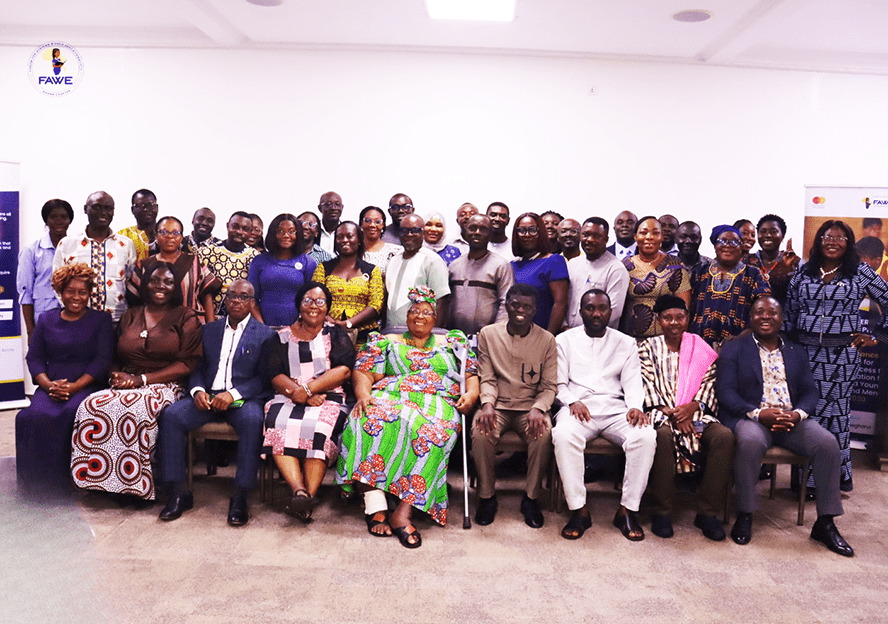
The initiative was unveiled during an inception and stakeholder engagement workshop last Thursday, July, 30, 2026 in Accra, where officials of FAWE Ghana, representatives of partner tertiary institutions and key education stakeholders discussed the implementation framework for the programme.
According to FAWE Ghana, although access to tertiary education has improved significantly over the years, many academically capable students, particularly girls and other marginalized groups, continue to miss university admission because they fail to meet the minimum entry requirements in one core subject. The organisation noted that the challenge is more prevalent among students from disadvantaged backgrounds, Category C Senior High Schools and Technical and Vocational Education and Training (TVET) institutions.
While candidates have the option of rewriting their examinations through the Private WASSCE or Certificate II examinations, many prepare on their own without structured teaching, academic guidance, qualified tutors or adequate learning resources, making it difficult for them to improve their grades sufficiently to qualify for tertiary education.
Welcoming participants, Mr. Richard Amoani of FAWE Ghana said the programme was designed to ensure that no academically promising young person is denied the opportunity to continue his or her education because of one examination setback.
He noted that the country’s education system had recorded remarkable progress over the years, but recent examination results showed that many students still faced barriers to higher education.
“We are here to find the best way to give them what we call a second chance opportunity,” he said, adding that the programme aims to support 500 young people across the 16 regions of Ghana.
Presenting an overview of the FAWE/Mastercard Foundation Phase II Programme, the Programmes Manager, Mrs. Anna Nongnedome Nabere, said the organisation’s interventions are aimed at advancing equitable education by removing gender, financial and social barriers that prevent young people from accessing and completing tertiary education.
She explained that the Bridging/Remedial Learning Programme forms part of a broader intervention that will support 1,100 marginalized young women and men through two complementary pathways.
According to her, while one component provides scholarships to students who already meet university admission requirements for STEM programmes, the new bridging programme targets candidates who passed all their elective subjects, but obtained D7 in only one core subject.
“We are supporting just one core subject—not two core subjects, not three core subjects. We are looking at students who have passed all their elective subjects and obtained D7 in one core subject,” she emphasized.
Under the initiative, successful applicants will receive provisional admission into partner institutions, where they will undertake structured remedial classes delivered by experienced teachers while pursuing their studies. FAWE Ghana will support its participants to register for the November/December Private WASSCE or Certificate II examinations, and students who improve their grades to satisfy university admission requirements will have their admissions regularised and continue in their chosen STEM degree programmes.
Beyond remedial teaching, the programme includes a comprehensive student support package comprising payment of examination registration fees, learning materials, monthly stipends, transport or accommodation support where necessary, mentorship, psychosocial support and career guidance to improve student retention and completion.
Ms. Nabere said applicants must be between 15 and 25 years old, demonstrate financial need and show a commitment to community service. The programme will prioritise girls and other vulnerable groups, with 80 per cent of beneficiaries expected to be female while dedicated slots will also be reserved for persons with disabilities, refugees and internally displaced persons.
She stressed that the programme is founded on the principle that academic potential should not be lost because of poverty, gender, disability, displacement or one remediable examination result.
In her closing remarks, Board Chair of FAWE Ghana, Mrs. Marian Akorkor Tackie, expressed confidence that the collaboration between FAWE Ghana, the Mastercard Foundation and partner institutions would create a sustainable pathway for more young people, especially young women, to access and complete STEM education, thereby contributing to Ghana’s long-term human capital development.
For more news, join The Chronicle Newspaper channel on WhatsApp: https://whatsapp.com/channel/0029VbBSs55E50UqNPvSOm2z