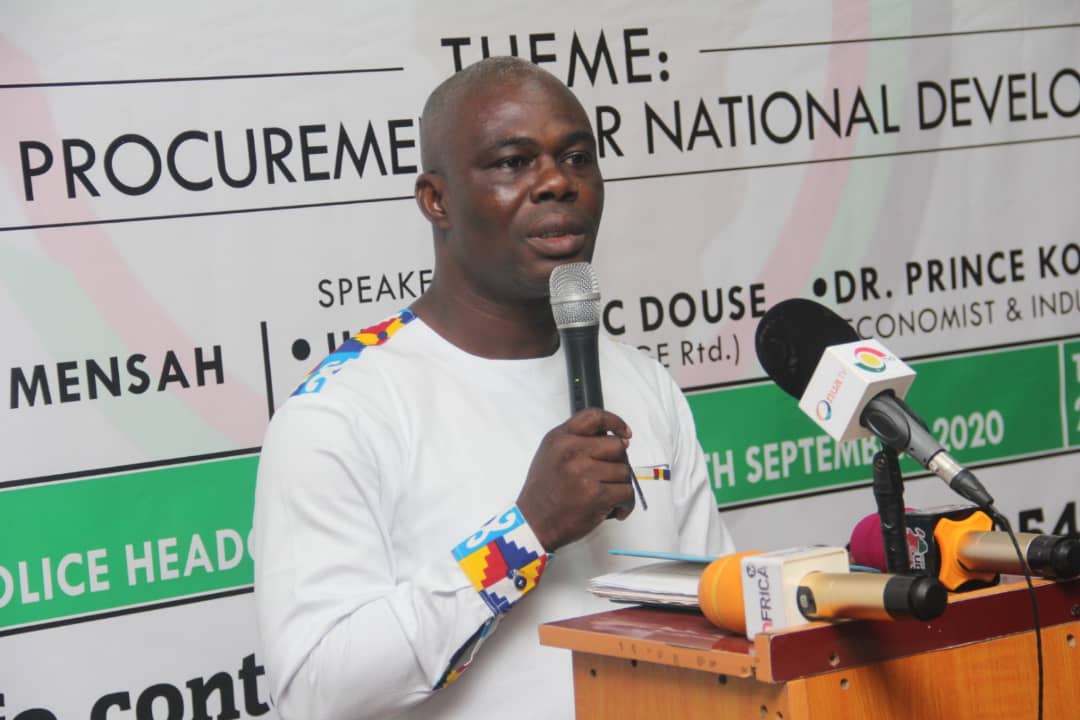
Economist and Cleric, Samuel Worlanyo Mensah, has called for the re-engineering and reintroduction of the Electronic Transfer Levy (e-Levy) as a potential source of funding for the government’s development programmes.
Rev. Dr Mensah, who is also a lecturer at the Wisconsin International University College, Accra, said the prevailing global economic uncertainties and high expectations of Ghanaians for improved infrastructure and social services require the country to explore sustainable, homegrown development and revenue mobilisation strategies.
The e-Levy was introduced in Ghana on May 1, 2022 by the then ruling government of the New Patriotic Party, under President Nana Addo Dankwa Akufo-Addo, to capture economic activity in the informal sector and increase domestic revenue mobilisation.
President John Dramani Mahama, after being elected in the December 2024 presidential election on the ticket of the National Democratic Congress (NDC), signed the bills repealing the e-levy, Betting tax and Emissions levy on Wednesday, April 2, 2025.
The repeal of the e-levy was in fulfillment of a core electioneering campaign promise in the run-up to the 2024 general elections, to reduce financial pressure on citizens.
In an interview with the Ghana News Agency (GNA), Rev. Dr. Mensah, who is also the Executive Director of the Centre for Greater Impact Africa, policy think-thank, said the digital economy had become an important component of modern economic development and should not be overlooked in Ghana’s efforts to generate revenue.
He noted that the government’s “Big Push” programmes and the proposed 24-Hour Economy had placed considerable demands on public finances, making it necessary to identify reliable sources of funding to address the country’s developmental deficits.
“The expectations of Ghanaians are very high, and the government needs to do everything possible to generate enough revenue to meet these developmental deficits,” he said.
Rev. Dr. Mensah said although the e-Levy introduced by the previous government had subsequently been abolished, the changing economic circumstances, however, warranted a reconsideration of the policy.
He urged the government, the Ministry of Finance and the Bank of Ghana (BoG) to engage in further economic policy discussions on how the digital economy, including the e-Levy, could be structured to support national development.
The economist cum cleric said reintroducing the levy with stronger accountability and transparency measures could make it more acceptable to the public, particularly if the revenues generated were clearly linked to specific development programmes.
“If the e-levy will be used to support the Big Push programmes, it will be easy for us to track, and Ghanaians will be more comfortable than for us to roll out nice, wonderful programmes without funding,” he said.
He stressed the need for the country to build an economy capable of generating sustainable domestic resources to finance its development agenda rather than relying heavily on external sources.
Rev. Dr. Mensah also proposed the organisation of town hall meetings to build public consensus and improve understanding of the rationale behind any decision to reintroduce the levy.
He acknowledged that the e-levy had previously become a politically contentious issue but said the current economic circumstances called for a fresh assessment of the policy based on its potential contribution to sustainable socio-economic growth.
He said a carefully designed and accountable digital taxation framework could provide additional resources to support projects and programmes aimed at accelerating Ghana’s development.
GNA