Boarding school authorities have been encouraged to take decisive action to consider ending the use of firewood and charcoal in their school kitchens across the country, amid growing concerns about the devastating health consequences of prolonged exposure to inhalation of smoke from the use of wood fuel and charcoal.

The call follows disturbing accounts of kitchen workers in boarding schools who have suffered serious health complications, including bronchitis and blindness, after years of exposure to smoke from firewood and charcoal.
The National Petroleum Authority (NPA), which is leading efforts to promote cleaner cooking alternatives, says the continued reliance on these traditional fuels in institutional kitchens exposes thousands of kitchen workers and students to avoidable health risks.
During a sensitisation exercise at the Tamale College of Education, a Lecturer and Academic Counsellor at the institution’s Pre-Vocational Skills Department, Mr. Mohammed Mansur Hussein, recounted the tragic case of a woman who worked in a boarding house kitchen and eventually died from bronchitis after prolonged exposure to smoke from cooking with firewood and charcoal.
He also disclosed that a kitchen staff member at one of the boarding schools has lost her sight due to cataract, which he attributed to prolonged exposure to smoke in the kitchen. The condition has left her unable to continue working.
These accounts raise serious questions about the conditions under which meals are prepared for students in boarding schools and the extent to which the health and safety of institutional kitchen workers are being exposed.
These concerns are further reinforced by scientific research conducted in the Northern Region by a Senior Lecturer at the Medilab Department of Tamale Technical University, Dr. Hawawu Hussein.
Her study, which followed more than 1,200 mothers and their babies at four medical centres in Tamale and Savelugu, found that babies whose mothers cooked with charcoal or firewood had approximately four times the odds of suffering coughs and colds compared with babies from households using LPG or electricity.
Babies from households using firewood were also nearly seven times more likely to be taken to a health facility for chest-related illnesses.
The researchers explained that particles from smoke, resulting from cooking with charcoal and firewood, penetrate deep into the lungs, causing irritation and increasing the risk of respiratory illnesses. Women and children in the study area were found to spend between three and seven hours daily in and around kitchens.
A second study by Dr. Hussein and her colleagues established that pregnant women who cook with charcoal had approximately one-and-a-half times the risk of preterm birth compared with those who used gas or electricity.
The findings provide a compelling public health argument for government to reconsider the continued use of firewood and charcoal in boarding school kitchens, where large quantities of food are prepared daily, often over several hours in enclosed spaces.
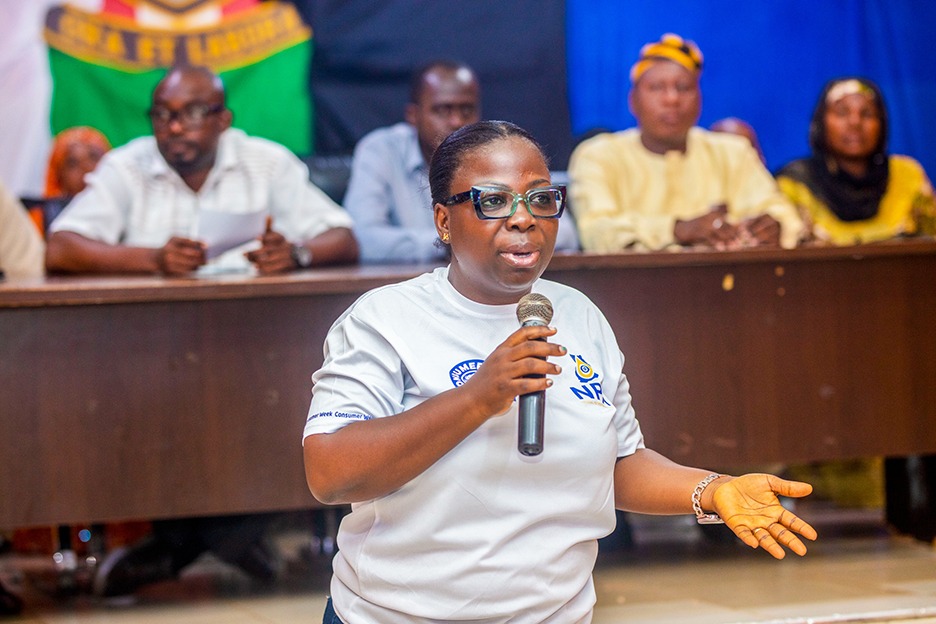
Speaking during the sensitisation exercise, the Director of Consumer Services at the NPA, Eunice Budu Nyarko, said the evidence demonstrated that cooks, students and pregnant women bear a disproportionate burden of the health consequences associated with traditional cooking fuels.
She encouraged educational institutions to switch to the use of LPG, describing it as one of the cleanest and most efficient cooking fuels available in the country.
The Director for Consumer Services observed that kitchen workers in boarding houses and halls of residence are particularly vulnerable because of the prolonged hours they spend cooking large quantities of food in enclosed spaces. She also observed that LPG adoption in northern Ghana remains among the lowest in the country. In Dr. Hussein’s research, fewer than one in ten mothers relied mainly on gas for cooking.
The exercise was carried out by the Consumer Services Directorate of the NPA, in collaboration with the Corporate Affairs Directorate and the Northern and Upper East Regional Offices of the Authority.
Technical presentations were delivered by Maureen Adwoa Duori, the Head of Consumer Education and Stakeholder Engagement, and the Head of Consumer Data Analytics and Market Intelligence, Ing. Johnson Gbagbo Jnr.
In the Northern Region, the team visited Tamale College of Education (TATCO), Bagabaga College of Education (BACE), Tamale Technical University (TaTU) and the Dungu Campus of the University for Development Studies (UDS). In the Upper East Region, the team engaged students and staff of St. John Bosco College of Education and the UDS Navrongo Campus as well as the Midwifery Training College and Bolgatanga Technical University (BTU) in Bolgatanga.
While advocating a transition to LPG, the NPA officials also educated students and staff on safe handling practices, including purchasing gas from licensed outlets, keeping cylinders upright in well-ventilated spaces, checking for leaks with soapy water and closing cylinder valves after cooking.
Additionally, the team highlighted the dangers of fuel siphoning and stressed the importance of prioritizing fuel quality over quantity as well as consumer rights and complaints resolution mechanism.
Heads of the institutions welcomed the initiative, but called on government to provide the necessary support to convert their kitchens to LPG and train kitchen staff in its safe use.
The call for government action, however, must go beyond sensitisation. The NPA says it will continue to engage institutions, communities and households as part of efforts to support Ghana’s target of increasing LPG use to 50 per cent of households by 2030.
For more news, join The Chronicle Newspaper channel on WhatsApp: https://whatsapp.com/channel/0029VbBSs55E50UqNPvSOm2z