Somewhere in Ghana today, a young mother will have her first seizure. A retired teacher will notice his hand trembling. A child will be unable to pay attention in class for reasons no teacher can name and an undergraduate student will be struggling to find meaning to their life. Their futures will be shaped less by these health challenges and more by this single uncomfortable question: will they be able to receive the right healthcare in time?
22nd July 2026 has been set aside as the World Brain Day, by the World Federation of Neurology under the theme “Brain Health: Access for All”. It is a good time for us all to confront this question based on the simple truth that a healthy brain is the foundation of everything that defines us. It is how we learn, earn, play and experience life as we know it. A healthy brain should not have to be a luxury for the fortunate few, yet across Ghana, access delayed often becomes access denied.
At last count, Ghana had just 16 neurologists and 18 MRI machines serving a population of roughly 35 million. These MRI machines are vital when diagnosing strokes, identifying brain tumors and other brain related conditions. Only 2 of them in state-owned hospitals are currently functional.
Between 2015 and 2022, over 1,200 doctors left the country, many of them specialists we can least afford to lose. For reference’s sake, Canada which has roughly the same population as Ghana (40 million people), has over 1300 neurologists and 400 MRI machines.
However, it is not all doom and gloom, neither is it a complete story of despair and hopelessness.
Over the past decade, Ghanaians have quietly rewritten what is possible with modest means. The Ghana Neuroscience Society has knitted together scientists and clinicians who once worked in isolation, turning scattered effort into a national conversation. Neuroscience research from Ghanaian institutions have multiplied by eight.
The number of neurosurgeons, neurologists and psychiatrists have continually been on the rise. Specialist training schools to build overall capacity have also equipped a new generation of clinicians and researchers who now train others in turn.
Community groups have carried brain health where formal institutions do not have reach. Led by G.H.Scientific, science outreach programmes have brought neuroscience to secondary school students, many of them girls who may have once upon a time being told neuroscience was not for them.
One can also find radio dramas in local languages dismantling the stubborn stigma that still casts epilepsy as a spiritual curse rather than a treatable condition. Psychiatrists across the country have found an organized way to support prayer camps, so that healthcare can be delivered where the people who need it are found.
These are exactly the ideas World Brain Day 2026 celebrates: prevention that begins in everyday life, and care that is brought closer to home.
The moment now demands that we turn momentum into permanent progress and established norms. Two developments give us a rare opening as a country if access to brain health for all will become a reality. The Free Primary Healthcare Programme is building a nationwide platform through which simple screening for stroke risk, childhood developmental disorders could reach communities entirely outside the specialist system. Secondly, the newly established Ghana National Research Fund offers for the first time, a domestic engine to finance homegrown brain research, outside of international funders.
Seizing this window requires deliberate choices at the core of which could be a national neuroscience agenda to synchronise research, clinical practice and public education. This will give neuroscience a formal seat at the policy table, because brain health is not merely a medical concern. Brain health is a measure of the kind of society we intend to build, one where a seizure in a village or a tremor in a city are met not with distance and delay, but with dignity and timely care.
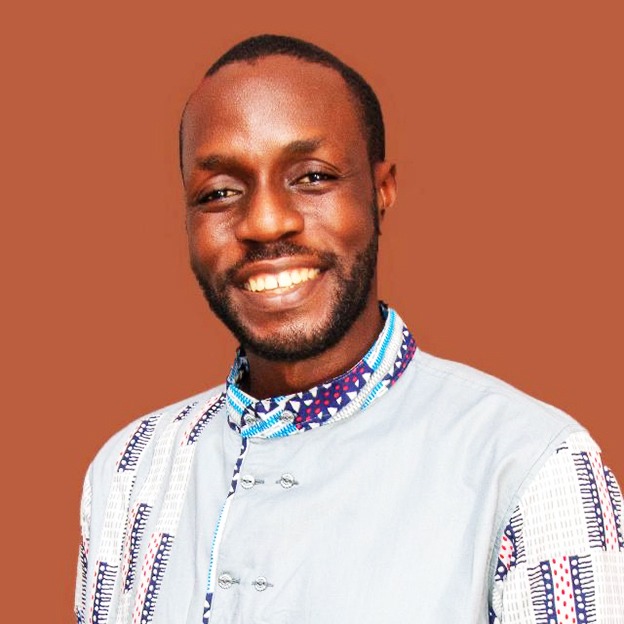
By Dr. Thomas Amatey Tagoe | World Brain Day, 22 July 2026
Dr. Thomas Amatey Tagoe is a neuroscientist at the University of Ghana and executive of the Ghana Neuroscience Society.
tatagoe@ug.edu.gh