The Bank of Ghana (BoG) has injected approximately $10 billion into the economy since January 2025 to stabilise the exchange rate and strengthen the nation’s foreign reserves.
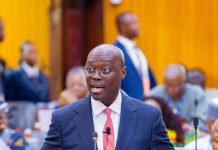
Appearing before the Public Accounts Committee (PAC) of Parliament in Accra on Monday, Nii Sowah Ahorlu, Head of Financial Marketing at the BoG, and Dr Johnson Pundit Asiama, Governor of the BoG, explained that the intervention primarily covered payments to Independent Power Producers (IPPs) and bondholders as part of a broader strategy to support the market.
Nii Ahorlu said: “Relative to last year, we have had significant intermediation processes, and that is what we have observed in terms of the stability and appreciation we have incurred. In terms of our support for the market this year, overall it has been close to $10 billion.”
The BoG’s intervention has contributed to the cedi’s appreciation, with the currency gaining 13.9 per cent against the dollar in October 2025.
The central bank’s gold reserves also recorded significant growth, reaching 37.06 tonnes by September 2025.
Dr Johnson Asiama, Governor of the Bank of Ghana (BoG), on his part, urged stakeholders to pursue reforms aimed at improving efficiency in the country’s gold-reserve programme, rather than apportioning blame over losses incurred.
Addressing the Public Accounts Committee of Parliament on Monday, Dr Asiama explained that the gold-reserve scheme and its complementary gold-for-oil programme were designed to build up Ghana’s gold reserves as a buffer to stabilise the cedi.
The Governor of the Bank of Ghana disclosed that an audit of the gold-reserve programme is currently underway, with the final report expected in March 2026.
The Governor revealed that the programme recorded net losses of GHS 1.8 billion in 2024, GHS 317.6 million in 2023, and GHS 744.4 million in 2022.
He attributed the losses to inherent costs in the trading model, which the Central Bank largely absorbed.
Dr Asiama emphasised that while the programme had faced challenges, it remained a strategic initiative for Ghana’s economic stability.
He called for a unified approach among policymakers, regulators, and industry players to ensure the scheme delivers long-term benefits to the economy.
“The focus should be on reforms that strengthen the programme’s efficiency so it can serve its intended purpose of stabilising the currency and supporting national development,” he said.
The PAC is holding a public hearing from Monday, January 12, to Tuesday, January 13, 2026 to consider the Auditor-General’s reports on the Public Accounts of Ghana ministries, departments, and other agencies for the year ended December 31, 2024.
By Elsie Appiah-Osei
GNA