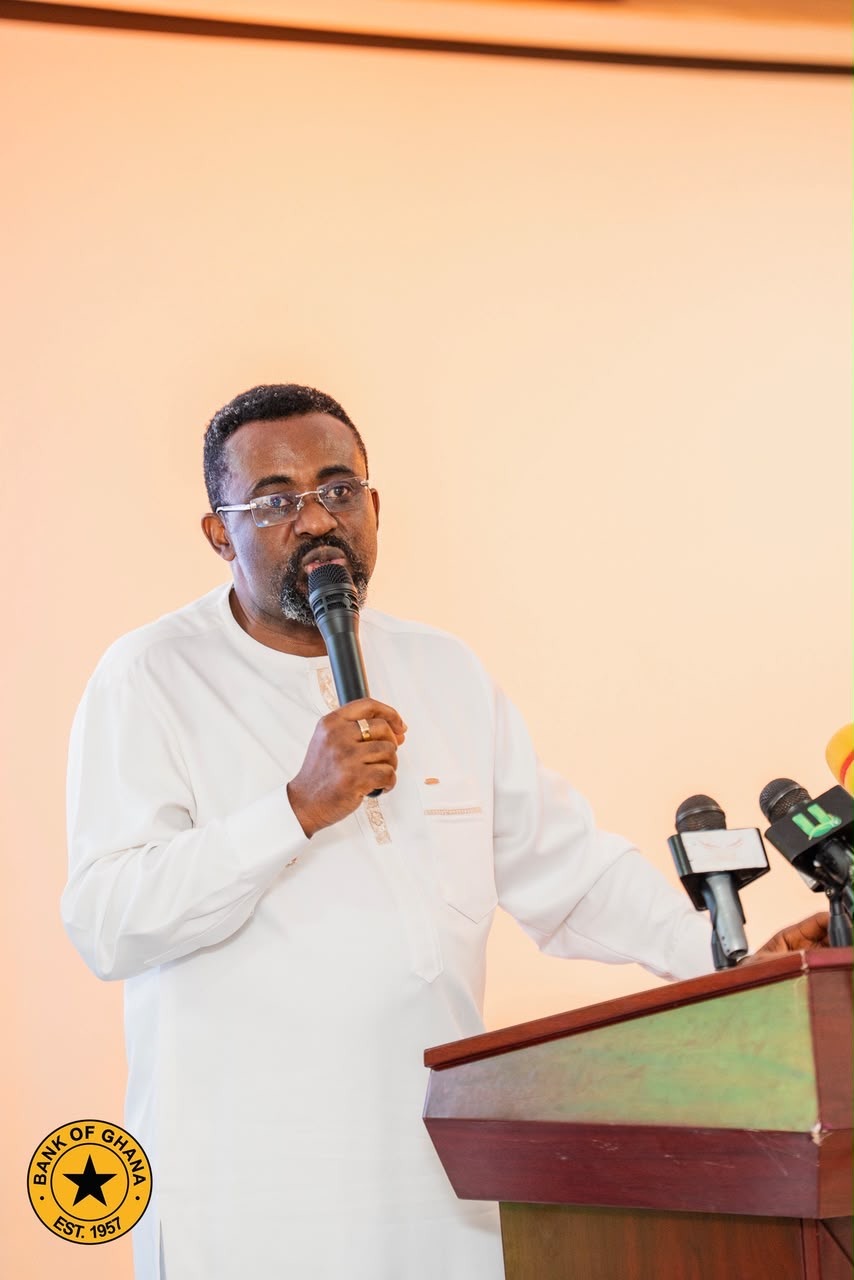
The Governor of the Bank of Ghana (BoG), Dr. Johnson Pandit Asiama, has assured businesses that the country’s economy remains on a stable growth path despite uncertainties in the global economy, citing low inflation, stronger economic growth, improved banking sector performance and resilient external reserves.
Speaking during a stakeholder engagement with business leaders, financial institutions, traders and journalists in Sunyani on Wednesday, Dr. Asiama said the central bank remains committed to maintaining macroeconomic stability while creating an environment that supports business expansion and investment.
According to him, the Bank of Ghana considers engagements with stakeholders essential because its policy decisions affect businesses, farmers, manufacturers, banks and households across the country.
“One of my priorities, since assuming office, has been to make the work of the Bank more open and transparent. We want to build stronger relationships with our stakeholders and ensure that our policies respond to the needs of businesses and the people we serve,” he said.

Providing an update on recent monetary policy decisions, Dr. Asiama explained that the Monetary Policy Committee maintained the Monetary Policy Rate at 14 percent after assessing both domestic and global economic conditions.
He said although uncertainty persists in the global economy, particularly due to the conflict in the Middle East and rising oil prices, Ghana’s economy has continued to perform well.
“We took this decision because we believe it is the right balance. It will help keep inflation under control while supporting businesses, investment and economic growth. At the same time, it gives us the flexibility to respond to changes in the global economy if necessary,” he stated.
On inflation, the Governor acknowledged the recent increase in the rate from 3.7 percent in May to 5.3 percent in June but stressed that it remains below the Bank of Ghana’s target range.
He attributed the increase mainly to higher transport costs resulting from rising global crude oil prices and expressed confidence that the situation would be temporary.
“The good news is that inflation remains low,” he said, adding that “low and stable inflation is good for everyone. It helps families manage their household budgets, allows businesses to plan with greater confidence, and encourages investment.”
Dr. Asiama further noted that Ghana’s economy continues to expand, with growth reaching 6.4 percent during the first quarter of the year compared with 6.2 percent during the same period last year.
He said the expansion was driven mainly by the services and industrial sectors, while business activity had also strengthened through increased bank lending, higher industrial production, greater trade activity and a recovery in tourism.
He added that falling lending rates have made it easier for businesses to access credit and invest, while confidence among businesses and consumers has improved.
The Governor also described the banking sector as strong and stable, noting that banks remain well-capitalised, deposits continue to grow and loan quality has improved.
He disclosed that credit to businesses and households grew by more than 41 percent in June, compared with about 9 percent during the same period last year.
“This means more businesses have access to financing to expand, create jobs and contribute to economic growth,” he said.
On the external sector, Dr. Asiama said strong exports of gold and cocoa helped Ghana record a higher trade surplus during the first half of the year, despite higher global oil prices increasing the country’s import bill.
He revealed that Ghana’s foreign exchange reserves currently stand at about US$12.9 billion, enough to cover five months of imports.
“These reserves give us a strong buffer against external shocks and help the Bank of Ghana support stability in the foreign exchange market,” he stated.
Although the cedi came under pressure earlier in the year because of global developments, particularly the conflict in the Middle East, the Governor said the local currency has since recovered, reaffirming the central bank’s commitment to maintaining an orderly foreign exchange market.
Looking ahead, Dr. Asiama cautioned against complacency, noting that external developments could still affect the domestic economy.
He said the Bank of Ghana would continue implementing policies aimed at protecting the value of the cedi, keeping inflation low, preserving financial stability and supporting sustainable economic growth.
“Our goal is simple: to create an economic environment where businesses can grow with confidence, households can plan for the future, and every Ghanaian can share in the benefits of a stable and growing economy,” he said.
The Governor stressed that maintaining macroeconomic stability requires collaboration among policymakers, businesses, financial institutions, traders, farmers and households, expressing confidence that continued engagement would strengthen efforts to improve economic outcomes for both the Bono Region and the country.