
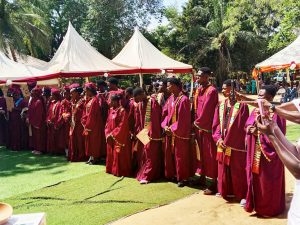
The Baobab Children Foundation has marked its 25th anniversary with the graduation of 30 young people trained in carpentry, dressmaking, catering and other vocational disciplines.
The Silver Jubilee celebration, held under the theme: “25 Years of Impact: Building Skills, Transforming Lives, Creating Futures,” brought together traditional leaders, parents, former teachers, government officials and other education stakeholders.
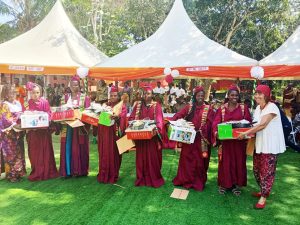
Held at Kwahinkrom, near Kissi, in the Komenda-Edina-Eguafo-Abrem Municipality of the Central Region, the celebration featured the graduation ceremony as its highlight.
Each graduate received a start-up kit to support the establishment of their respective businesses.
Since its establishment in 2001, the Foundation has trained about 200 young entrepreneurs, equipping them with practical skills to establish businesses or secure employment.
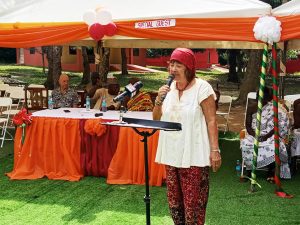
Delivering the anniversary address, the Founder and Chief Executive Officer, Edith de Vos, described the milestone as a moment of gratitude, pride and joy.
“Twenty-five years – a quarter of a century – Baobab Foundation is much more than an organisation. It is part of my personal life journey and my experiences in Ghana,” she said.
Ms de Vos said the Foundation was established on the belief that every child deserved an opportunity, regardless of their background or circumstances.
“We believe education should prepare young people for life, not only for examinations. We want young people who know where they come from, understand the world they live in and have the confidence to shape the world they want to live in,” she said.
Environmental protection and sustainability
On environmental protection and sustainability, Ms de Vos said the Foundation had integrated environmentally friendly practices into its operations.
“At Baobab, sustainability is something we practise. We use solar energy, practise organic farming and base our agricultural activities on agroecology,” she said.
She said students were taught sustainable farming, agroforestry, biodiversity and responsible soil management. She added that the Foundation began recycling water sachets in 2004 as part of its environmental sustainability efforts.
“Today, we collect plastic bottles and sell them to Plastic for Food in Elmina. We want our young people to understand that natural resources must be used responsibly so that future generations can benefit from them too,” she explained.
Ms de Vos identified securing adequate financial resources to sustain and expand the Foundation’s activities as its greatest challenge.
She noted that institutional and private-sector support for organisations such as the Foundation remained limited in Ghana and expressed appreciation to its foreign partners, particularly those from Germany, whose contributions had helped sustain the institution.
General Manager’s remarks
The General Manager of the Foundation, Alhaji Issaka, said its contribution over the past 25 years went beyond vocational training to creating opportunities for children and young people to develop their potential.
He said the Foundation’s work in agriculture, entrepreneurship and creative arts complemented its skills training programmes.
He added that the provision of start-up kits to graduating students each year helped ensure that the skills they acquired translated into practical livelihood opportunities.
According to him, the programmes were designed to equip learners with practical knowledge and skills they could apply in their daily lives.
Past students reflect on their experiences
The Foundation’s impact was also evident in the career paths of some former students, several of whom are now employed by the institution and its hospitality facility, Baobab House, in Cape Coast.
Former students like Michael Kukubor, Mersherk Queyson, Felicia Abeka, Isaac Queay, Bright Mensah, Emanuel Obeng and Ebenezer Esson are currently employed at the school.
Others, including Lydia Aidoo, Rose Dadze, Victoria Sey and Hadjat Aidoo, work at Baobab House, which is owned and operated by the Foundation.
Some former beneficiaries have also established their own workshops, sewing shops and catering businesses, while others have secured employment in workshops and hospitality establishments in Cape Coast and beyond.
One of the alumni, James Eduafo, who received carpentry training, told The Chronicle that the skills he had acquired would go a long way towards transforming his life.
“Before Baobab, I had no skill and no hope. Today, I have acquired practical skills that will enable me to own a workshop and train others,” he said.
Their experiences highlight how the Foundation’s vocational training has created pathways to employment, entrepreneurship and self-reliance for its beneficiaries.