Minister for Lands and Natural Resources, Emmanuel Armah-Kofi Buah, has challenged beneficiaries of the Responsible Small-Scale Cooperative Mining and Development Programme (RSCOMDEP) to distinguish themselves from illegal miners by demonstrating strict compliance with mining laws and protecting the environment.
He said the success of the cooperative mining initiative would depend on the ability of participating groups to prove that small-scale mining could be conducted responsibly without destroying lands, polluting water bodies or threatening the livelihoods of host communities.
Speaking at the launch of RSCOMDEP at Nkroful, Mr Armah-Kofi Buah said the cooperatives had an opportunity to demonstrate that organized mining, supported by proper training and effective regulation, could provide a viable alternative to illegal mining, popularly known as galamsey.
He urged the groups to regard their participation in the programme as a responsibility to uphold the law and establish a new standard for small-scale mining in Ghana. The minister’s challenge comes amid persistent concerns over environmental destruction associated with illegal mining, including the pollution of rivers and the degradation of agricultural lands.
He said the government was committed to creating opportunities for local people to benefit from the country’s mineral resources, but insisted that such opportunities must not come at the expense of environmental protection and public health. Mr Armah-Kofi Buah also defended the government’s decision to create mining opportunities for local communities.
The minister said the cooperative mining initiative had taken more than a year and a half to prepare because of the need to establish the appropriate arrangements for its implementation.
He said the government intended to equip participating miners with the necessary training and capacity to operate within the law while contributing to national development.
Mr Armah-Kofi Buah further highlighted the scale of environmental damage caused by illegal mining, citing the destruction of about 8,900 hectares of land and pollution affecting an estimated 60 per cent of Ghana’s rivers.
He said the government was pursuing a combination of stakeholder engagement, education, mining-sector reforms and stronger enforcement to address the menace.
The cooperatives are therefore expected to demonstrate that their operations can meet the standards of legality, environmental responsibility and accountability required under the programme.
Their performance, the minister’s remarks suggest, will be critical to establishing whether organized cooperative mining can become a credible alternative to illegal mining and help restore public confidence in the small-scale mining sector.
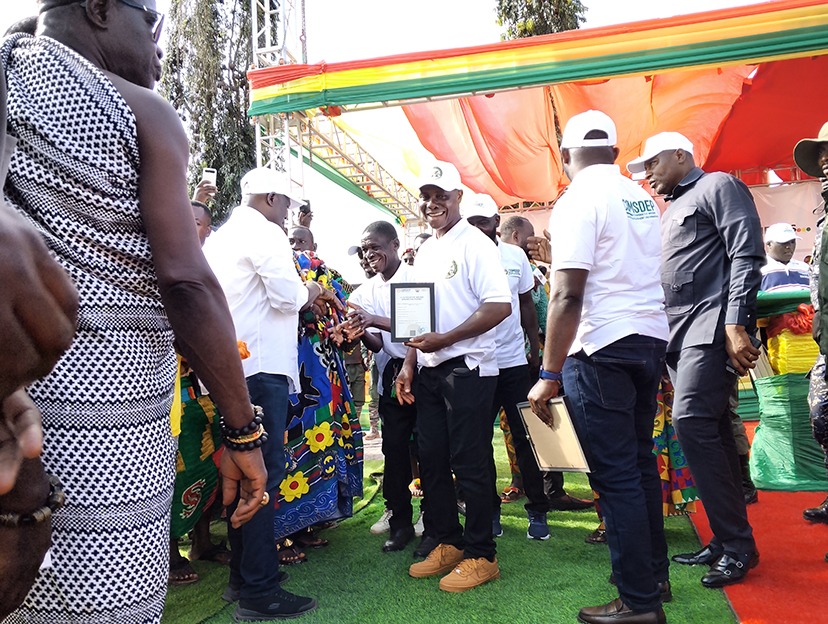
At the launch of the initiative at Nkroful, five cooperative were handed their license to begin operation. The license is valid for a period of six months and subject to renewal based on strict adherence to the requirements of the RSCOMDEP.
For more news, join The Chronicle Newspaper channel on WhatsApp: https://whatsapp.com/channel/0029VbBSs55E50UqNPvSOm2z