The Pan-African Parliament (PAP) has adopted landmark resolutions that could require African governments to establish legal and regulatory frameworks for integrating traditional medicine into their national healthcare systems.
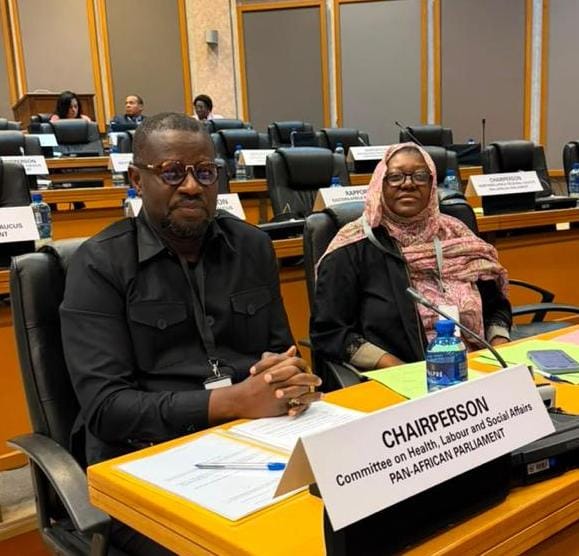
The resolutions, championed by the Chairman of PAP’s Committee on Health, Labour and Social Affairs, Mr. Frank Annoh-Dompreh, called for the development of a continental ‘Model Law on Traditional Medicine and the Protection of Local Knowledge’ to guide African Union (AU) Member States on research, licensing, quality assurance and the ethical use of indigenous medicines.
The move signals a major shift in Africa’s health policy, recognising traditional medicine as a critical component of healthcare rather than an informal alternative.
Across the continent, millions of people, particularly in rural communities, continue to depend on herbal practitioners and traditional birth attendants as their first source of healthcare.
Presenting the Committee’s report during the First Ordinary Session of the Seventh Pan-African Parliament in Midrand, South Africa, Mr. Annoh-Dompreh argued that Africa could no longer afford to treat traditional medicine as a parallel health system.
He said indigenous medicine should be integrated into mainstream healthcare through scientific research, clinical validation, standardisation and effective regulation to improve healthcare delivery, while safeguarding public safety.
He noted that protecting Africa’s indigenous medical knowledge was not only a public health necessity but also an opportunity to preserve cultural heritage, stimulate scientific innovation and unlock economic value from locally developed health products.
The recommendations followed a joint Parliamentary Oversight Mission undertaken by PAP’s Committee on Health, Labour and Social Affairs and the Africa Centres for Disease Control and Prevention (Africa CDC) Regional Office in Lusaka, Zambia, in December 2025.
The mission reviewed the implementation of key AU health policies and consulted government officials, parliamentarians, healthcare professionals, development partners and traditional medicine practitioners.
The Committee found that despite advances in modern healthcare, traditional medicine continues to provide essential services to millions of Africans, especially women in remote communities where hospitals, skilled health workers and medical facilities remain out of reach.
It therefore recommended that governments establish robust legal and regulatory systems to ensure scientific validation, product standardisation, practitioner accreditation, quality assurance and the protection of indigenous knowledge.
The report also raised concerns about Africa’s maternal and child health situation. Although some countries have made progress, the continent still accounts for about 70 per cent of global maternal deaths and more than 40 per cent of neonatal deaths, many of which are preventable.
While Zambia has recorded improvements through stronger primary healthcare and increased skilled birth attendance, the oversight mission identified persistent challenges, including shortages of health workers, inadequate infrastructure, weak referral systems, unreliable electricity, insufficient essential medicines and inadequate health financing.
The Committee urged African governments to accelerate reforms to achieve the Sustainable Development Goal target of reducing maternal mortality to fewer than 70 deaths per 100,000 live births by 2030.
The report further underscored the need for Africa to strengthen its health sovereignty following lessons from the COVID-19 pandemic and outbreaks of Ebola, Mpox and Marburg virus disease. It observed that these health emergencies exposed the continent’s heavy dependence on imported medicines, vaccines and pharmaceutical products.
To address the challenge, the Committee endorsed Africa CDC initiatives to expand local vaccine production, pharmaceutical manufacturing, digital disease surveillance and African-led scientific research as essential measures for building resilient health systems.
Following debate, PAP adopted resolutions urging AU Member States to increase investment in primary healthcare, strengthen maternal and neonatal services, recruit more health professionals, improve emergency obstetric care, expand digital health systems and reinforce medical supply chains.
Parliament also mandated its Committee on Health, Labour and Social Affairs to work with the Africa CDC, the African Medicines Agency and other stakeholders to draft the continental Model Law on Traditional Medicine.
In addition, PAP called on Member States to domesticate Africa CDC frameworks on biosafety, biosecurity, pandemic preparedness, data governance and cross-border disease surveillance, while urging governments to honour the Abuja Declaration by allocating at least 15 per cent of national budgets to the health sector.
The resolutions are expected to advance the harmonisation of traditional medicine across Africa while strengthening health systems, improving health security and reducing the continent’s dependence on imported medical products.
For more news, join The Chronicle Newspaper channel on WhatsApp: https://whatsapp.com/channel/0029VbBSs55E50UqNPvSOm2z