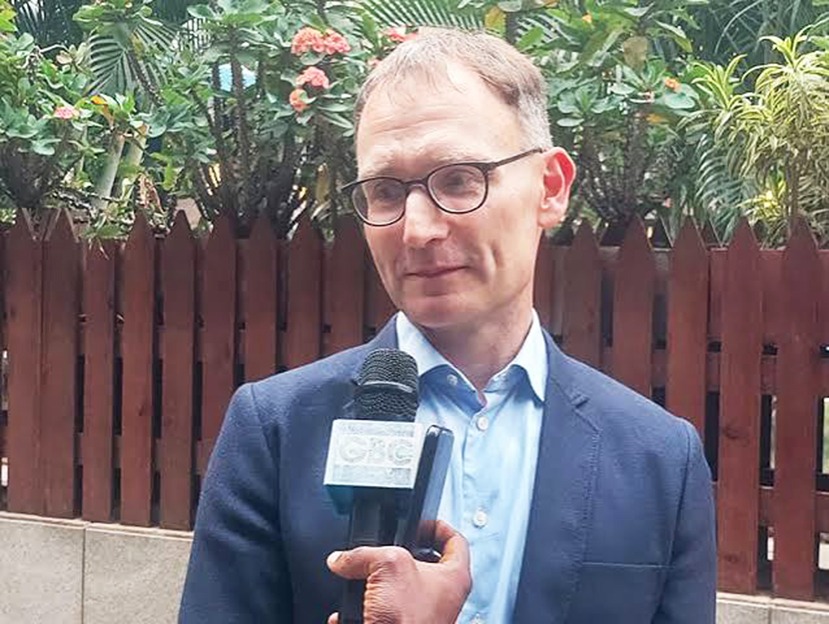
Professor Neil Ferguson, the director of public health at Imperial College London has warned that Africa could face a growing gap in artificial intelligence capability, saying the technology is currently concentrated in a small number of countries and the continent has far less data-centre capacity than Europe, the United States and China.
“AI capability is very concentrated in a very small number of countries,” Prof Ferguson said. He said Africa’s comparatively limited data-centre capacity was an important issue as AI develops and becomes increasingly relevant to healthcare, scientific research and biosecurity.
However, Prof Ferguson stressed that the biological threats facing Africa were not fundamentally different from those facing other parts of the world. Prof Ferguson made the remarks during an online Biosecurity Media Briefing organised by Imperial College London to examine emerging biological threats, global biosecurity and the implications of rapid advances in artificial intelligence.
He cited the Africa Centres for Disease Control and Prevention (Africa CDC) as a positive example of regional cooperation, saying its leadership and coordination among African countries demonstrated political will that other regions could emulate.
The comments came during an online news conference on the emerging biosecurity implications of artificial intelligence, with Prof Ferguson saying an AI-designed virus causing human extinction was “highly unlikely”.
He said current gaps in scientific knowledge about many viruses, particularly information linking their genetic characteristics to their biological effects, placed limits on what AI could achieve in the near term.
“Even if AI models develop remarkably quickly in the next year, there is going to be a limit to the threat they pose in the biosecurity space,” he said.
Prof Ferguson said the longer-term concern was that AI could accelerate automated biological experimentation and help generate the data currently missing, potentially increasing the ability to understand and engineer pathogens.
He also identified plant pathogens as a potentially greater short-term concern, saying automated experimentation could generate better data on plant disease, making it easier to engineer threats to crops.
He said the economic consequences of deliberately targeting agriculture could also provide a clearer incentive for malicious actors than attempting to create a pathogen capable of affecting people globally.
DNA access
Professor Wendy Barclay, Regius Professor of Infectious Disease at Imperial, said controlling access to synthetic DNA was an important short-term biosecurity measure.
She said AI could design a biological agent digitally, but someone would still have to obtain the DNA and physically assemble it.
Prof Barclay said synthetic DNA companies already self-regulated access to potentially dangerous sequences, but argued that stronger international coordination was required.
Evolution still ahead
Professor Tom Ellis, Professor of Synthetic Genome Engineering at Imperial, said natural evolution remained more capable than current AI systems at exploring biological possibilities.
“Evolution is smarter than you,” he said, arguing that AI-assisted DNA design was not yet capable of competing with the enormous biological search space explored naturally through evolution.
For more news, join The Chronicle Newspaper channel on WhatsApp: https://whatsapp.com/channel/0029VbBSs55E50UqNPvSOm2z