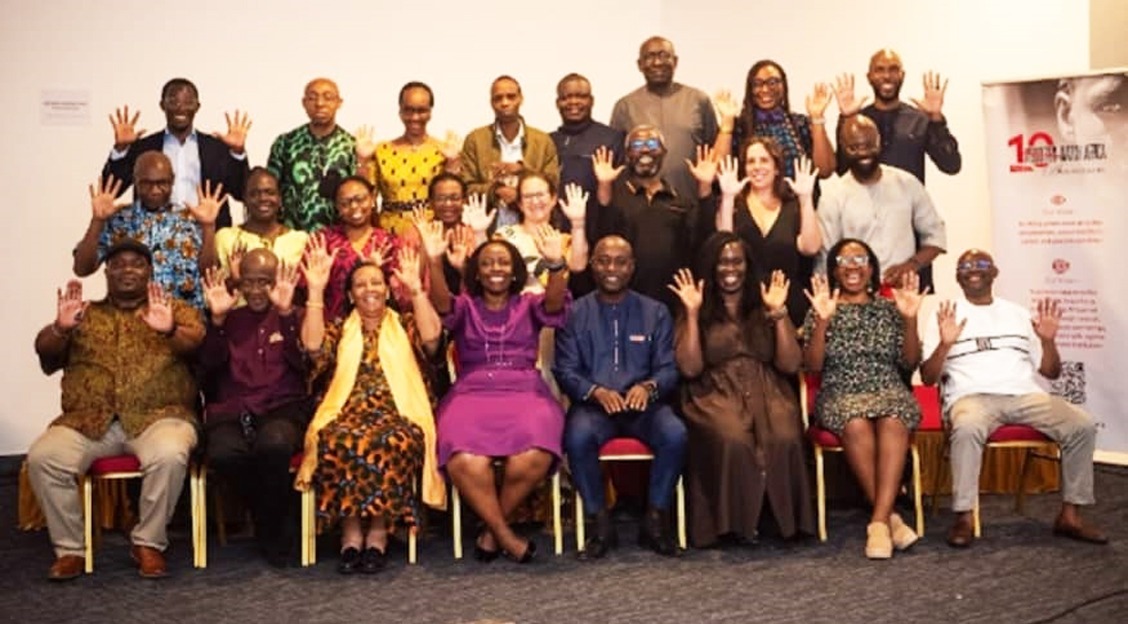
Leading experts have called for a fundamental overhaul of Africa’s approach to preventing and responding to mass atrocities, warning that the continent’s early-warning systems continue to be undermined by political inaction, structural inequalities, illicit financial flows and weaknesses in accountability.
The experts, comprising policymakers, civil society leaders, peace and security experts, human rights advocates and international partners, made the call at a high-level gathering in Accra to mark the 10th anniversary of the establishment of Atrocities Watch Africa (AWA). Under the theme “Atrocity Prevention in Africa: Looking Back and the Future Outlook,” the participants examined the state of atrocity prevention, peace and security on the continent against what they described as a rapidly eroding global rules-based order, the rising influence of middle powers and rapid technological advances.
According to the “Accra Agenda on Atrocity Prevention in Africa,” these developments are producing contradictory realities noting that while technology has strengthened the ability to track and monitor threats, it has also created new vulnerabilities through online disinformation and the rapid spread of hate speech.
The participants expressed concern about growing sovereign indifference to atrocities and increasing pressures on mechanisms designed to ensure accountability.
The gathering concluded that these developments are affecting social cohesion and complicating peace and security dynamics across Africa, while perpetuating what participants described as a persistent gap between early-warning systems and effective action to prevent and respond to atrocities.
In a communique issued at the Accra Summit last month following interactive dialogues, panel presentations and plenary discussions, the participants identified eight major areas requiring action.
They rejected approaches that treat atrocity prevention primarily as a technical problem involving early-warning systems, peacekeeping mandates and institutional capacity arguing that such a technical framing risks erasing history, portraying emerging crises as spontaneous and isolated events and perpetuating the dehumanization of Africans.
The forum therefore called for contemporary atrocity prevention and response to be understood against the historical realities of transatlantic chattel enslavement, colonialism and apartheid.
The communique also pointed to ongoing conflicts in Sudan, the Democratic Republic of Congo (DRC), the Sahel and Ethiopia, arguing that the atrocities occurring in these areas should not be viewed simply as spontaneous events or the product of recent failures which the participants described as cumulative expressions of long-standing structural violence connected to historical conditions.
The participants consequently called for advancement of the decoloniality project through updated educational curricula and transformation of legal and cultural frameworks to address historical blind spots.
They also emphasised the need to cultivate advocates capable of bridging knowledge gaps that continue to impede effective action against atrocities.
On the political economy of violence at the centre of atrocity prevention, the participants
said resources and conflict in Africa are deeply interconnected, with contemporary atrocities frequently sustained by illicit and unaccountable flows of capital.
According to the communique, global and regional financial channels are being used to bankroll armed groups, finance mercenary operations and other non-state actors and contractors of atrocity, while also facilitating the unaccountable exploitation of local resources.
The consequences, participants noted, are ultimately borne by local populations who suffer the human and social costs of violence.
They therefore identified the tracking of financial architectures as a foundational component of any comprehensive atrocity-prevention strategy including monitoring money-laundering networks, opaque mineral supply chains and instances of state capture.
The participants also called for a careful reassessment of the frequently invoked principle of “African solutions to African problems”; they argued that many African crises are also shaped by global forces at the backdrop of recognizing the importance of African agency in defining the continent’s problems and identifying solutions.
The communique notes that although the physical theatre of violence and suffering may be African, the structural architectures, economic motivations and political configurations behind many crises are frequently intertwined with actors and interests beyond the continent for which the participants stressed that African agency must coexist with international action addressing the global roots and accelerators of African conflicts.
For more news, join The Chronicle Newspaper channel on WhatsApp: https://whatsapp.com/channel/0029VbBSs55E50UqNPvSOm2z