Mercury concentrations in sampled waters of Ghana’s Pra and Ankobra rivers are more than 55 times the average levels recorded in streams in the United States, a baseline study by the United States Geological Survey (USGS) has found.
The study also found mercury concentrations in river sediments between two and 25 times higher than the US stream average, with communities closer to active small-scale mining sites recording higher concentrations.
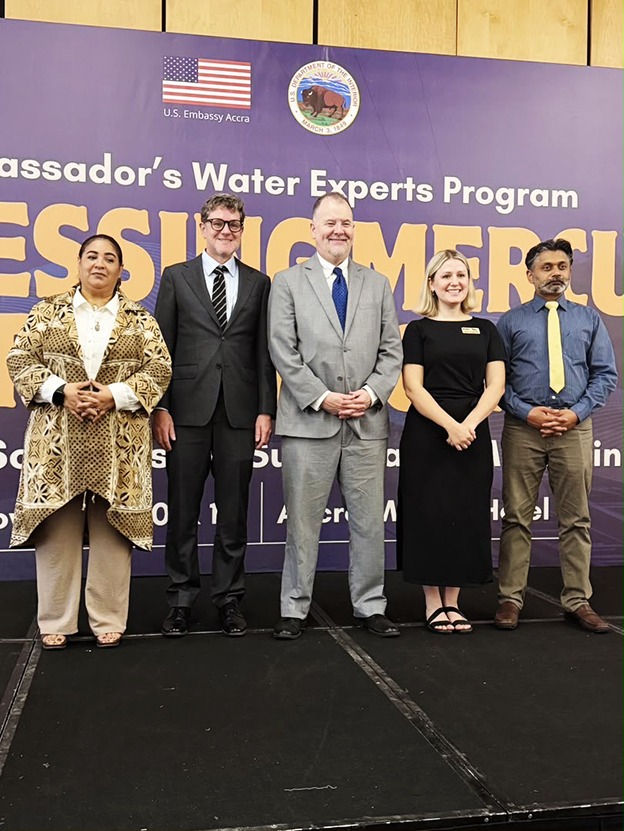
Presenting the findings at the Ambassador’s Water Experts Programme (AWEP) Symposium in Accra, Dr Grace Armstrong of the USGS Mercury, Metals and Microplastic Research Laboratory (USGS-M3RL) said the elevated concentrations raised concerns about the environmental impact of artisanal and small-scale gold mining.
She identified Bamianko as one of the communities with the highest mercury concentrations in its sediments, attributing the findings to its proximity to mining activities.
The symposium, organised by the US Embassy in Ghana, was held under the theme, “Addressing Mercury Pollution: Collaborative Solutions for Sustainable Mining in Ghana.”
Mercury in waterways
Dr Armstrong said the assessment found that much of the mercury detected in the sampled river waters was associated with suspended particles.
She explained that filtered water samples recorded mercury concentrations more than 10 times lower than their corresponding unfiltered samples, indicating that suspended particles carried a significant proportion of the mercury.
According to her, the finding had implications for the transportation of mercury downstream and its eventual movement into the marine environment.
She said mercury could undergo microbial processes in water bodies and sediments, producing methylmercury, a highly toxic form that accumulates in aquatic food chains, particularly in fish.
Dr. Armstrong explained that people could be exposed to the contaminant through the consumption of fish, with larger fish potentially accumulating higher concentrations through the food chain.
Drinking water and fish findings
Despite the elevated mercury concentrations recorded in the sampled rivers, the study found that all the drinking water samples collected from pipes, boreholes and wells contained mercury levels below the drinking water criteria set by the US Environmental Protection Agency (EPA) and the World Health Organisation (WHO).The US EPA criterion is two parts per billion (ppb), while the WHO criterion is one ppb.
Dr. Armstrong said the findings showed that the elevated mercury concentrations detected in the rivers did not translate into similar levels in the drinking water samples examined.
The researchers also found that mercury concentrations in the fish samples collected from some communities were below the US EPA’s fish consumption criterion.
However, she cautioned that fish availability was limited during the sampling exercise, with some communities having very few fish available for collection.
Most of the fish samples came from two communities, limiting the extent to which the findings could represent fish contamination across the wider study areas.
The researchers also detected mercury in sampled cassava and cocoa materials, although the limited number of samples prevented them from drawing firm conclusions about contamination levels in the crops.
Health and environmental concerns
Dr. Armstrong described mercury as a potent neurotoxin that could damage developing brains and affect other organs, including the kidneys and heart.
She also warned of potential reproductive health effects, particularly for pregnant women and developing babies.
She explained that mercury was used in some artisanal and small-scale gold mining operations to separate gold from surrounding sediments.
The process involves mixing mercury with gold-bearing materials to form an amalgam, which is subsequently heated to separate the gold, releasing mercury vapour into the atmosphere.
The mercury can then settle in nearby communities, waterways and agricultural environments or travel over long distances before being deposited.
Dr. Armstrong said artisanal and small-scale gold mining accounted for more than 35 per cent of global mercury emissions into the atmosphere.
Further research needed
The assessment covered selected communities along the Pra and Ankobra rivers, where researchers collected samples of surface water, sediments, drinking water, fish, cassava and cocoa.
Dr. Armstrong stressed that the exercise was a small-scale baseline study and should not be used to draw broad conclusions about mercury contamination across Ghana or serve as the sole basis for policy decisions.
She said the findings were intended to provide initial scientific evidence to guide further investigations and discussions among stakeholders.
The research was also designed to strengthen the capacity of Ghanaian institutions in mercury monitoring, field sampling and laboratory analysis through the transfer of technical expertise.
She called for further studies into atmospheric mercury emissions, the movement of contaminated particles through waterways and the accumulation of mercury in aquatic food chains.
She noted that communities located far from mining sites could also be exposed to mercury transported through the atmosphere.
For more news, join The Chronicle Newspaper channel on WhatsApp: https://whatsapp.com/channel/0029VbBSs55E50UqNPvSOm2z