On 28 and 29 October, Moscow hosted the Russia-Africa summit. It was the third, not the first, and that matters, because the record of the first two is the best guide to how the third should be judged. It was also one summit among many. Beijing, Paris, Brussels, Washington and Delhi all keep their own Africa calendars. Africa is the most courted continent on earth, courted on other people’s schedules, in other people’s capitals, under other people’s agendas. My argument is that this is a strategic problem, and that the fault lies less with the courtiers than with the court.
The record of the first two
At Sochi in 2019, 43 African leaders attended, and President Putin promised to double trade within five years. By 2023, Chatham House noted, that goal had stalled, with trade at about $18 billion against a target of about $40 billion. Independent estimates are gloomier. A summary by the Africa Center for Strategic Studies puts Russia-Africa trade at about $14 billion, down about 30 percent since 2018, with less than 1 percent of foreign direct investment into Africa.
At St Petersburg in 2023, only 17 heads of state attended. African leaders asked for the restoration of the Black Sea grain deal and a path to peace in Ukraine, and received neither. Putin dismissed a ceasefire as “virtually impossible”, rebuffing the African peace initiative. It also promised free grain, 25,000 to 50,000 tonnes each for six countries, and about 200,000 tonnes reportedly arrived, a rare pledge delivered in full, though small.
The third summit followed the same script. Organisers report 146 documents were signed, a declaration of reportedly 101 points, and an action plan for 2027 to 2029. Putin is reported to have claimed $27 billion of trade in 2025 and to have set a target of at least $50 billion, which echoes 2019, with no date I could find.
Attendance of 21 or 22 leaders recovered from 17 but remains about half of Sochi. Nearly all these figures come from Russian officials and organisers, and independent confirmation is thin. A continent that must rely on a Kremlin aide and a European think tank for the size of Russia’s footprint on its own soil has a data problem before it has a diplomacy problem.
What success should look like
When the leaders declare the summit a success, as they will, the claim will rest on what is easy to count: documents signed, leaders present, a declaration adopted. Those measure ceremony. A success worth the name would attach four things to every commitment: a number, a date, a baseline and an independent verifier, and at least one commitment that cost the host something, such as a processing plant built in Africa or a debt actually cancelled and recorded. By that test the 2019 trade pledge failed, the 2023 African requests were not met, and the free-grain pledge passed. The 2026 targets cannot yet be tested, because those reported carry no date.
What Africa put on the table
The coverage I could find points to standing political positions and not to a programme. The African Union’s chair, Burundi’s Évariste Ndayishimiye, said Africa had not come to ask for aid, raised the African Union’s G20 membership and a permanent Security Council seat, and asked Russian investors to invest. The declaration reportedly carries language on Security Council reform, opposition to unilateral sanctions, local mineral processing and a stronger African voice in the IMF and World Bank. Ghana’s President is reported to have called for a shift from political to economic cooperation, with a joint commission in 2027.
These matter, but as reported none carries a baseline, a deadline or a verifier, and I found no bloc-level strategic programme. They are mostly requests that cost the host little. A pledge to support Security Council reform costs Moscow a sentence, whereas a pledge to build a processing plant costs it a plant. The 2023 African peace mission, the one initiative that tested Moscow’s willingness, was set aside.
The romance
There is a growing narrative, on social media in Ghana and beyond and in some political and academic commentary that Russia has always stood with Africa and is the partner of choice because it is committed to Africa’s transformation. The same is said of other summits, depending on the speaker’s persuasion.
Soviet support for liberation movements deserves respect, but gratitude for the 1960s is not a strategy for 2026. One post-summit commentary argues that Russia offers investment where others offer exploitation, while conceding that its main exports are arms, grain and fertiliser. Its author is listed as an Africa representative of a Russian trade council. The footprint is arms, grain, nuclear contracts such as Egypt’s El Dabaa plant, and security deployments, with little investment. It follows from Russia’s interests and capacity, and it is not a plan for African industrial transformation.
Ordinary Africans are less romantic than the commentary. Afrobarometer’s survey of 38 countries found that 36 percent see Russia’s influence as positive, against 62 percent for China and 52 percent for the United States, and that 72 percent of those who know of the war say their country should stay neutral. The Foreign Policy Research Institute, citing Afrobarometer, puts positive views of Russia in Ghana at about 25 percent. The public already holds the sensible line, which is neutrality and results over alignment, and it is in the summit declarations that the line disappears.
The powers are doing their jobs
The France-Africa, EU-AU, Russia-Africa, US-Africa, Afro-Arab, China-Africa and India-Africa summits are all initiatives of major powers. Each is the visible end of a long internal process in which a foreign ministry, a treasury and an intelligence service decide what the country wants from a region and what it can offer. The self-interest is easy to name: minerals, markets, United Nations votes, arms sales, grain, basing and legitimacy.
That is how the international system works, and it is no cause for grievance. The claim that any of these powers is here chiefly for the transformation of Africans has no evidential basis and the claim is not needed. It was the lesson of my series on China’s Announcement 54, which asked “Zero Tariff, Zero Ownership?” of a policy whose address, as I put it in Part I, was African and whose ownership was Chinese. Attendance at these summits has become the African reaction to initiatives designed elsewhere. The open question is who, on the African side, is doing the designing.
Why Africa arrives without a text
The failure is documented and old. In 2006, in Banjul, the African Union adopted a formula under which fifteen leaders would represent the continent at partner summits. Partners largely ignored it. In 2017 the Union set up a Partnerships Coordination and Interactive Platform, and in 2019 it decided to review every strategic partnership. Russia’s first Sochi summit went ahead that October outside the formula.
The Institute for Security Studies identified the problem: the Union cannot enforce its directives when others organise the summits, and member states bypass the rules when it suits them. The European Council on Foreign Relations adds that African states bargain alone against partners who negotiate as blocs, and that governments suspended after coups have attended Russian summits.
Ghana is not exempt. Within months of each other, its Foreign Minister reported that about 272 Ghanaians had been recruited into the war in Ukraine and about 62 were dead, while the Labour Ministry was reported to have signed a recruitment memorandum with Russia’s Alabuga zone. One part of the state counted the cost and another opened a channel to increase it, and no framework existed against which either could be measured. I take that case up in a separate article.
At Moscow, the Foreign Ministry says, President Mahama raised the war recruitment discussion and President Putin assured him that Ghanaians may no longer take part in the war. That is exactly the kind of commitment the success test is for. It should be put in writing, confirmed by Moscow, and checked against the Alabuga memorandum, which the reported assurance does not obviously cover.
What a strategic African position would contain
Nothing here requires Africa to choose between partners. It requires Africa to arrive prepared.
- One African text, tabled first.Publish five or six African asks, such as local processing, market access, debt terms and technology transfer, before any summit. Nigeria’s September framework with Washington, which puts value addition in writing, shows the direction.
- A net assessment of every partner.The African Union and the regional communities should prepare a classified assessment of what each partner wants, offers and has delivered, with a public version.
- Red lines.Recruitment of citizens for foreign wars or war industries, foreign mercenary forces, and any pledge of a state’s votes or territory should be off the table without a continental position.
- Our own numbers.The African Union and the African Development Bank should publish an annual independent ledger of each partner’s pledges, disbursements, trade and investment.
- Texts before signatures.No memorandum signed at a summit should bind until its text has been tabled in the national legislature.
The questions that ought to be asked
- What did Africa ask for, in writing, before the summit began? Where is that text?
- What did this partner pledge at its last two summits, how much has been delivered, and who verified it?
- How much of any new pledge is grant, how much is loan, how much is tied to the partner’s own firms, and how much is old money announced again?
- What do we give in exchange: votes, minerals, basing, or silence on a conflict?
- Does any agreement touch our citizens directly, through recruitment, labour or security arrangements, and has the legislature reviewed it?
- When the summit is over, who will hold the partner to what was said, and when will they report?
A necessary caution
None of this is an argument against summits. A state that needs capital, grain, technology or security will rightly attend them, and Africa has gained from many partnerships, Russian support at moments of need included. Much of the 2026 coverage rests on Russian sources, and I have attributed it accordingly.
The powers analysed us before they landed. They arrived with texts, and we arrived with speeches. No external saviour is coming, because none of these powers has ever been in the business of saving anyone but itself. Africa’s destiny has to be taken into its own hands, and the place to begin is the document it should have tabled at the last summit.
By Nana Attobrah Quaicoe
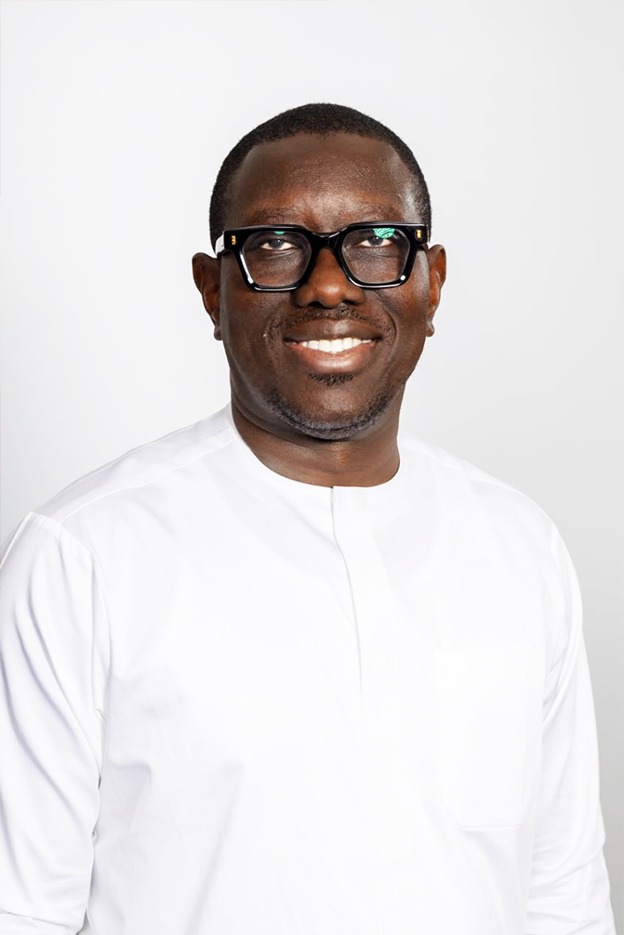
The author, Nana Attobrah Quaicoe, is an Intelligence and National Security Analyst, a former Director General of the Bureau of National Intelligence (2022-2025), and writes on national security and intelligence reforms, risk, integrity assessment and institutional governance in the Ghanaian context.
For more news, join The Chronicle Newspaper channel on WhatsApp: https://whatsapp.com/channel/0029VbBSs55E50UqNPvSOm2z