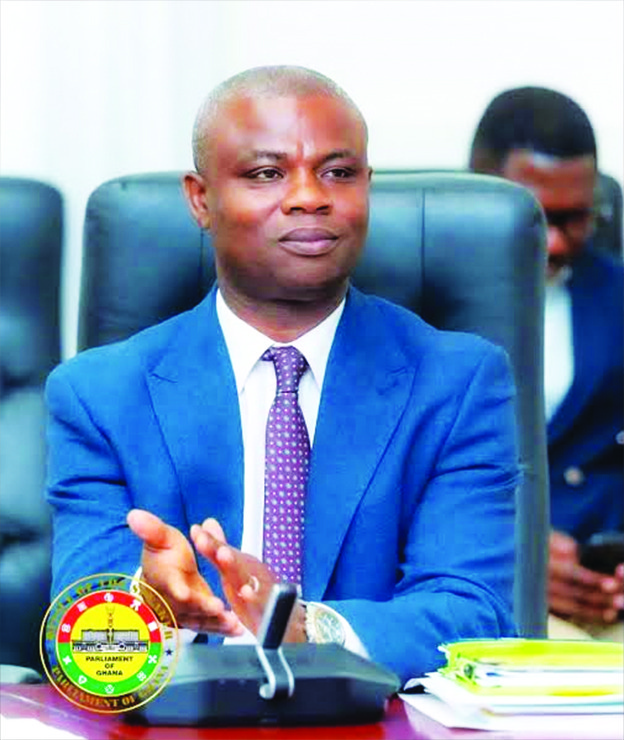
Director-General of the Internal Audit Agency, Conrad Dumbah, says public officers responsible for internal auditing must be held accountable when they fail to identify and challenge irregular payments involving state resources.
Speaking in an interview on JoyNews during the 2026 Internal Audit Awareness Month, Mr Dumbah said internal auditors have a responsibility to scrutinize payment requests, verify the legitimacy of transactions and ensure that public funds are disbursed only to individuals and institutions entitled to receive them.
He said auditors must go beyond reviewing financial records to establishing whether payments correspond with actual goods, services or entitlements.
He explained that where public funds are paid to individuals who did not qualify for them, internal auditors must demand evidence, seek the recovery of the money and ensure that the necessary corrective measures are taken.
“Did we enjoy the right for whatever application we had started? So if you ask me to pay for two chests, did we get those two chests? Was there evidence of us?” he said, illustrating the checks auditors are expected to undertake before payments are approved.
Mr Dumbah further cited situations where individuals receive allowances or payments without fulfilling the conditions attached to them, arguing that auditors must establish whether beneficiaries actually undertook the activities for which they were compensated.
He maintained that payments made without the necessary justification should be challenged, with the responsible officers required to account for the lapses.
He added that audit reports frequently bring questionable transactions to the attention of management, leading to requests for officers to provide evidence that beneficiaries received their entitlements or refund money that was improperly paid.
“Failure to do it; the officers are responsible,” he said, emphasising the accountability expected of officers responsible for addressing such irregularities.
Mr Dumbah explained that internal auditing is designed to provide independent and timely assurance to management, helping public institutions identify operational weaknesses, prevent financial losses and ensure that resources are used for their intended purposes.
He also highlighted the importance of internal auditors examining government projects while they are being implemented, noting that real-time project assurance can help identify irregularities before they develop into significant losses for the state.
According to him, the effectiveness of internal auditing depends on its ability to detect risks early, question questionable transactions and provide management with the information needed to take corrective action.
He stressed that internal auditing should be regarded as a preventive accountability mechanism rather than merely a process of reviewing financial activities after public funds have been spent.
By Jesse Otoo