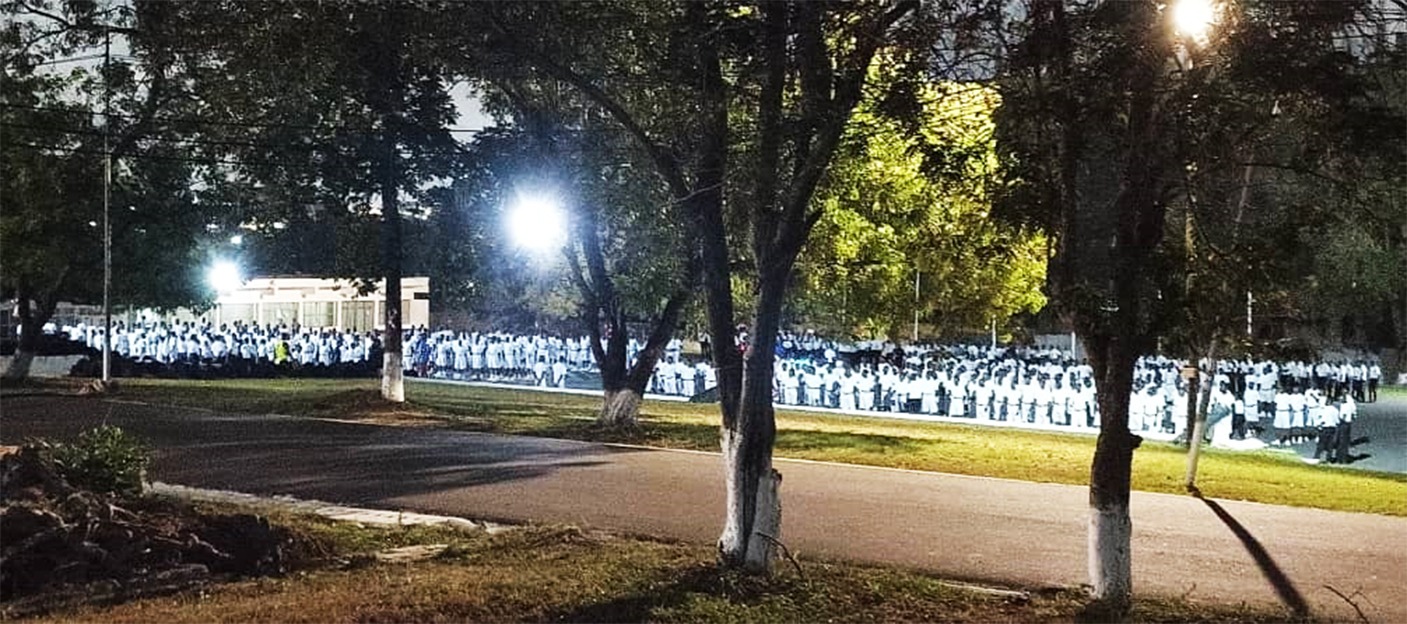
Attached is a photo taken recently at night on campus and it tells a stark story.
Under the dim glow of campus lights at Regional Maritime University. Hundreds of cadets in uniforms sit in the open to learn at night. There are no classrooms in sight large enough to hold them when the facilities have collapsed under the weight of numbers.
Classrooms Full, Cadets Outside in the Dark
The scarcity of classrooms has reached a breaking point. With lecture halls and study spaces overcrowded, many cadets are forced outdoors at night to revise. The lighting is inadequate. The environment is exposed. Yet these students, training for careers that demand precision and discipline at sea, have little choice. They sit on the benches and pavement, trying to absorb course material under streetlights because the classrooms simply cannot accommodate them. A university that prepares professionals for the maritime industry cannot continue treating outdoor night study as an acceptable alternative to proper learning spaces.
Accommodation
Accommodation blocks built in the early years of the institution were intended to house about 200 cadets across two academic years. Today those same facilities are expected to absorb close to 600 students. Rooms originally meant for eight occupants now routinely hold 16 to 20. Overcrowding on this scale strips cadets of privacy, rest, and basic dignity. It creates tension, health risks, and an environment fundamentally unsuited to serious professional training. The photograph of the large gathering of cadets is not just a picture of numbers; it is visual evidence of facilities pushed far beyond their design capacity.
Water Scarcity and Unhygienic Living Conditions
Compounding the overcrowding is a persistent lack of water on campus Accommodation blocks, particularly the older rear sections, have become unpleasant and unhygienic. Without reliable water supply, basic sanitation suffers and the living quarters develop foul smells. Cadets and other students are forced to walk long distances across campus simply to collect water for bathing, and washing. In a residential training institution, this is not a minor inconvenience. It is a daily drain on time, energy, and morale that should be directed toward studies and practical seamanship training.
Leadership Vacuum and the Need for Accountability
These conditions are not the result of sudden misfortune. They reflect sustained failures in planning, admissions control, maintenance, and investment. When an institution continues to admit students far beyond the capacity of its classrooms, hostels, and utilities, responsibility rests with those charged with its governance.
It is high time the governing body of Regional Maritime University appointed a substantive Vice Chancellor. Interim or acting arrangements cannot deliver the firm direction, long-term planning, and clear accountability the current crisis demands. A substantive Vice Chancellor must be held responsible for the state of infrastructure, the realism of student intake, the condition of cadet accommodation, and the basic standards of the learning environment. Without decisive leadership and transparent accountability, the same overcrowding, the same night-time outdoor study sessions, and the same water shortages will persist.
The image of hundreds of cadets gathered under campus lights should serve as a wake-up call. Facilities built for far fewer students are now stretched to breaking point. The question that can no longer be avoided is simple and direct: Who is responsible for allowing this situation to develop and continue? Until that question is answered with concrete action proper leadership, controlled admissions, and urgent investment in classrooms, hostels, and water systems the cadets of Regional Maritime University will keep studying in the dark.
Ebenezer Kobina Quaidoo.
(Concerned Alumni & Former SRC President)
For more news, join The Chronicle Newspaper channel on WhatsApp: https://whatsapp.com/channel/0029VbBSs55E50UqNPvSOm2z