After my recent article on Ghana’s application to join BRICS, a former Minister sent a short response. “Really nice work,” he wrote, “but how do we get ministers to work?”
It was the right question. It came from someone who has sat around the table of government and knows how far a good strategy on paper can be from what happens in the ministries. My article had argued that membership by itself is not strategy: Ghana has belonged to the UN, the AU, ECOWAS, the IMF and the World Bank for decades and the benefits have tracked our preparation rather than our memberships.
His question exposes the gap in that prescription. Capability without incentive sits unused. A strategy that ministers and executive appointees have no reason to pursue will gather dust like the plans before it. So this article tries to answer him honestly, even if we begin from a place of discomfort.
A system working as designed
It is tempting to treat poor ministerial performance as a matter of individual failure: the wrong people in the wrong posts although there is some truth in that. But the deeper problem is that our political system rewards the exact behaviors that undermine the national interest, and punishes very little of it.
Ghana’s political parties have no reliable, regulated source of funding. They run on the energy of loyalists who campaign, mobilise and defend the ballot in the logical expectation of reward when the party wins. The rewards come from the state: appointments, jobs, contracts, postings and, too often, protection from consequences!
Appointments therefore follow political weight. A person who controls a constituency, a region or a bloc of delegates has a strong claim on office whether or not he is the most capable candidate. Once appointed, he must keep that base satisfied to remain relevant, so his attention turns to jobs, contracts and favours for supporters, even where these cut against the national interest or against the work of his colleagues in other ministries. Coordination suffers because it pays nobody.
Impunity is part of the bargain: many supporters believe that when their party is in power, their lawlessness should be overlooked. Police officers learn that acting against a connected supporter of the governing party can end a career, and enforcement bends.
When power changes hands, neither party dismantles the machine, because each expects to operate it next. “It is our time” becomes the governing logic.
In such a system, a minister who chases what is lucrative or “juicy” for himself and his base is not malfunctioning. He is responding rationally to the incentives in front of him. That is why exhortation so rarely changes anything.
This is not a description of one party; both major parties have operated the same machine. Nor is it true of every appointee. Ghana has capable and principled ministers and officials, but the system makes them the exception and their work harder.
The structures that feed it
Several features of our constitutional order deepen the problem. The presidency is winner-takes-all: the President appoints ministers, district chief executives, board chairs and the heads of state enterprises and many agencies.
The executive and legislature are entangled. Article 78 requires a majority of ministers to be drawn from Parliament. Oversight weakens when the majority in Parliament includes the people it is meant to scrutinise, and many of the rest are hoping to join them.
Vetting is largely ceremonial. The Appointments Committee usually divides along party lines, and serious testing of competence or integrity is rare.
Consequences are weak. Asset declarations are neither published nor verified. Audit findings recur year after year, even though the Supreme Court, in the Occupy Ghana case, confirmed the Auditor-General’s duty to surcharge those responsible for losses.
Most fundamentally, there is no national strategy for ministries to coordinate around.
The missing grand strategy
Every government arrives with its own manifesto, and the continuity breaks. The Constitution anticipated this danger. Article 36 requires each President, within two years of taking office, to present to Parliament a coordinated programme of economic and social development, and the National Development Planning Commission exists to provide long-term direction. Yet long-term plans have been drafted and set aside, and Vision 2020 faded.
Without a grand strategy, ministries have no common reference point. Each pursues its own priorities, or its minister’s. On the US health compact, the Security Council seat, China’s zero-tariff policy and BRICS, Ghana has reacted to others’ initiatives because it has no settled answer to what it wants.
A grand strategy is a small set of durable answers. What are those things any Ghanaian, political party, government administration will want to fight for all Ghanaians to have without compromise? What must Ghana become over the next thirty to fifty years? What threatens that, at home and abroad? What are our real assets and leverage? Which partners serve which purposes? What will we refuse, whatever the price?
Its practical value is that it lets government say NO. A minister chasing a lucrative or procurement deal as typically happens must explain how it serves the strategy, and a Cabinet can reject it when it does not fit, if a critical mass in there have national interest mindset.
Breaking the equilibrium
Because the system is self-reinforcing, reform must change incentives rather than appeal to conscience.
The first is to shrink the patronage surface, filling boards of state enterprises, heads of technical agencies and senior professional posts through competitive, merit-based recruitment with fixed terms.
The second goes to the root: regulated, transparent public funding of parties, with strict disclosure, so they depend less on rewarding a particular group with state jobs and less on money of uncertain origin, including criminal money.
Third, appointees should face genuine role and risk vetting: independent assessment of competence and integrity before confirmation, not only a partisan hearing.
Fourth, the police need real operational independence, with senior commanders insulated from politics and officers protected when they enforce the law against the connected.
Fifth, consequences must become real. Asset declarations should be published and verified, and audit surcharges enforced as the Supreme Court has required.
Sixth, the constitutional review’s proposal on Article 78 should be accepted, so that Parliament can scrutinise the executive rather than audition for it .
And seventh, Ghana needs a grand strategy built to outlast governments.
Making strategy survive elections
A strategy owned by one party will be abandoned by the other, so it must be built as a pact involving both major parties, Parliament, academia, labour, business and civil society.
It should be anchored in law, with the National Development Planning Commission as custodian and an insulated professional secretariat. Governments would remain free to choose their tactics within a fixed national purpose and agreed red lines. Every major programme in the budget should show which priority it serves, and Parliament should review progress against published measures every year.
Singapore, Botswana and South Korea held long-term direction steady, but usually through dominant parties or strong bureaucracies. Ghana must achieve the same discipline in a competitive two-party democracy, which is only possible if both parties agree to disarm together.
A senior minister with the President’s backing
Another former minister responded to me with a further thought, and it deserves a place here. He argued for a senior minister to head the strategic committees of government: someone the President visibly supports, who is impervious to Cabinet jostling and territorial disputes, and who does not seek accolades from colleagues. As one leader of an international finance body ³once remarked, “If you are loved, you are not serving the Republic.” In much of Asia as we like to idolise, finance ministers are given precisely this kind of rarefied authority.
South Korea’s finance minister also serves as Deputy Prime Minister, with authority over the economic ministries, and Indonesia and Singapore use coordinating ministers who sit above line ministries. Ghana has tried versions of the idea, with senior ministers under both Presidents Kufuor and Akufo-Addo, and that experience deserves an honest review.
The model works only on conditions. Presidential backing must be visible and consistent, or ministers will appeal over the coordinator’s head. The mandate needs a secretariat and control of budget levers. The holder should have no further political ambitions, because only someone who need not be liked can afford to enforce. And the post must still answer to Parliament. Its weakness is that it lasts only as long as one President sustains it, which is why it must sit within a cross-party strategy anchored in law. The senior minister is the engine; the pact keeps it running after an election.
So, how do we get ministers to work?
Within the present system, the remaining answer is practical. Ministers work to what the President measures and what the public sees. A President who personally reviews a handful of priorities every quarter, supported by a small delivery unit, will see ministries align. Shared targets and budget allocations tied to delivery concentrate minds. Strategy lodged with chief directors and technical staff survives reshuffles. And public scorecards, reviewed by Parliament and amplified by the media and civil society, raise the political cost of doing nothing.
But the deeper answer is that systems do not make ministers work. Presidents, leadership and citizens do. What good systems can do is make it visible whether ministers have worked, and make non-delivery costly. That requires changing what our politics rewards.
Change of this kind usually comes from a reforming leader, a pact among political elites, and sustained pressure from citizens outside party structures. What Ghana has lacked is the will to treat the patronage machine itself as the problem.
Until we do, we will keep joining clubs and launching plans, and wondering why so little changes. The question is not only how to get ministers to work. It is whether we, as a political community, are prepared to reward them when they do.
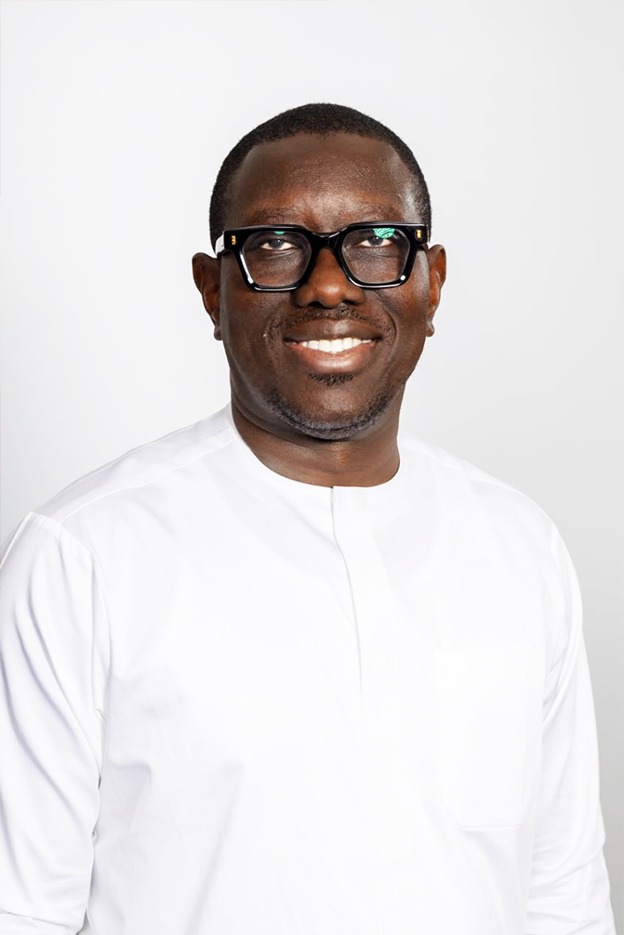
By Nana Attobrah Quaicoe
The author, Nana Attobrah Quaicoe is an Intelligence and National Security Analyst, a former Director General of the Bureau of National Intelligence (2022-2025) and writes on national security and intelligence reforms, risk, integrity assessment and institutional governance in the Ghanaian context.
For more news, join The Chronicle Newspaper channel on WhatsApp: https://whatsapp.com/channel/0029VbBSs55E50UqNPvSOm2z