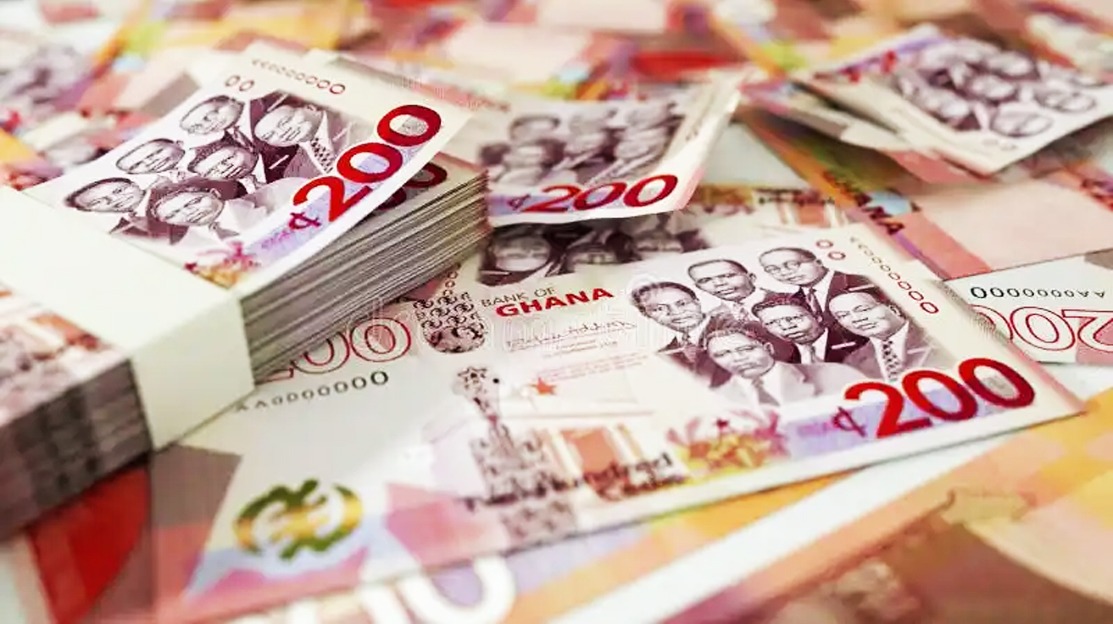
The Ghanaian cedi has emerged as the weakest-performing currency among a group of African currencies monitored by the World Bank, despite the government’s claims that it has stabilised the local currency and brought relief to Ghanaians.
The finding is contained in the World Bank’s October 2026 Africa Economic Update, titled Building AI Readiness, which examines, among other issues, the impact of the escalating Middle East conflict on African economies and exchange rates.
According to data presented by the World Bank under the sub-theme, “Middle East Conflict Triggers Exchange Rate Pressures across Africa”, the cedi recorded the largest depreciation among the currencies featured in the chart, based on percentage variation from the end of February.
The data, titled “Nominal Exchange Rate Variation amid the Middle East Crisis”, is credited to Bloomberg Analytical Services and the Central Bank of Congo.
The chart places the Ghana cedi behind the currencies of Lesotho, Namibia and South Africa in terms of performance over the period under review. Madagascar’s ariary was identified as the best-performing currency among those featured, followed by Mozambique’s metical, while Somalia’s shilling ranked third.
Middle East conflict
The World Bank said the escalation of the Middle East conflict initially exerted broad-based pressure on African currencies. “Most countries with available daily exchange rate data recorded currency depreciations during the second quarter of 2026 relative to end-February, before the conflict intensified,” the report stated.
It explained that in seven of the 22 countries monitored, excluding the CFA franc zone, maximum depreciation exceeded five per cent. Ghana was among the countries recording such depreciation, alongside the Democratic Republic of Congo, the Seychelles and South Africa.
By the end of August, however, much of the pressure had eased, with only 10 currencies remaining weaker than their end-February levels, according to the report. The World Bank said the exchange rate movements reflected a combination of external shocks and pre-existing domestic vulnerabilities.
“The sharp increase in oil and energy prices raised import bills across net energy-importing economies, increasing demand for U.S. dollars, weakening reserve positions, and intensifying depreciation pressures,” it said.
Capital flight
The report also linked the pressure on African currencies to heightened geopolitical uncertainty, which triggered a flight to safety in global financial markets. According to the World Bank, this prompted investors to reallocate capital away from emerging and frontier economies.
It further said supply disruptions in the Middle East pushed up the cost of key agricultural inputs, including fertiliser, thereby adding to imported inflationary pressures.
The depreciation of local currencies also heightened fiscal vulnerabilities in countries with significant external debt service obligations, as the local-currency cost of servicing US dollar-denominated debt increased. However, the World Bank stressed that the impact was not uniform across sub-Saharan Africa.
It said countries heavily dependent on energy imports, with limited foreign exchange buffers and elevated debt service burdens, faced the strongest pressures.
Burundi, The Gambia and Malawi, for instance, experienced significant strains from higher energy costs, weaker external positions and rising financing needs.
Gold, oil cushion some economies
In contrast, the report said some economies proved more resilient because exports of safe-haven commodities helped offset capital outflows.
South Africa, it noted, benefited from stronger demand for gold and platinum, which supported foreign exchange earnings despite heightened risk aversion.
Energy exporters such as Angola and Nigeria also benefited from higher crude oil prices, which boosted export receipts and generated additional foreign currency inflows, helping to cushion exchange rate pressures.
The World Bank’s assessment comes against the backdrop of the Ghanaian government’s repeated assertions that measures implemented by the administration have restored stability to the cedi and strengthened confidence in the local currency.
For more news, join The Chronicle Newspaper channel on WhatsApp: https://whatsapp.com/channel/0029VbBSs55E50UqNPvSOm2z