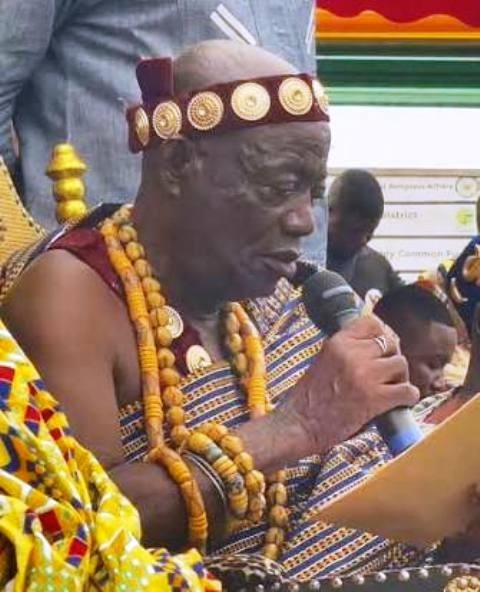
A simmering dispute over traditional authority and jurisdiction over Avega and its surrounding communities in the Akatsi North District of the Volta Region has prompted the Akatsi North District Security Council (DISEC) and the Akatsi South Municipal Security Council (MUSEC) to ban all traditional festivals and customary rites in the area.

The security intervention follows growing tension between the Ave-Dakpa Traditional Council and the Avenor Traditional Council, with both sides advancing competing positions over their traditional authority and jurisdictional relationship with Avega.
The dispute comes against the backdrop of persistent chieftaincy and land-related conflicts across the country, which continues to place considerable pressure on Ghana’s security architecture.
In a communiqué issued after a joint security meeting on September 1, 2026 and intercepted by The Chronicle, DISEC and MUSEC said they had taken notice of an emerging feud between the two traditional councils over which of them exercises traditional authority and jurisdiction over Avega and its environs.
According to the security councils, aspects of the dispute have already been brought before the Volta Regional House of Chiefs.
The security assessment further noted what it described as fierce agitation during an attempt by the Avenor Traditional Council to launch the Avenor Tutudoza at Avega-Agornu.
The councils said the uneasy relationship between the two traditional authorities had created a situation that could potentially erupt into chaos, particularly in the Avega area.
“The two Security Councils foresee potential breakdown of peace and security in the District if stringent measures are not put in place to check activities that could fuel tension,” the directive said.
Consequently, DISEC and MUSEC imposed an immediate ban on the observation of traditional festivals and the performance of customary rites at Avega-Agornu.
Avenor petitions for ban to be lifted
The ban, however, triggered a fresh exchange between the two traditional councils.
In a petition to the security councils, the Avenor Traditional Council requested the immediate lifting of the restrictions to enable it to proceed with the launch of the 2026 Avenor Tutudoza at Avega-Agornu.
The council argued that developments at the Volta Regional House of Chiefs had addressed the objections underlying the dispute.
According to the Avenor Traditional Council, a meeting of the Research Committee of the Volta Regional House of Chiefs on September 2, 2026 considered objections concerning the registration of some Avenor chiefs.
The council claimed that the committee found that issues of land ownership were being improperly mixed with questions of chieftaincy and traditional allegiance and subsequently cleared the affected chieftaincy declaration forms for processing.
Based on that interpretation of the proceedings, the Avenor Traditional Council argued that the basis for the anticipated security tension had been removed and appealed for the ban to be lifted, with security protection provided for the launch.
Ave-Dakpa disputes interpretation
But the Ave Dakpa Traditional Council has challenged the Avenor Traditional Council’s interpretation, insisting that the Research Committee’s work had not formally concluded at the time of its response.
The council said no official minutes, final report or formal communication of the committee’s conclusions had been issued and described it as premature for either party to present the proceedings as a final determination.
It, therefore, urged DISEC and MUSEC to rely on the official record of the Volta Regional House of Chiefs rather than either party’s interpretation of an ongoing process. More importantly, the Ave-Dakpa Traditional Council argued that the security councils’ decision to impose the ban went beyond the chieftaincy registration objections.
It said the security concerns identified by DISEC and MUSEC included the broader dispute over traditional authority and jurisdiction over Avega, the reported agitation surrounding the attempted launch and the possibility that the tension could degenerate into a breakdown of law and order.
“It is, therefore, inaccurate to suggest that the security measure rests exclusively on the particular objections concerning registration of chiefs,” the council said in its response.
The Ave Dakpa Traditional Council further maintained that even a decision favourable to Avenor by the Research Committee would not automatically remove the security concerns that informed the ban.
It consequently called on the security councils to await the formal conclusion of the proceedings before the Volta Regional House of Chiefs and independently reassess the security situation before lifting or modifying the restrictions.
A test for preventive security
The Avega-Agornu dispute presents another test of Ghana’s capacity to prevent local chieftaincy and land disagreements from escalating into violence.
The security councils have, for now, opted for a preventive approach by suspending activities they believe could inflame existing tensions.
However, the correspondence shows that the underlying disagreement over traditional authority and jurisdiction remains unresolved, while the two traditional councils sharply disagree over the significance and status of proceedings before the Volta Regional House of Chiefs.
Both councils, in their respective communications, have pledged their commitment to peace and the use of lawful and established institutions to resolve the dispute.
The immediate challenge for the security authorities will be to maintain calm while the appropriate traditional and legal processes determine the substantive issues at stake.
For more news, join The Chronicle Newspaper channel on WhatsApp: https://whatsapp.com/channel/0029VbBSs55E50UqNPvSOm2z