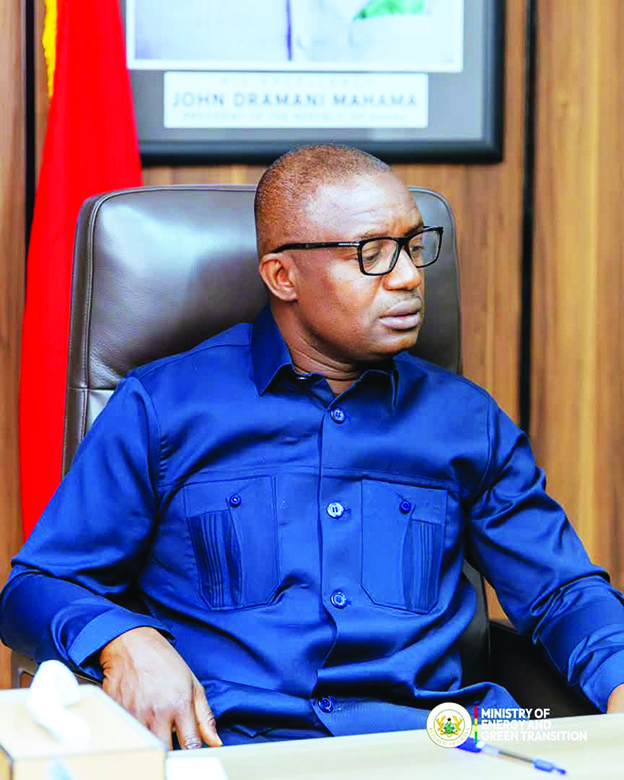
The Minister for Energy and Green Transition, Dr John Abdulai Jinapor, has called for stronger collaboration between the government and private sector to transform Ghana’s energy sector and build a reliable, financially sustainable and cleaner energy system.
He said government alone could not deliver the country’s energy transformation, stressing the need for the private sector to bring capital, technology, innovation and management expertise into the sector.
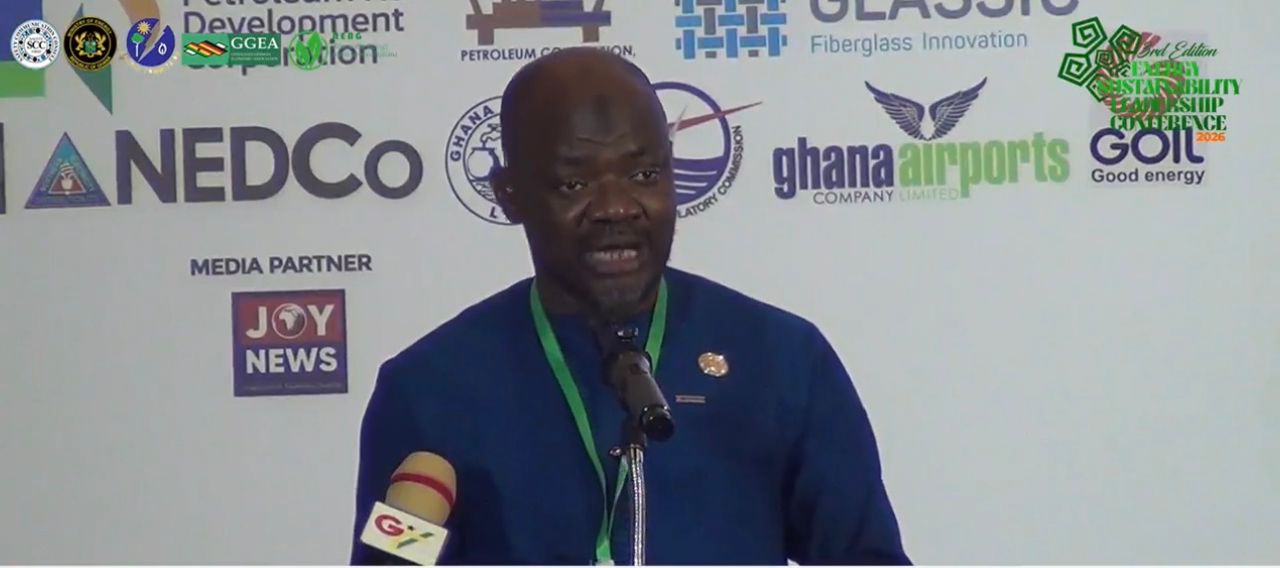
Dr Jinapor made the call in a speech read on his behalf by Dr Yussif Sulemana, Technical Advisor at the Ministry, at the third Energy Sustainability Leadership Conference in Accra.
The conference, organised by Safety Communication Consult (SCC), was held on the theme: “Public-Private Synergy: The Role of Corporate Ghana in National Energy Transformation.”
According to Dr Jinapor, government’s priorities include ensuring energy security, improving the financial sustainability of the sector and transitioning towards cleaner and more efficient energy systems capable of supporting the 24-hour economy.
He disclosed that negotiations with Independent Power Producers had resulted in about US$250 million in savings, while reforms to the Cash Waterfall Mechanism had improved payment predictability and strengthened confidence in the energy sector.
Government, he added, was also introducing greater private-sector participation in electricity distribution to improve efficiency, reduce commercial and technical losses, strengthen revenue collection and enhance customer service.
Dr Jinapor further said investments were being made in generation and transmission infrastructure, including battery energy storage systems, alongside efforts to expand solar generation.
He urged Corporate Ghana to move beyond being consumers of electricity or government contractors and become investors, innovators and strategic partners in the country’s energy transformation.
He, however, cautioned that public-private partnerships must ensure a fair sharing of risks, responsibilities and rewards.
The call for greater private-sector involvement was reinforced by the Chief Financial Officer of CIPA Holdings Group, who outlined opportunities for mobilising local capital to finance commercial and industrial (C&I) solar projects.
Speaking on “Unlocking Local Capital for C&I Solar,” the CFO said CIPA was already financing solar and battery energy storage projects for C&I clients in Ghana using local currency under a Solar-as-a-Service model.
Under the arrangement, CIPA and its financing and technical partners fund, install and, in some cases, operate the solar systems, while clients pay for the power they consume, typically at a lower and more predictable rate than grid tariffs.
The CFO said the model was particularly suited to businesses with substantial and consistent electricity demand, adequate rooftop or land space and a sound payment history.
However, the presentation identified challenges that have historically limited solar financing at scale, including the shorter lending tenors offered by local banks compared with the longer repayment periods required by solar assets, limited lender experience in the sector, fragmented project pipelines and relatively small deal sizes.
“The problem is not that Ghana lacks capital. The problem is that the capital is not yet packaged in a form that institutional investors can efficiently deploy into distributed energy assets,” the CFO said.
To address the financing gap, CIPA is pooling multiple C&I solar assets into an investable portfolio and sponsoring a cedi-denominated green bond programme through its GreenStar platform, with an ambition to scale it to GH¢1 billion over five years.
The first phase is anchored by a pipeline of at least 20 megawatts of aggregated assets, with plans to bring other qualified solar and battery storage developers onto the platform.
Founder and Chief Executive Officer of CIPA Holdings Group, Mr Kwaku Osei-Sarpong, also called for greater use of local-currency financing and highlighted pension funds as an underutilised source of long-term capital for energy projects.
He said Ghana’s pension funds could help bridge the financing gap for renewable energy assets, while stronger corporate governance and transparency would be essential to attracting institutional investment.
“Capital does not just ask whether an asset is good anymore. It asks who is watching the money, and whether that answer can be trusted,” Mr Osei-Sarpong said.
He said the next phase of Ghana’s energy sector would depend on institutions capable of attracting and managing significant capital, linking the need for investment to the conference’s broader call for stronger public-private partnerships.